Q&A: The crisis in Israel-Palestine and Canada’s philanthropic sector
Why It Matters
Rabinowicz suggests when a global issue profoundly impacts the communities philanthropy supports, we should be able to respond.
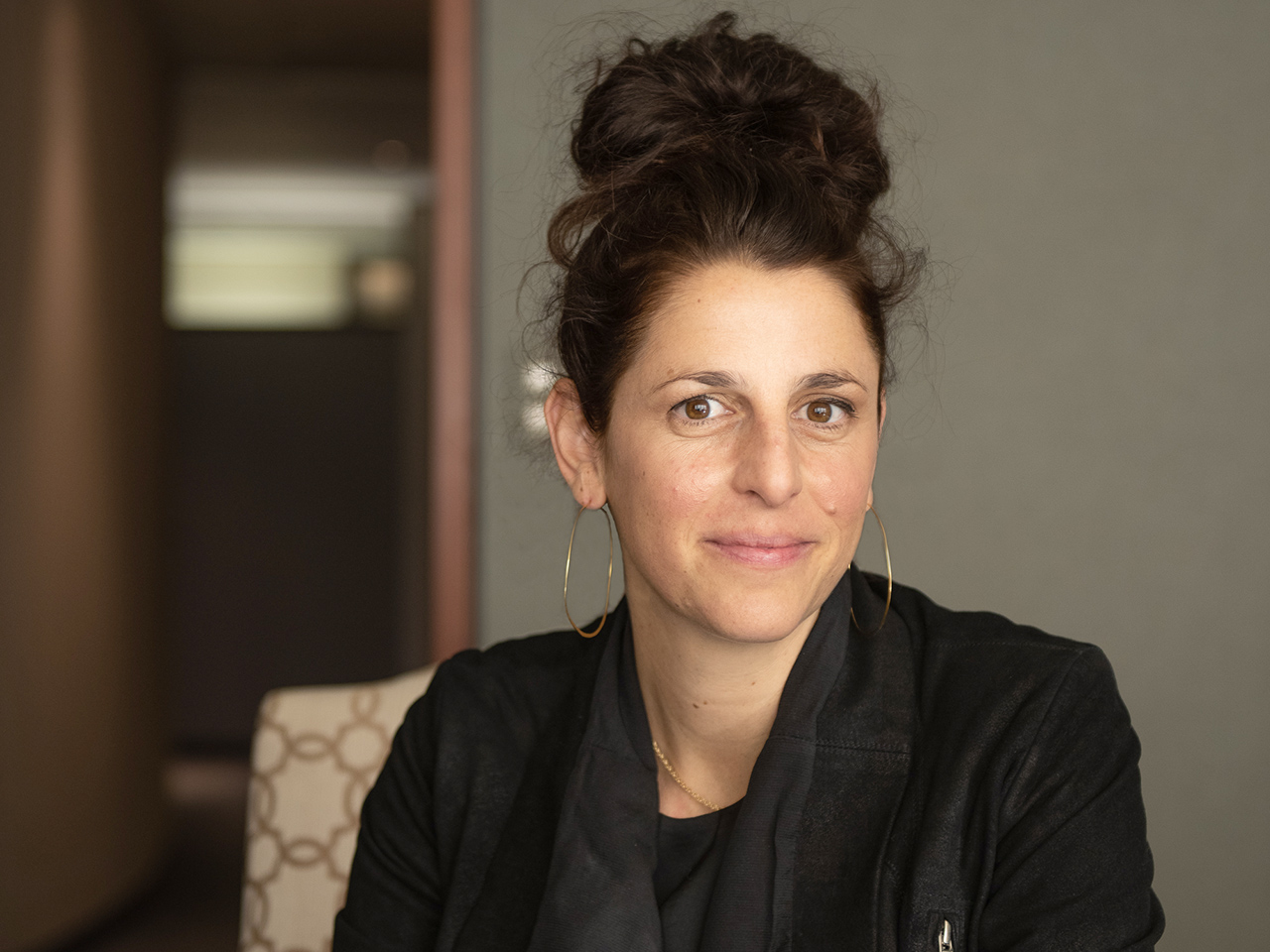
The opinions expressed in this Q&A are the personal views of Jane Rabinowicz and do not necessarily reflect those of the McConnell Foundation.
Future of Good reached out to Jane Rabinowicz to take part in a timely Q&A following a response to a LinkedIn post that stated those in the social impact sector should be able to comment publicly on the Israel-Hamas war.
What follows is an edited version of her responses.
Q: Why are you so passionate about the current crisis in Palestine and Israel and the impacts here in Canada?
A: I feel completely heartbroken, and somehow, each day, my heart breaks again. I have family in Israel. Multiple people in my close community lost loved ones on Oct. 7 and in the weeks since.
People very close to me have family members taken hostage by Hamas. A very dear friend works at the Jewish school in Montreal that has been shot at twice. I have friends with loved ones in Palestine and southern Lebanon.
In the past three months, I have witnessed and experienced more antisemitism than ever in my life. People close to me have shared stories of frightening Islamophobic incidents, and I have borne witness to dehumanizing comments about Palestinian people.
I feel a responsibility as a Jewish person to express love and care towards Palestinians and Israelis of all faiths, Muslims, Jews, and all other people impacted by violence and divisiveness. I feel deep pain for the victims of Oct. 7, their families and communities, and Jewish people whose intergenerational trauma has been activated in a way we’ve never experienced before.
I feel equal heartbreak for the innocent Palestinians who are being killed, injured, losing family members, losing their homes, and losing hope. I cannot separate one pain from the other, and I don’t see why I should. Every death, every lost future, is one too many.
Q: Some philanthropic leaders observe an unbearable silence in the sector. Would you agree? If so, why do you think the silence exists?
A: There have been clear messages from parts of our sector. Organizations with ties to Israel and/or Palestine who were active before the current crisis have amped up their activities.
Humanitarian and international cooperation organizations have been sharing information, fundraising for aid, advocating to Canadian and international governments, and circulating calls for a ceasefire and the release of hostages. Philanthropic networks have issued statements, and so have a smaller number of individual foundations.
This crisis is unique in its impacts here in Canada – the massive public response, the polarization and divisiveness, the increase in hate speech and hate crimes, and the loneliness and alienation so many of us are feeling. Views are so strong, and people are incredibly triggered (for good reason) – this doesn’t create optimal conditions for dialogue.
I know of organizations where there isn’t adequate internal consensus to agree on a public statement and organizations where tension is so high that staff can’t speak with each other about this at all.
I am also aware of multiple individuals who have been asked by their employers not to discuss this issue publicly.
Speaking up is certainly fraught. I’ve seen statements of solidarity with the victims of Oct. 7 that discount or do not recognize the suffering of Palestinians and that decry the rise in antisemitism without acknowledging anti-Palestinian racism and heightened Islamophobia.
I’ve seen statements of solidarity with the Palestinian people that trivialize the deep grief and fear felt by Israelis and Jews.
I’ve seen statements that aim for compassion for everyone impacted but fall into false equivalencies that aren’t helpful. Engaging in dialogue can feel like a zero-sum game or walking on a knife’s edge.
Q: Does this mean it’s better to say nothing?
A: Clearly, I don’t think so. Finding inspiration in the current context can be hard, but it is there.
There is incredible collaborative work happening between Israelis and Palestinians, including families who have lost loved ones coming together to try to prevent more innocent deaths.
Sadly, these examples don’t get the airtime they deserve. I believe this is a time for courage, for conversation across differences, and for each of us to do whatever we can within our sphere of influence to protect innocent lives and the safety and security of all communities.
RELATED: What to say when there are no words: 24 responses to renewed conflict in the Middle East
Q: Power dynamics in the philanthropic sector have become even more evident in this particular crisis. What do you make of the power and influence at play?
A: Having worked for 20 years with charities and non-profits before becoming a funder, I can attest that the power dynamic in philanthropy is very real and always present.
We can seek to operate with a spirit of mutual accountability, but we must acknowledge that power is always uneven.
When we fund an initiative, we agree with our partner about the scope of work we support – this also sets the boundaries of where we should exert our influence.
Beyond these parameters, we should only engage if we suspect fraud, illegal activity, management or governance failure, or other mission-critical issues.
As a sector that seeks to champion tolerance and diversity, we should speak up if an organization we support is voicing hate speech or discriminatory perspectives. But we need to be able to distinguish hate speech from opinions we disagree with.
As partners, we can talk to each other if we disagree, but wielding power responsibly means refraining from exerting undue influence if individuals within institutions we support express views that differ from our own.
If donors exert influence to the point that people who voice opposing views (not hate speech) lose their jobs, this is simply wrong.
Q: What’s at stake here for philanthropic leaders in your mind?
A: Over the past few years, our sector has faced heightened scrutiny, and I see this as a good thing. Our job, after all, is to act for the public good.
When an issue profoundly impacts the communities we support, we should respond.
I’ve asked foundations what they are doing in the face of this crisis, and it varies depending on their mission and footprint. Examples include shifting program funding to emergency aid, investigating resource flows, launching investment vehicles to support communities in rebuilding post-war, and creating dedicated support for journalists.
At McConnell, as we are nationally focused, we are looking at polarization, misinformation, and disinformation in Canada and how they impact our work.
Beyond this, funders can speak with each other about what this crisis means to our funding and partnerships, how the communities we support are doing, and how our staff members are doing – many are not doing well.
This crisis is likely deeply personal to at least one person we work with. We can de-risk dialogue on contentious issues and voice our firm support for international law, liberty of expression, and, above all, the sanctity of all human life.
Tell us this made you smarter | Contact us | Report error