Video: Youth-led lawsuit accuses Carney government of abandoning its 2030 climate target
The groups say Ottawa’s carbon price and methane rollbacks have made its legally mandated 2030 emissions target unreachable
Why It Matters
The lawsuit turns climate accountability into a courtroom fight, with charities and young plaintiffs testing whether legislated targets actually mean anything once a government decides to roll them back. For the social good sector, it's a signal: litigation is becoming as central to advocacy work as lobbying or public pressure ever was.
By Gaye Taylor, the Energy Mix
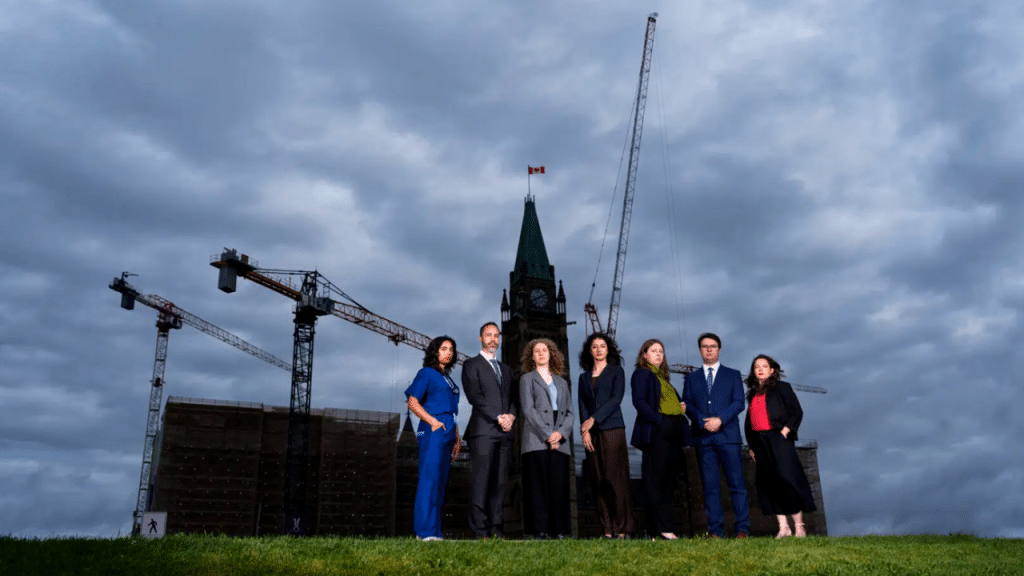
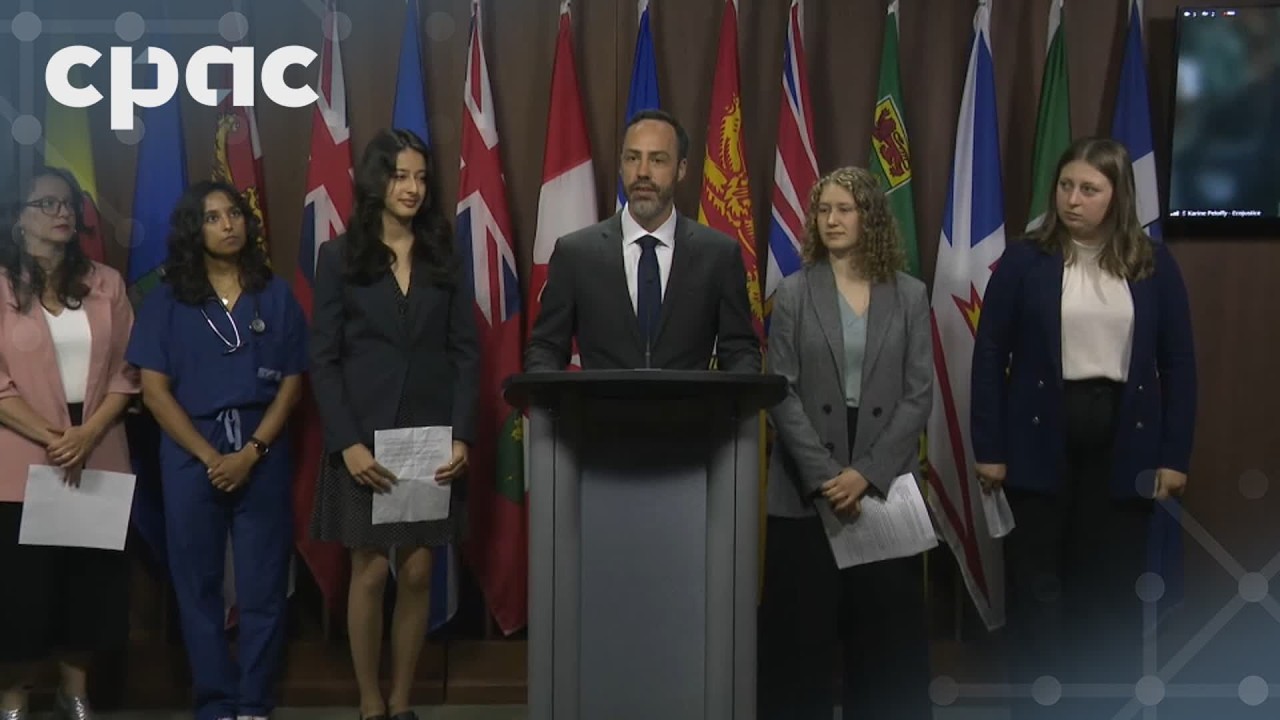
Three young Canadians, together with Environmental Defence Canada and the Canadian Association of Physicians for the Environment, are taking the federal government to court, alleging that its many reversals on key measures in its climate plan have left that plan an irresponsible and illegal shell of its former self.
“The Carney government’s gutting of climate policy is a massive insult,” said youth applicant Shirley Barnea, 22, in a media release from Ecojustice, a legal charity that is providing counsel on the case.
“After presenting himself as a climate leader, our prime minister is now abdicating responsibility—to Canadians, to future generations, to the law,” Barnea added.
“Our clients are seriously concerned that the government of Canada is putting its 2030 greenhouse gas emissions target of 40-45% below 2005 levels further out of reach, due to the repeal, reversal, or weakening of key measures described in Canada’s 2030 Emissions Reduction Plan,” wrote Ecojustice lawyer Reid Gomme in a May 15 demand letter to Environment, Climate Change and Nature Minister Julia Dabrusin.
Recent findings from the House of Commons Standing Committee on Environment and Sustainable Development validate those concerns, Gomme added, citing comments from an April report from the oversight body.
“Canada is not on track to meet its greenhouse gas reduction targets and has no plan to meet them,” said the committee, referencing the government’s own projection that, as of December 2025, emission reductions fell nearly 50% short of the legally mandated target of 40-45% by 2030.
Reflecting on Carney’s directive to his audience at Davos in January that all countries (including Canada) must now pursue a “pragmatic” course of “value-based realism,” Barnea told The Energy Mix she found the prime minister’s speech “powerful and inspiring.” His melding of values and realism “rang true for me,” she said.
From that starting point, she said she finds Carney’s track record on climate “all the more upsetting as he seems incapable, or unwilling, to follow his own advice.
“Has our prime minister already forgotten the 2023 wildfires, the worst in Canada’s history, which burned 4.5 million hectares in Quebec alone?” the Quebec-based youth asked. “Can he ignore that on average, Canada now experiences more than $3 billion in annual insured losses due to severe weather, a number that is only increasing?
She added that “doubling down on fossil fuels is equivalent to sticking our heads in the sand and waiting to get swept away in a tornado.”
Youth applicant Marie Maltais, 20, told The Mix she agrees with Carney’s “tacit claim” that passive idealism will get us nowhere. But idealism that inspires “consequential action” is a different story, she said.
Maltais is motivated by her own idealism, by her hopes and dreams about “the kind of society we want to live in.
“That’s why I am taking action, asking that the government make a real plan to reach its target.”
The Carney government is falling far short of its 2030 target—and thereby abdicating its responsibilities under the Canadian Net-Zero Emissions Accountability Act (CNZEAA)—because of its “comprehensive rollbacks of key measures” in its 2030 Emissions Reduction Plan, says the Ecojustice release.
These rollbacks include:
• In May, the government weakened its industrial carbon price via its Memorandum of Understanding (MOU) Implementation Agreement with Alberta. Under the agreement, the headline price of carbon—what companies pay the province to comply with emission limits—will reach $115 per tonne by 2030, rather than the previously pledged $170 by that date. Modelling by the Pembina Institute projects that the dropped price will lead to an additional 230 megatonnes (Mt) of emissions by 2040.
• The MOU “lowered expectations for the CCS (Carbon Capture and Storage) Pathways Project” from an initial, and already inadequate, 10-12 Mt by 2030 to 6 Mt by 2035. Ecojustice cited that change in a list of more than 30 regulatory rollbacks initiated by the Carney government since April 2025.
• Earlier retreats from the 2030 reductions plan included moves to cancel the oil and gas emissions cap and delay application of federal methane regulations in Alberta by five years, from 2030 to 2035.
The May 15 demand letter gave the federal government 30 days to start an amendment process that would “reflect the numerous rollbacks and changes to the 2030 ERP’s key measures” and bring the plan back into alignment with its CNZEAA-mandated 2030 Greenhouse Gas Emissions Target.
“The government would be free to choose the measures it intends to take to achieve the target, but the public would have a right to weigh in,” Ecojustice noted in its release.
The ministry’s failure to “respond in any form” to the letter within the mandated 30 days triggered the lawsuit, Ecojustice said in an email to The Mix.
“Our government is putting people at risk by dismantling key climate policies without a credible plan to reduce emissions,” said CAPE President Dr. Samantha Green.
“Climate change is not an abstract future threat: it is a public health emergency that is already harming patients and communities across Canada.”
“Young people are being handed the consequences of decisions we didn’t make,” said youth applicant Sophia Mathur, 19. “We are going to live with the impacts of unchecked climate change for the rest of our lives—so we’re standing up for our futures now.”
This story is part of The Energy Mix’s partnership with Small Change Fund. This story was republished with permission. Find the original story here.
Your job. Your mission. Your news.
With your support, the sector you're building gets the journalism it deserves, and you get a tax receipt.

Related Articles
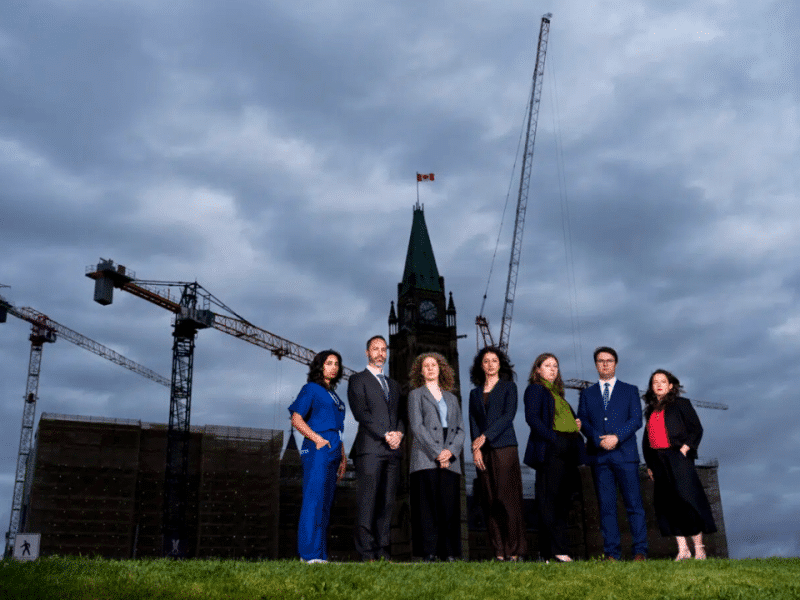
Federal court rejects Ottawa’s bid to quash youth-led climate case
Federal Court says youth climate advocates deserve a full hearing on whether Ottawa weakened Canada’s 2030 plan.
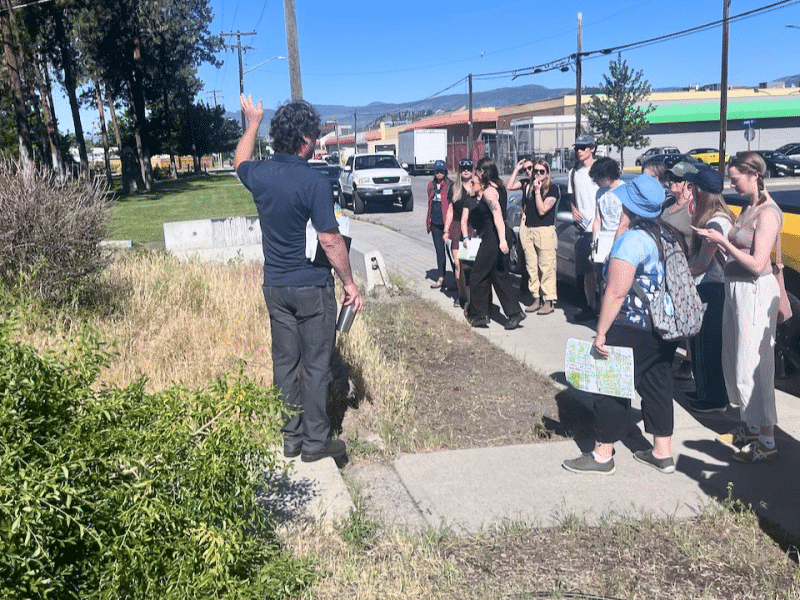
New UBC-Kelowna tool helps cities plant trees where they’re needed most
CanopyFit maps physical barriers alongside heat and equity data to maximize shade and cooling.
Canada’s Sustainable Finance Taxonomy: What it is, what is happening and what’s coming next
Canada’s sustainable finance taxonomy faces big challenges, from oil and gas, Indigenous rights and the real meaning of the word ‘transition.’
