Weaponization of anti-discrimination laws casts pall over start-ups, funders
The Fearless Foundation ends grant program for Black businesswomen after conservative lawsuit alleges racial discrimination.
Why It Matters
Anti-discrimination laws are being used to target those working to end historic inequities. Can better data, more education and cooperation turn the tide?
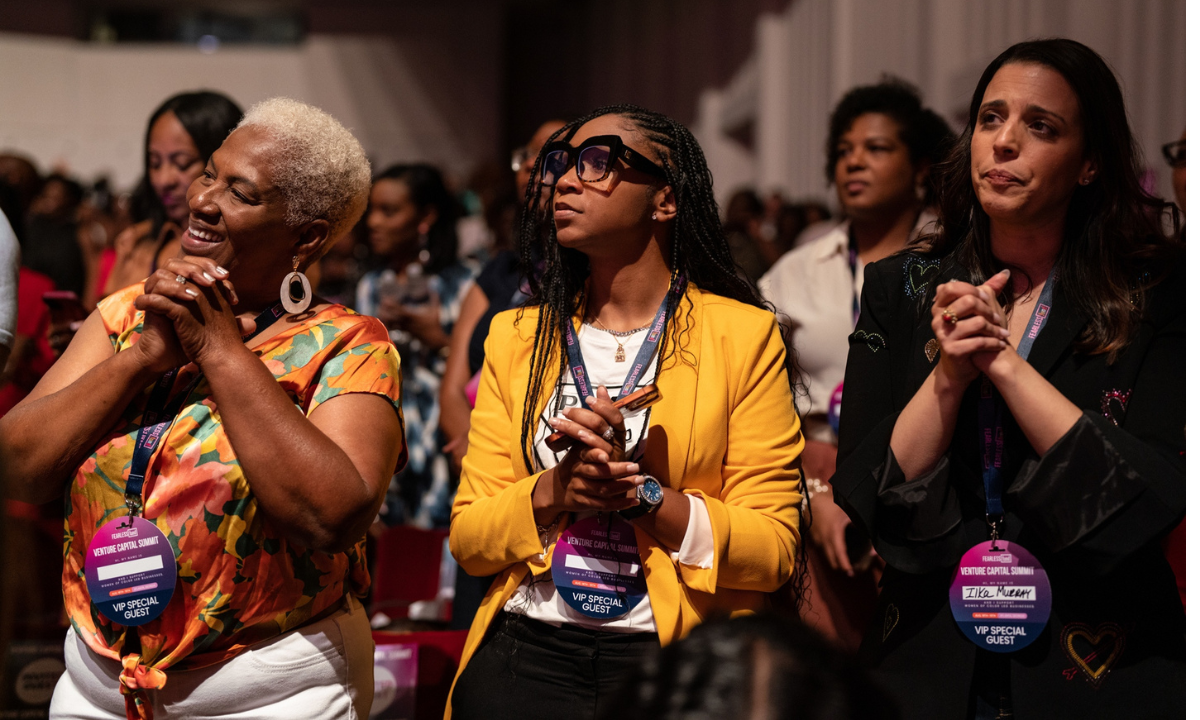
In 2023, conservative activists sued the Fearless Fund over its Strivers Grant, leading to the program’s termination last month to avoid further court proceedings and potential widespread precedent. (Fearless Fund/Facebook)
The permanent closure of a venture capital program for Black businesswomen is already reverberating across North America, say those working to address systemic racial inequalities in business funding.
“It’s taking money off the table,” said Craig Wellington, CEO of the Black Opportunity Fund.
“We have Black-led venture funds here in Canada that are looking to raise seed capital from the U.S., and this environment is now making it harder for them to raise that seed capital.”
In 2023, conservative activists sued the Atlanta-based Fearless Fund, claiming its Strivers Grant racially discriminated against non-Black business owners.
The fund agreed to end the program last month as part of a settlement that avoided further court proceedings and the possibility of setting a widely applicable precedent that would harm similar organizations in other states.
Wellington said this lawsuit is part of a broad backlash to initiatives launched after Minneapolis police murdered George Floyd in 2020.
In the years immediately following Floyd’s death, the number of non-profits and charities funding Black entrepreneurs proliferated. Venture capital investment in Black startups across North America hit an all-time high of $4.5 billion in 2021, he said.
One year later, investments in Black businesses had fallen by 73 per cent.
“We’re now on track for the lowest amount invested in black bus venture businesses in the last ten years,” Wellington said.
“So, the pushback, the blowback to the advances made post-George Floyd are actually taking us back further.”
Many companies and institutions are also ameliorating diversity and inclusion initiatives preemptively as the number of lawsuits using anti-discrimination laws to attack affirmative action grows, he added.
Both Google and Meta slashed diversity, equity, and inclusion, or DEI, programming last year—only three years after the technology giants promised to do more to support Black employees and communities.
Wellington said these trends also affect philanthropic organizations, further decreasing the amount of capital available to Black-led and Black-serving organizations.
“I think that there is a need for deeper reflection on the current moment,” said Narinder Dhami, executive lead and co-founder of New Power Labs.
“When we think about populism, when we think of polarization and the pushback on work that advances traditionally underfunded communities, we need to have a conversation about how it is all interconnected,” she said.
Both cautioned against viewing the use of anti-discrimination laws to fight equity initiatives as an American issue, noting the same racist ideas and anti-Black racism driving this trend south of the board also exist in Canada.
At least two similar lawsuits have been launched in Canada, including one by a Quebec professor who claimed a job posting seeking racialized candidates discriminated against him as a white man.
“We are absolutely seeing the weaponization of existing laws,” Dhami said.
“And so, I think part of moving forward does mean examining the legal structures, finding ways to enable that forward progression.”
Big disparity, little data
Canadian data on capital investment in businesses and organizations led by equity-deserving groups is poor, but existing data paints a picture of extreme inequity.
A 2020 report by the Network for the Advancement of Black Communities and Carleton’s Philanthropy and Nonprofit Leadership Program found that for every $100 donated to charity, only between seven to 30 cents supports Black organizations.
Then an Abacus Data survey conducted the following year found that only two per cent of venture capital funding in Canada went to Black-led businesses.
Long-standing housing inequities further limit access to capital for many Black entrepreneurs, noting home equity is the foundation of many start-ups, said Wellington.
“Black people in Canada have the lowest homeownership rate of any racial or ethnic group,” he said.
“And on top of that, we’ve seen is there are vast discrepancies in terms of the assessment value of homes owned by Blacks versus white and other racial groups.”
This increases Black founders’ reliance on outside investment, Wellington said, adding his organization will soon launch a $50 million fund aimed at increasing Black home ownership in Canada.
“Black populations are already starting out with less access to capital, which means if you have less access to capital, you also have less business and financial intelligence,” he said.
“And if you’re not inheriting money, you’re not inheriting, of course, the knowledge of how to deal with money and to grow money.”
The chill created by disingenuous discrimination lawsuits, like that targeting the Fearless Foundation and Hello Alice, has also impacted the ability of Black businesses to sell into the U.S. market, said Wellington.
For years, supplier diversity targets had been prioritized in the U.S., but that’s no longer the case.
Wellington said fear of civil litigation means many purchasers no longer track vendors by racial or ethnic categories or disaggregate minority procurement performance data.
More context, more education needed
Wellington said persistent myths about anti-Black and anti-Indigenous racism in Canada helped create an environment where people see affirmative action as a type of inequity.
For example, most Canadians would be surprised to learn that in 1921, the mayor of Oakville responded to a Ku Klux Klan cross burning by saying the organization was “very much in alignment with Canadian values,” he said.
“So we need to be telling these stories, sharing the data,” Wellington said.
With the possibility of a federal election in the coming months, there are also questions about how the election of a Conservative government might impact grants and financing for underserved or overlooked communities in Canada.
“My hope is that we can shift the conversation in a way that is more directly linked into the opportunity of progress, of economic prosperity, of social cohesiveness,” Dhami said.
“Changing how capital flows today is so important … because getting capital into the hands of productive Canadians is good for all of us.”
While Canada and the U.S. have many similarities, Wellington added that Canada’s political system is less polarized, which creates more stability.
“In the U.S., you’re literally seeing a swing in terms of values, depending on which party is in power,” he said.
“Whereas in Canada, we have a multi-party system. So you can’t get that level of extremism either way. The parties are forced to work together.”
Your job. Your mission. Your news.
With your support, the sector you're building gets the journalism it deserves, and you get a tax receipt.

Related Articles

Partnered Partnered content How construction contracts became the blueprint for social change in Manitoba
Manitoba is a leader in social procurement, with decades of partnerships among government, businesses and social enterprises that have shaped a model other communities can learn from.


‘The need is endless’: Food insecurity highest in Canada’s Black, Arab and Indigenous communities
Food insecurity gaps aren’t closing, so community organizations across Canada are trying new ways to help beyond just providing food.
