Feeding Change: North York Harvest Food Bank on the verge of becoming self-sufficient
The food bank based in northern Toronto is working to triple its capacity by next spring to create a long-term solution to food insecurity.
Why It Matters
The rising food insecurity crisis shows that communities need solutions beyond traditional food bank services.
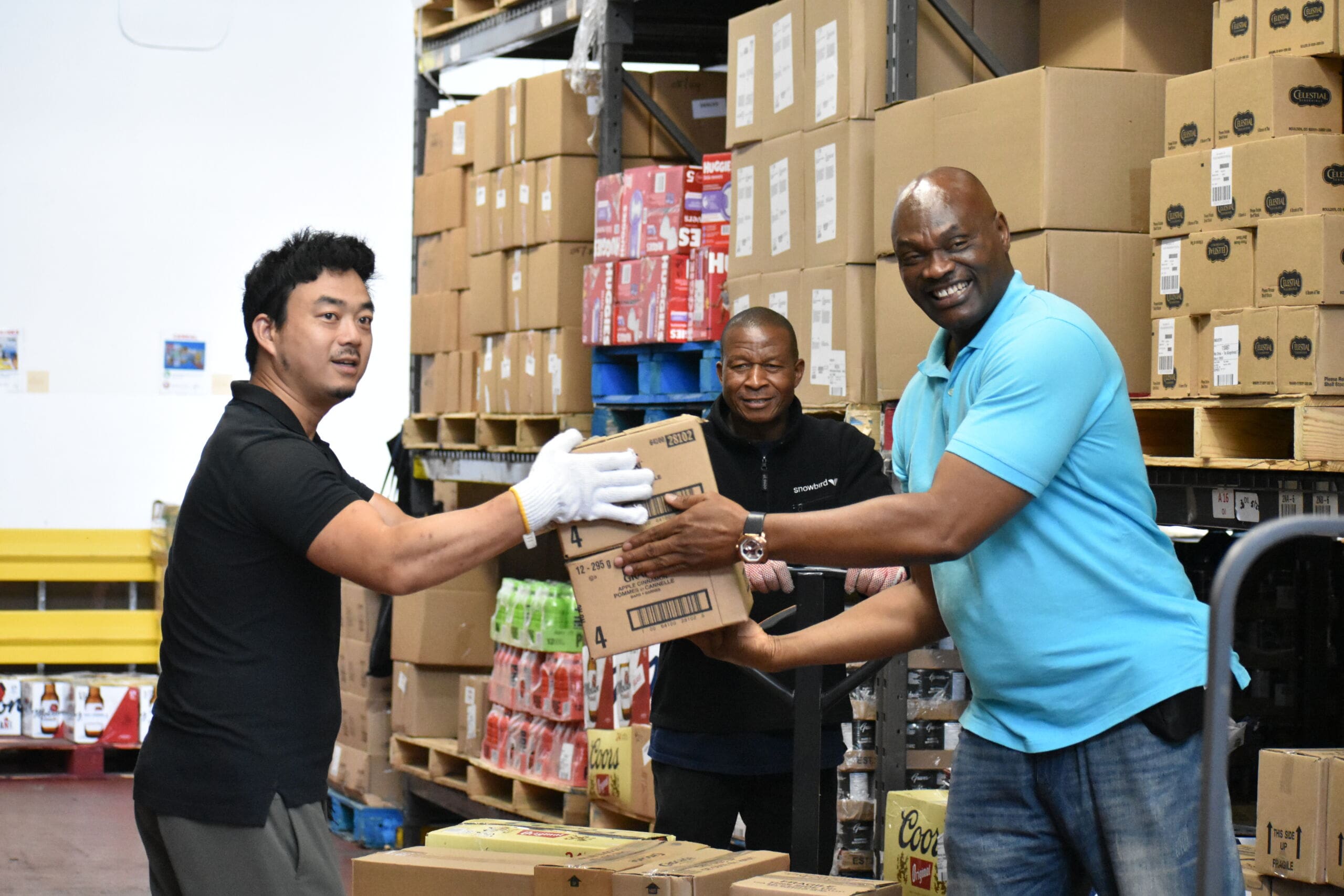
Volunteers work at North York Harvest Food Bank in Ontario. (Supplied photo.)
For the past several months, we’ve reported on the rapidly rising numbers of food bank users across Canada as inflation, a lack of rent-geared-to-income housing, and stagnant wages have reached a critical point for families nationwide. This is the first in a three-part series called Feeding Change, focusing on innovative ways food banks across Canada are meeting the demand – and what they’re doing to reduce it. Read part two tomorrow.
Ryan Noble has watched the number of people relying on North York Harvest Food Bank double over the past five years, reaching 30,000 clients per month.
Now, he’s working to ensure the organization he leads can not only keep up with the demand, but ultimately reduce food bank usage while becoming a self-sustainable food bank.
@futureofgood A food bank in Toronto is expanding #foodbank #affordability #NorthYork #Toronto #nonprofit ♬ original sound – Future of Good
The food bank plans to triple its capacity by launching a Community Food Hub next spring.
“We are trying to deal with the crisis at its root and we know that in order to do that, we can’t do that alone,” said Noble, the executive director of North York Harvest Food Bank.
The hub will be a central space to connect clients to food, while also connecting people to job opportunities through private partnerships and helping them advocate for policy changes.
“We know that unemployment and underemployment is a key driver of low incomes and ultimately a key driver of poverty and food insecurity. So if we can address that with partnerships with other companies that we’re working with in other ways, then that creates the long-term solution,” he said.
Food bank visits have increased 340 per cent since 2019 in Toronto, according to the 2025 Who’s Hungry Report by Daily Bread.
The demand goes beyond food, said Noble. It highlights a growing need for broader support services.
“How we provide emergency food is for us, almost as important because we want that to be a strategy that deals with the root causes of food insecurity,” said Noble.
“As we get emergency food out to people, we’re also creating conditions where people don’t need to come to food banks in the first place.”
Toronto declared food-insecurity emergency last year, with one in 10 residents relying on a food bank.
In response, North York Harvest Food Bank plans to triple its capacity by launching a Community Food Hub.
“We are trying to deal with the crisis at its root and we know that in order to do that, we can’t do that alone.”
Its community food hub will be a central space to connect clients to food, while also connecting people to job opportunities through private partnerships and helping them advocate for policy changes.
“We know that unemployment and underemployment is a key driver of low incomes and ultimately a key driver of poverty and food insecurity. So if we can address that with partnerships with other companies that we’re working with in other ways, then that creates the long-term solution,” he said.
The new space will be 30,000 square feet, but it still needs to be built and will contain ten times the amount of cold storage they currently have.
“We are not trying to build the world’s largest food bank,” said Noble.
“What we are trying to do is build infrastructure that allows organizations to come together and work together in partnership so that we can craft specific solutions in our community.”
Self-sustaining model
The food bank’s goal is to become fully self-sustaining; it currently operates without any government funding.
Last year, it generated about $500,000 through its social enterprise, FoodReach, which sells produce, dairy and bread at wholesale prices to Toronto’s non-profit sector.
North York Harvest Food Bank uses those funds for its workforce development programs, logistics training, and its distribution operations.
The goal is to have FoodReach’s revenue cover all administrative and operating costs, allowing the organization to focus directly on community needs, he said.
As North York Harvest moves forward with its plans for the new Community Food Hub, it says community support will be crucial.
“We’re fortunate to have support from the community, but we also really, really depend on it,” said Noble.
“We’re asking once again for the support from that community, first to deal with the ongoing crisis but then also to help us plan for this hub so that we can approach this crisis in a different way in the future.”
Your job. Your mission. Your news.
With your support, the sector you're building gets the journalism it deserves, and you get a tax receipt.

Author

Related Articles

Fires and floods: How Canada’s non-profits are responding to summer disasters
Several organizations have set up ways Canadians can help as more than 900 wildfires burn across the country

New “endings” hotline to help the social sector with closures, insolvency and succession
Ever / Was is run by a collective of navigators seeking to destigmatize closures and endings in the Canadian social purpose sector.

Should B.C.’s condo buyout be an opportunity to grow housing through non-profits?
The federal and B.C. governments plan to buy thousands of unsold condos to expand homeownership, but some housing advocates say the units would have a greater long-term impact if they were transferred to non-profit providers.
