
Canada is cracking down on the Freedom Convoy’s finances. Here’s why that may hurt social justice movements, too.
The Emergencies Act, invoked by Prime Minister Justin Trudeau on Feb. 14, would require crowdfunding platforms to report suspicious transactions to Canada’s anti-terror financing watchdog.
Why It Matters
Indigenous land defenders and other social justice movements have been labeled "extremist" in the past for their work. Subjecting their fundraising methods to additional anti-terror restrictions could make it harder for them to raise funds publicly.
Gabe Oatley’s journalism on this special report is made possible by the Future of Good editorial fellowship on transforming funding models, supported by United Way Centraide Canada and Community Foundations of Canada.
After two-and-a-half weeks of a disruptive, loud, occasionally violent occupation of downtown Ottawa by protesters virulently opposed to COVID-19 public health restrictions, Prime Minister Justin Trudeau’s government put its foot down.
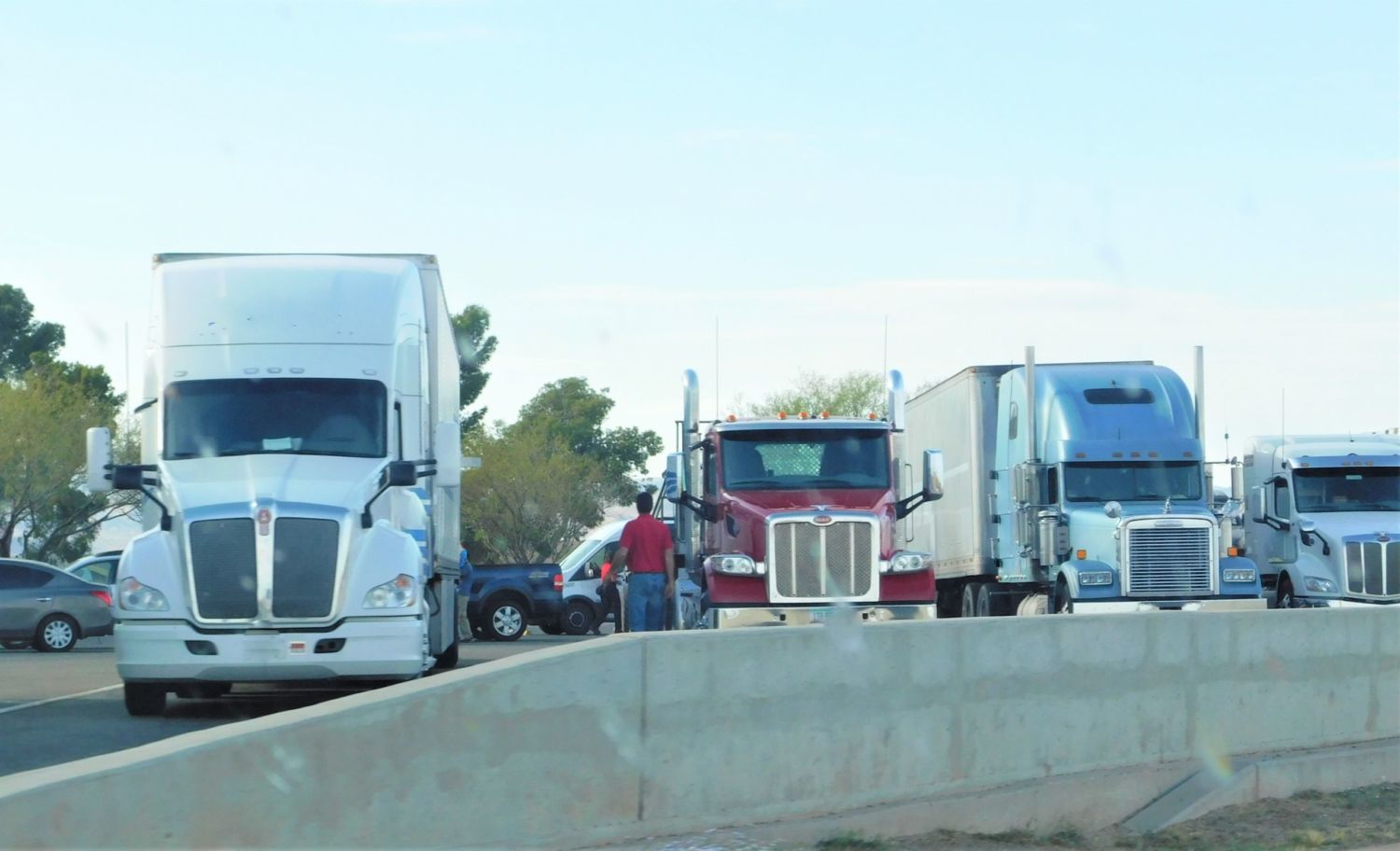
The Freedom Convoy started as an occupation of Canada’s capital city, bankrolled in large part by massive crowdfunding campaigns on platforms like GoFundMe. Since then, it has devolved into a series of rotating blockades of major Canada-U.S. border crossings, rowdy weekend protests in cities like Edmonton and Toronto, and cover for violent opposition to the Canadian government. Thirteen participants from Alberta were arrested on Feb. 14 with 13 rifles and shotguns, two handguns, ammunition, and a machete. Hours after they were taken into custody, Trudeau’s government invoked the 1988 Emergencies Act for the first time in Canadian history. It will last up to 30 days, with the possibility of renewal by the government. (Ottawa Police have also begun to crack down, issuing formal warnings to protesters, setting up nearly 100 checkpoints downtown, and arresting two key Convoy organizers.)
Under the Emergencies Act, Deputy Prime Minister Chrystia Freeland explained, crowdfunding platforms and cryptocurrencies are required to register with the Financial Transactions and Reports Analysis Centre of Canada (FINTRAC) – the federal government’s anti-terrorism and anti-money laundering unit – and report all “large and suspicious” transactions to it. (In the past, only banks and payment processors like Stripe or PayPal had to do that.) Banks are now required to determine whether they are holding the accounts of someone who participates in a blockade. If so, they’ll be required to report it to the RCMP or CSIS.
“We are making these changes because we know that these platforms are being used to support illegal blockades and illegal activity, which is damaging the Canadian economy,” Freeland told reporters at an afternoon news conference on Feb. 14. “The government will also bring forward legislation to provide these authorities to FINTRAC on a permanent basis.”
Some charity law and national security experts welcomed these changes. They’ve done real damage to the Freedom Convoy’s finances over the first 48 hours of the Act taking effect. Yet Canada’s proposal to monitor crowdfunding platforms through an anti-terror and anti-money laundering agency could have consequences for social movements who rely on the platforms and have historically been subject to disproportionate state violence – Indigenous land defence movements, anti-pipeline and anti-logging protests, and Black Lives Matter rallies.
Crowdfunding platforms have a tremendous amount of power. GoFundMe alone has raised $15 billion since 2010. Some of that money is used to pay for a social movement’s food, supplies, or transportation costs. Cracking down on protests that turn into violent occupations is one thing – but Canada’s government has a history of treating social justice movements as a danger to law and order. Brett Caraway, an associate professor at the University of Toronto whose expertise includes social movements, says a regulatory crackdown on certain movements who operate on crowdfunding platforms may lead to a chilling effect.
“If GoFundMe becomes the target of regulation, the concern I would have is, what are they willing to do to appease the regulators?” he told Future of Good. “What kind of changes and what kind of groups would they discourage or prohibit?”
No one knows where the political winds will blow on any given day – and organizers of environmental and Indigenous rights movements know all too well how laws aimed at cracking down on extremism can be used against their causes, too.
Why are crowdfunding platforms under so much scrutiny?
When Canada announced its latest rules on vaccine requirements for Canadian and foreign truckers crossing the border, a group of organizers decided to send a convoy to Ottawa in protest – and turned to GoFundMe to bankroll it. On Jan. 14, the day before these rules took effect, a fundraiser attributed to Tamara Lich and B.J. Dichter launched to pay for fuel, food, and other expenses to help protesters occupy Canada’s capital city, repeal all public health restrictions, and overthrow the government. Over the next few weeks, rallies and blockades sprang up at Canada-U.S. border crossings in Alberta, B.C., Manitoba, and Ontario.
Organizers and participants in the Freedom Convoy have repeatedly insisted their movement is peaceful. Within days of setting out from British Columbia, however, researchers sounded the alarm over the Rally’s extremist rhetoric. The Canadian Anti-Hate Network, an organization that monitors hate groups nationwide, noted the presence of convoy organizers with white nationalist and Islamophobic views. The convoy did not purchase a permit before it arrived in downtown Ottawa on Jan. 28, nor have all of its members been peaceful. Shepherds of Good Hope, an Ottawa homeless shelter, alleges convoy protesters harassed staff and assaulted a client on Jan. 29 while trying to get food.
GoFundMe’s terms of service prohibit the use of crowdfunding for illegal activities. Yet it took GoFundMe nearly a week to cut off the Freedom Convoy’s fundraiser. By then, it was at $10 million – and organizers quickly moved to other fundraising platforms such as GiveSendGo (a Christian organization based in Boston), crypto exchanges, and private transfers of funds. The lethargic response from GoFundMe, a platform for community fundraising, to an illegal occupation of Ottawa may seem odd. Paloma Raggo, assistant professor of philanthropy and non-profit leadership at Carleton University, says GoFundMe is not a charity. “GoFundMe is a business,” she says. “Their business is to pull people’s money and channel it to people that ask for money. If that’s the case, why aren’t they subject to laws on the books about funding violent activities?”
Then there’s the question of where all of the Freedom Rally’s money is coming from. Idling hundreds of trucks, tractor-trailers, SUVs, farm vehicles, and cars for weeks at a time is not cheap – not to mention paying for food, accommodation, and lost income. The movement claims to be bankrolled by patriotic Canadians who are sick and tired of COVID-19 related health restrictions, but a recent leak of data from GiveSendGo published by The Guardian suggests Americans are significant donors. Around $3.62 million U.S. was given to the Freedom Rally’s GiveSendGo fundraiser by Americans, compared to $4.31 million U.S. from Canadians.
Overseas donors contribute to Canadian fundraisers all the time for perfectly good reasons, such as repairing and rebuilding after British Columbia’s momentous floods in the fall of 2021. Raising $10 million for a cause is a completely different matter, Raggo says – especially when a fundraiser’s organizers can use it in ways that skirt funding regulations that bind charities, lobbyists, or third-party election donors. “When you cannot control who is giving, you’re opening the door to foreign influence on your local democratic process,” Raggo explains. “That becomes a matter of national interest.”
Officials are now tightening the rules on fundraising thanks to a combination of the Freedom Rally’s connections to white nationalism and white supremacy, criminal behaviour by convoy participants – especially the blockading of roads – and large numbers of foreign donors. The Emergencies Act is the most significant development yet, but it’s far from the only legal response. The City of Ottawa is considering a lawsuit against the Freedom Rally to compensate for physical damage, while NDP MP Alastair MacGregor called for GoFundMe representatives to appear before the Standing Committee on Public Safety and National Security to discuss its security measures to ensure funds aren’t used to promote hatred. The Ontario government successfully sought a court order to prevent anyone associated with the Freedom Convoy or Adopt-A-Trucker campaigns on GiveSendGo from distributing money.
South of the border, the opposite is happening – U.S. governors in Florida, Texas, Missouri, and West Virginia vowed to investigate GoFundMe for fraud after its initial promise to donate all funds from the Freedom Rally fundraiser to charities chosen by convoy organizers, rather than simply issuing refunds. GoFundMe ended up doing the latter, but it hasn’t stopped conservative politicians in the U.S. from seeing GoFundMe’s cancellation of the Freedom Convoy’s fundraisers as wrong-headed.
Raggo believes Canadian law needs to catch up to “the reality that you can just press a button, link your PayPal to anything, and transfer funds” across provinces, borders, and continents. But there are many legitimate social movements that raise money internationally all the time – and their organizers are at risk if tougher crowdfunding laws emerge in the aftermath of the Freedom Rally.
What could new restrictions mean for social movements?
Three grassroots leaders who spoke with Future of Good said crowdfunding platforms are a critical tool in supporting organizers to raise a large volume of funds quickly. Brianna Olson Pitawanakwat and her partner Nanook Fareal have used GoFundMe to raise more than $125,000 across several different fundraisers, including to provide PPE and care packages for Indigenous communities, for an Indigenous arts studio, and for personal support needs.
“If you’re looking to raise $1,000 for a person who needs to safely leave a dangerous situation, maybe that’s just a matter of asking around for people to send private e-transfers,” said Kate Klein, an organizer with the Mining Injustice Solidarity Network. “But I think if you’re looking to raise a large amount of money for a project, especially a land defense project, I don’t really see how that would happen right now without a proper platform, like GoFundMe or something similar.”
Crowdfunding platforms are useful for groups with limited administrative capacity, said Maya Menezes, a climate and migrant justice organizer, because they provide a single site where updates can be posted, a seamless way to process payments, and a means for automating follow-up emails. “That immediate follow-up email to folks who have just donated is such a valuable engagement tool. It eliminates a huge amount of manual work,” she said.
International fundraising is hardly new either. Jacob Remes, a clinical associate professor at New York University who studies urban disasters, points to fundraising efforts after the catastrophic Halifax explosion of 1917. In the immediate aftermath – nearly 1,800 dead, 9,000 injured, and much of Halifax destroyed – many donees were actually American. The first relief train to arrive in Halifax from outside the Maritimes actually came from Boston. “There was a tremendous amount of money – the equivalent of $700,000, which paled in comparison to what the Canadian government ended up giving,” Remes says.
More modern examples abound. Donations to Black Lives Matter and Indigenous land defender movements in Canada come from all over the world. So, too, do donations related to environmental work. After years of advocacy against Alberta’s highly polluting fossil fuel industry, Premier Jason Kenney launched a multi-million inquiry in July 2019 to investigate what he described as a “foreign funded defamation campaign”.
Klein says she’s worried that hasty regulation of foreign donations through crowdfunding platforms could negatively impact social movements’ capacity to raise funds to focus on the root causes of the problems. “The Canadian mining industry is global,” she says. “And so, I’m a little suspicious of attempts on the part of the Canadian state to, in any way, control what people around the world are able to donate to address things that are caused, in many ways by the actions of the Canadian state.”
Canada is home to many of the largest mining companies in the world. As a mining justice organizer, Klein works with groups in mining-affected communities around the world, such as Panama, Honduras, and Guatemala, to take action to try and curb damage caused by Canadian mining companies.
“And so if there is a rule put in place saying ‘but donations can only come from Canada’, then that really, really limits the scope of who’s able to support and how we’re able to see our struggles connected,” she said. “If you’re going to set up an entire economy to be reliant on extraction that happens because of transnational corporations, you need to allow the response to that — and the fixing of that — to be transnational as well.”
An ‘extremist’ is in the eye of the beholder
Both Klein and Menezes are also concerned that social movements might be negatively affected by new government efforts to combat “extremism.” Historically, Klein said, the definitions of extremism and terrorism have been “very loose” and are based on the ideological perspectives of the groups doing the defining. In her book Red Scare, for instance, author Joanne Barker shows how the rhetoric of “terrorism” has been used against Indigenous organizers to curb their efforts to protect the land and water.
“I would want us to be cautious not to only picture right-wing people when we think about who is considered an extremist,” said Klein. “I think we always want to be very careful because we don’t know when that’s going to be turned against people like land defenders who are resisting a pipeline.”
Menezes too said that she is concerned that a government-led definition of extremism could really end up harming grassroots organizers. “I’m worried that everybody’s so angry that [the Convoy] got to this point that we might make a really big decision that could have really dangerous implications on community groups,” she said.
With the Feb. 14 declaration of the Emergencies Act, Canada’s newfound regulatory zeal for crowdfunding is already moving at lightning speed. The Act now requires all crowdfunding platforms to register with FINTRAC – an agency explicitly set up to combat extremist financing and money laundering – and report suspicious transactions related to the Freedom Rally. While GoFundMe hasn’t commented, one crowdfunding executive doesn’t believe Canada’s new rules will stop a Freedom Convoy-style situation from happening again. In fact, he says, rules for shutting down violent or hateful protests are already on the books.
What are the crowdfunding platforms saying in response?
To Darryl Hatton, CEO of ConnectionPoint – a collection of crowdfunding services that includes FundRazr, CoCoPay, Campaign HQ, and Sponsifi – lots of people seem to think crowdfunding is a financial Wild West. He disagrees. Banks, credit card companies, and payment processors for crowdfunding campaigns are already registered through FINTRAC. If a donee provides money (even cryptocurrency) to a crowdfunding campaign that isn’t legal, he says, law enforcement can trace it.
Unlike a bank account, crowdfunding platforms like FundRazr do not hold onto funds themselves. They act as intermediaries between donees and recipients, Hatton explains. It is the payment processor – Stripe or PayPal or MasterCard – who are best able to verify how money is used on a particular fundraiser. “There’s a web of trust in the industry between payment processors, crowdfunding platforms, and the banks to say, ‘who are the recipients of funds?” Hatton says.
That isn’t to say crowdfunding platforms don’t do anything about illegal actions. If a company receives a subpoena to remove a fundraiser or hand over user information, Hatton says, it does – the justice system is best-suited to handle questions of legality. As Hatton puts it: “Is the telephone company responsible for harassing phone calls?”
Rachel Hollis, a spokesperson for GoFundMe, declined Future of Good’s request for an interview on Feb. 1, but offered to answer questions by email. Future of Good asked whether GoFundMe’s attitudes towards hosting fundraisers for groups who practice civil disobedience might change as a result of Ottawa’s proposed lawsuit, whether GoFundMe had faced similar legal threats in the past, and GoFundMe’s response to critics of its decision to host the Freedom Rally fundraiser. Hollis said she would respond to Future of Good’s questions once they had an update. As of Feb 14, GoFundMe had not provided one.
GiveSendGo, on the other hand, issued a fiery response to Ontario’s court order freezing fund distribution from its Freedom Rally-related fundraisers. “Canada has absolutely ZERO jurisdiction over how we manage our funders here at GiveSendGo,” the platform said on Twitter. “All funds for EVERY campaign on GiveSendGo flow directly to the recipients of those campaigns.” However, the new requirement for crowdfunding platforms to register with FINTRAC may spell trouble for GiveSendGo. As Jessica Davis, a security analyst and former FINTRAC employee, also noted on Twitter: “If they don’t comply, they don’t get to operate here. Given that they don’t care about Canadian law, [I] suspect they’ll cease operating here rather than comply.”
Hatton, for his part, says he’s perfectly fine with the idea of regulating crowdfunding platforms, but he doesn’t think they’d stop the Freedom Convoy from happening. He asks: What is Canada trying to stop by cracking down on the Freedom Rally’s fundraiser? “Are we trying to stop a convoy? A protest from a group that is uncomfortable with a situation and wants to protest it?” Hatton says. “They have a right to protest. What they don’t have a right to do is burn down the place where they’re protesting. We need to be able to support freedom of expression and the right to protest, but we have rules in society on what’s tolerable within that environment.”
Where does the situation go from here?
The Emergencies Act will be in effect until mid-March at the most. After 30 days, it could be renewed, but the Canadian government seems reluctant to do so. There will also be a future inquiry into how the Emergencies Act was used.
On March 3, a representative from GoFundMe will appear before the Standing Committee on Public Safety and National Security. What exactly will happen remains to be seen. Other witnesses might be called (Hatton said the government hasn’t reached out to him), a commission might look into the circumstances behind the Freedom Rally and, undoubtedly, Canada’s crowdfunding scene will change.
But some movement groups aren’t waiting for government recommendations. Though Fareal recently received a free shipment of GoFundMe swag from the company for being a top fundraiser, Olson Pitawanakwat said that she and her partner are considering not using GoFundMe anymore, switching to more “ethical” fundraising platforms or using other methods like e-transfer. The pair were disappointed to see GoFundMe’s hosting of the ‘Freedom Convoy’ fundraiser and fundraiser in support of Gerald Stanley, the man who killed Colton Boushie in 2018.
“GoFundMe is making money off our causes. So if they’re supporting causes that don’t coincide with our values, then we’ll just stop using them and we’ll stop giving them the 7 percent that they take from us,” said Olson Pitawanakwat, referring to the administrative fee levied by the platform.
Other movement groups are taking a similar tack. In June 2021, Menezes co-organized a mutual aid fund to support undocumented people using Chuffed, raising over $8,000. Though GoFundMe is well known, Menezes said her team opted against it “because they allow right-wing extremists to fundraise on their platform.”
Meanwhile, the line between what constitutes an acceptable cause or a rules violation on major crowdfunding platforms isn’t always clear. Caraway says there is sometimes understandable confusion between left and right-wing movements over what platforms condone. Take New York City’s BLM chapter. Caraway says its GoFundMe page used to say it embraced civil disobedience. That is, technically, breaking the law — a violation of the platform’s terms of service. Caraway isn’t comparing Black Lives Matter to the Freedom Rally, but rather saying crowdfunding platforms need to be clearer about their conditions.
What is clear is that crowdfunding platforms like GoFundMe hold an immense amount of power, Caraway says, similar to social media giants like Meta or TikTok. “We’ve seen what it means to have an organization like that at the centre of journalism, social networking, crypto, currency, gaming, and entertainment — and how problematic that is,” he says. “I certainly think the same sort of criticism directed at a crowdfunding platform would be a welcome event.”
Related Articles
Protecting rural housing: Saltbox Fund founder on the power of lending circles
KJ Conyers-Steede is piloting a peer-to-peer community financing model that can be scaled and replicated across rural Canada.
How philanthropy can uplift affordable housing
A new affinity group hosted by Philanthropic Foundations of Canada (PFC) will bring together foundations with deep expertise in funding housing, as well as those that might be new to the space.

$65K raised for BC Children’s Hospital in support of Heated Rivalry star’s comments
A birthday fundraiser for actor Hudson Williams brought in $65,000 for BC Children’s Hospital.