‘We’re in a values crisis’: An in-depth conversation with Carol Anne Hilton, author of Indigenomics
Hilton’s book releases today, and argues for “igniting a $100 billion Indigenous economy”
Why It Matters
COVID-19 is a health and social crisis, but it’s also an economic crisis. With record high unemployment and poverty rates, and all of this unfolding along gender, race, and other socioeconomic lines, many agree it’s time for a new, far more inclusive — and decolonized economic system. Could Indigenomics be it?
For many across social impact and economic spaces, the pandemic has delivered a very clear message: Our mainstream economic system does not work. Or, more boldly, our economic system works, but was designed and continues to function on the basis of exclusion and oppression.
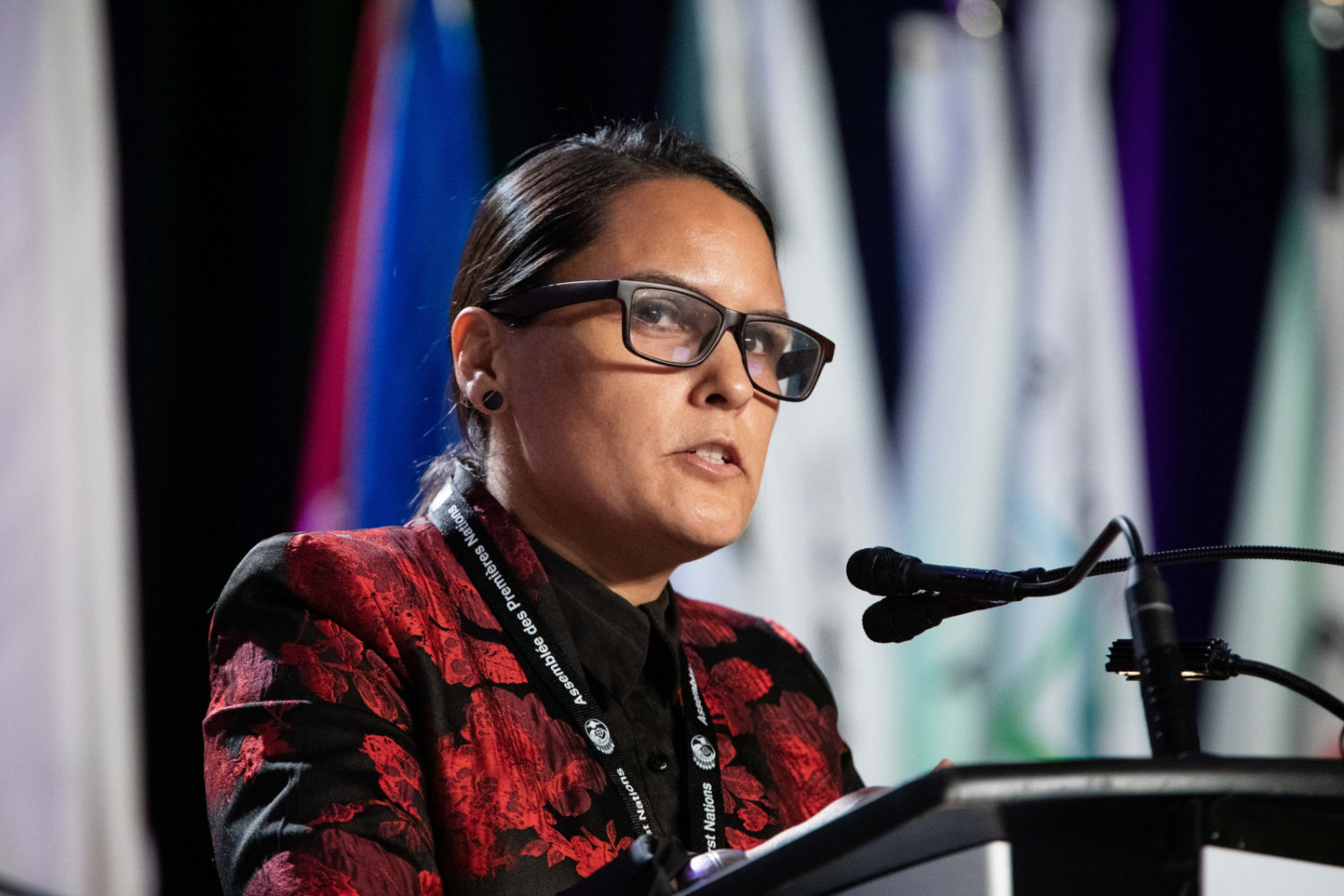
That’s certainly the view held by Carol Anne Hilton, and has been since long before the pandemic.
Hilton is the author of a new book called Indigenomics. Released today, Indigenomics makes the case for “igniting the $100 billion Indigenous economy” by increasing “the visibility, role, and responsibility of the emerging modern Indigenous economy and the people involved.”
Future of Good’s publisher Vinod Rajasekaran sat down with Hilton to learn more about how Indigenomics can reshape a radically inclusive and decolonized economy for the post-pandemic world.
This interview has been edited for length and clarity.
Vinod Rajasekaran: How has writing your book changed you as a person?
Carol Anne Hilton: It’s pushed me to be clear in what I’m saying. I did not want to centre the book as an academic contribution. I didn’t want to externalize verification from an academic perspective. So a lot of times, I had to go back and ask, what am I saying in this? Where is my voice in this? And that’s very much a reflection of my personal life, too — asking how I was living, where are my personal beliefs, where do I show up, where is doubt in my life. Those are parallel processes, and here we are.
Vinod: Why didn’t you want to centre it around academic perspectives?
Carol Anne: I think because Indigenomics was a new word, a new line of thought, I wanted to create this space for what it needed to be more than what others put on it as limitations, or limitations in terms of methodology. I also wanted to be able to amplify Indigenous voices and experiences within Indigenous economics and business.
Vinod: Let’s talk about the context in which the book comes out. The past year has upended much of what we know, not to mention the multiple crises we were facing before the pandemic. What do you make of the way the mainstream economic model has responded?
Carol Anne: I have the belief that it’s not an economic crisis. It’s a humanity-based crisis steeped in values. We’re in a values crisis. From whose worldview is the world being rebuilt? When you can understand and view that our built environment around us is primarily built from one worldview, when we look at our financial systems driven by one world view, our economic models are oftentimes built from one world view. And the over-reach of that worldview is the crisis we’re facing. Coming from a values perspective, the upcoming movement of this concept of new, regenerative economy that works for everybody, the grounding concepts are values based — whether it’s circular economy, social economy, green economy, gift economy, they speak to the fundamentals of human relationships. We assume that the current system is how the economy is, this is what it is, this is how we experience it, but the truths we believe around that are becoming undone, and the blinders are coming undone.
Vinod: What’s the core message? What are you calling for in your book?
Carol Anne: I spend a considerable amount of time upfront creating the distinction of an Indigenous worldview, and how that is different from a mainstream worldview and why that is important. What I wanted to demonstrate is that Indigenous peoples before contact had functioning economies. The devaluing of the knowledge systems and the process of establishing invisibility of Indigenous peoples are essential to what you refer to as those global crises. Indigenous people have never fallen behind. We are not backwards. We’re not underdeveloped. Indigenous prosperity is tied to wellbeing, it’s tied to community, and it’s tied to our relationships.
Vinod: It sounds like our economic metrics are all wrong. What we’re counting, what we’re paying attention to, is wrong. Am I getting that right?
Carol Anne: Absolutely — whether it’s GDP, whether it’s the concept of development progress.
Vinod: In one part of the book, you talk about the re-storying of Canada. What does this mean to you?
Carol Anne: There is a common perception of Indigenous peoples as being a burden on the fiscal system of this country. I draw the strings back to the language in the origin of building the development of this country based on the idea of the Indian problem — we need to deal with the Indians, we need to put them on reserves, we need to control them, we need to increase their invisibility. To re-story means that we acknowledge the systems and structures of economic exclusion. We come to that truth that we are not underdeveloped, we are not falling behind. We need the economic space to be able to facilitate who we are within our own regional territories and economies.
Vinod: The federal government has been talking about a feminist economic recovery. What is the role of Indigenomics in that kind of recovery?
Carol Anne: I recently was on an Indigenous women’s panel that talked about bringing the perspectives of Indigenous women entrepreneurs forward. There’s resilience across sectors — hospitality, tourism, arts — with high representation of Indigenous women. There’s also a ‘shop Indigenous women’s markets’ page on Facebook that, within three months, saw 42,000 participants. I’ve had a number of friends who are entrepreneurs say that there’s been a higher experience of buying local. I think there are organic movements of inclusion that are happening.
To see a full recording of Vinod’s conversation with Carol Anne, including more on the tension between Indigenous research and white academic spaces, the need to recognize our history of Indigenous economic exclusion, and what kind of action should come next, become a Future of Good member today.
Your job. Your mission. Your news.
With your support, the sector you're building gets the journalism it deserves, and you get a tax receipt.

Related Articles
‘The need is endless’: Food insecurity highest in Canada’s Black, Arab and Indigenous communities
Food insecurity gaps aren’t closing, so community organizations across Canada are trying new ways to help beyond just providing food.
Controversial Palestine exhibit opens at Canadian Museum for Human Rights
The exhibit, called Palestine Uprooted: Nakba Past and Present, drew criticism even before it opened at the national museum in Winnipeg.
Vancouver tests new app to map accessibility in parks and trails
The pilot program allows app users to identify barriers in city parks to help make outdoor spaces more accessible and inclusive for everyone.
