The chaos south of the border is distracting us from another emergency.
Four years ago, in November 2016, I was giving a talk on Canadian social innovations at San Francisco’s Social Impact Week when Donald Trump won the U.S. election. I saw people of all ages and backgrounds crying, at parks, on the sidewalks, and at the airport. I also remember that Canada’s immigration website crashed due to higher than normal levels of traffic. We often hear that choosing a new head of government or retaining one will be one of the most important decisions of our lives, and this is true in part — but can placing so much weight on the actions of one (albeit very powerful) person obscure the power the rest of global society has for change?
Last week, the U.S. became the first and only country to officially exit the Paris Agreement on Climate Change, the landmark 2015 commitment by almost every country to curb greenhouse gas emissions and keep global warming in check. The Agreement on Climate Change, signed by 195 countries became effective on 4th of November 2016 — and people knew that one of the first things that President Trump would do was pull the US out of the agreement. A promise made, a promise kept.
Well, except that on the same day that the US officially withdrew from the global agreement, now president-elect Joe Biden committed that he would rejoin the Paris Agreement. This is welcome news.
Unlike the U.S., however, Canada has maintained a commitment to the agreement since 2015. But how well do you think we’ve fared on climate goals since the Paris Agreement was signed? Put another way, how do you think Canada is progressing on one of the most important emergencies of this generation?
Not well. But you likely already knew that. According to Climate Transparency, Canada’s per-capita emissions, that is, the greenhouse gases it releases divided by the number of people who live here, are the second-highest in the G20, behind only Australia. Not something to be proud of.
But experts say Canada still has a shot. And the ball’s in our court. Will we choose to mobilize fast enough?
I just finished reading a new book by Seth Klein called ‘A Good War: Mobilizing Canada for the Climate Emergency.’ The book is a bit too much of progressives alone praising progressive viewpoints for my taste, but it is a terrific read, and what I took away from it is that humans have an extraordinary capacity to mobilize one another for a cause that matters. In the last seven months alone, look at how you and I, and people in our neighbourhoods and on our streets mobilized: we started becoming more responsible for one another’s welfare with the pandemic. Our choices, practices, and lifestyles changed. We understood that fighting the pandemic wasn’t just the responsibility of governments but it was all of ours, together. We began to understand that citizens taking responsibility was the only way to keep cases down, to flatten the curve, to minimize the damage. “My mask is to protect you, and your mask is to protect me” became the mantra of mobilization.
Ultimately, Klein’s book does a decent job of arguing that we need ‘war-time’ like mobilization (or pandemic-time type; but the book was written just prior to it) for climate transition. And he looks back at similar tensions we faced before Canada joined the Second World War, from ‘how do we pay for this’ to regional differences, and remaking the economy post-conflict. However, as Klein notes, “There is a clear difference between the climate crises, on the one hand, and the coronavirus pandemic on the other. Climate mobilization demands that we get out and build what is required for the transition, while the pandemic obliges us to stay home. Whereas climate action can be a boost to the economy and job creation, the COVID crisis represents a massive hit to both.”
So, what does all this have to do with the social impact world?
As Future of Good’s editor Kylie Adair said once, “Climate change is your problem. It’s everyone’s problem.”
The Government of Canada formally declared climate change an emergency in June of 2019. 505 city and town councils across Canada have made climate emergency declarations — from Mahone Bay, Nova Scotia, population 1,036 to Toronto, Canada’s largest city. These Canadian communities join 1,799 jurisdictions around the world that cover over 820 million citizens.
Climate emergency declarations don’t just concern environmental NGOs. These declarations concern all of us, regardless of what our mission is. Like COVID-19, climate change is having negative social and economic effects — from violence against women and alcoholism to mental illness and job loss.
Climate change is an emergency and it’s about time the social impact sector declared it. And again, I don’t mean just environmental NGOs — they are expressing this openly. I mean the rest of us.
Climate Week takes place in September every year, and this time around, I was expecting a shared climate emergency declaration but it didn’t happen. We have made shared declarations in the past. Just this past July, a number of social impact organizations issued a joint statement to root out racism, colonization, and exclusion in our sector. Back in April, over 70 Canadian foundations declared that they would give at least 5 percent of their assets this year to support charities. A climate emergency declaration is also possible.
A number of industry sectors now have plans to transition how they work and lower their carbon footprint. Canada’s building sector has one. The freight sector has one. The forestry sector has one. Where’s ours?
Future of Good’s latest special report on climate leadership in the social sector (part two publishes this week) dives into how organizations outside the environmental NGO world are creatively integrating a climate conscious and plan in their programs, services, and operations. And this will be a key plenary discussion at the 2020 Future of Good summit, taking place online November 25-26 (don’t miss out), where social impact leaders dive into adaptations and actions we can collectively take in the next 12 months.
As social impact organizations like yours reimagine, reshape, and retool your teams, operations, services, programs, and business models for a post-pandemic era, now is the time to openly recognize the impact of climate change and embed climate action. It can be opportune for your mission, and to make a critical contribution toward the Paris Agreement this decade. Practically, this means re-tuning all that you do for a lower or even net-zero carbon footprint; it means considering climate implications of how you conduct research, how you host fundraisers, how you do direct mail campaigns, how often you travel, and how much waste you generate at events.
All of these are being reimagined anyway, so let’s reimagine them for a better climate future.
Vinod Rajasekaran
Publisher & CEO
Your job. Your mission. Your news.
With your support, the sector you're building gets the journalism it deserves, and you get a tax receipt.

Related Articles
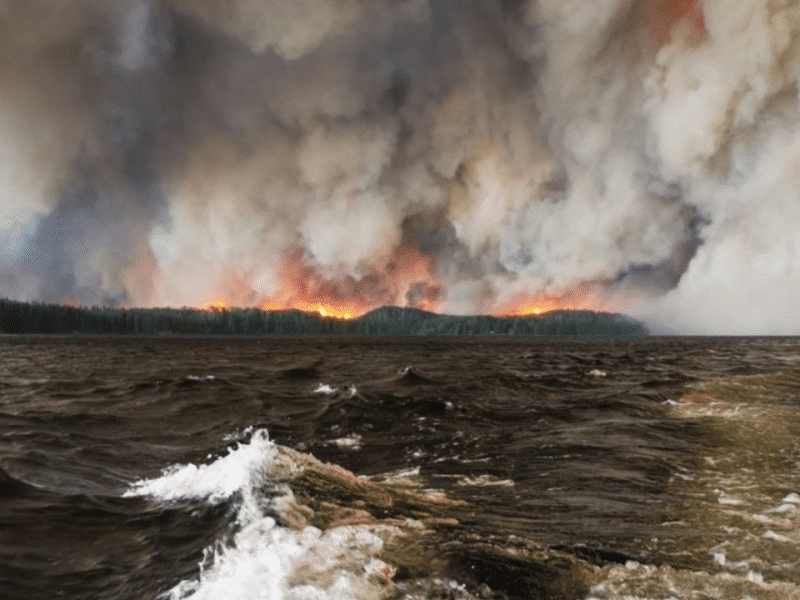
Indigenous people bear brunt of climate change disasters: StatCan
New data from Statistics Canada shows that, despite only representing five per cent of the population, just under half of wildfire evacuations in 2023 were from communities where more than half the population was Indigenous.
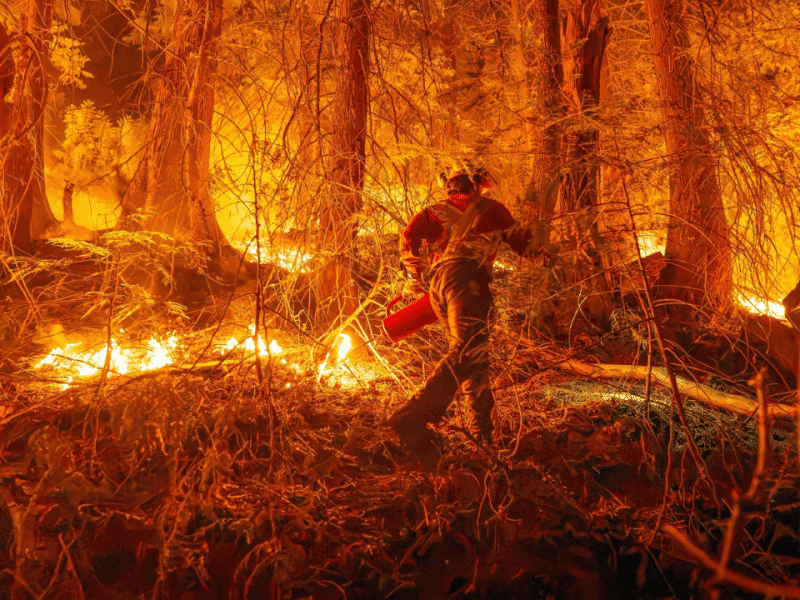
Fires and floods: How Canada’s non-profits are responding to summer disasters
Several organizations have set up ways Canadians can help as more than 900 wildfires burn across the country
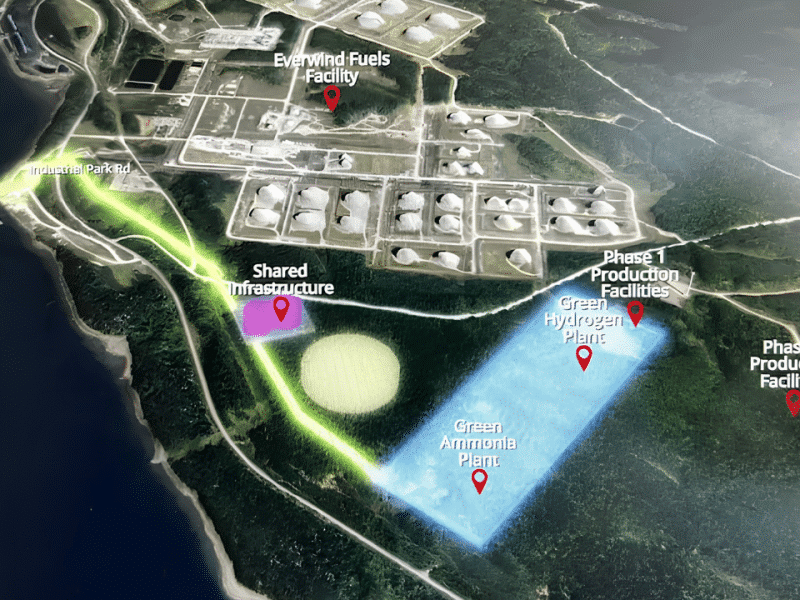
Nova Scotia approves Indigenous-owned, largest-ever wind farm to power hydrogen production
The massive 1.2‑GW wind farm locks in Indigenous-led ownership and will power Canada’s biggest proposed green hydrogen export hub.
