Complaint process weaponized against Black civil servants in Canada, study finds
Participants experienced threats against themselves and their livelihoods while at work.
Why It Matters
Successive reports have documented pervasive and systemic anti-Black racism in Canada’s civil service. The creation of a Black equity commissioner could be part of the solution.
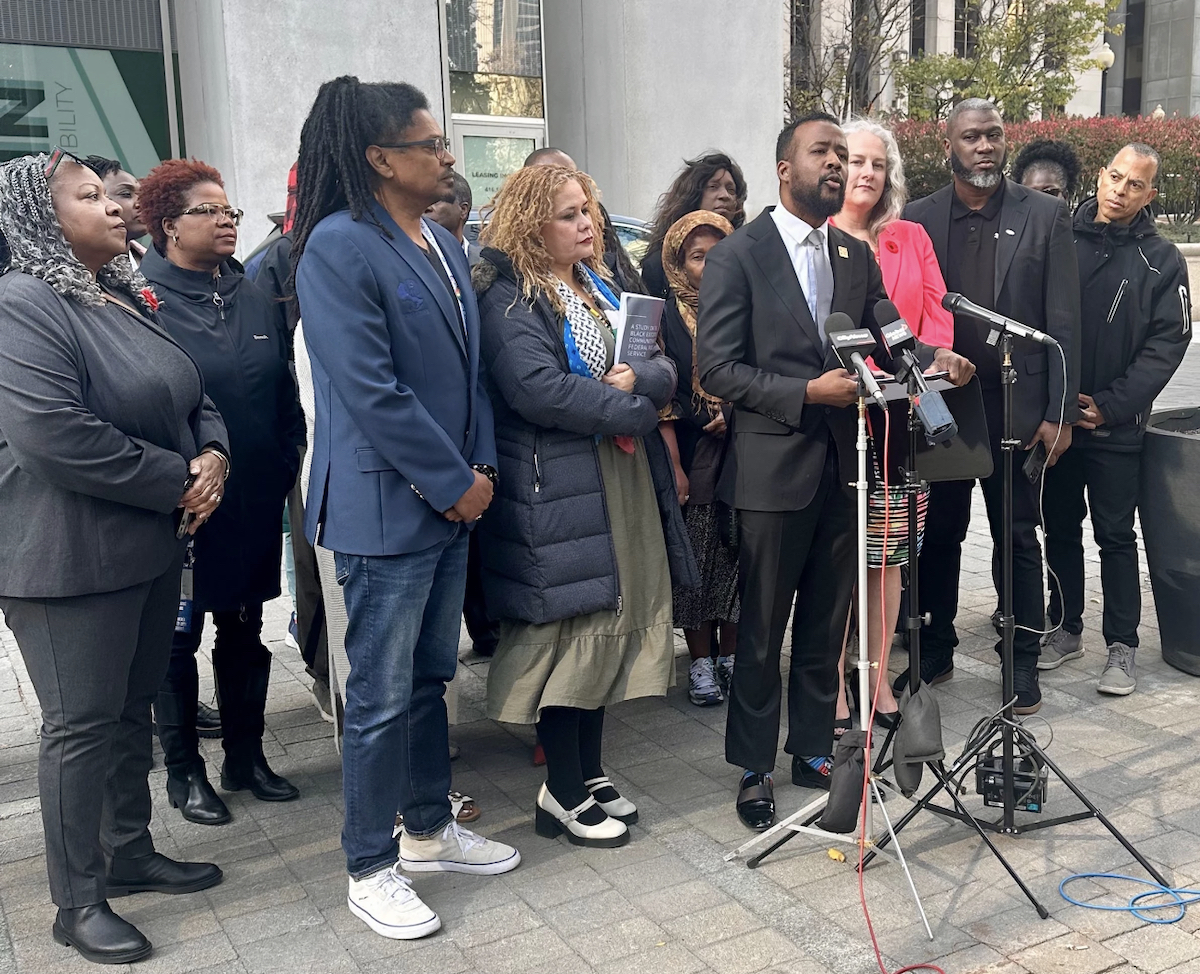
The Black Class Action Secretariat holds a press conference at the Federal Court of Canada on Nov. 8, 2024. (Massa Media/Supplied photo)
The Black Class Action Secretariat has called on the Government of Canada to implement 15 recommendations in the wake of a new report, which identifies “an alarming pattern of systemic anti-Black discrimination within Canada’s federal public service.”
The Black Executives Network commissioned the two-year-long, peer-reviewed study—an employee group within the federal government housed at Innovation, Science and Economic Development Canada—and authored by Dr. Rachel Zellars.
It found Black leaders face a deeply hostile work environment marked by threats, abuse, cruelty, subjugation, insubordination, intimidation, baseless complaints, and relentless harassment and documents disturbing instances of psychological trauma rooted in a toxic workplace.
Black women endured especially severe and sustained harassment, and many reported dealing with intense, chronic depression as a direct result of their working conditions.
Seventy-eight per cent of Black women surveyed by Zellars reported dealing with harassment and intimidation. One Black woman executive had police called after taking a government-issued laptop with her to another division.
“Formal and informal complaints are regularly being used, maliciously and vexatiously, to harm Black leaders,” Zellars wrote following the report’s release.
“Black leaders were subjected to 18 to 24-month invasive investigations. After being removed from their leadership positions. And after experiencing extreme health impacts – lasting depression, high blood pressure, diabetes, heart and breathing problems, suicidality – all caused by a humiliating, exhausting, isolating, and unjust complaint process,” she said.
Employees who made unfounded complaints against Black civil servants were not punished.
Zellars also documented instances of racist language and threats of violence. Both women and men reported being called the N-word while at work.
“These accounts are disturbing but not surprising because they echo what we have been hearing from Black public service workers for years,” said Nicholas Marcus Thompson, CEO of the Black Class Action Secretariat.
“Even when Black workers make it into executive positions, they are met with unbearably hostile working environments, insubordination from direct reports, and career stagnation.”
Alisha Kang, National President of the Union of National Employees, said the study represents the “tip of the iceberg.”
“This study is just the latest in a long list of federal reports commissioned by the government, confirming systemic discrimination in the public service,” she said. “We heard it in the Senate Report on discrimination in the Canadian Human Rights Commission, and we heard it in the internal audit on discrimination in the Privy Council Office.”
Black public sector employees have launched a $2.5 billion lawsuit seeking damages for decades of discrimination and lost wages and pensions. Lawyers for the plaintiffs have argued that the report should be introduced as evidence.
“We need to have the government come to the table and give us more than performative words,” said Jennifer Carr, president of the Professional Institute for the Public Service of Canada.
“The grievance system has failed our Black members; it’s not a place where people can find justice.”
Report includes recommendations and solutions
The report’s recommendations include addressing and redressing antiblack discrimination, addressing the failures of Bill C-65, regular employment systems reviews and audits focused on Black employees, and establishing a Black equity commissioner.
Better training, with demonstrable learning across all levels, is also key to an improved working environment for Black employees, according to the report.
Inclusive leadership, cultural competency, anti-racism and anti-bias training must be mandated for leadership teams and managers, Zellars writes, adding interactive learning with measurable impact is needed.
The report also calls on leaders to prioritize professional development and provide Black executives opportunities to enhance their skills and grow their capabilities.
“Make these services widely known to all Black executives and employees in an organization; advertise individualized assessment, counselling, and coaching services through the Public Service Commission,” writes Zellars.
“Where absent, establish mentorship and sponsorship programs to support the career development and advancement of aspiring Black executives.”
Last month, shortly before the study’s release, the federal government launched a new stream of its Executive Leadership Development Program, offering targeted learning and development opportunities for Black federal public service executives.
Treasury Board president Anita Anand said the move demonstrates “the concrete steps” the federal government is taking to address anti-Black racism.
Your job. Your mission. Your news.
With your support, the sector you're building gets the journalism it deserves, and you get a tax receipt.

Related Articles

‘The need is endless’: Food insecurity highest in Canada’s Black, Arab and Indigenous communities
Food insecurity gaps aren’t closing, so community organizations across Canada are trying new ways to help beyond just providing food.

Controversial Palestine exhibit opens at Canadian Museum for Human Rights
The exhibit, called Palestine Uprooted: Nakba Past and Present, drew criticism even before it opened at the national museum in Winnipeg.

Vancouver tests new app to map accessibility in parks and trails
The pilot program allows app users to identify barriers in city parks to help make outdoor spaces more accessible and inclusive for everyone.
