Could AI increase volunteerism?
Work on the soft skills and leave the hard skills to new technologies, expert says
Why It Matters
Some researchers predict artificial intelligence could reduce people's workload by as much as 45 per cent in the coming years. Channelling some of that newfound time into volunteerism could reverse current declines in volunteer numbers.
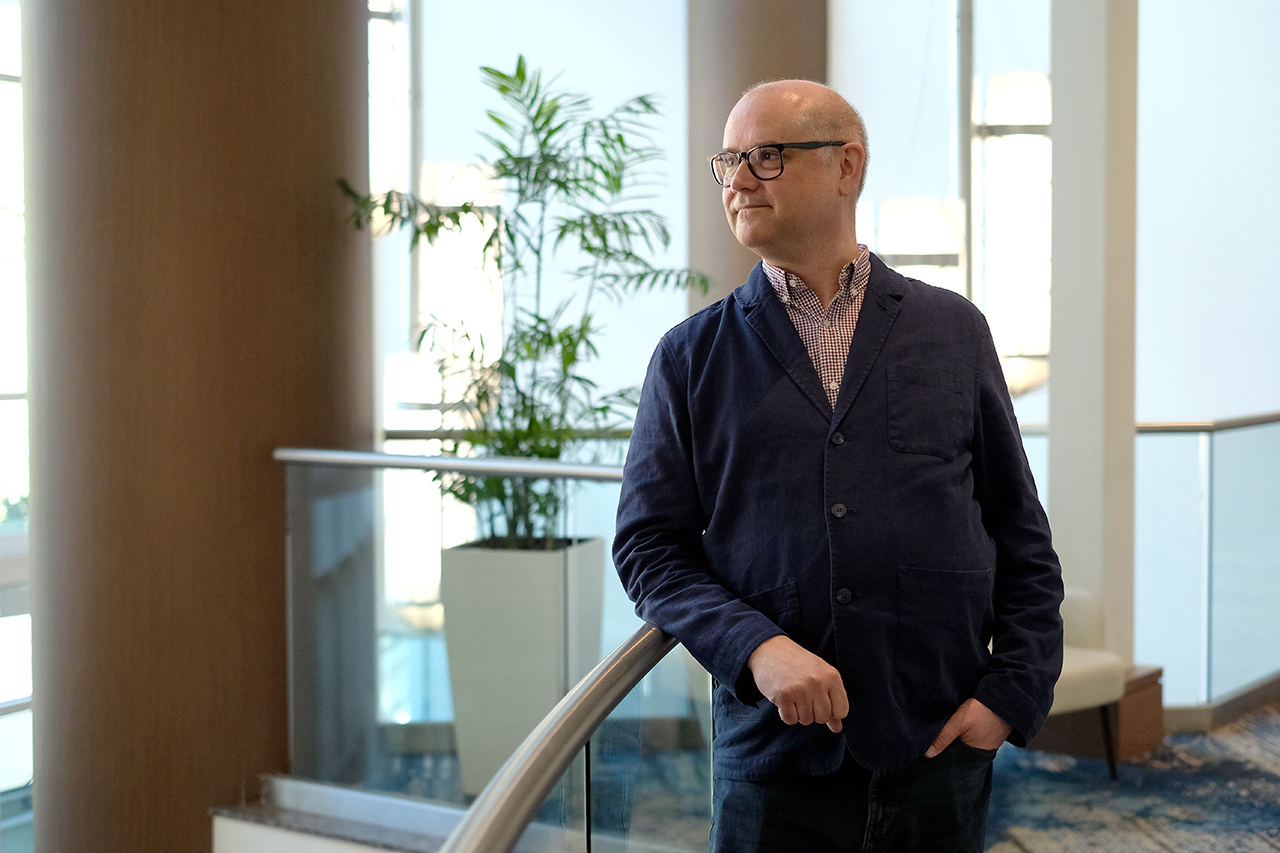
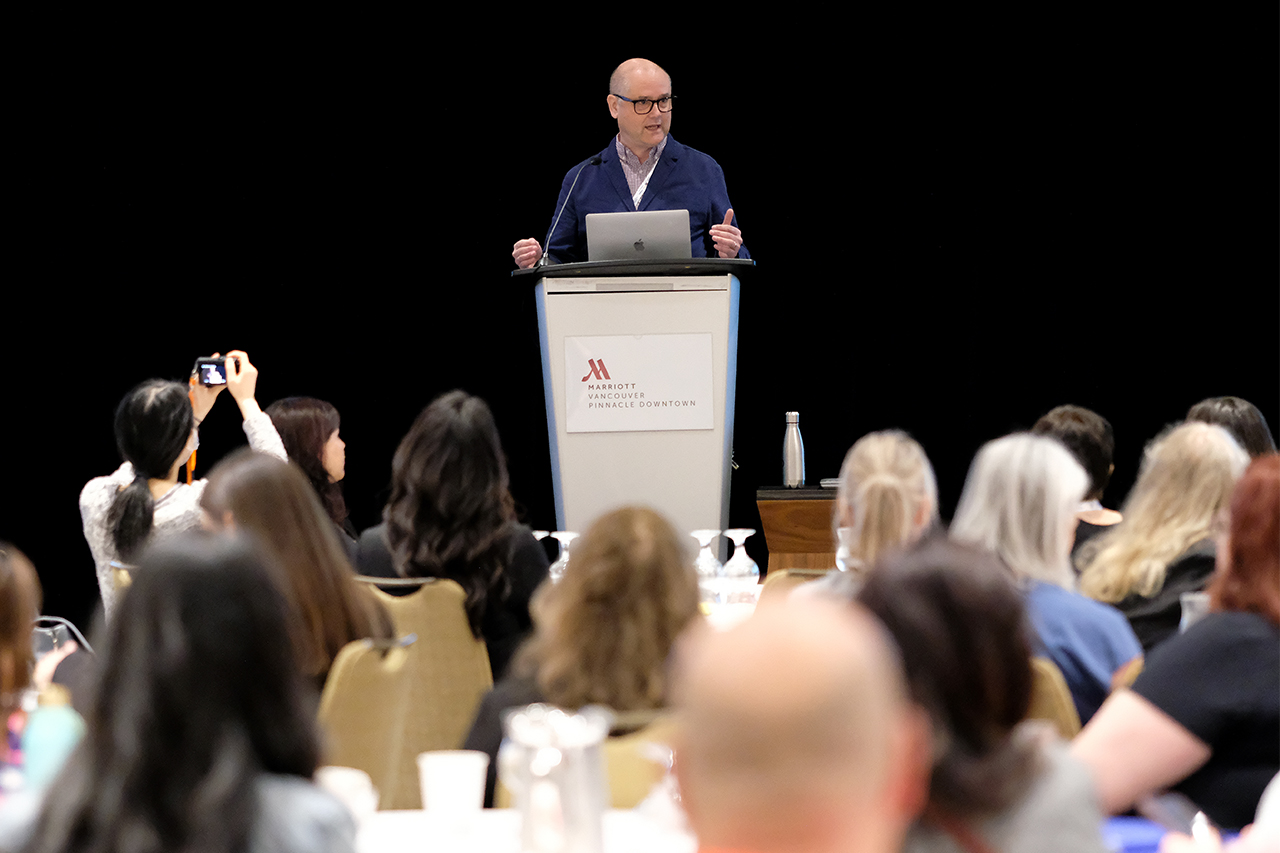
Rob Jackson at the Volunteer Management Professionals of Canada conference in Vancouver on May 10, 2024. (Shannon VanRaes/Future of Good.)
Artificial intelligence can increase human connections — including between volunteer managers and their volunteers — if used strategically.
“Hard business skills, the data analysis and all of that kind of stuff is what AI is going to do,” Rob Jackson, a UK-based consultant, told participants at a recent conference hosted by the Volunteer Management Professionals of Canada in Vancouver.
“It’s the soft skills, it’s the interpersonal skills, it’s the emotional intelligence that’s going to be increasingly important,” he said.
In the coming years, AI could give workers back as much as 45 per cent of their time and make the four-day workweek inevitable rather than aspirational, said Jackson.
For non-profit organizations relying on volunteers, this is an opportunity for staff to spend more time recruiting and training volunteers at a time when more people have time to dedicate to volunteerism.
“It can free us up from the mundane,” Jackson said.
However, the first step is for non-profits to adopt and integrate AI into their organizations.
“You know that slide deck that you produced in PowerPoint that took you three days to write for National Volunteer Week?” he asked conference attendees.
“Using Microsoft Copilot, that’ll take about five minutes, and then it will take you another 55 minutes just to check … and then you are done.”
He suggests starting small and experimenting with open AI applications like ChatGPT to build confidence and learn how generative AI functions.
“Don’t put personal data into it, don’t put your volunteers’ contact details into it, but just have a play around,” said Jackson.
“Be silly with it. You know, ask it to write poetry. Ask it to write a rap.”
Some using, some not
Alfred Han, Volunteer Burnaby’s community engagement coordinator, said he’s already using AI in his day-to-day work.
“There are times where you have to put out materials on social media or in a newsletter … and why not ask AI to rephrase it a little bit or rework the material? It can save time,” he said.
Using AI for day-to-day tasks hadn’t initially occurred to Brenna Kimball, a community engagement coordinator with FuseSocial in Fort McMurray.
“I’ve never actually considered what AI could do for us in the volunteer world,” she said.
“I’ve mostly heard that AI is going to be bad and dangerous, so hearing the flip side of how it can actually work for us really resonated with me.”
Kimball would like to see AI free up more time to improve volunteer management platforms and have more in-person meetings with volunteers.
Kamillah El-Giadaa at Volunteer Manitoba wasn’t surprised to hear that AI might free up as much as 45 per cent of a person’s workday in the near future.
The training and development manager said she’s already seeing workload reductions thanks to generative AI.
“We’re using it to supplement our work,” El-Giadaa said. “I wouldn’t say 45 per cent of my workload is gone, but I feel like it helps enhance the work that we’re doing.”
“It can’t replace the work we do, but we use it to write social media posts or put together resources.”
However, she emphasized that human oversight is always present.
“We would never just copy and paste something from something created by AI,” she said.
“We ensure that there’s still human connection because human connection is at the core of what we do.”
AI could be a tool for job creation, not loss
While some businesses and institutions have predicted generative AI could eliminate as many as 300 million jobs globally, Jackson said other organizations see the technology as a tool for job creation.
In either case, volunteer management is one role unlikely to be erased by the advent of artificial intelligence, he said.
And translating reduced workloads in the broader economy into volunteer hours will only happen under the guidance of skilled volunteer recruiters and coordinators, Jackson added.
“You are not competing with each other for volunteers,” he said.
“You are competing with anything the public can spend their spare time doing.”
Volunteer Canada has found that as many as 65 per cent of non-profit organizations are experiencing volunteer shortages; 35 per cent have had to reduce services in recent years.
Jackson said non-profits and charities need to build new partnerships in their local communities now to take advantage of coming changes to the employment landscape.
Creating an environment where people want to volunteer is key to recruiting and retaining new volunteers, he said.
That means considering the growing desire for greater flexibility, lingering pandemic trauma and trends around micro-volunteering and inter-generational projects.
“They’re not your volunteers; you are their organization,” he said.
Your job. Your mission. Your news.
With your support, the sector you're building gets the journalism it deserves, and you get a tax receipt.

Related Articles

‘Canada must not go down that road’: More than 250 organizations demand investigation into CBSA after student protesters issued exclusion orders
The students were protesting after being denied post-graduation work permits they say they were eligible for when they enrolled at Portage College.
Partnered Partnered content How construction contracts became the blueprint for social change in Manitoba
Manitoba is a leader in social procurement, with decades of partnerships among government, businesses and social enterprises that have shaped a model other communities can learn from.
‘Fiercely dedicated’: Prominent Winnipeg labour advocate Gord Delbridge dies
Former CUPE 500 President leaves behind a legacy of years advocating for city workers and opposing the privatization of municipal services.
