Digital first responders play a growing role in disaster response. Are there lessons Canada should learn?
“Whether you’re in a developing country or a developed one, the majority of first assistance is done by local community members.”
Why It Matters
Humanitarian responses need reliable communications infrastructure. Equipping municipal staff with the technical skills to repair damaged infrastructure could be crucial as climate change continues to increase the frequency of natural disasters.
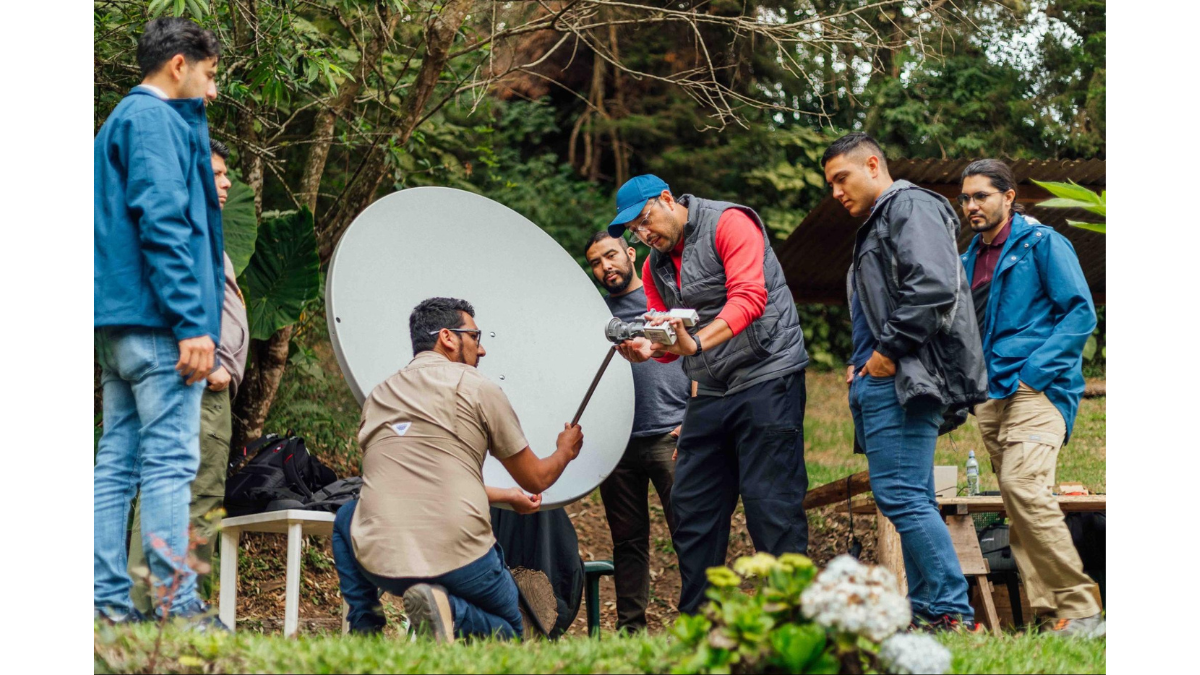
Disaster Communications Training taking place in Guatemala. Photo: Sarah Stone, Director at Stone Barrell
This independent journalism on data, digital transformation and technology for social impact is made possible by the Future of Good editorial fellowship on digital transformation, supported by Mastercard Changeworks™. Read our editorial ethics and standards here.
Yoeslyn Sands is a self-confessed lover of technology, which makes being an information technology officer at Save the Children International’s regional Latin American and Caribbean office in Panama pretty close to a dream job. There, he has access to some remarkable technology — technology that could be lifesaving in the event of a disaster.
Thanks to NetHope’s disaster communications training, which he participated in earlier this year, Sands is one the few people with the skills to deploy crucial telecommunications technologies in emergency response situations, making him part of a growing cohort of digital first responders.
“I would advise people in the IT area to all learn how to use renewable energy,” he says.
“All technologies require energy, and we never know when there will be an emergency or disaster in the country; people should try to learn about using solar panels.”
Sands now plans to share his skills with a regional organization dedicated to establishing disaster communications technology in Latin America.
NetHope, a membership-based consortium of non-profit organizations around the world, is working to better incorporate technology into humanitarian aid and development initiatives. Funding from the Internet Society Foundation allowed NetHope to run disaster communications training in four countries this year, providing technical staff at non-profits with the skills to build and repair telecommunications infrastructure in emergency situations. Skills such as cabling, networking and installing sustainable power sources were covered in the training. A total of 259 people were trained across Panama, Guatemala, Ghana and the Philippines.
Technology – ranging from GIS mapping to image sensing and real-time data generated by artificial intelligence – is increasingly a must-have in humanitarian aid and emergency response work, says Jerry Montgomery, senior director of field and impact programs at NetHope. All of this, however, is subject to two fundamental pieces of infrastructure remaining intact: power and broadband connectivity.
Without consistent, reliable access to communications technology, it becomes even more challenging to get food, water, shelter and medication to the right place at the right time, says Charles Higgins, NetHope’s director of disaster preparedness and response. In the short-term, inadequate or broken telecommunications infrastructure means aid organizations aren’t able to talk to one another to coordinate their emergency response.
In the medium term, prioritizing telecommunications infrastructure allows people in disaster-affected areas to return to a semblance of normality and even resume their livelihoods in some instances, Montgomery says.
The so-called digital first responders who participated in NetHope’s disaster communications training needed to have baseline technical knowledge to begin with, particularly because providing connectivity services requires them to manage both hardware and software components. “We’re teaching people to patch-up and fix things that have already been broken, not the design of [connectivity] systems in the first place,” says Higgins.
Large technology companies, such as Microsoft, Google and Cisco have funded NetHope’s work in Turkey and Ukraine and participate in training sessions. “There needs to be a synergy between the expertise that they bring, and our own strengths in building disaster response frameworks,” Montgomery says.
Technical training still “getting crickets” from funders
Funding for technical infrastructure development and technical training is still “getting crickets,” because its impact is not as immediately tangible as a “child being helped with healthcare or a family being given shelter,” Montgomery says. “There aren’t any large grants that ask for a tech-only response.”
He hopes this training will raise awareness among two critical groups of people — governments, the United Nations and multilateral organizations in the aid space, as well as teams working in development contexts, whose members need to be on the same page about investing in connectivity in emergency settings.
The irony, he says, is that digital protection should be one of the biggest priorities for the NGO sector, given it’s “one of the most targeted groups for unsavoury actors and it is apparent that there is a further need for agencies to understand the risks and build capacity.” Firewalls, for instance, are a key part of NetHope’s disaster communications training. The goal is to build temporary communications networks that are safe and secure and don’t subject vulnerable people to more threats.
Part of the challenge of securing funding for technical training is that measuring its impact isn’t simple. “[The Internet Society Foundation] didn’t really specify a rigorous results framework, so it was up to us to determine what results we could measure,” Higgins says.
Rather than measuring impact by the number of people trained, NetHope implemented what’s often called a train-the-trainer model. This essentially means that NetHope trains an initial set of people, who then become responsible for passing their knowledge onto others in the field, so that information can trickle down without NetHope themselves having to be present.
“We wanted to create a network of people who would not only work together as a team, but would become mutually supportive after we’d gone,” Higgins says.
“What we do can then have greater sustainability – we and they can follow up and have continued communication around the issue.”
Another beneficial impact of the training is that it provides organizations in various countries with equipment that can be deployed in subsequent emergencies. But this has created two additional challenges, Higgins says. “There are limitations on moving items of technology around in some countries. They don’t want to see telecommunications equipment coming into the country that is not entirely under the state’s authority.”
Technical equipment also carries a risk of obsolescence. “The shelf life of IT equipment, such as mobile phones, is shorter than other relief equipment. If you don’t get the technology in at the time it is needed, it becomes a problem, not a solution,” says Higgins.
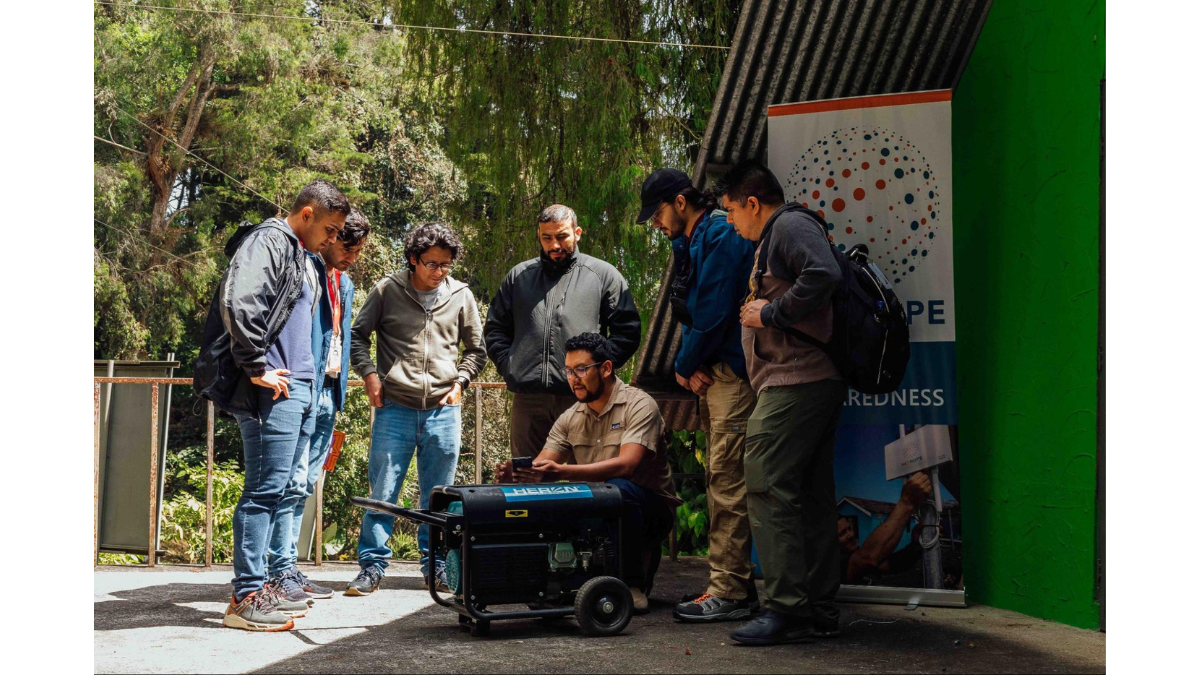
Disaster Communications Training taking place in Guatemala. Photo: Sarah Stone, Director at Stone Barrell
Digital first responders in the Canadian context
NetHope had government participation in all four countries where it ran this training program. In Ghana, there were 29 participants from a variety of governmental organizations, such as the National Disaster Management Organization, the National Information Technology Agency, the National Communications Agency, the National Cyber Security Agency and other governmental agencies. In Panama, three people from two local municipalities participated in the training.
The more “forward-leaning” a government is when it comes to information and technology, the more likely it is to participate, he says.
“Where this training is most needed is probably where we can’t go and deliver it,” Higgins says.
“We can’t go and do this in North Korea, to use an extreme example, where there is great need for connectivity, access and knowledge.”
Higgins says disaster communications training could also benefit so-called developed nations, even if the need is less acute. Technology like Starlink and other low Earth orbit satellite systems are opening up more opportunities for broadband access – Starlink itself has high coverage across Canada.
“Whether you’re in a developing country or a developed one, the majority of ‘first assistance’ is done by local community members,” Higgins says, “Even some of the work of restoration of services that have been knocked-out too gets done by community members in major emergency situations — which may temporarily exceed the response capacity of even the most well-developed country.”
In response to devastating and ongoing wildfires, many Canadian municipalities — as well as provincial governments — are collaborating with telecommunications companies on emergency management. In Nova Scotia, Eastlink temporarily waived overage charges on mobile data, while Rogers waived charges on long-distance calls, SMS and data overages.
In Alberta, Rogers also provided open access to the Shaw Go Wifi Network in affected communities and evacuation centres, while Telus brought in temporary generators and portable cell towers.
When the Canadian Telecommunications Network Resiliency Working Group convened in March 2023, they recognized the complex environmental challenges that the country’s connectivity providers are facing. Recommendations were made to design physical telecommunications structures resilient to extreme weather conditions, including wildfires, floods, windstorms and ice.
The working group also recognized that the telecommunications landscape is “complicated by jurisdictional divisions between different levels of government, some current and potential legal requirements that could impede the ability of Canadian Telecommunications Service Providers to respond to outages.”
Future of Good contacted the office of Harjit Sajjan, the Minister of Emergency Preparedness, to ask about the extent to which telecommunications infrastructure had been factored into disaster response planning, and who is responsible for their maintenance in times of distress for communities. No response was received in time for publication.
Higgins believes the disaster communications training NetHope runs could equally have an impact in so-called developed countries, provided the right participants are engaged and expectations are set from the very beginning.
“If you focused on this at a community level rather than on the authorities or official agencies that have legislated roles in emergency response situations, it would be useful,” he says. “You would not want to get in the way of the public or private service providers which are, in any case, the owners of infrastructure too.”
Your job. Your mission. Your news.
With your support, the sector you're building gets the journalism it deserves, and you get a tax receipt.

Author

Related Articles
Quarter of all Canadian AI ventures could be categorized as ‘clean AI’: new research
At Toronto Climate Week, the global CleanAI Initiative shared research on the Canadian ecosystem, finding growing investment hubs in Vancouver, the GTA, and Kitchener-Waterloo.

Partnered Partnered content Non-profits are increasingly being targeted for cybercrime. Here’s how your organization can help protect itself
Being cybersecure doesn’t have to be daunting or expensive. A panel of experts discuss ways the non-profit and charitable sector can help protect itself in a constantly changing AI landscape.
Canadian astronaut, entrepreneur donates $15M to Concordia to launch new space school
Montreal’s Concordia University will be the home of the Mark Pathy Space Institute.
