Gender equality organizations sometimes work in isolation. Equal Futures Network brings them together.
The Canadian Partnership for Women and Children’s Health (CanWaCH) initiative maps out more than 350 gender equality organizations from across Canada.
Why It Matters
Gender equality organizations across Canada (and the world) are often trying to solve the exact same problems: domestic violence, discrimination in the workplace, a lack of child care. Many of the solutions are similar ─ and organizations can learn by sharing them.
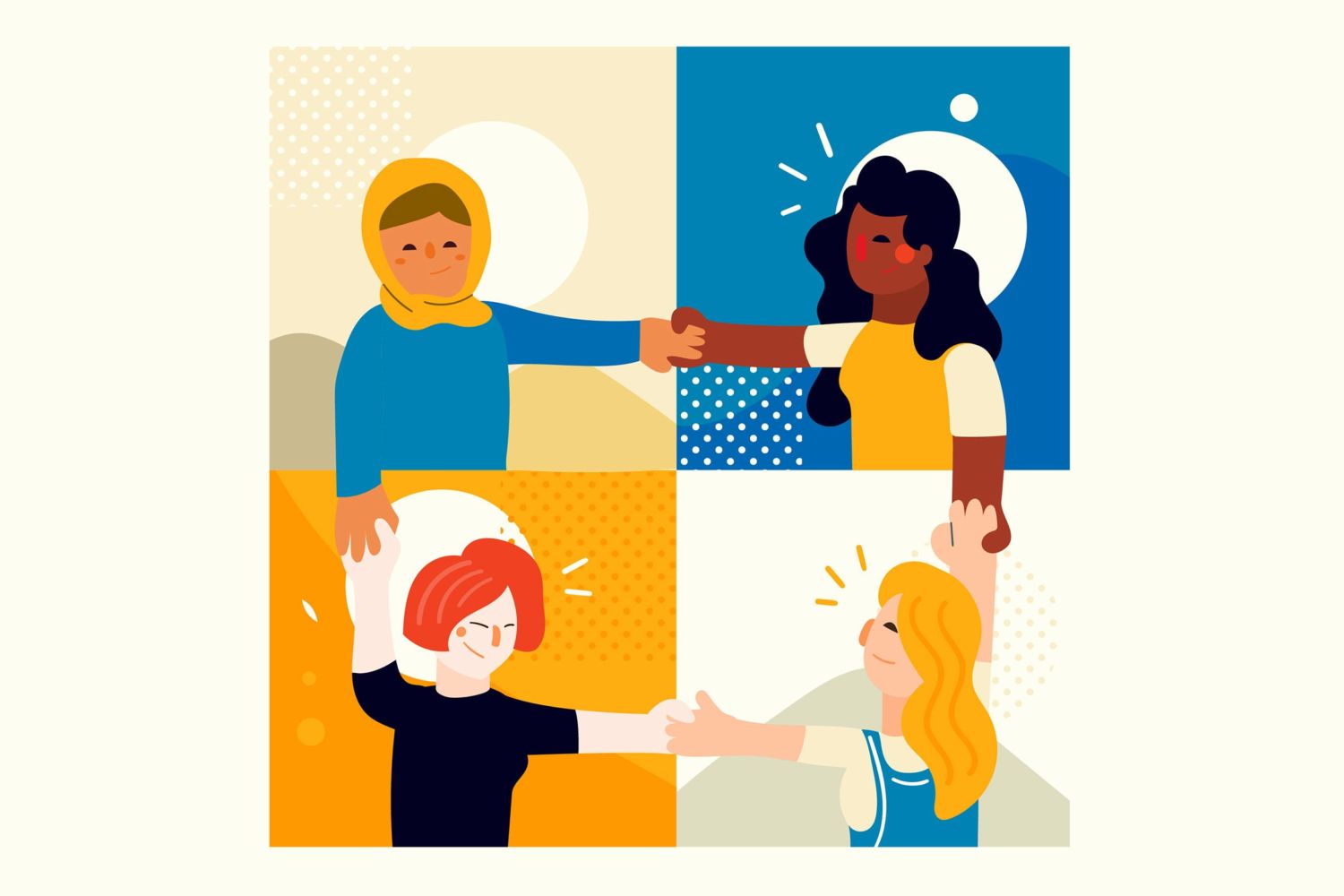
The thousands of leaders, advocates, and academics who flocked to Vancouver for Women Deliver 2019 conference may have come from all corners of the world ─ but when it came to preventing gender inequality, they all spoke the same language.
“The roots of gender-based violence, no matter where you are in the world, are the same,” Julia Anderson, CEO of the Canadian Partnership for Women and Children’s Health (CanWaCH), tells Future of Good. “They are misogyny. They are the patriarchy.”
Many ideas for gender equality programming, education, and intervention strategies are applicable to organizations everywhere. “If you put them in a room together to focus on what they can learn from one another, it can be tremendously impactful,” Anderson says. Yet gender equality organizations don’t always keep in regular contact with one another about their ideas.
Enter the Equal Futures Network: a platform to bring together organizations, agencies, and projects from across Canada that are committed to advancing gender equality. According to the Network’s website, the Canadian gender equality movement is strong, but under-resourced in many communities ─ and COVID-19 is only compounding its challenges. “Using innovative approaches,” the website reads, “Equal Futures provides a platform for connection and collaboration to drive progress on gender equality from coast to coast to coast.”
Gender equality roll call
Equal Futures Network is trying to help Canadian gender equality organizations find each other on the map ─ literally. A Network Explorer feature on its website (still in beta stage) lists the more than 350 Canadian member organizations across all provinces and territories. Click on each little marker and you’ll find not only a listing with an organization’s name, but also their location, focus area, contact info, and web presence.
They include internationally focused grantmakers like Aga Khan Foundation Canada, but also domestic violence organizations like Shelter Movers, sex worker advocates like Maggie’s Toronto Sex Workers Action Project, the Canadian Association for Girls in Science, and training programs like Keepers of the Circle. A full list of Network members also shows whether a particular organization is women-led or Indigenous led.
The map acts as a way to not only showcase the depth and breadth of Canadian gender equality organizations, but also connect broad global movements to local, on-the-ground efforts. Helping two domestic violence charities ─ one, say, in Moose Jaw and another in downtown Toronto ─ see how their domestic violence programming teams could learn from one another is important, but so is connecting their work to, for example, SDG #5: ‘Gender equality and women’s empowerment’.
The map is open to all Canadian gender equality organizations free of charge, not just those who are part of CanWaCH. “The more data, the better, because in the end, it serves our members,” Anderson says. “If you are a member organization of CanWaCH, I don’t want you missing the fact that there’s a similar organization doing work in the country you’re working in,” she says, “because that could improve your work.”
Charting their own course
CanWaCH isn’t the first organization to map out the location of social impact organizations. Global Affairs Canada uses a mapping feature on its website to showcase the department’s international projects, but it only accounts for projects that receive government funding. The Network is open for any organization to submit their details.
Anderson also doesn’t think social impact organizations have faith in the Canadian government to put together a project like the Network. “There’s not a high degree of trust when you hand your information over to the government that they’re going to effectively create the connective tissue, that they’re going to do it in a way that’s neutral and serves your interests,” Anderson says. (That said, the Equal Futures Network does receive federal funding through Women and Gender Equality Canada, as well as through private philanthropy).
When CanWaCH receives a listing request for the Network Explorer, she says it is thoroughly vetted to ensure it is legitimate. CanWaCH doesn’t charge organizations to list their projects on the Network. Anderson also says CanWaCH can handle the work more efficiently than the government ─ and just wants to help the sector thrive.
“We’re not trying to kill two birds with one stone,” she says. “We really are trying to get the best information out there that’s rigorously collected so their story can be told and they can make connections to other organizations doing great work.”
Come together
This week, the Equal Futures Network will be going off the map and into a (virtual) conference ─ another aspect of its work in bringing gender equality organizations together. On July 29, Women in Leadership: A Coming Together Celebration will bring together women politicians and First Nations leaders from across the country to honour their efforts, especially during the COVID-19 pandemic.
“We’re seeing these massive setbacks after decades of progress for women,” Anderson says ─ referring to the disproportionate number of job losses among women, but also higher rates of domestic violence.
On the other hand, she says, women are so often at the forefront of the fight against COVID-19, from nursing staff to the chief public health officers for several Canadian provinces. “How do women lead differently ─ and how is this impacting communities?” Anderson wondered.
Her organization put together a list of 1,000 elected officials at all levels of government to talk about how women lead differently ─ and what they can all learn from each other in this critical moment. This is the conference’s first year, but Anderson hopes it continues.
“I’d like to see this once a year,” she says, “where, once a year, all those who identify as women come together and say: This is what we’re doing.”
Your job. Your mission. Your news.
With your support, the sector you're building gets the journalism it deserves, and you get a tax receipt.

Author

Related Articles

Caste, corruption, and the collective: Crow’s Theatre’s A Fine Balance confronts India’s enduring inequities with humour and heartbreak
The Giller Prize-winning novel explores the realities of caste violence in India, which has been adapted into a powerful stage production in Toronto.
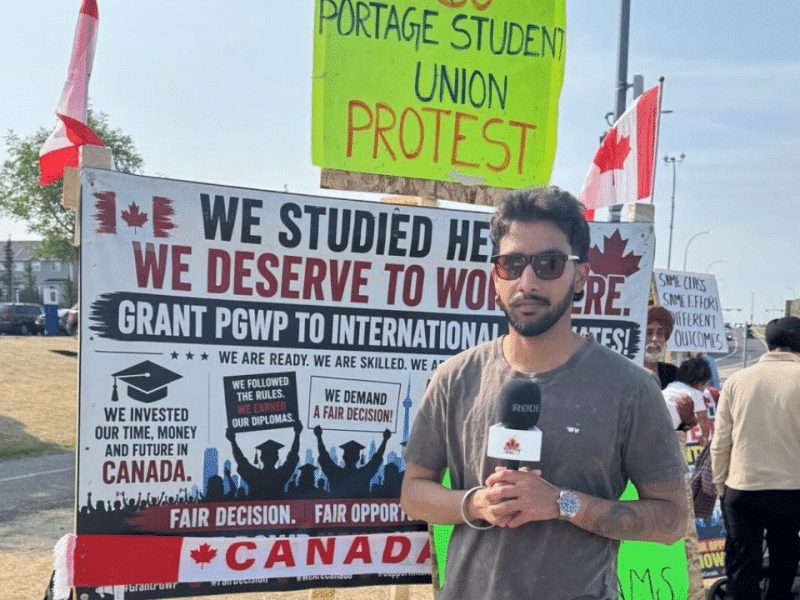
‘Canada must not go down that road’: More than 250 organizations demand investigation into CBSA after student protesters issued exclusion orders
The students were protesting after being denied post-graduation work permits they say they were eligible for when they enrolled at Portage College.
Half of Filipino immigrants to Canada are overqualified for their jobs: StatCan
‘For the relationship that Canada has with the Philippines, it seems like it’s lopsided.’
