First of its kind: New culture, faith-led Winnipeg circle to tackle challenging social issues
Winnipeg’s faith communities come together to offer insights with new model of community collaboration
Why It Matters
Municipalities across Canada are struggling to deal with issues around poverty and homelessness. Winnipeg thinks the city's religious and cultural leaders could play a bigger role in finding solutions.
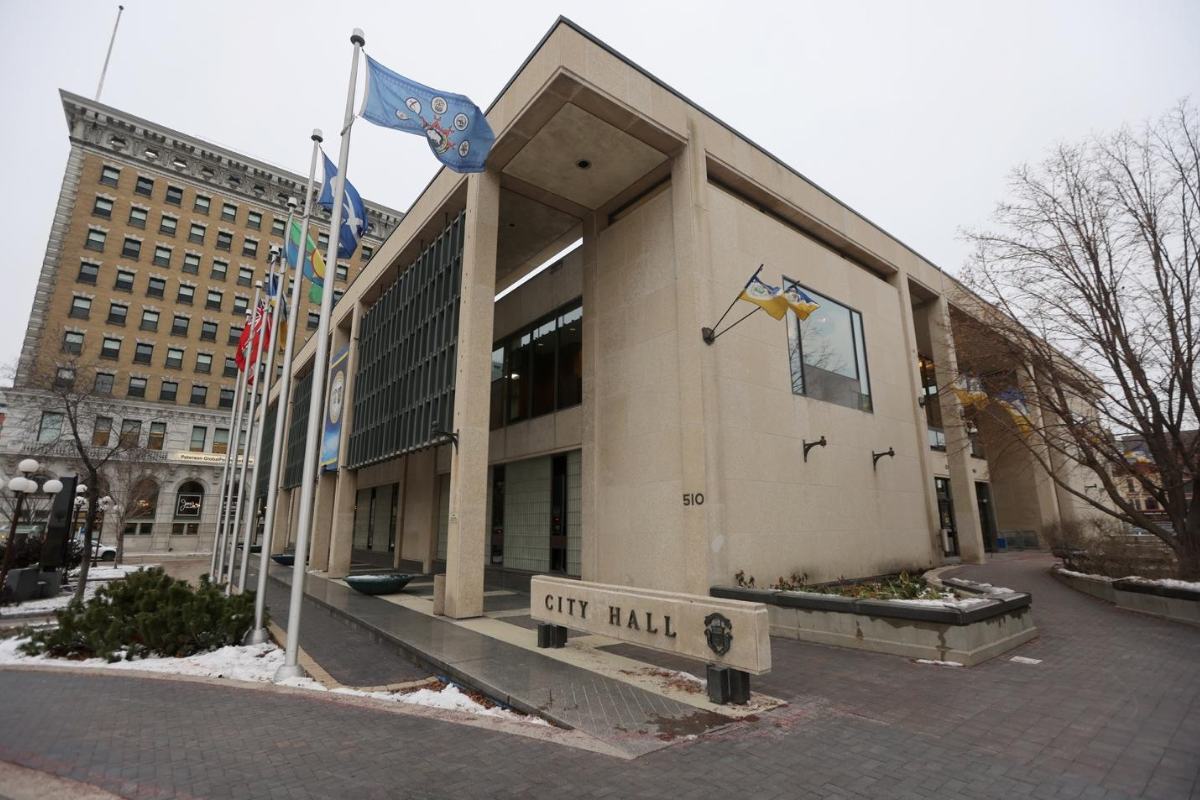
Winnipeg City Hall. Photo: Shannon VanRaes
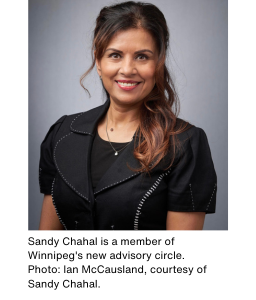
When Winnipeg Mayor Scott Gillingham asked Sandy Chahal to join his newly formed multi-faith and culture liaison circle earlier this year, she jumped at the opportunity to share the insights and resources of the city’s Sikh community with city hall.
“I really think the circle can act as a bridge between the city’s government and diverse communities, but it can also serve as a symbol of the city’s commitment to inclusivity,” says Chahal, a past president of Winnipeg’s Guru Nanak Darbar Gurdwara who’s also served on several boards, including the India Canada Cultural & Heritage Association.
“We have such a rich tapestry of cultures and faiths present in Winnipeg. This is a way to celebrate the contributions from our diverse backgrounds in our city and also engage in educational initiatives promoting interfaith and intercultural understandings.”
Gillingham, a former Pentecostal minister, launched the 15-member multi-faith and culture liaison circle earlier this year. It includes representatives from Muslim, Christian, Hindu, Sikh, Baháʼí, Jewish and Indigenous faith traditions and aims to offer insight into issues like homelessness, hunger, and inequity.
Participants say the circle will also keep the city apprised of resources, such as gymnasiums, community halls and communal kitchens, that could be used during emergencies like extreme weather or flooding.
“It’s about ensuring voices from our diverse faith and cultural communities are heard and have a role in shaping our city’s future. And it takes advantage of the established networks that exist in these communities,” says Gillingham.
Members were selected based on their expertise in faith, culture and the unique needs of their communities, as well as a willingness to work collaboratively to identify issues and opportunities, he says.
 The advisory circle is the first of its kind in Canada.
Rabbi Kliel Rose, who returned to Winnipeg after 26 years abroad to lead Congregation Etz Chayim, says he was “touched” by the mayor’s willingness to be so inclusive of faith communities.
“There’s a lot of rhetoric that talks favourably about faith communities and people of faith coming together, but this extension of inclusion on a civic level seems to be really something quite different than what I’ve known previously,” he says.
The circle meets four times a year and reports directly to the mayor but doesn’t have the standing of a formal committee.
“I very much believe, as someone who lives in the democracy and values democracy, that there should be a clear separation between church, synagogue, mosque and state,” Kliel says.
“So, I’m opposed to faith being used in civic settings if it’s going to be coercive or insists on certain religious norms and standards. But I think so many different faith traditions have incredible teachings and values that can influence civic society for the positive.”
The newly formed entity has no administrative responsibilities and won’t operate in an official advisory capacity. However, it will offer the mayor insights and suggestions stemming from the experiences of the communities it represents, says the circle’s convener, Rev. James Taylor Christie.
“We wanted to get away from this idea of yet another committee and to be something that is, in some ways, more amorphous,” says the former University of Winnipeg theology dean.
“We’re trying to make this a safe table for dealing with both tough questions and general insights into the nature of the City of Winnipeg.”
For that reason, Christie requested the title of convener rather than chair. “I think lends a tone of greater collegiality,” he says.
The circle will also build bridges between faith communities in the city, Chahal adds.
“I don’t think there’s a lot of conversations happening between different faiths right now,” she says.
“And I think learning about each other’s faiths, having a more in-depth understanding of other faith communities would go a long way.”
Faith communities also have much to learn from each other about service delivery models, something that could improve how community organizations provide assistance across the city, particularly when addressing homelessness, Chahal adds.
“We’ll also bring these different perspectives to the mayor and say, ‘You know what, we think this is an issue maybe the city hasn’t paid attention to, but could be a problem or a solution,’” she says.
While there are many things faith communities need to stay out of in terms of civic governance, Rose says they can help humanize what might otherwise be figures and facts.
“All religions have a lot to say about issues when it comes to folks who are marginalized in our society, so I really hope that we’ll be heard. But I think the caveat has to be that we are going to offer our advice in an open, thoughtful way without any real expectations.”
Your job. Your mission. Your news.
With your support, the sector you're building gets the journalism it deserves, and you get a tax receipt.

Related Articles

Caste, corruption, and the collective: Crow’s Theatre’s A Fine Balance confronts India’s enduring inequities with humour and heartbreak
The Giller Prize-winning novel explores the realities of caste violence in India, which has been adapted into a powerful stage production in Toronto.
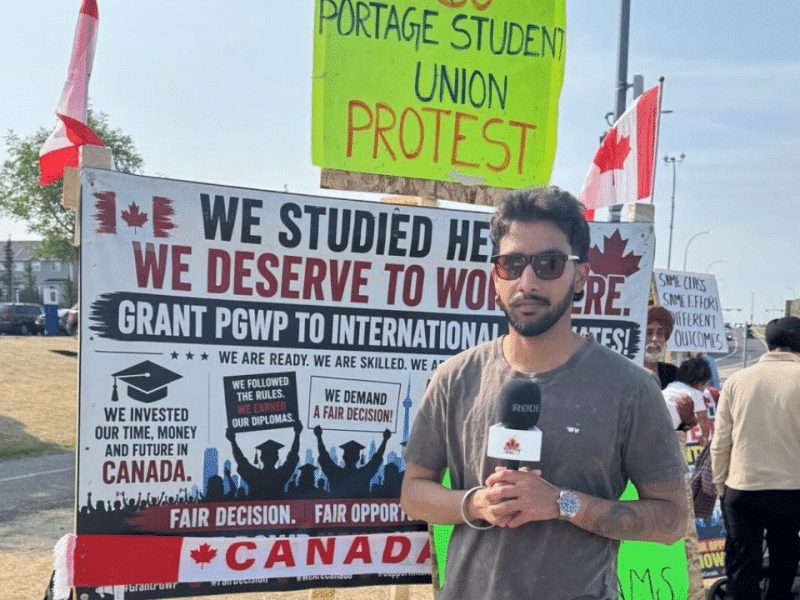
‘Canada must not go down that road’: More than 250 organizations demand investigation into CBSA after student protesters issued exclusion orders
The students were protesting after being denied post-graduation work permits they say they were eligible for when they enrolled at Portage College.

Half of Filipino immigrants to Canada are overqualified for their jobs: StatCan
‘For the relationship that Canada has with the Philippines, it seems like it’s lopsided.’
