Five essential lessons from Future of Good’s Black Leadership in Social Impact Summit
Accept discomfort, promote Black leadership, and get ready to talk solutions
Why It Matters
Plenty of social impact organizations understand the need to combat racism, but few of them actively dismantle their own racist cultures, structures, and programs. Social impact organizations who fail to do so will lose credibility among Black professionals and clients, as well as their allies.
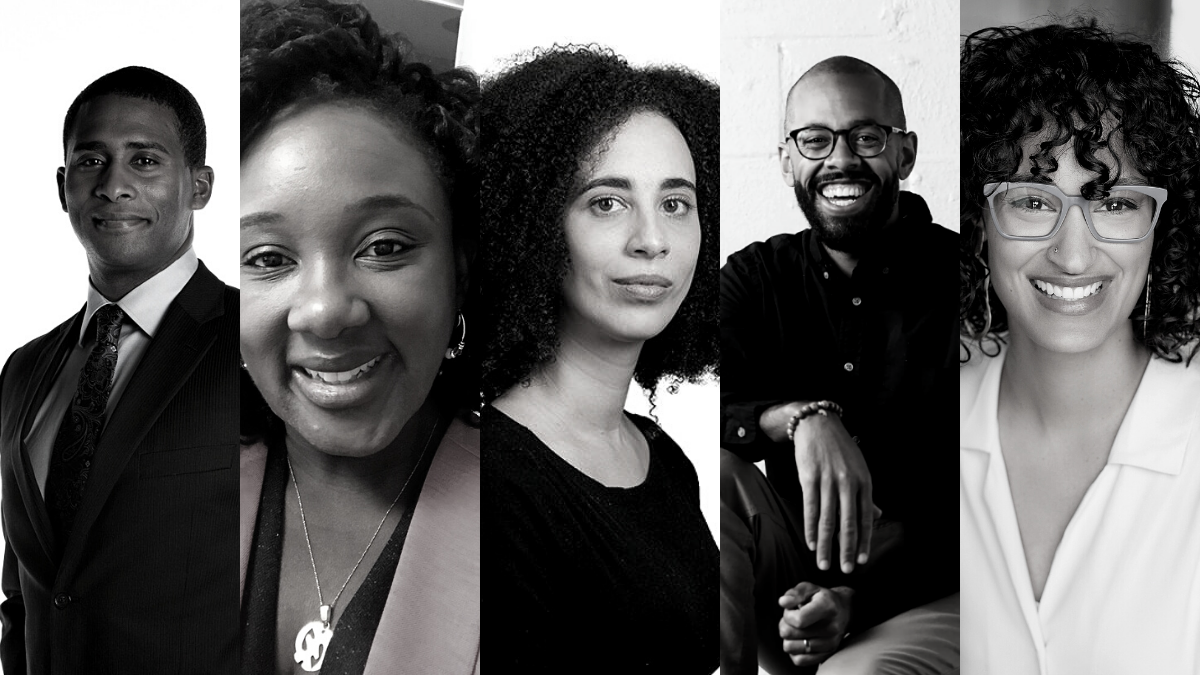
If there is one takeaway from Future of Good’s Black Leadership in Social Impact plenary last week, it is that anti-racism is a lot of work.
“You are dismantling things. You’re challenging your own thoughts, you’re breaking down other people’s thoughts. You’re having uncomfortable conversations. You’re challenging accepted norms,” said Nathan Hall, the founder and CEO of Culture Check.
“It is really, really hard to be anti-racist and to form an anti-racist culture.”
Adrian Harewood, co-host of CBC News Ottawa, moderated a plenary panel with four Black leaders in the social impact sector on Thursday as part of the Summit. The wide-ranging discussion included several key ideas for social impact organizations looking to become actively anti-racist in their programming and internal operations.
Here are a few:
Black people are often seen as service recipients, not leaders
One of the major barriers faced by Black social impact professionals and leaders is the racist assumption that they aren’t capable of driving change, even in their own communities. “I don’t think it’s possible to have this conversation without naming the stereotypes that exist in the sector,” said Rebecca Darwent, a working group member with the Foundation for Black Communities. “Black people are often seen as recipients of service, and not seen as competent, capable, and ready to lead solutions in their communities.”
This lack of confidence in Black-led and Black-focused social impact organizations is one of the reasons they simply do not receive the same sort of support that other organizations doing the same work receive. Darwent also said the lack of representation in the sector by Black leaders is one of the major ways racism manifests itself in Canada’s social impact sector. “The lack of relationships make it seem as if there is no pipeline of talent, and I really, really question that,” she said.
Racism goes way beyond overt acts of hatred
Blatant acts of racism — hate speech, for instance — are serious problems. However, Hall said organizations can fixate on these acts, condemn them, and not look any deeper into whether they’re perpetuating more subtle forms of racism. “They fail to acknowledge that few people who uphold racism do so with intent,” Hall says.
Ensuring Black professionals feel supported if they have problems requires organizations to really focus on their own internal culture, Hall said. “Can organizations have the courage to reflect, to look back, to understand, so there is better listening to what’s going on?” he added. It also requires leadership that is willing “to uphold and to welcome your challenging perspectives,” Hall said.
Canadian philanthropy is failing Black-led and Black-focused organizations
Recent research by the Network for the Advancement of Black Communities and Carleton University’s Philanthropy and Nonprofit Leadership Program — “Unfunded: Black Communities Overlooked By Canadian Philanthropy”— details the financial impact of anti-Black racism by wealthy Canadian foundations. For every $100 granted by Canadian philanthropists, just seven cents went to Black-led social impact organizations, while 70 cents went to Black-serving organizations. “The data is clearly there to show that resources are not going to the communities that need them the most,” Darwent said.
For every $100 granted by Canadian philanthropists, just seven cents went to Black-led social impact organizations, while 70 cents went to Black-serving organizations.
There are some limitations to the report. Its authors acknowledge that it does not include organizations who do not mention Black communities in their mandate, even though they may still serve Black people. Even still, a rudimentary comparison of the 7 cents-per-$100 figure to Canada’s Black population — roughly 3.5 percent of the country — shows just how badly Canada’s philanthropic world is ignoring Black social impact organizations.
You don’t need another anti-racism consultation
When it comes to anti-racism, social impact organizations do not need to keep reinventing the wheel year after year. Gladys Okine-Ahovi, executive lead at the Canadian Council for Youth Prosperity, said investors and funders keen on changing often start forums, hire consultants, and hold focus groups. “We’ve done a lot of that over the years,” she said. “There are recommendations on the table right now that can start to be actioned.”
Okine-Ahovi suggests organizations who do end up hiring consultants focus on how to implement changes, rather than simply brainstorming possible changes. “There are tonnes of ideas already out there on the table,” she said. “Start moving towards implementation.” She also recommends organizations expand their networks and challenge themselves to speak with subject matter experts that they normally wouldn’t contact — and pay them. “They are there, they are available, and they are willing to provide support,” Okine-Ahovi said.
Trust Black communities
When Black communities try and seek out funding for their own initiatives, they have a much tougher time securing the trust of predominantly white financers. This isn’t unique to the social impact sector — it also happens to Black homebuyers looking for mortgages and Black startup founders seeking capital. Eliminating racism in Canadian social impact will require the sector to trust that Black people know what they need.
“White-led organizations can change, but the magic is really in equity-seeking groups and communities determining their own futures and starting their own organizations,” Darwent said.
There is also a tendency within the sector to consider only certain perspectives from within Canada’s Black communities, rather than looking at an entire range of responses. “There’s a whole lot of tone policing going on and picking which Black person you’re most comfortable with,” said Emilie Nicolas, a columnist with Le Devoir and co-founder of Quebec inclusif. “The solution to that is, be willing to be uncomfortable.”
Read more of Future of Good’s coverage of anti-racism work here. Watch the full plenary below:
Your job. Your mission. Your news.
With your support, the sector you're building gets the journalism it deserves, and you get a tax receipt.

Related Articles
Migrant-led non-profits prioritized through RADIUS’s participatory grantmaking
RADIUS’s participatory grantmaking process shows how community voices and lived experience can shape funding decisions.
7 short documentaries about Canadians making change you should watch
Citizen Minutes looking for Canadian changemakers for fourth season docs
Homelessness organizations dealing with increasing legal attacks, anti-poverty rhetoric: Ontario Nonprofit Network
In a recent brief, the ONN said “hostility against people experiencing homelessness and/or mental health and addictions challenges” is rising.
