Recovery plan 2020: 20 bold ideas from 20 social impact leaders
We spoke to leaders across the country to hear what they want Trudeau to prioritize, in this week’s Throne Speech and beyond
Why It Matters
The pandemic has amplified inequities in Canadian society. Social impact organizations working with and advocating for vulnerable communities have unique insight into how to close the gaps. Their ideas, borne from on-the-ground experience, could make Canada a more resilient nation in the face of adversity.

September 23 will be a big day for Canada.
Prime Minister Justin Trudeau’s government will deliver a speech from the throne – an update to its legislative priorities – as Parliament resumes for the first time in weeks. Thousands of Canadians have died from COVID-19, the unemployment rate is at record highs, and a second wave of the virus appears to be crashing across Ontario and Quebec just as school starts for the year.
Canada needs an equitable recovery plan. Wednesday’s speech from the throne is expected to be an outline for a broad economic stimulus package aimed at revitalizing Canada’s healthcare system, along with its flagging economy and social stability. It may even offer additional green energy or infrastructure spending. But many are looking for more than just a return to the status quo. Social impact organizations are ready to take the lead on an equitable recovery.
Future of Good asked Canadian social impact leaders what they hope to see in the federal government’s recovery plan for COVID-19. Their responses go far beyond mere economic revitalization:
Jeff Cyr | Managing Partner, Raven Capital Partners
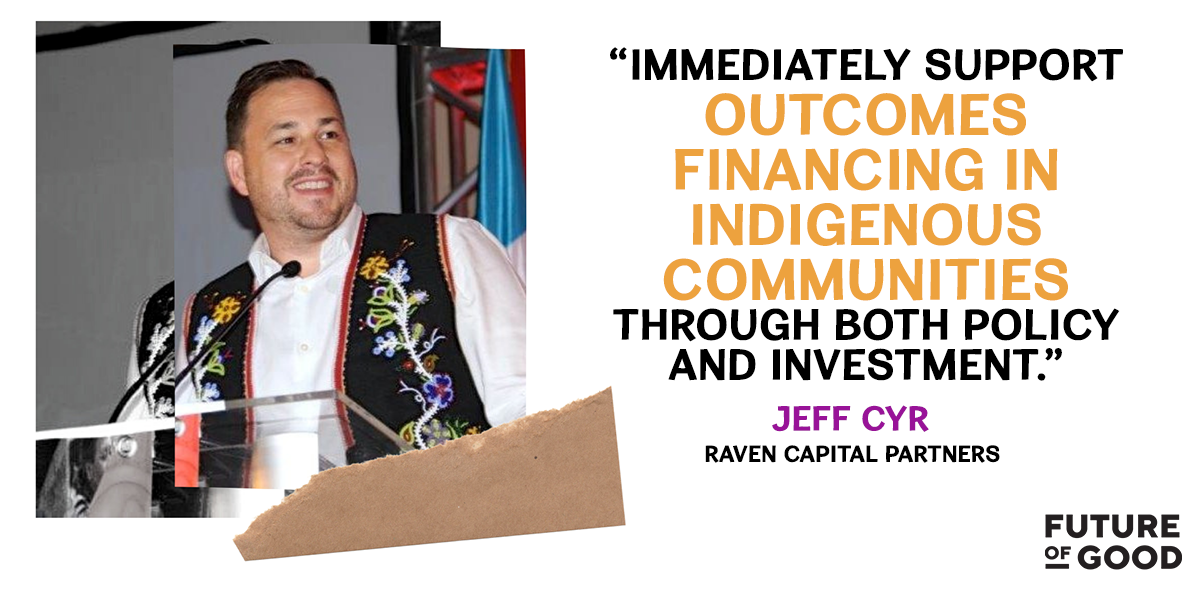
“The one action the federal government must include for pandemic recovery is to immediately support outcomes financing in Indigenous communities through both policy and investment. Outcomes financing resets funding pathways, gives ownership and control to communities, solves deep social /economic issues, leverages private capital in new ways, builds businesses and achieves long-term savings for the public purse. It’s clear that economies need to reform to be more resilient, more green, more inclusive of diversity, and through which more people benefit. With outcomes financing public and private capital can better serve the common good, now and in the future.”
Patrick Dubé | Directeur Général, Maison de l’innovation sociale (MIS)
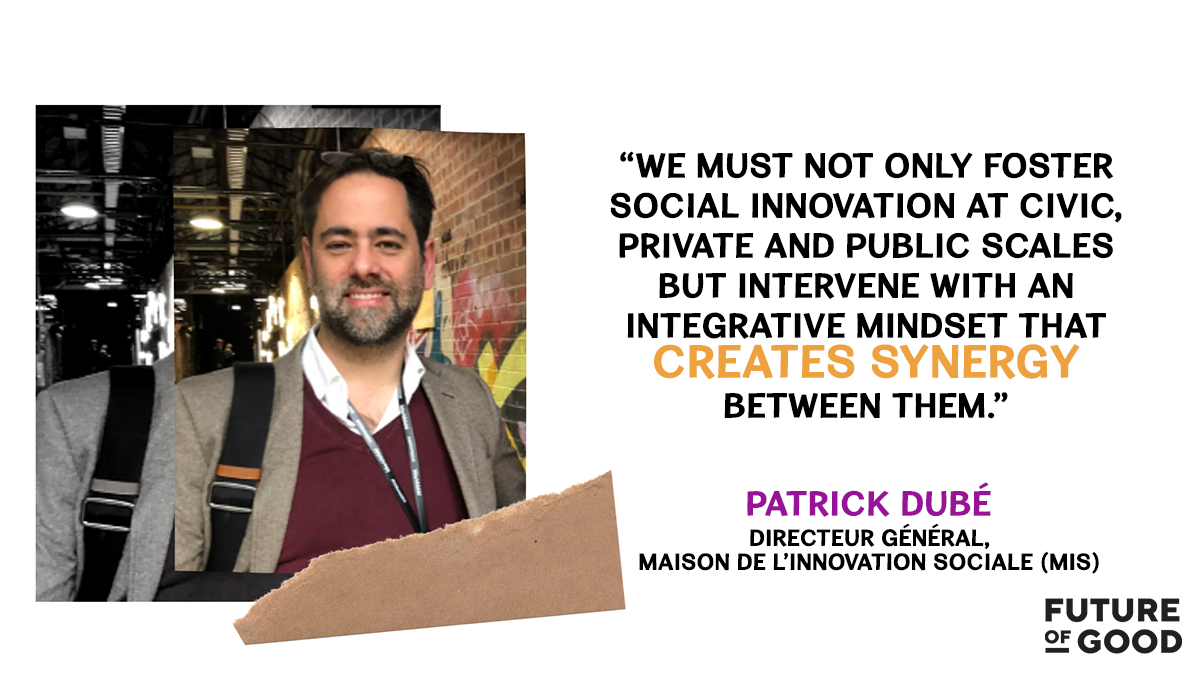
“To best address the pandemic recovery, we need to recognize that it is a symptom of something bigger, not an isolated event. We must be bold and not shy away from the complexity of what lies before us. Tackling systemic change to foster true positive impact requires reframing our collective approach to problem solving. We must not only foster social innovation at civic, private and public scales but intervene with an integrative mindset that creates synergy between them. Such an approach is a scope of practice that is best suited for such a task because it takes on the root of the problem, integrating interdependencies between all parts of a system. A bold governmental approach is one that does not recoil at complexity and innovation beyond the constraints of electoral temporality. It leads the way for driving true change by rethinking, for example, regulatory barriers that stand in the way of innovative solutions emanating from the field or by designing new financial mechanisms that synergize social and environmental gains. A bold approach is one that is inclusive and reaches out to multiple stakeholders from different horizons to work together in an integrated approach to accelerate the change we need now.”
Judy Duncan | Head Organizer, ACORN Canada
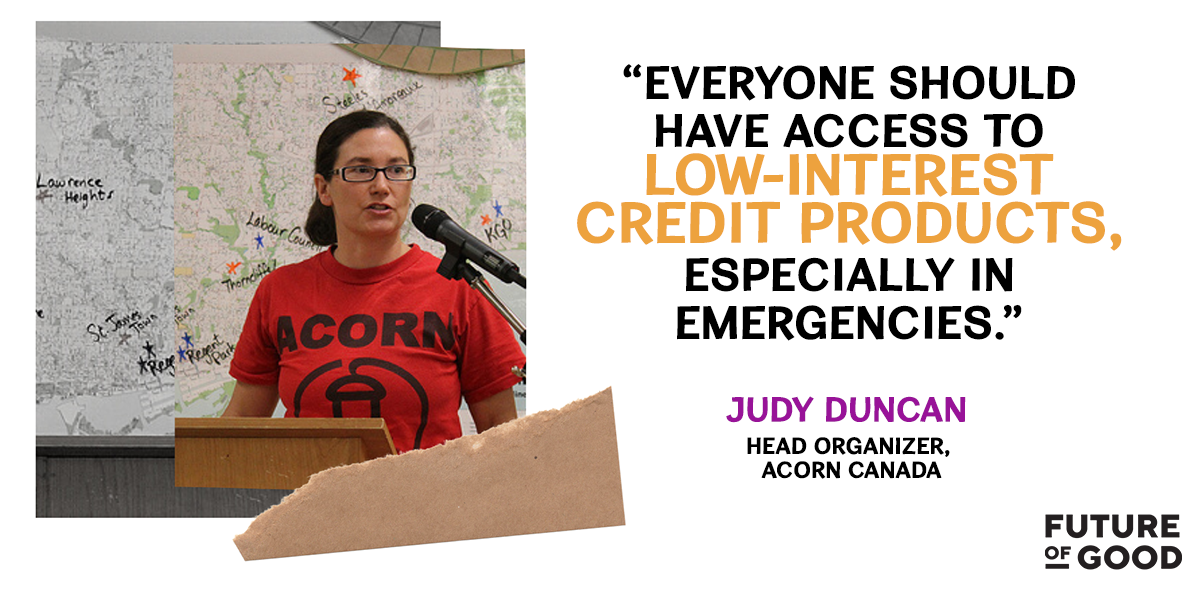
“ACORN Canada is fighting for social and economic justice. As the pandemic unfolds, we see the situation going from bad to worse, especially in low-and-moderate income communities. COVID-19 has reinforced the need for the following immediate federal actions.
Stop evictions and ensure the right to affordable and livable housing. Create a federal rent relief program for those unable to make rent due to COVID-19. Federally mandate full rent control in all provinces, including vacancy controls. Stop REITs from making investor profit at the expense of people’s right to housing, by renovating and pushing out long standing tenants in affordable units.
Ensure internet for all. In the modern economy, all people need access to affordable, reliable and high speed internet. Offer all ‘low-income Canadians’ and ‘fixed-income seniors’ $10/month Internet with 50/10 speed through the Connecting Families program and make the program mandatory for all main telecom companies.
Modernize EI. All workers, including self-employed and gig workers, should be entitled to Employment Insurance that ensures 90 percent of worker’s earnings or $500/weekly (whichever is higher) available until 50 weeks.
Fair banking. Everyone should have access to low-interest credit products, especially in emergencies. Government must mandate banks to create alternative credit products for low-income people to stop the use of the fringe predatory market (payday and installment loans). And permanently reduce non sufficient funds fees from $45 to $10.”
Jennifer Flanagan | CEO, Actua
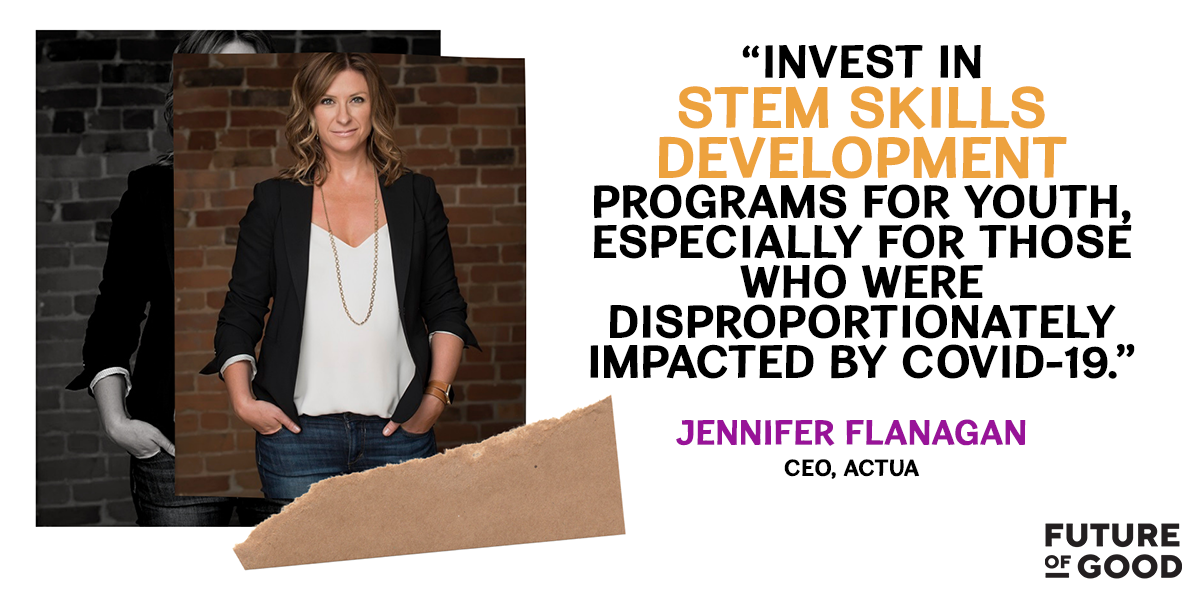
“STEM professionals are the architects of our post pandemic world and a strong STEM workforce and culture has never been more critical. The federal government is responsible for ensuring that Canada has a robust and inclusive skills talent pipeline to tackle our future challenges. My call to action is for the government to invest in STEM skills development programs for youth, especially for those who were disproportionately impacted by COVID-19, including Indigenous, racialized, disabled youth and youth in remote communities. These youth rely on schools and after-school programs as safe places to learn and gain critical skills. Critical investments now by the federal government in youth skills programs will ensure we are not leaving these youth behind. We cannot risk having them once again deprived of essential support systems, and we cannot continue to have a STEM culture and workforce that does not include their perspectives.”
Jocelyn Formsma | Executive Director, National Association of Friendship Centres
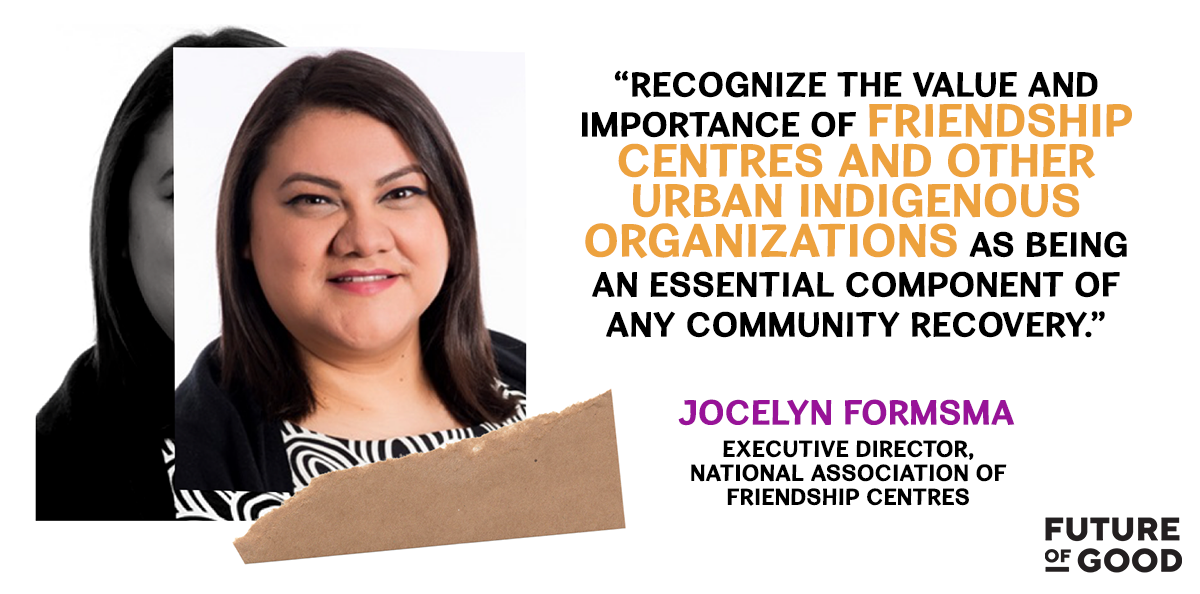
“Our work often falls between federal, provincial and municipal jurisdictions, each thinking it’s another level of government’s responsibility to financially support what we do. I would like the federal government to recognize the value and importance of friendship centres and other urban Indigenous organizations as being an essential component of any community recovery.
It’s hard to put a number on what’s enough funding, because the situation changes day to day. We’re looking for sustainable and predictable investment over the long term. A lot of what we’re dealing with is the result of lack of investment over the last 10 or 20 years, so we’re dealing with the infrastructure and resources we have, which has limited our ability to respond to the pandemic. If there’s investment in our organizations, we can be key players in ensuring that Indigenous people are a huge component of our society’s recovery.”
Robert Greenhill | Executive Chairman, Global Canada
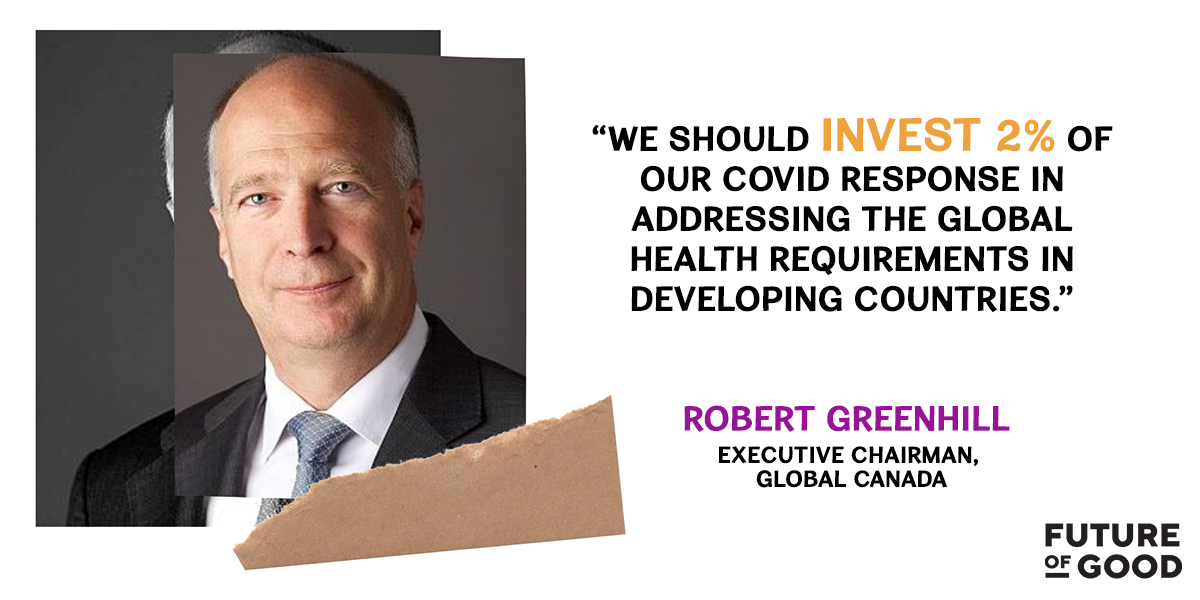
“Canada should lead in catalyzing the global response to this global crisis. We should invest 2 percent of our COVID response in addressing the global health requirements in developing countries, and in addressing the unparallelled humanitarian crisis which is developing in the poorest countries as a result of COVID. For the first time in a generation, gains on poverty reduction have been reversed, hunger is affecting over a quarter of a billion people now, and the IMF talks about a lost decade if the world does not respond. So far, Canada’s new commitments internationally have been less than one tenth of 1 percent of our COVID response — less than $200 million. We’re not going to have a Canadian recovery unless this global pandemic is brought to a halt globally, and we’re not going to have an economic recovery, unless economies around the world start to recover.”
Allyson Hewitt | Vice President of Impact, MaRS
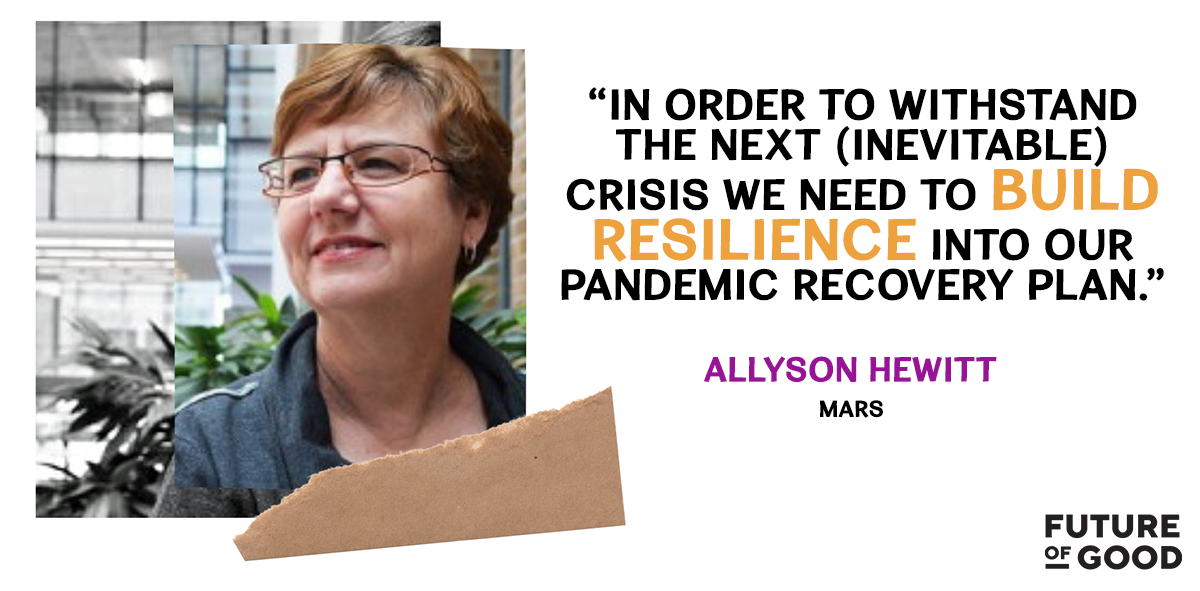
“In order to withstand the next (inevitable) crisis we need to build resilience into our pandemic recovery plan. This is a “portal moment” (as outlined by B Team) in our efforts to encourage economic stimulus that doesn’t go back to a system that failed so many. Leveraging the work of Imperative 21, we are calling for a stimulus approach that engages in a “RESET to accelerate a transition from shareholder primacy to stakeholder capitalism, creating shared wellbeing on a healthy planet.” The imperatives are to design for interdependence; invest for justice; and account for stakeholders. It’s a movement the Canadian government should heed.”
Nejeed Kassam | CEO, Keela
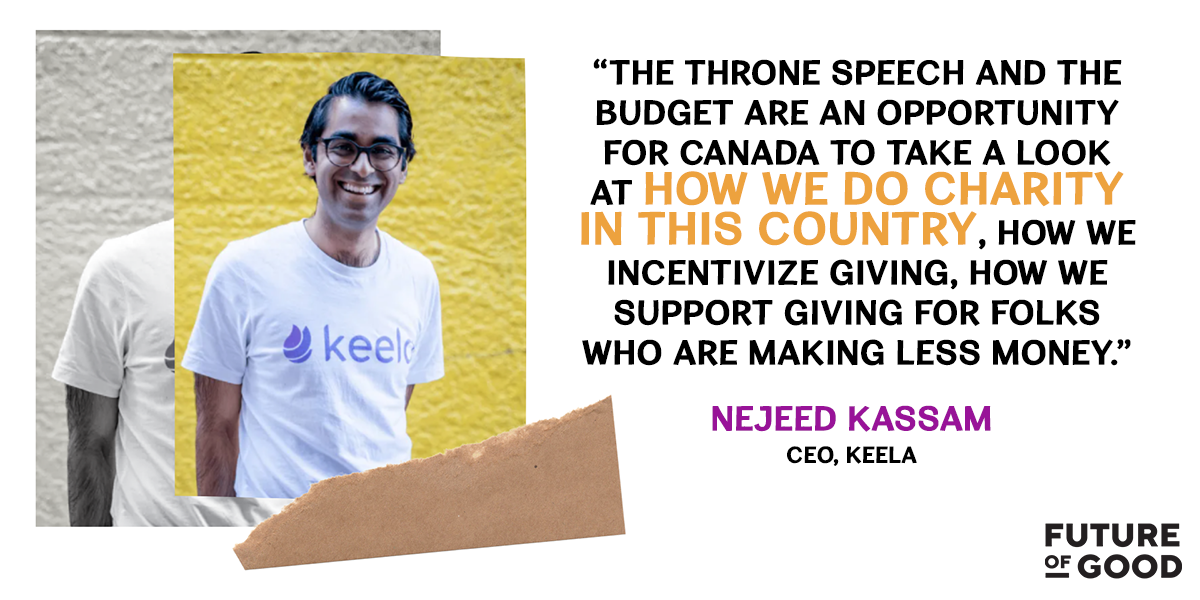
“The Throne Speech and the budget are an opportunity for Canada to take a look at how we do charity in this country, how we incentivize giving, how we support giving for folks who are making less money. The data shows that people who make less money give a higher proportion of their salaries every year to charity. Let’s incentivize them and engage them and empower them, reimagine a generation of giving for this country.
In addition, if Canada is going to continue to be a global economy, we can no longer only rely on the economic drivers of our past. We need to be operating in the next economy, and we need to be thinking about how we build innovative and powerful companies that are not only serving the world for good, but also driving our economy for the future of Canada. We need those companies to stay in Canada. We need those companies to grow in Canada. And we need those companies to build ecosystems around them that are Canadian.”
Shereen Munshi | Manager of Partnerships and Strategic Communication, The Circle on Philanthropy and Aboriginal Peoples In Canada

“This moment in time does not call for one action or solution, nor does it call for status quo solutions led by status quo leaders. For the Covid-19 pandemic recovery plan to meaningfully address the needs of all communities, we should look to (and fund) Indigenous-led, Black-led and equity-seeking-led organizations, grassroots movements and advocacy groups to guide the way forward.
The federal government should acknowledge that pre-pandemic, there were grave injustices and those injustices have been exacerbated and amplified (e.g. lack of internet access in rural remote communities; lack of clean drinking water; lack of adequate health care and emergency supports in communities, lack of action on both TRC and MMIWGs calls to action and calls to justice). Increase financial support for Indigenous-led, Black-led and equity-seeking-led organizations to continue their important and innovative work, support, care and learning in response to the Covid-19 pandemic.
Commit financial investment in artists to create art that captures emotions, learnings and work during this moment in time. This curation of art will support reflection now and inform the post-pandemic future.
Meaningfully engage Indigenous, Black and equity-seeking communities in the building of a post-pandemic recovery plan. As history has shown, the solutions equity-seeking communities are currently implementing and developing will be of help to all. Include First Nation, Métis and Inuit communities as well as Black communities in research and policy development for future pandemic planning.”
Brady Paron | Social Impact Lead, Shopify
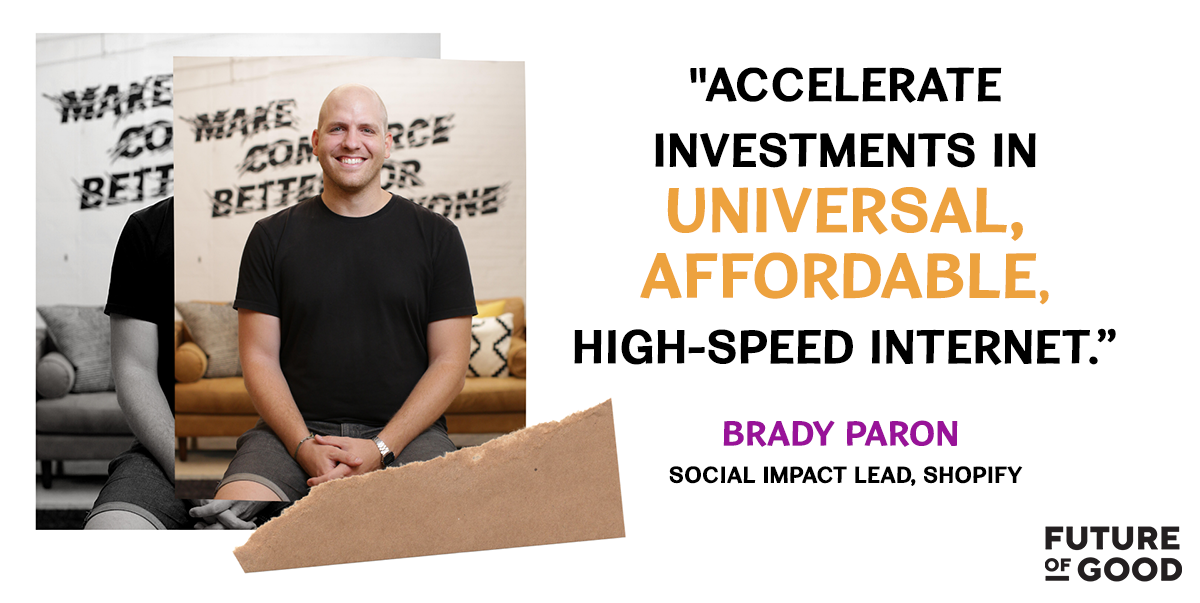
“Accelerate investments in universal, affordable, high-speed internet. In our new reality, access to high-quality digital infrastructure is more essential than ever before. Gaps in connectivity will restrict access to resources like online education and participation in the economy, and also further contribute to the exclusion of Indigenous and racialized communities.”
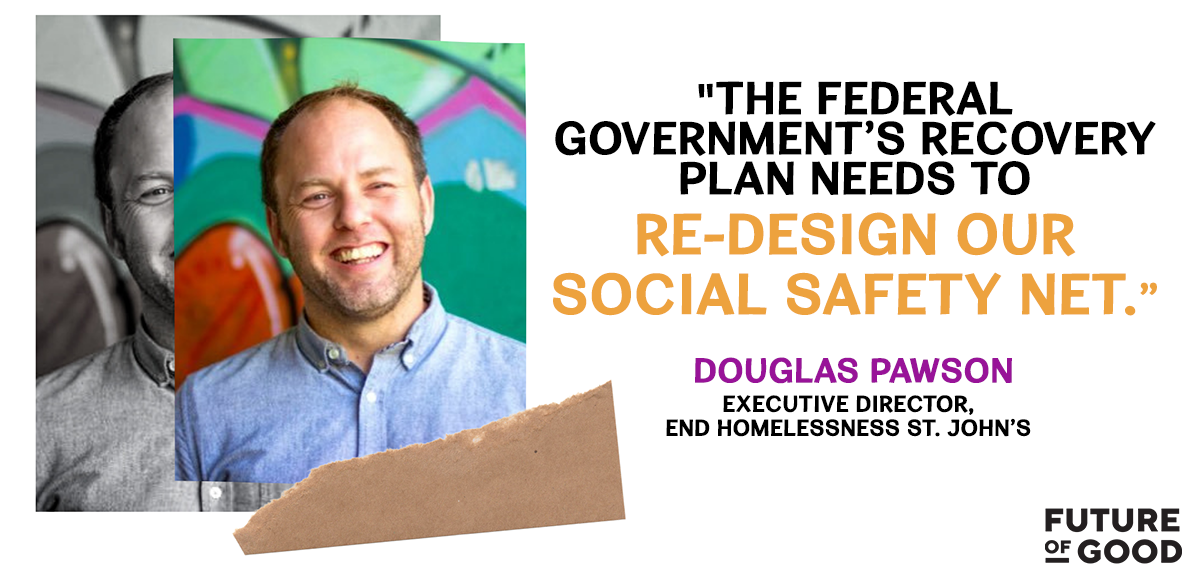
Douglas Pawson | Executive Director, End Homelessness St. John’s
“At End Homelessness St. John’s, we recognize that homelessness itself is not the issue – it is the culmination of system breakdowns. These breakdowns, whether they be related to health, the economy, poverty, exploitation, gender-based violence, trauma and more, all serve as pathways into homelessness.
The federal government’s recovery plan needs to redesign our social safety net. The foundation of any stimulus package should include a commitment to building hundreds of thousands of new affordable housing units. Ending homelessness will require a greater level of investment – not only of financial resources – but with bold leadership that ensures housing remains a human right for all Canadians.”
Diane Roussin | Project Director, Winnipeg Boldness Project
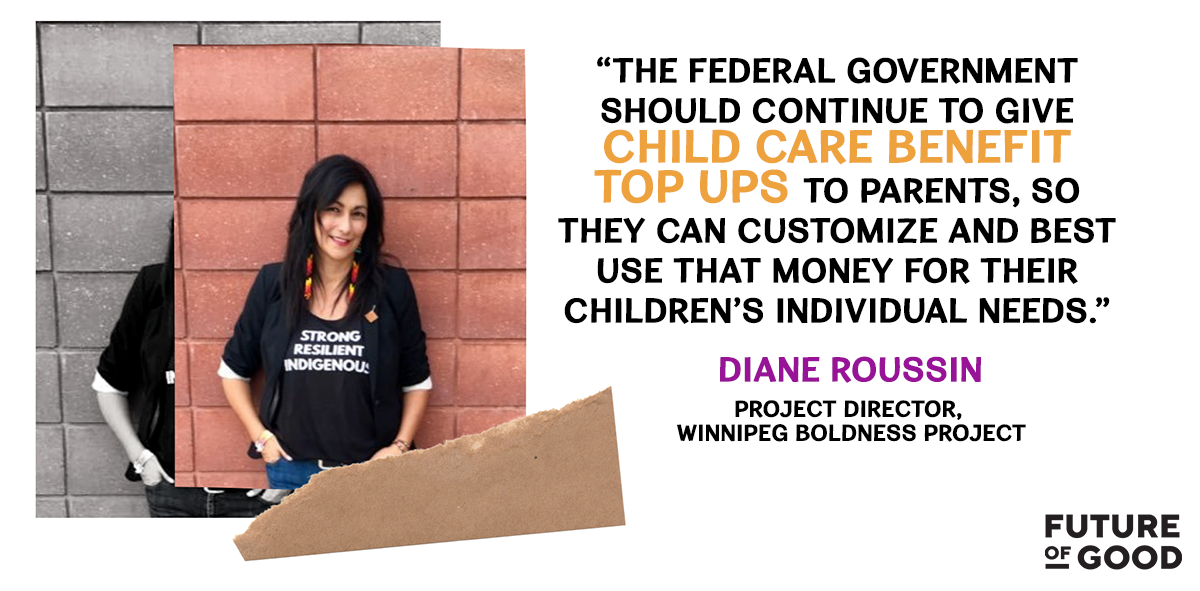
“Families, especially those with lower incomes, are challenged by having kids at home all day. Kids are at home and eating more, without school programs that supplement food. The tech and connectivity needed to learn at home, and access to the hardware can be challenging. As we move into the winter months, the ability to go outside is going to be further stretched. Recreational activities take more effort and more money — parents are more worried about that than ever before. The federal government should continue to give child care benefit top ups to parents, so they can customize and best use that money for their children’s individual needs. Standardized programs aren’t always the best use of dollars.”
Maya Roy | CEO, YWCA Canada
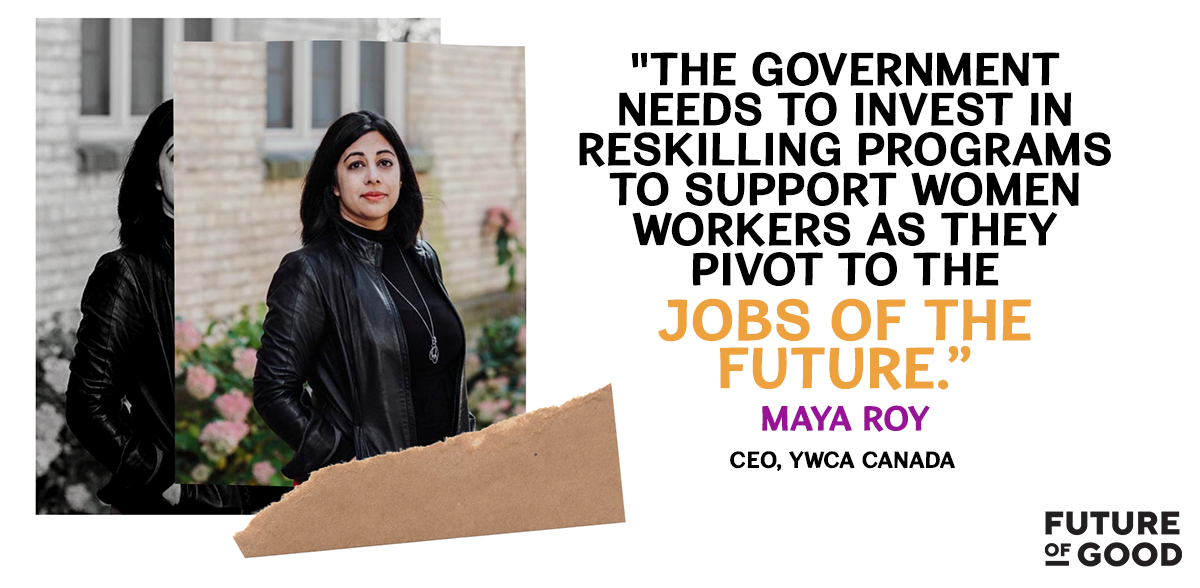
“Women’s labour market participation has dropped to levels not seen since the 1980s. To address these issues head on, the federal government needs to immediately invest in social infrastructure like affordable child care and safe schools to support parents and provide care services. Many of the sectors that disproportionately employed women have been devastated due to pandemic-induced shutdowns and those jobs are not coming back in the same way. The government needs to invest in reskilling programs to support women workers as they pivot to the jobs of the future.”
Vicki Saunders | CEO, SheEO
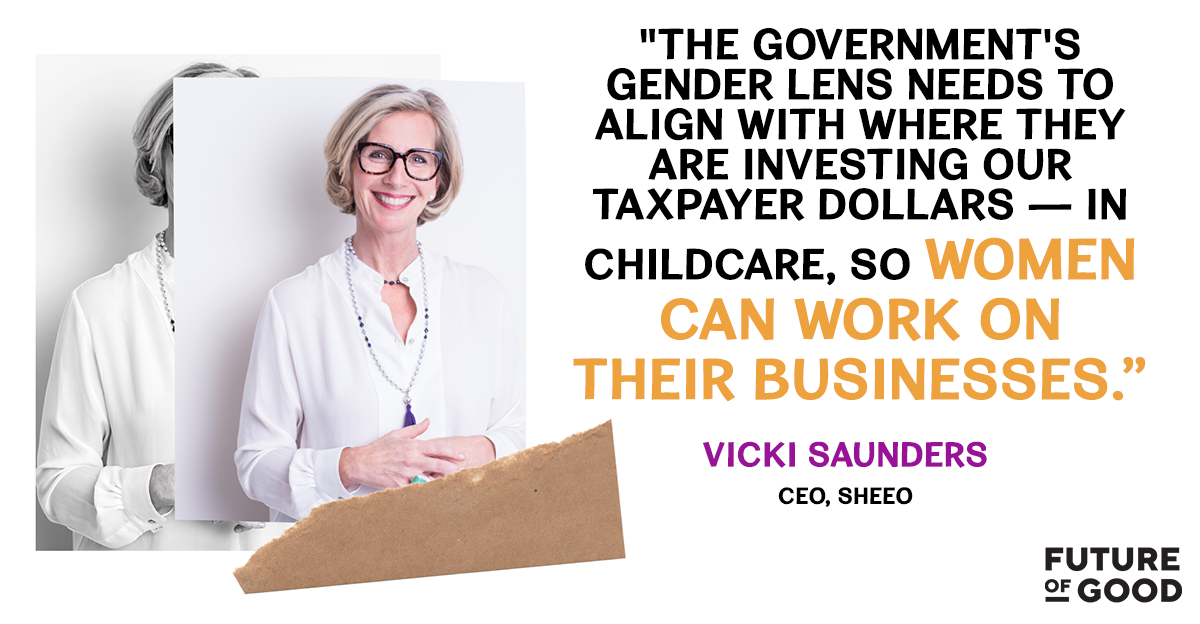
“The government’s gender lens needs to align with where they are investing our taxpayer dollars — in childcare, so women can work on their businesses, and in women entrepreneurs, who dramatically outperform their male counterparts when it comes to capital efficiency, as this pandemic has disproportionately affected women.”
Paulette Senior | CEO, Canadian Women’s Foundation
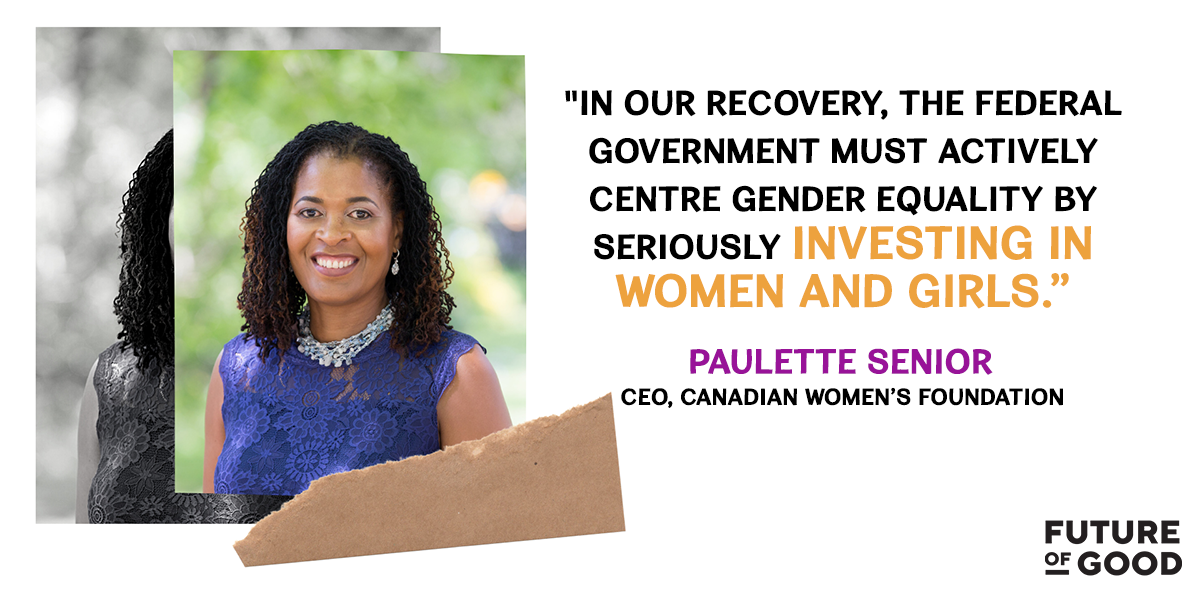
“When COVID-19 spread in Canada, it deepened inequalities for diverse women and Two Spirit, Trans, and non-binary people. To address this in our recovery, the federal government must actively centre gender equality by seriously investing in women and girls. In particular, investing in affordable and accessible childcare, long-term care, and gender-based violence services will put everyone in a position to thrive.”
Shirlee Sharkey | CEO, Saint Elizabeth Health
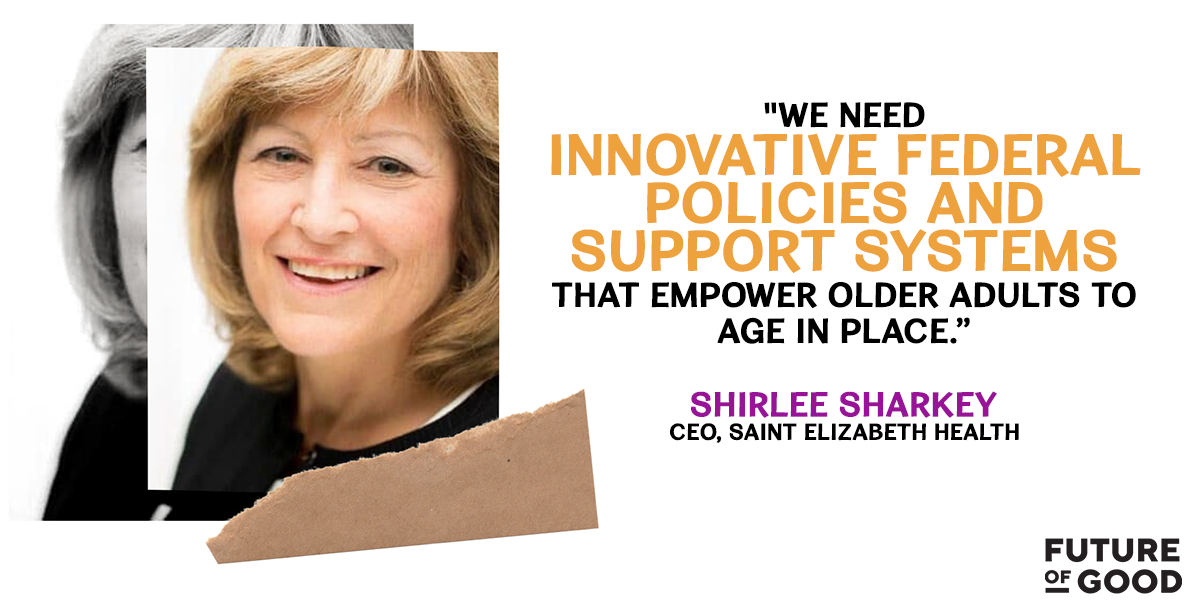
“Health is a journey and it can take you a lot of places – but nothing quite feels like home. Now more than ever, older Canadians want to live at home, they want their care at home and many wish to die at home. As we continue to grapple with the fallout of the global pandemic, we need innovative federal policies and support systems that empower older adults to age in place – that prioritize their life care needs and safety – and that enable family caregiver wellness.”
Abdullah Snobar | CEO, DMZ Ventures
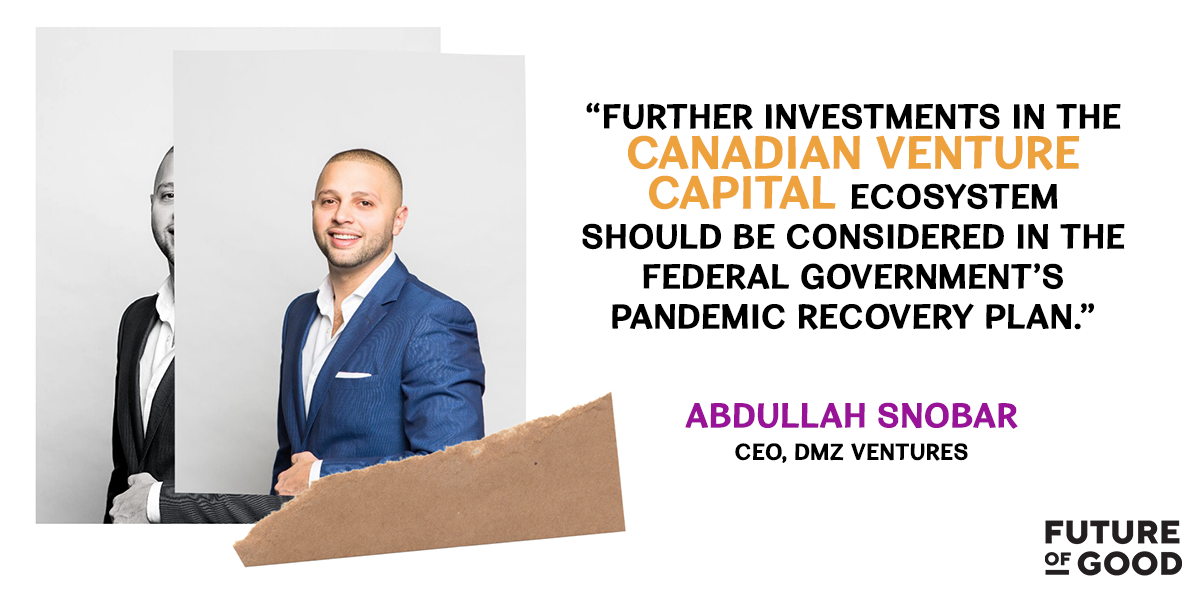
“Further investments in the Canadian venture capital ecosystem should be considered in the federal government’s pandemic recovery plan. A strong venture capital system is essential in helping early-stage businesses scale, and for many industries, the COVID-19 crisis has greatly disrupted the flow of venture capital.
In recent years, the federal government’s Venture Capital Catalyst Initiative (VCCI) has reinvigorated the venture capital industry — VC investments grew from $1.9 billion in 2013 to $6.2 billion in 2019. Now, with the VCCI program nearing full deployment, we would like to encourage the government to build on this initiative. The program attracts more private sector investment into Canada’s innovation ecosystem, delivers a net-positive return to the taxpayer, helps improve gender balance among Canadian VC firms and drives job creation — all of which will serve as important functions in helping our economy bounce back.”
Dominique Souris | Executive Director, Youth Climate Lab
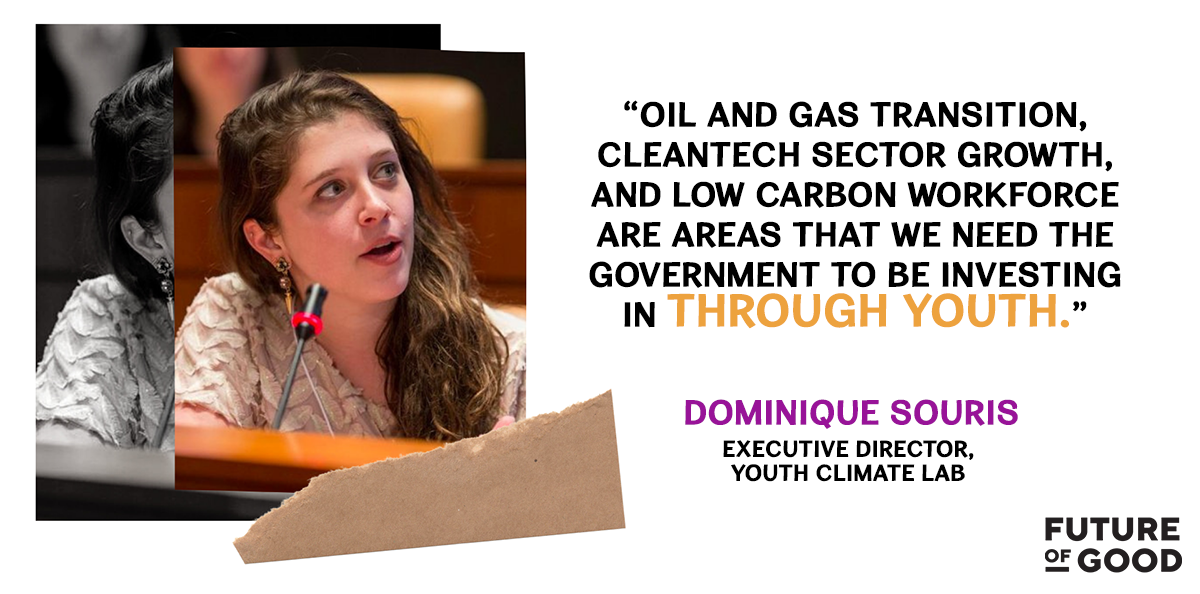
“How do you rebuild in a manner that allows for immediate relief today and long term benefits for today’s young people? Invest in future-proofed and essential skills for youth entering the workforce and people whose work is in transition — oil and gas transition, cleantech sector growth, and low carbon workforce are areas that we need the government to be investing in through youth, in terms of employment and skills building. And do it in a way that’s more than creating six to 12-month internships, which are a great start, but create long term employment pathways for young people, so that youth employment can be a catalyst to the transition to a net-zero economy.”
Tonya Surman | CEO, Centre for Social Innovation
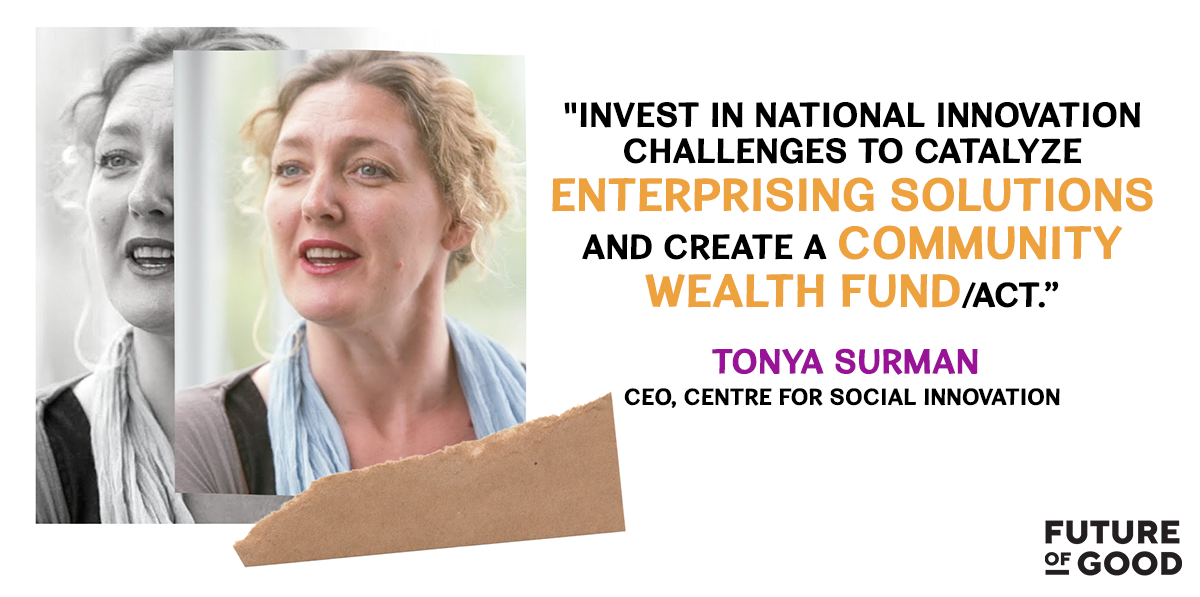
“The federal government should invest in national innovation challenges to catalyze enterprising solutions. Unlock the power of social innovation to get at the root causes of complex challenges such as climate change, income inequality, lack of housing affordability, precarious work and food insecurity. Accelerate problem solving while building the jobs and marketplace for a more equitable, regenerative and prosperous economy by supporting multi-sector innovation labs intentionally connected with the firepower of acceleration and incubation. And last and perhaps most critically, build transformational leadership that supports the future of work in the next economy by creating a Social Enterprise Youth Employment Program that puts talented young people to work supporting enterprising solutions with purpose that emerge through these challenge areas.
To do this, the government should create a community wealth fund or act. Modelled after the Community Reinvestment Act in the US, but way more savvy, we are recommending that the federal government legislate that 20 percent of the five big banks profits and the reallocation of 20 percent of police budgets generate a community wealth fund that would be managed and governed at a neighbourhood and community level with a focus on building solutions including daycares, green jobs, elder care, participatory cities, community energy systems and community economic development to name a few. We need to build community wealth models into this community infrastructure so that we are building truly resilient communities capable of ensuring local food resilience, community shared import substitution and resilient supply chains.”
Justin Wiebe | Mastercard Foundation
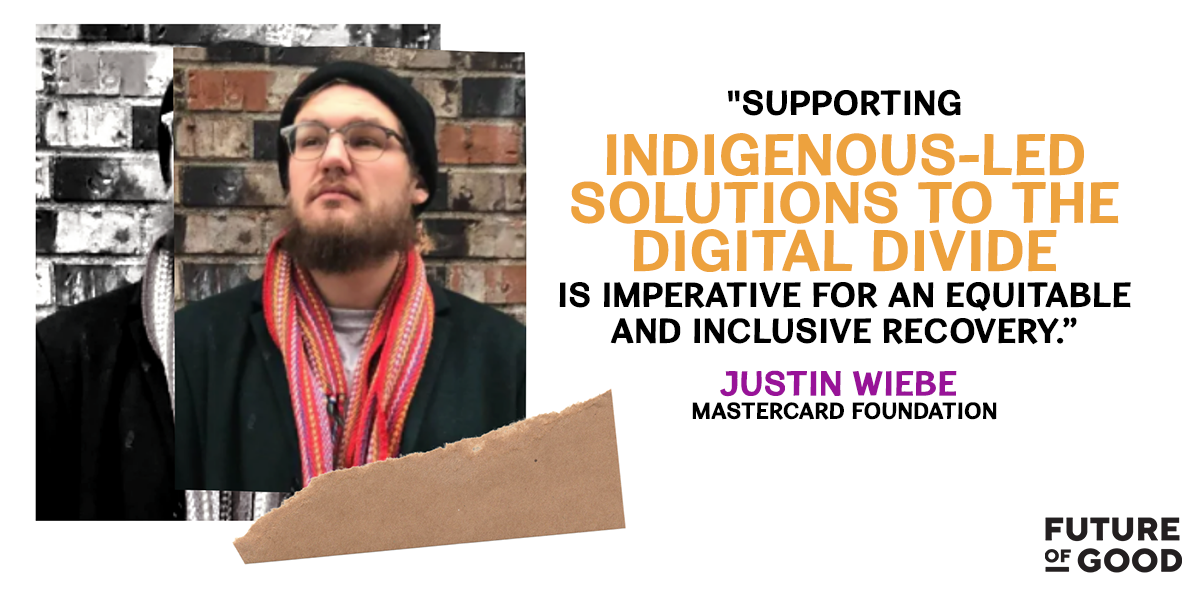
“The federal government must clearly articulate a vision and plan that supports Indigenous-led recovery efforts. In particular, the digital divide has limited Indigenous youth, communities, and Nations from actualizing true self-determination and achieving community prosperity. The digital divide has restricted Indigenous youth and leaners from accessing high quality primary, secondary, and post-secondary education, put barriers in place for Indigenous entrepreneurs and businesses to reach new markets outside of their community, and has limited access to new remote and virtual employment options for Indigenous community members. Supporting Indigenous-led solutions to the digital divide is imperative for an equitable and inclusive recovery.”
Our team is working around the clock to deliver insightful stories, analysis, and commentary on how the social impact world can build back better post COVID-19. If you liked this story, please consider becoming a member. Start a 14-day free trial now.
Your job. Your mission. Your news.
With your support, the sector you're building gets the journalism it deserves, and you get a tax receipt.

Related Articles

Partnered Partnered content Les microcours ont pour but d’aider les Canadiens à acquérir des compétences professionnelles sans frais
Dans le cadre de l’ambition de RBC de doter les gens des aptitudes nécessaires pour réussir, nous aidons les Canadiens à s’adapter à l’évolution du marché du travail en leur offrant gratuitement des microcours et des outils de perfectionnement.

Partnered Partnered content Microcourses aim to help equip Canadians with job-ready skills at no cost
As part of RBC’s ambition to equip people with the skills for a thriving future, the financial institution is helping Canadians adapt to the changing job market with microcourses and upskilling tools at no cost.
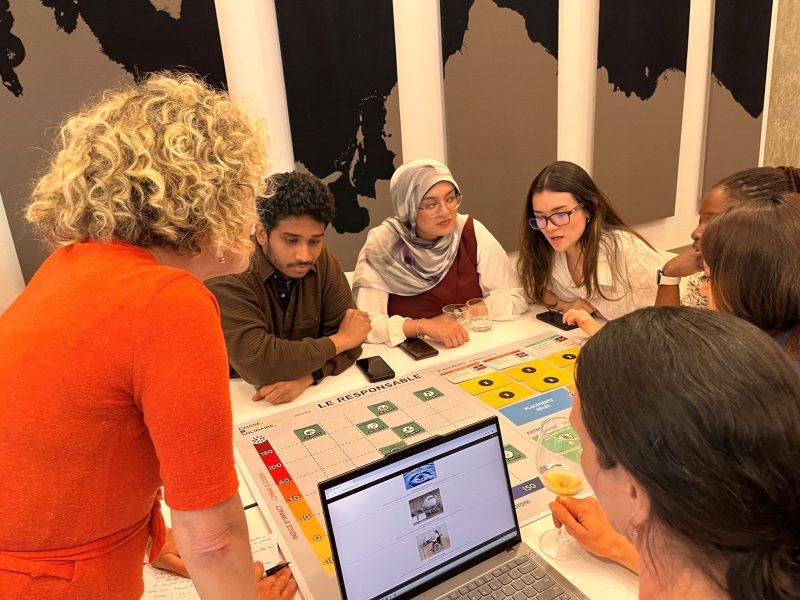
How I experimented with games to change the world
Responsible investment, carbon footprint, and DEI, as well as other serious issues, were all discussed and tried using games.