The pandemic has changed social impact. Here’s what we’re watching in 2021.
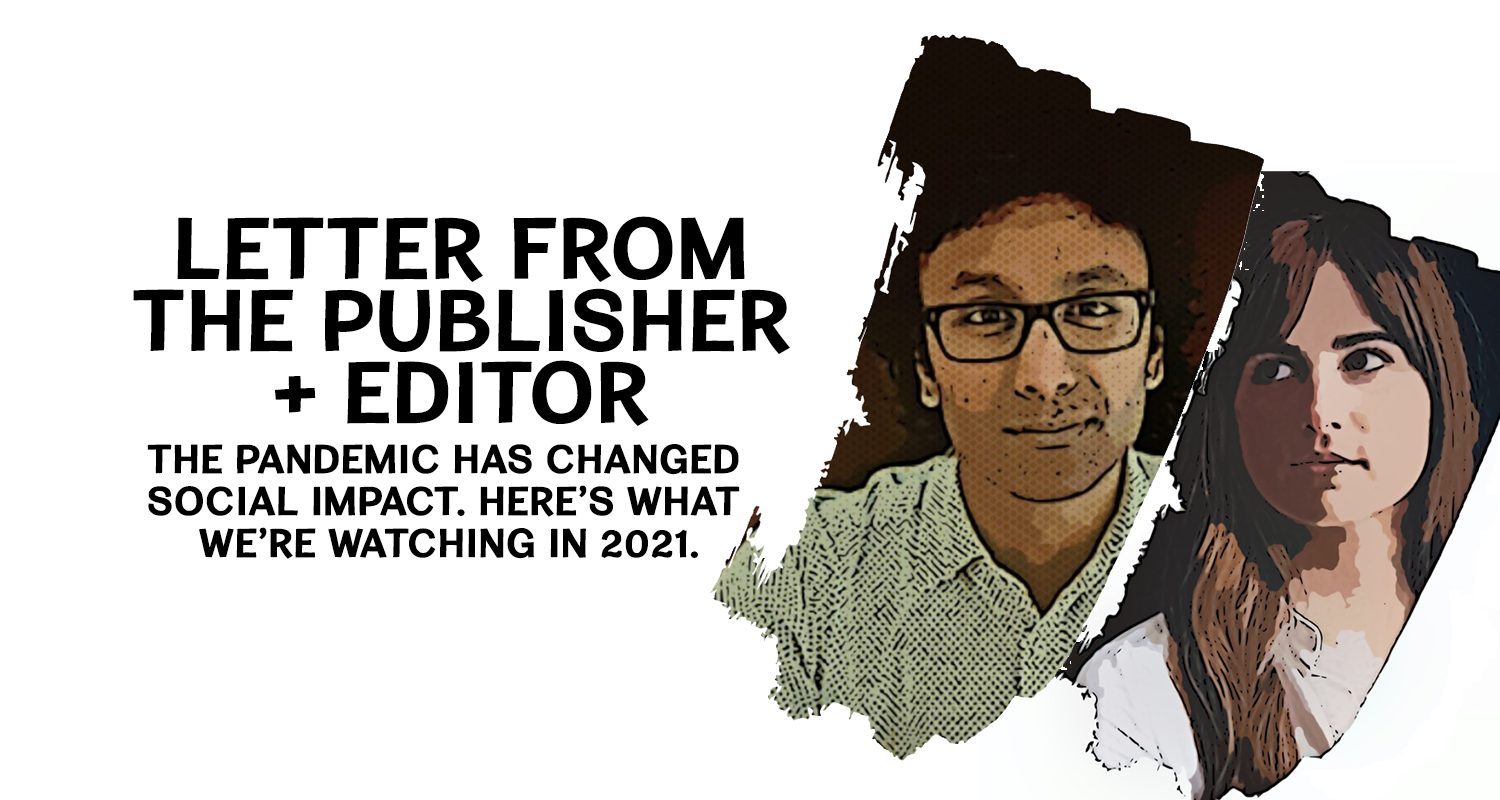
As 2020 wraps up, Future of Good CEO and publisher Vinod Rajasekaran and editor Kylie Adair sat down to reflect on what we’ve learned, and the big shifts in the social impact world we’re anticipating next year.
Vinod: Is the social impact sector ready to step up to after-COVID (AC) era societal needs? Is the sector prepared to help realize the potential of an AC era society?
One of the most resonant messages for me from the 2020 Future of Good Summit was that every turbulence, including this pandemic, has two sides: approaches that may become obsolete, that we need to let go of, and the approaches that are about to emerge.
On one hand, it was fascinating to see how quickly the social impact world could transition — from remote work and digital social services to trust-based philanthropy and championing anti-racism.
On the other hand, there are broader societal transitions emerging all around us, from every corner of the globe and country — from child care to international aid and mental wellness to food security. After 10 arduous months, there are still more questions than answers, but that’s alright. At Future of Good, we’re obsessed with societal questions that help us all better transition to the AC era.
Here are a handful that keep me up at night, from our editorial ‘bike rack’ — the virtual chat where we park all our big questions: If there were an audit of response measures, what grade would Canada receive? Why did we not realize the magnitude of the digital divide in Canada until the pandemic? How do we maintain the environmental gains we’re seeing right now? What should be Canada’s response to the global south’s growing concern about the world’s inequitable vaccine dosage distribution? What types of programs and organizations do communities need to support the hundreds of thousands of COVID-19 survivors for the next decade? Why did most of the Canadian government’s stimulus and subsidy packages not work for the social sector?
Let me see what comes first to mind for our editor, Kylie Adair.
Kylie: If there’s one transition I’m thinking deeply about into 2021, it’s power — who has it, and who could carry out more effective social change work if they had it. In other words, will social impact work decolonize in 2021?
There are signs that this kind of shift is on the horizon. Kris Archie, executive director of The Circle on Philanthropy and Aboriginal Peoples is bringing attention to the ways relationships between foundations and Indigenous communities are broken and ineffective. The leaders of the Foundation for Black Communities recently released a study that shows philanthropy gives a miniscule amount to Black-led and Black-serving communities — and told Future of Good about the innovative community-led model they’ll use. And many philanthropic foundations moved toward a more trust-based, flexible funding model in their emergency response. Will that stick?
I’m also thinking a lot about power dynamics in international social impact work — from humanitarian aid and global development to corporate social impact. The pandemic grounded a lot the travel required for this work this year. Has that meant a shift toward more genuine, trust-based partnerships with local people and organizations?
Vinod: Well said, Kylie. Power is massively integral for a transition we can all look back on and be proud of. It relates to something I’ll be paying attention to, and that’s the politicization of this crisis and its response. In just about every province and territory, as well as federally, it feels like politicization has given way to polarization — and 10 months into the pandemic, communities are on the edge. There are more than enough examples and I don’t think I need to mention them. What I heard from Future of Good members at the Summit is that there are silos and frustrations on the left, there are silos and frustrations on the right, and we aren’t going to achieve an equitable recovery by politicizing the recovery, but it’s beginning to head in that way.
From child care to decent work to vaccine distribution, there is a massive opportunity for the social impact world here, and that is to be bridge builders, not just across sectors but also across ideologies in order to enable a fast and equitable recovery. The sector has struggled (and continues to struggle) in the pandemic’s wake but there have been monumental efforts and incredible ingenuity all around. Will civil society organizations seek to play a bridging role for recovery?
Kylie: Vinod’s right — 2020 has been a polarizing year. But I’m also on the lookout for ways it might have increased civil society’s capacity for collective action. We saw an extraordinary display of mutual aid this year as it moved from the margins — a long-held, culturally-embedded practice among communities of colour, queer communities, and others that have been historically excluded from social safety nets — to the mainstream. We also saw (here in Canada, and for the most part, anyway) an extraordinary display of community care in our willingness to wear masks, physically distance from our friends and family, and drastically change our way of life for the common goal of ending the pandemic and protecting the most physically vulnerable.
Some experts say these shifts we’ve been forced to go through are increasing our capacity for collective action — which may bode well for climate action moving into 2021. Climate change is a massive, complex, expensive problem that will require cross-sector, cross-ideology, and cross-generation collaboration. We’ll be keeping a close eye on how folks are working together to mitigate it and other big, complex problems next year.
Vinod: And so the question now is: what is the relationship between big wealth and big problems? Forbes recently wrote about how the greatest global intergenerational wealth transfer in history is underway, in the range of $50 to $60 trillion to younger generations. It’s a jaw-dropping amount. In addition to this transfer, which will happen over the next 10 years, there is tremendous new wealth building, even right here in Canada, from fast-emerging industries such as natural foods, ethical apparel, software, and cleantech. Historically, we know that when there is a new wealth, there is typically also a new injection of philanthropic capital — a recent example being Airbnb, which launched Airbnb.org or Shopify CEO Tobi Lutke and his partner Fiona McKean launching Thistledown Foundation.
The size of the philanthropic sector in Canada is about $60 billion right now. What shape will the next $60 billion take? This is an area Future of Good has covered a bit, but it feels like we’re just scratching the surface. Shaping the next $60 billion, and doing so in a way that doesn’t contain the same blind spots as the last 60, will be worth paying attention to, especially to go after big, complex problems like the crisis of inclusion and belonging, the crisis of care, and that of climate and clean energy. The next 60 has already shown that it will be shaped around social justice, decolonization, trust-based philanthropy, data-driven, donor advised funds, venture philanthropy and so much more. Philanthropies won’t look like foundations. How about that for a provocation?
Kylie: I started as Future of Good’s editor back in late February 2020, three weeks before the pandemic hit Canada in earnest. The past 10 months have been a crash course in how the social impact world operates, and I have to say, I’m fascinated by the unwritten, unspoken rules the sector follows.
The sector broke many of these unwritten rules in its emergency response. One was: most philanthropic funding has to be programmatic and cannot be operational. Another: workers will be unproductive and lazy if we let them work from home (folks in disability communities have been saying the opposite for years). Now that these rules have been broken, will they stay that way? What other rules did 2020 break? What unwritten rules need to be uncovered and broken in 2021?
But of course, all of this work — breaking the rules, building bridges, shifting power, and shaping the next iteration of social impact work — requires a capacity and capability to transition. Really transition. It requires a social impact sector that’s open to unlearning conventional ways of knowing, being, and doing, to having seriously tough conversations, and, ultimately, to making massive changes.
What’s been incredible to watch in the last 10 months is the response and resilience social impact organizations have shown. The narrative around the block can sometimes be focused on what the social impact world doesn’t have, but what it does have is extraordinary creativity and ingenuity.
The post-pandemic social impact world will look, feel, think, and act differently. Are you ready?
Your job. Your mission. Your news.
With your support, the sector you're building gets the journalism it deserves, and you get a tax receipt.

Related Articles

Texting with a stranger beats a chatbot at easing loneliness: Canadian study
UBC-led study challenges the idea that an always-available AI companion can substitute for a human connection.
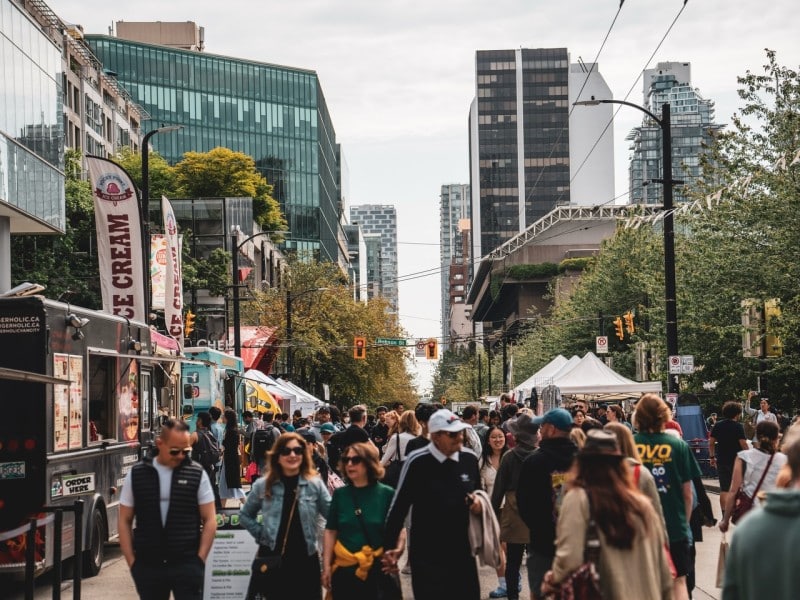
City of Vancouver calls for festival federal funding return
Vancouver’s city council plans to push the federal government to restore and expand federal funding for major festivals and cultural events.
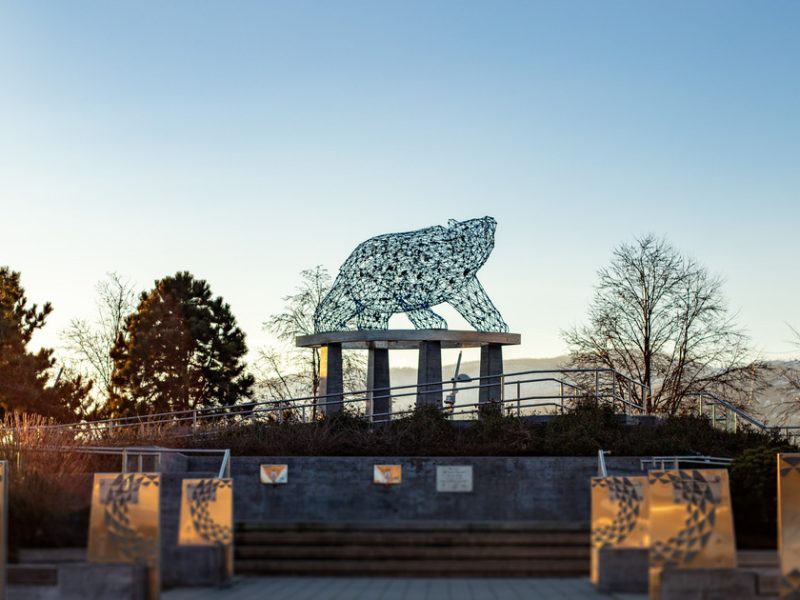
Victoria, Kelowna and Quebec City have the most vibrant arts and culture scenes, new index finds
The inaugural Arts Vibrancy Index showed that mid-sized cities often outperformed major Canadian cities on several indicators, including the overall share of arts and culture businesses, arts and culture revenue per capita, and arts and culture jobs per capita.
