
LONG READ: Shared platforms strengthen grassroots, mutual aid work – yet funders know little about them
Funders are still often limiting grants to charities and qualified donees. What does that mean for community groups?
Why It Matters
In Canada, there is still little legal structure for the instances in which incorporated grassroots groups and non-profits need access to a ‘legal home’ in a charity to pursue a particular funding pot. On the other hand, the U.S. has a specific legal designation for a fiscal sponsor. The lack of legal recognition means that knowledge of shared platforms, trustees and fiscal sponsors is not widespread – despite changes that have made granting to non-qualified donees easier.
Correction: A previous version of this story stated that MakeWay Charitable Society had administered funds on behalf of Future of Good. We have since removed this statement and would like to add that the MakeWay Foundation has provided funding to Future of Good.
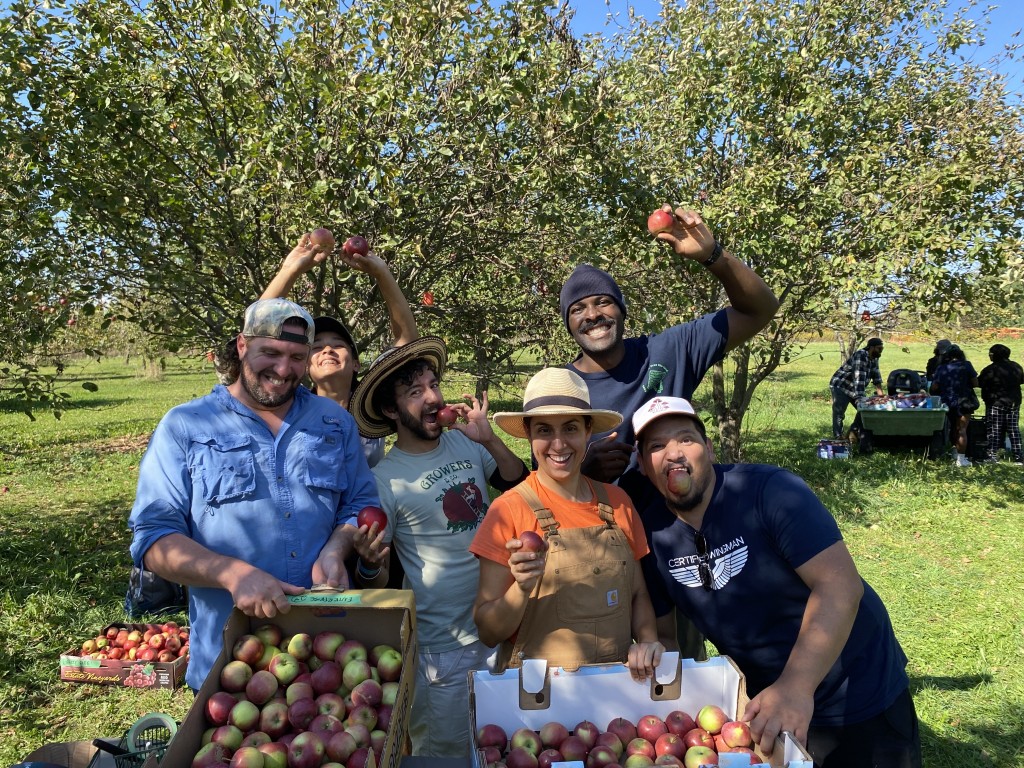
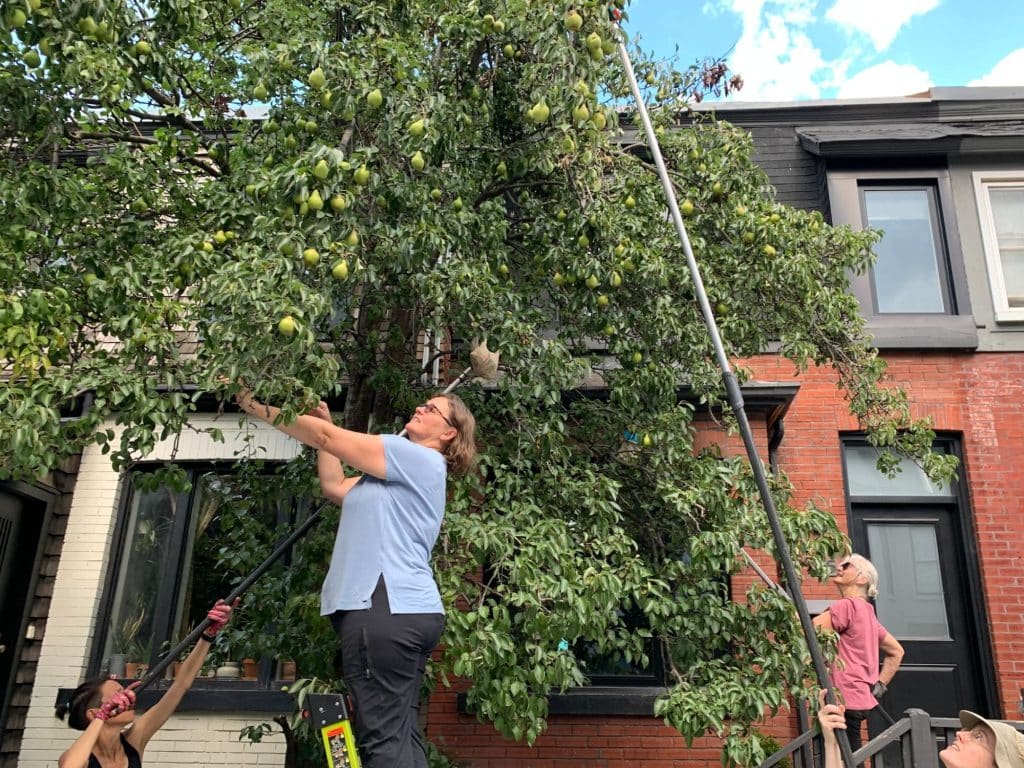
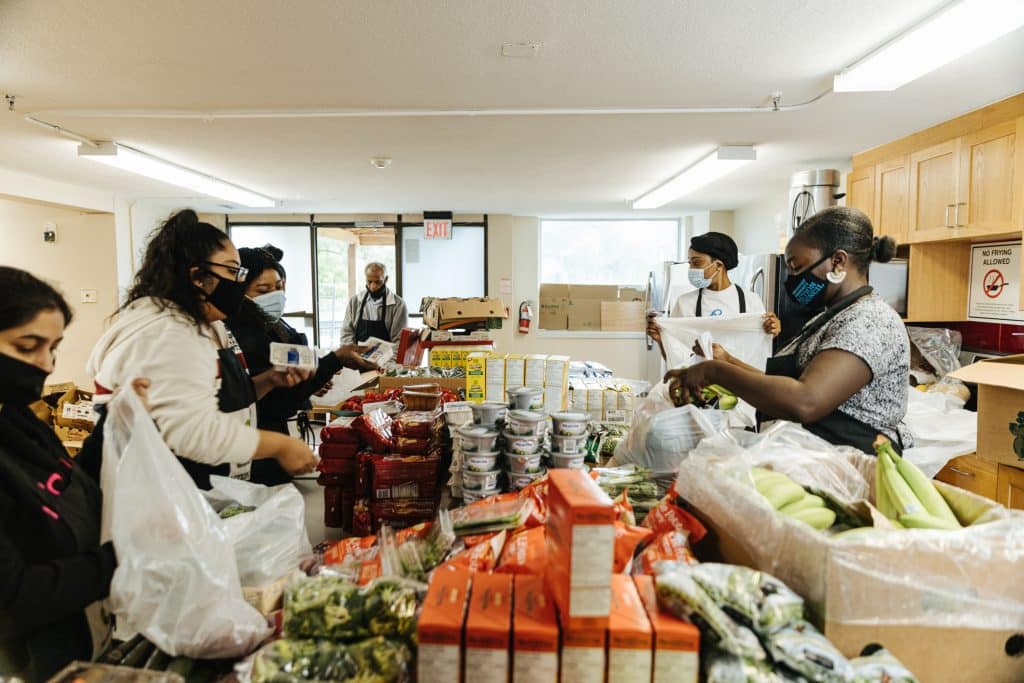
Since 2008, Not Far From The Tree (NFFTT) has been gathering volunteers to pick fruit from trees on private lands in Toronto.
One third of the harvest goes to the owner of the tree, another to the volunteers, and the third to community partner organizations, including community fridges, food banks and meal programs at shelters.
As a community-led group, NFFTT does not have its own, independent non-profit or charitable status. Yet, it has secured support and funding from the likes of the Peter Gilgan Foundation, the RBC Foundation, and the Toronto Foundation.
Access to this philanthropic funding would not have been possible without the support of the MakeWay Charitable Society, said project director Julia Girmenia.
Rather than registering or incorporating as an independent organization, NFFTT is a project of the MakeWay Charitable Society’s (MWCS) Shared Platform. Girmenia, one of only two staff members at NFFTT, receives financial management support, insurance access, and grant management support from MWCS, alongside 60 other organizations.
“Most of the [grant] applications I was seeing, you needed to have a charitable number,” Girmenia said.
“You need to have some sort of status. That’s where MakeWay comes in: we need that charitable number so that we can be awarded these funds.”
As the project is part of MWCS’s shared platform, NFFTT staff are also MWCS employees. For a grassroots or unincorporated group, and even for small non-profits, these infrastructural supports can be challenging to put in place without consistent funding.
In exchange for providing some of that infrastructure, NFFTT and other projects contribute a percentage of their revenue to MWCS. While Girmenia added that MWCS does not tell projects how and where they should spend the money granted to them, MWCS is still responsible for upholding requirements from funders, the CRA and accounting practices, the latter said.
Although NFFTT had previously considered applying for its own charitable status – and hence rolling off the MWCS shared platform – the steering committee deemed the cost of applying for charitable status prohibitively expensive.
This, for many grassroots and community-led groups, remains a bind in accessing funding: most funding sources and grant pools require a charitable number, yet becoming a charity is a lengthy and costly process.
Funding is an “age-old and all-important question” for Jordyn Ledgister, who leads CommUnity Doulas in Toronto.
“Finding people who are willing to support such a niche cause is not easy by any stretch, but there is no way that, if I had done this project on my own, I would have been able to secure the kind of funding that we’ve been able to secure,” she said.
CommUnity Doulas is another project on MWCS’s shared platform, providing programming and doula services to new and expectant mothers. Ledgister neither has the capacity nor wants to get into the weeds of the infrastructural pieces required should she register CommUnity Doulas as an independent organization, and would rather rely on MWCS’ shared platform structure instead.
“I would never, ever do this as an independent non-profit,” she said.
“It’s just too much work, and it’s not worth my time, because I can’t pay myself.”
Ledgister takes on the fundraising, which is then administered through MWCS, with the latter paying Ledgister as an employee.
Many grassroots organizations will just want to be doing the community-facing work without the stresses of building an organization, a charity and a board, Ledgister added. At the same time, having seen just how many grants need to be administered through a charity, she understands why there is a risk aversion among grantmakers.
“That’s just the nature of the sector at the moment, and for good reason,” she said.
“If I was just by myself, yes, your heart is in the right place, you mean well, but it’s messy.
“At the end of the day, the finances need not be messy. And that’s because this is other people’s money. There is a level of responsibility that needs to be there, and grassroots organizations don’t have the bandwidth – not for lack of know-how, [but] there aren’t the resources.”
Shared platforms, trustees, fiscal sponsors, and organizational mentors
According to MakeWay, registering with the CRA as a charity can not only cost as much as $20,000 in start-up, legal and accounting fees, but also take one to two years to get up and running. This estimate includes the cost of incorporating a non-profit, which is a pre-requisite to applying for charitable status, MWCS said.
For grassroots groups that want to focus on their direct impact in the community, setting up an organization and all the ancillary infrastructure could be both inaccessible and unappealing.
However, to sustain their work, they will still want access to funding and grants – and many, like Girmenia and Ledgister, have noticed that the majority of grants require applicants to have a charitable number, allowing the funder to disburse funds through a charity or a qualified donee.
In the U.S., the IRS recognizes the model of fiscal sponsorship, wherein a 501(c)(3) charitable organization provides administrative, legal and fiscal oversight for a project or new non-profit that is not yet recognized as tax-exempt.
However, in Canada, the “CRA’s regulatory structures do not specifically address organizations operating as a shared platform,” said Chelsea Morka, senior manager of MWCS’s shared platform and capacity strengthening practice.
Without a legal definition in Canada – and with a clear one in the U.S. – the sector has instead come up with its own definitions, said Morka, adding there is a lack of universal acceptance of the different terms by which a grassroots group can find a legal home within a charity.
Unincorporated groups or non-profits finding legal homes in registered charities is common, but a patchwork of terminology has emerged to show the different types of relationships that the sector facilitates.
Some Canadian organizations also use the term fiscal sponsor. Toronto-based non-profit co-op Hypha currently “hosts” two community groups, but, under its agreement, states that, as it is not a charitable organization, it cannot issue tax receipts.
Meanwhile, the Peel Region’s Community Investment Program also allows grassroots groups to apply for regional funding through a fiscal sponsor, which can either be a registered charity or a non-profit with acceptable financial health.
The City of Toronto and the Ontario Trillium Foundation (OTF) allow funds to be disbursed to grassroots groups through pre-approved organizational mentors (OM). Trustees, which can be both charities and non-profits, also hold and disburse funds on behalf of grassroots organizations.
In a toolkit released by the Ontario Nonprofit Network (ONN), the organization differentiated between trustees and shared platforms, with the former focused more on a transactional or contractual agreement, while the latter focused on a relationship.
According to the ONN, “shared platforms can play a role in supporting Black and Indigenous-led groups by providing critical infrastructure to grow and access funding.” They are also crucial to sustaining grassroots groups and mutual aid networks that sprang up during the COVID-19 pandemic.
Where organizational mentors, trustees and fiscal sponsors might form a relationship with a grassroots group to administer a specific pot of funding, shared platforms support these groups with more general capacity-building, professional development and growth opportunities.
Like the MakeWay Charitable Society, FoodShare Toronto supports seven BIPOC-led food justice groups through its own shared platform, bringing their leaders on as staff.
“One of my personal pet peeves with this work is that I don’t necessarily know that all funders have the same understanding of what an organizational mentor is, versus what a trustee is, versus what a fiduciary intermediary is,” said Sharita Henry, director of programs at FoodShare.
“It’s kind of just become these terms that people will use to say ‘We need the money to go to a charity.’”
“In the past, FoodShare has operated as essentially whatever the requirement of the funder is for us to operate as,” Henry added.
“OTF is a good example. Their Youth Opportunities Fund recipients, if they’re non-qualified donees, require an organizational mentor. So if we have a group coming to us with OTF funding, we sign the papers to be their OM for that grant.
“For others, it may be a trusteeship. Whatever the funder says, we’re able to fill that role within the scope of what we’re able to offer.”
Despite overlap in the sector’s general understanding of these terms, Henry and the FoodShare team differentiate between the grassroots groups they support based on the type of relationship they are entering into.
As a trustee, they are solely responsible for the group’s finances, in that they can receive funds from the funder and disburse them to the group.
On the other hand, the more formal Supportive Partnerships Platform is where FoodShare, as a charity, can provide more long-term, wraparound support to selected groups.
“For MakeWay, I think the way that we would make a distinction between the shared platform model and that of a trustee or perhaps an organizational mentor even, is that a shared platform onboards projects and that relationship is one that is indefinite, until we decide otherwise,” Morka said. “There is no time-bound relationship.”
Groups that join a shared platform are “structured in” to the charitable organization, Morka said.
That is, she added, until they choose to transition off the shared platform to set up their own independent entity or wind down their operations altogether. Groups can also choose to move to a different platform.
Both MakeWay Charitable Society and FoodShare Toronto have been running their respective shared platforms in some capacity for upwards of 20 years. Both provide groups with business, legal, and compliance support that they would struggle to access on their own, including fundraising support, program design, budgeting, financial reporting, grant management, reporting to funders, insurance and contracting.
They both require groups to have the capacity to generate revenue, with groups joining MakeWay’s shared platform able to show a budget of more than $100,000.
While groups that join MakeWay are required to state publicly that they are part of MakeWay, those that join FoodShare are not.
Both will open and close opportunities for additional applications to their respective shared platforms, depending on their own capacity to provide payroll, HR, and grants administration support.
“There can also be challenges with financial sustainability,” Morka added. “The greater the breadth of work and partners supported, the more important it is to be able to maintain relationships and offer tailored support.”
Grassroots groups appear more ‘legitimate’ with charitable backing
“Leadership at FoodShare has, for a very long time, believed that leadership is in community, and it’s best when we try to support community members to actually lead the solution-finding to issues caused by poverty and food insecurity in their communities,” said Markus Doerr, interim director of strategic initiatives at FoodShare.
“They will have relationships and access to space and people and knowledge that hasn’t historically been recognized by the charitable institutions.”
Several of the food security groups that are part of FoodShare’s Supportive Partnerships Platform (SPP) said they also did not want to, or did not have the capacity to, pursue charitable status.
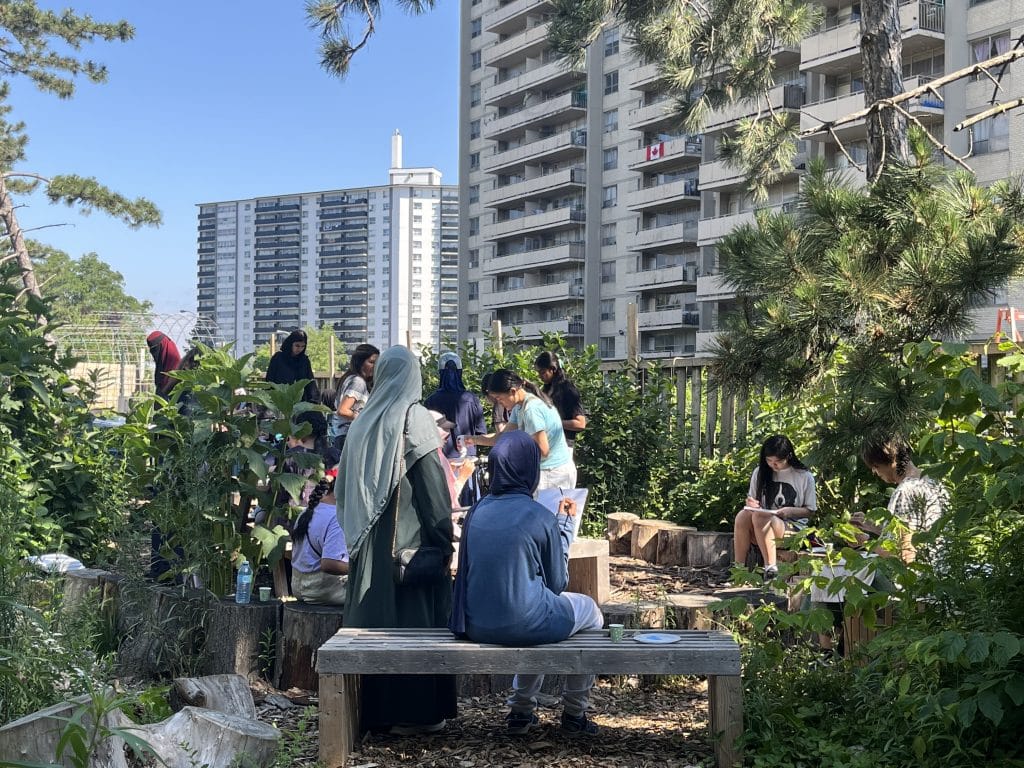
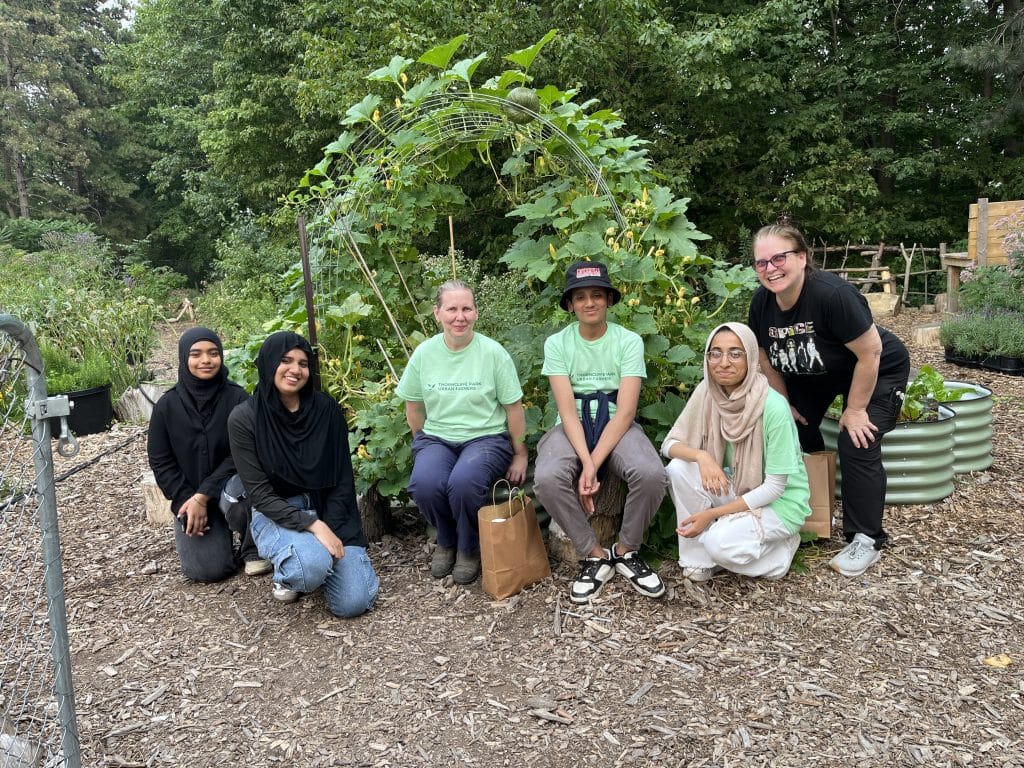
However, applying for grants with FoodShare’s backing gave them greater legitimacy among funders, said Cheyenne Sundance of Sundance Commons and Michelle Delaney of the Thorncliffe Park Urban Farmers (TPUF).
“There’s a trust because FoodShare is much larger and a well-known organization,” Delaney said. “So we kind of get to piggyback off that trust that they have with funders.”
Some of MWCS’s project partners also reported being able to access unrestricted pools of funding through the shared platform.
On the other hand, Sundance said she often saw grants and funding arrangements that provided a pre-approved list of charities the grantee would need to administer their funds through, whether through a trusteeship, an organizational mentor, or a fiscal sponsor relationship.
She had seen this for both large and small grants, and felt she would not get the same wraparound support from a trustee chosen at random to administer a grant as she does through FoodShare.
“It penalizes grassroots groups, and it creates, in my opinion, a weird system where a group can get $15,000 for just holding the money and doing this very simple kind of auditing,” Sundance said, adding that often grassroots groups are run by young people.
To sustain shared platforms, both FoodShare and MakeWay Charitable Society charge projects a fee, a percentage of any revenue or grants the charity administers on behalf of the grassroots group. MakeWay recommends setting aside 10 to 12 per cent for fees, and Henry confirmed that the fee is between 10 and 15 per cent for FoodShare’s projects, depending on the type of revenue coming in and the administrative support required.
Among the projects that Future of Good spoke with, most felt comfortable with the fees charged by their charitable partners and the level of support the fees afforded them. Some said that their willingness to have a portion of the grant go towards shared platform fees might wane if they start winning larger grants.
On some occasions, they have found that funders are willing to have a portion of their grant cover the administrative fees that would go to the shared platform partner.
Shared platforms underappreciated in Canada
In a shared platform arrangement, it’s often the groups themselves that are at the forefront of the fundraising process, with support from the charity to identify, submit and administer the grant when it is awarded.
However, some of the grassroots groups also said that they had seen confusion among funders and others about the way that shared platforms and other registered charities steward funds for grassroots groups.
“When I speak to lawyers and accountants, [they] appear to frown upon this supportiveness and talk about it as if it’s a gray zone,” Delaney said.
Funders had also asked Girmenia if she had plans to roll NFFTT off the MWCS shared platform.
The FoodShare team have also found it challenging to explain the model to funders, especially if several projects are eligible for and interested in the same funding opportunity.
“There are still a lot of restrictions for charities who might submit multiple applications under one charitable number, or only being able to receive one grant per charitable number,” Henry said.
“For a shared platform, where we might have three or four groups interested in applying for a specific pot of funding under our charitable number, to be restricted to one, or told that only one will be successful, feels like it defeats the purpose in a way.”
Henry said that FoodShare now has an internal decision-making process for when such competition for grants arises, especially as some of the charity’s own projects might be eligible for the same funding that its shared platform partners are interested in.
Morka has also had similar experiences with funders granting through the MakeWay Charitable Society, with varying degrees of understanding and ability to accommodate a shared platform among them. On the other hand, she has also seen instances where funders discover new projects through the shared platform, too.
Prior to CRA’s changes to granting to non-qualified donees, the barrier to entry for many grassroots groups accessing funding was much higher than it is today, said Doerr. However, despite the loosening of the grip on how the CRA and foundations administer grant funds, Henry has found the rollout of those changes to be “very slow and very clunky.”
“Even though the format of the NQD granting is intended to allow the money to flow directly to grassroots groups, there is still obviously a number of barriers and bureaucratic challenges that true grassroots groups will still struggle to navigate,” Henry said.
She added that while the policy change hasn’t necessarily impacted the inquiries from grassroots groups that FoodShare receives, it has changed the way FoodShare communicates with groups that want to understand NQD granting without going through a charity.
“The average grant size for NQD grants, I think, still tends to be smaller than what we see foundations or organizations granting to charitable entities,” Henry said.
“So as an NQD grant, a group might be able to get $5000, or $15,000, or $20,000, but through the shared platform with a charitable number, they’re able to get $100,000, $200,000 plus.”
Author

Related Articles


Carleton prof proposes hub for philanthropy research in Canada
A proposed hub would bring researchers together to study trends and strengthen Canada’s philanthropy sector.

Victoria, Kelowna and Quebec City have the most vibrant arts and culture scenes, new index finds
The inaugural Arts Vibrancy Index showed that mid-sized cities often outperformed major Canadian cities on several indicators, including the overall share of arts and culture businesses, arts and culture revenue per capita, and arts and culture jobs per capita.