Non-profits are prone to toxic work environments, experts say
Labour and human rights violations within social impact organizations
Why It Matters
The non-profit sector, while employing 2 million Canadians, remains mostly off the radar when it comes to public cases of labour and human rights violations. But those in the sector say toxic work environments are leading to employee burnout.

As conversations about social and racial justice become more mainstream, some people in the non-profit sector are sharing their grievances publicly, in what many are calling a shift in the sector.
In July, seven staff members and consultants of the Nobel Women’s Initiative, including all the women of colour in the Ottawa-based women’s rights organization, collectively resigned. Weeks later, they issued a statement calling for “profound organizational reforms — based on transparency, equity, inclusivity and a commitment to uproot embedded patriarchal practices.”
In August, a third-party review of the Canadian Museum of Human Rights in Winnipeg went public, which found “pervasive and systemic” racism within the organization, which have adversely impacted Black, Indigenous, and people of colour. It also stated cases of homophobia and sexism.
Sharon Nyangweso, founder of Quake Labs, a communications and inclusion agency, says these issues are not unique, and for employees of colour, navigating systemic racism compounds stress in an already overworked sector. “When you consider the history of racism and imperialism [in the non-profit sector], and you put it together with staff who are typically under-compensated or overworked, it’s not going to end well,” she says.
Nyangweso has seen it all. There was the non-profit employee whose parent died and on their first day off, received messages from their director pressuring them to return to work. There was the father who was told he needed to use vacation days when going to hospital appointments for his child’s brain tumour. There are those who were demoted when returning from parental leave, and the employees of colour who have been told they should be happy with their current roles as they won’t be promoted. “It ranges from irritating to bordering on illegal,” Nyangweso says.
Andrew Langille, a Toronto-based labour lawyer, says poor human resources practices, and even violations of human rights and labour law, are not uncommon in non-profits. “A lot of non-profits start with the best of intentions but because of a lack of resources or lack of skills within the organization, oftentimes, pressures are downloaded onto staff in a variety of ways.” He says that low pay, precarious work and ineffective organizational procedures, which are common amongst small non-profits, “often come together for quite a toxic environment.”
Langille, who has been an executive at non-profit organizations, served on non-profit boards and also represented employees of non-profits, says that when employees raise concerns, they are often received by managers with a level of hostility, and sometimes reprisal. In a statement of solidarity, a group of 34 former employees, consultants, and interns of the Nobel Women’s Initiative said those who expressed concerns about employee well-being faced repercussions.
Both Langille and Nyangweso say the low rate of unionization in the non-profit sector is a contributing factor to toxic work environments. Nyangweso says non-profit workers risk their livelihoods when reporting problematic practices at work, and that unions would bring them a much-needed safety net.
She also says some non-profit managers use their organization’s mission as scapegoat: “How can your staff hold [executives] to account when you say: ‘Everything we are doing is for the sake of these starving African children?’”
Shanaaz Gokool, a human rights activist and the former executive director of Dying with Dignity Canada, an end-of-life rights charity, believes more stories of toxic work environments in the non-profit sector will come to light. “After George Floyd’s murder and in the middle of a global pandemic, something broke and shifted. People just felt a sense of rage and anger and frustration and empowerment, so they started speaking up.”
Gokool currently has a pending lawsuit regarding wrongful dismissal and systemic racism and discrimination against Dying With Dignity Canada. Her story made headlines late last year, when she went public with evidence of pay discrimination.
In recent years, a handful of Canadians have shared similar stories, including Elizabeth LeClair who experienced sexual harassment and assault while working as a fundraiser and Chelsey Rhodes who went public regarding experiences of harassment and abuse at Engineers Without Borders.
Earlier this year, when Gokool ran an online search on systemic discrimination in Canada, her story was on the first page of search results. Now, Gokool’s story is buried deep on page 30 of a search. “You can see from that how things are changing,” she says. After going public with her story, Gokool says dozens of non-profit employees reached out to share experiences of discrimination, harassement, ageism, abelism, and more.
She warns them of the possible repercussions of going public — including being threatened or sued for defamation, losing colleagues and friends, experiencing distress and health challenges, a damaged reputation, and declining professional opportunities. Gokool, who is currently unemployed, has experienced this first-hand. “I was the only person with dark skin leading on these discussions about dying. I am still an expert, [yet] there is no space in the end of life and assisted dying space for me — anywhere. That is heartbreaking.”
Going public with workplace grievances is also sometimes seen to undermine a non-profit’s reputation and ability to raise funds. In recent months, as the WE Charity made headlines regarding conflicts of interest after winning a government contract, former employees went public with accounts of racism and other problematic practices within the charity. Many non-profit leaders, including those from Imagine Canada — which advocates for better public policy on the charitable sector — have vocalized concerns around how the WE Charity controversy will impact the entire charitable sector.
Still, for those in toxic work environments, Nyangweso suggests taking collective action, as in the case with the Nobel Women’s Initiative. Langille recommends contacting a labour lawyer and collecting evidence or documenting the issue. “If you’re experiencing a wage gap, then track your hours and collect documentation on pay. If you’re being harassed, you’d want to document what you’re experiencing — these are all things you can do to protect yourself.”
However, Nyangweso recognizes that not everyone is in a position to be a whistleblower or assert their rights, particularly immigrants and women of colour. “We often feel we need to [take action against injustice], otherwise we are going against our values,” she says. While it is challenging, she says employees should prioritize self-care and take advantage of what they are entitled to — whether it’s sick days, a full lunch hour, or benefits.
Your job. Your mission. Your news.
With your support, the sector you're building gets the journalism it deserves, and you get a tax receipt.

Related Articles
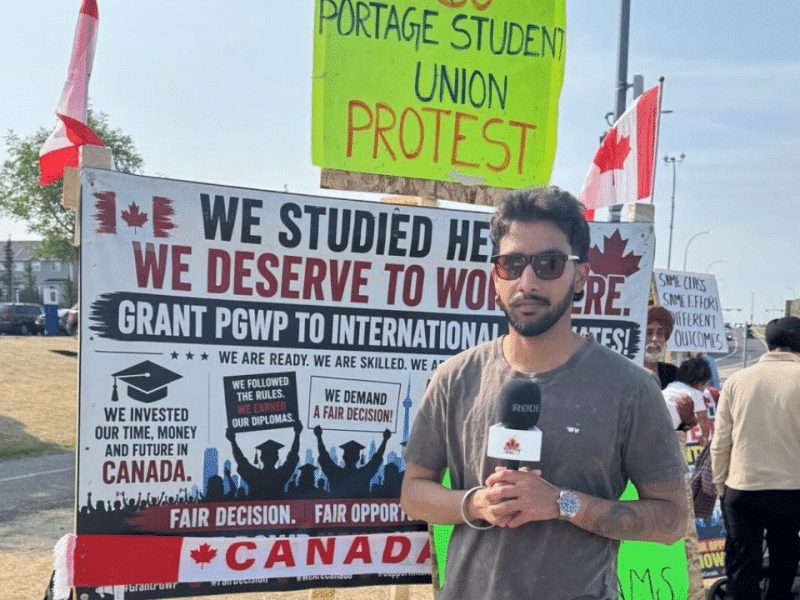
‘Canada must not go down that road’: More than 250 organizations demand investigation into CBSA after student protesters issued exclusion orders
The students were protesting after being denied post-graduation work permits they say they were eligible for when they enrolled at Portage College.

Half of Filipino immigrants to Canada are overqualified for their jobs: StatCan
‘For the relationship that Canada has with the Philippines, it seems like it’s lopsided.’

Partnered Partnered content How construction contracts became the blueprint for social change in Manitoba
Manitoba is a leader in social procurement, with decades of partnerships among government, businesses and social enterprises that have shaped a model other communities can learn from.
