“Peace is a verb, not a noun”: why modernizing global cooperation and aid must start with reframing language
Dissecting the language within the global cooperation and aid sector that is keeping colonialism alive
Why It Matters
Words like decolonization are not made for the global south. If the global cooperation and aid sector fails to use language that is meaningful, inclusive and accessible to everyone, conversations on advancing the sector’s future will remain one-sided.
This story is in partnership with Cooperation Canada. See our editorial ethics and standards here.
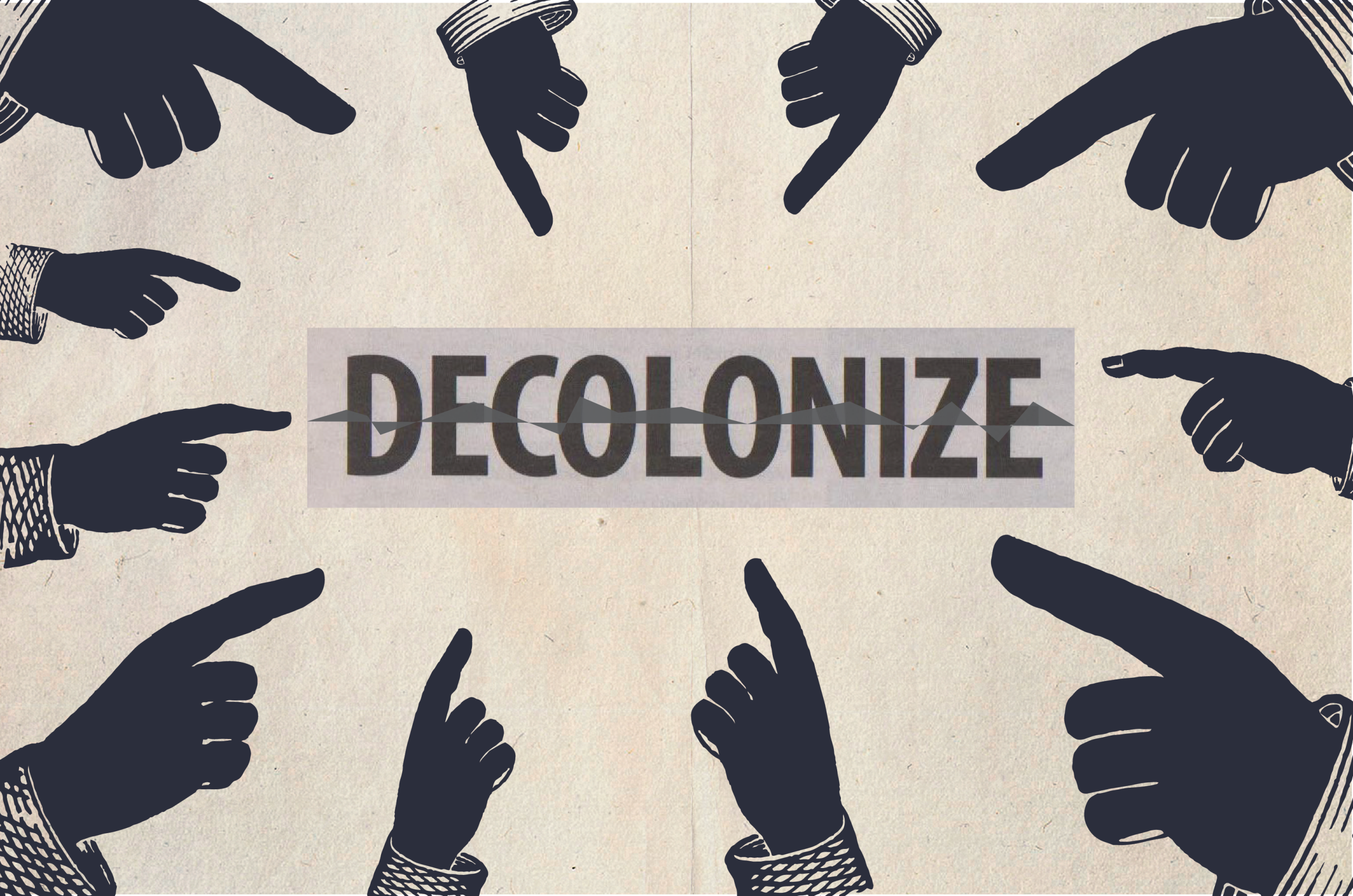
Decolonization is lost in translation.
Though it’s become somewhat of a blanket term in the social impact world, the word decolonize originally comes from when a colonizing power leaves the country or state that it was formerly colonizing. The act does not automatically undo the wrongs of colonialism – but in fact, these intergenerational effects are often very much alive for many populations.
In the last few years, calls to action such as “decolonize the workplace” or “decolonize healthcare” are more and more common. But what are they really encouraging? And more importantly, who do these calls to action speak to?
Several formerly colonized cultures and regions, like South Asia, don’t even have a word for decolonization – the sentiment does not relate to the populations that it is meant to serve. Many activists in the global south have also criticized the use of words like empowerment and localization for their inherent ‘white gaze’ in belittling populations outside the global north.
When it comes to the localization agenda, experts have criticized the lack of real powershifts that allow global south actors to have a greater decision making power and agency over implementing local solutions.
Then, during the 2016 World Humanitarian Summit, the grand bargain agreement was a major milestone to hold the sector accountable when it comes to shifting more financial power to local actors. Donors and international organizations committed to providing 25 percent of humanitarian funding to local organizations and responders.
However, recent assessments of the grand bargain agreement show that very little had changed in how much money and leadership power was being shifted to local actors. The largely optimistic ended up as a major disappointment for many local organizations around the world.
Decolonization and localization remain as elusive ideals, and local knowledge continues to be undervalued.
How the language of global cooperation and aid excludes many populations
In Peace Direct’s 2021 ‘Time to Decolonise Aid’ report, language is a central theme. Through interviews and case studies from around the globe, the report unpacks what kind of words and phrases the global cooperation and aid sector uses, and how much of that language excludes global south populations.
Shannon Paige, a policy associate at Peace Direct, explains that language is a massive barrier for many people, not only in terms of the literal language but also the common words and phrases. In what way is the language being used? What are the terminologies used?
More importantly, what ways do those terminologies assume that people have a certain experience or have had access to similar education as those using it?
Paige shares the example of the concept of capacity building. “We talk a lot about capacity. And those people we spoke with [for the report] really found that term to be demeaning, failed to recognize their agency, failed to recognize their very specific expertise and capacities,” she says.
Also, funders in the global north often view capacity in a very narrow scope, according to Paige. They don’t recognize that local communities have ways of existing and functioning that aren’t valued.
“[Local actors] have to almost convince [funders] that they do have capacity, or that they may not know how to fill out a particular type of report; they do, though, know how to do five other things that somebody from the United States or Canada or Sweden wouldn’t know how to do,” says Paige.
And so the issue isn’t simply about the word ‘capacity’, but more so on how capacity is defined and imposing that definition as a one-size-fits-all for vastly different communities.
“What I found is that language that was used to try and refer to these global-level, extremely high-level systems changes that were occurring tended to not being regionally or linguistically specific,” says Paige.
Words like decolonization and localization, she says, tend to be something that come out of more academic spaces, and then would trickle down to be adapted to the linguistic conventions of various languages.
“I don’t necessarily think it’s a bad thing but what we’re describing are these really large systems change.” Local communities, however, sometimes have difficulty relating to these concepts and seeing themselves as a part of the conversation, according to Paige.
For Peace Direct, Paige explains that they used the word ‘decolonize’ in the report to signify the ongoing colonial dynamic that continues to exist within the global cooperation and aid system.
“We act as though the hierarchies of our current system are innate and inherent. And we’ve naturalized them without recognizing that they are a product of history. We don’t have the language to actually talk about it. We have the language to talk about political colonization and colonialism and imperialism, but not understanding the ways that these relationships continue to be unequal and continue to privilege certain populations over others,” says Paige.
Understanding how language has shaped global cooperation and aid systems
The criticism around language is not only about words, but how these words continue to keep unequal power structures in place in the way that they impact systems. Words like ‘empower’, though seemingly neutral and positive, tend to reinforce the idea that one group with more power needs to teach a population how to find their own power.
“We’re seeing a lot of things in language that really highlight that the global north believes that they have some sort of divine or inherent superiority to local populations,” says Paige. “That’s why the conversation is framed around this idea that they need to empower them and share their power, rather than recognizing that they have their own power and what’s actually needed is for global north actors to relinquish some of theirs, not for local populations to build up their own.”
Paige also explains that this idea of empowerment is quite disingenuous when considering the realities of global south populations when it comes to how they interact with the global north.
“The way that our system is constructed, if you’re a local actor in the Democratic Republic of Congo, you will have a better chance of accessing a UN entity in your own country that exists to serve you if an external party in the global north can make an introduction for you and legitimize you,” says Paige. “Their power as people, as individuals is not recognized by a system that was formed to privilege the global north.”
Changing who is writing and leading the narrative
Karri-Lynn Paul, an adult educator at Coady Institute teaches an ‘abundance-based approach’ in her programing for Indigenous women across Canada. The students of this program have worked on community-based projects that build on the existing positives within that community.
“We talk a lot about labels and no one knows labels better than Indigenous people in Canada,” says Paul, adding that these labels and the idea that Indigenous populations need to be ‘empowered’ perpetuates this idea that the communities are lacking.
“When [Indigenous women] come to our programs, they start to learn they’re often stuck in what I would call internal colonialism or disempowerment − they’re stuck in that idea that they can’t make change,” says Paul.
Looking at the abundance in a community, however, doesn’t mean ignoring the realities of struggles that exist. Rather, it’s about starting the conversation with seeing the assets, talents, gifts, and skills of the people in communities.
“From a community development perspective, I think there’s a lot of opportunity for this to be a space of resistance, to do things [our] own way, and to decolonize the way that we build and relate to community,” says Paul “I don’t think it’s just good for communities in Canada, it’s good for communities everywhere.”
Paul explains that there’s a lot to learn from this approach to understanding different communities and allowing local actors to define themselves and tell their own stories. It’s also a method for funders, locally and globally, to take a moment to understand a worldview outside their own perspective.
Breaking the perception of neutrality
“The peacebuilding sector, at times, can talk about ourselves on a bit of a moral high ground because we are here to end conflict, prevent conflict, create peace. What’s political about that? Well, everything,” says Paige.
“I think it’s been really, really challenging for us to recognize who we view as the perpetrator, who we view as the victim, what we view as a victim, even our notions of what a conflict is,” says Paige. “We in the west are so arrogant at times to presume that the way that we see the world is the way that the world is.”
“I had the privilege of engaging with an Indigenous woman from the Philippines who was sharing how for her community peace is a verb, not a noun,” says Paige. “And so the idea of peacebuilding feels redundant because inherent in the term of the word peace is this notion of continuous effort.”
Paige says that the west can be quite arrogant at times to presume that the way that they see the world is the way that the world is. And this tunnel-vision can largely limit global cooperation and aid sector’s approach to local collaboration.
“We are unaware of our own routines, our own norms, our own language — we are at times oblivious to our own functioning; we don’t see what we don’t see. And by engaging and meaningfully creating opportunities for non-western, local actors, they can really be in positions to critique us and engage us,” says Paige.
Your job. Your mission. Your news.
With your support, the sector you're building gets the journalism it deserves, and you get a tax receipt.

Author

Related Articles

Caste, corruption, and the collective: Crow’s Theatre’s A Fine Balance confronts India’s enduring inequities with humour and heartbreak
The Giller Prize-winning novel explores the realities of caste violence in India, which has been adapted into a powerful stage production in Toronto.
‘Canada must not go down that road’: More than 250 organizations demand investigation into CBSA after student protesters issued exclusion orders
The students were protesting after being denied post-graduation work permits they say they were eligible for when they enrolled at Portage College.

Half of Filipino immigrants to Canada are overqualified for their jobs: StatCan
‘For the relationship that Canada has with the Philippines, it seems like it’s lopsided.’
