Candid conversation: Here’s what Stephen Huddart has learned about power and privilege in philanthropy
After ten years as president and CEO of the McConnell Foundation, Huddart sat down for a final interview with Future of Good before retiring
Why It Matters
Stephen Huddart has worked as president and CEO of the McConnell Foundation for almost a decade — and has even more decades of experience in the social impact sector, giving him a unique vantage point on what’s evolved and changed through the years, what still needs to change, and what the sector needs to do to seize the current opportunity to build back better.
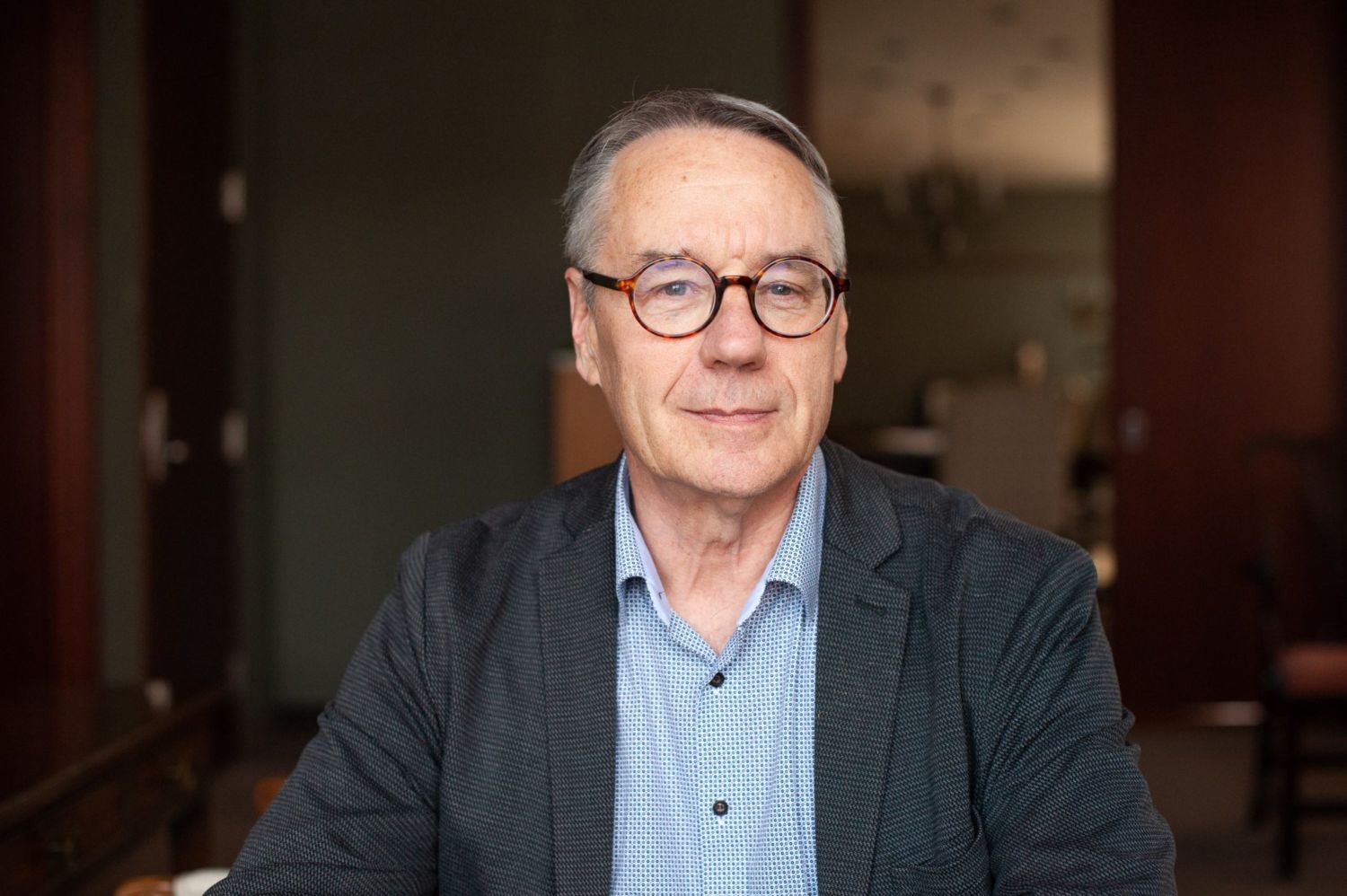
Photo: LM Chabot
Later this year, after almost a decade as president and CEO of the McConnell Foundation, and 17 years total working with the organization, Stephen Huddart will retire. He’ll pass the torch to Lili-Anna Peresa, who currently leads Centraide du Grand Montréal.
It’s an extraordinary time to be retiring and reflecting on a decades-long career in the sector, with so much social change, so many inequities being brought to light, and so much potential for reimagining. In one of the final interviews of his career, Future of Good Publisher Vinod Rajasekaran sat down with Huddart for an in-depth candid conversation about what he’s learned and unlearned throughout his career — about power, privilege, innovation, experimentation, and what it all means in a post-pandemic Canada.
The following conversation has been edited for clarity and length.
Vinod Rajasekaran: Stephen, really great to have you with us. I’d like to start with the present. It’s a present that no one anticipated in January. How would you characterize the times we’re living in?
Stephen Huddart: I think we’re in one of those periods of rapid and profound and far reaching, change in society — some of it imposed upon us, things like climate change and the pandemic, but others more directly of our own making. I’m thinking about the eruption into public consciousness of the racial and cultural injustices that have been perpetuated all around us. And we’ve been inadequate in our response. It’s an enormous challenge to be alive now in this time, and to be raising kids and running institutions, and to try to look after the people that were responsible for the budgets that we’ve got to manage, the relationships with partners, and so on. All of that is suddenly very, very demanding. The house is on fire, to quote Greta. And it’s the fact that so many of these things are happening at the same time.
Vinod Rajasekaran: Let’s go back in time. Since I’ve known you, McConnell has had a hand in introducing and really mainstreaming a number of these concepts that you’re talking about: systems change, social finance, future cities, social R&D. Each of these things carry so much risk. At the time, they’re all new and they’re very edgy. Looking back, what were a couple of the biggest risks that you took and what were the stakes?
Stephen Huddart: I remember getting an evaluation one time, which we’d commissioned to look at how we were handling the use of intermediaries to run programs, and someone said, ‘What are they smoking up there on the 18th floor?’ Because some of this stuff was getting ahead of where people were at and where they were comfortable. It did alienate people sometimes. And we got some strongly worded letters from people and some clamour to slow down or, you’re stepping on our turf, and so-on. Some of those risks were real and we learned to manage them as best we could, but in the end, what we were aiming for was the exploration of alternatives, of new pathways and approaches. And by and large, I think we had a number of proofs, as they say. I think that has justified some of this work.
Vinod Rajasekaran: There must be conversations though, where you’re like, Hey, what don’t you get? Like, how could I make it any clearer?
Stephen Huddart: The thing is that those don’t stop. In attempting to explore that sort of proximate space of possibility and the disruptive innovations that shake up the status quo in any domain, there are those who see themselves as custodians of values, of arrangements in the status quo, who will be upset. We do our best to mitigate that and to include those perspectives, and to be open to the critiques that are embedded in those challenges. I think when we fail, it’s when we fall into these polarities, these polarized debates and conversations where nobody moves forward, because you’re kind of holding the other guy in place, or just insisting that no, you’re a bad, we’re good. That’s where I think the real risk is — to not find the synthesis. And today this is really important because we’ve got a lot of these polarized conversations and debates going on. One of the things that philanthropy and civil society need to keep learning is that development of compassion, compassionate engagement, being able to understand where an oppositional view or oppositional argument is coming from.
Vinod Rajasekaran: Let’s talk about power and privilege a little bit. You’re an older, white gentleman, a settler, and the CEO of a private foundation. What have you learned in the past decade about your own power?
Stephen Huddart: Well, I had a great lesson in this one day when the foundation had set out to create a social impact bond. We’d heard about this financial tool being used in England. And it struck me that if there were a place to test the financing of better outcomes, it might be in Indigenous child and family well-being, to see if we couldn’t find a way to cut into that space with this new tool. We commissioned somebody to go out and look around for a place where that might happen — he’d happened to have just done something similar in Australia with Aboriginal people, so he knew what we were talking about. He wasn’t Indigenous, but he called me up one day and said he’d just been in Winnipeg and had raised the idea with a group of government and community people, and had been basically driven out of the room.
But he said somebody called him afterwards afterwards and said, don’t take that no for an absolute. We would like to know more. And so he and I went together and met with a group of community leaders in the North end of the city. I remember very clearly. We were in a restaurant in Point Douglas that was closed for the day. We were sitting around a table and it was a group of mostly women and mostly Indigenous people. Diane Roussin was sitting at the head of the table and she said, So what are you here for? I went through the whole song and dance about financing, better outcomes, and so on. She was listening politely. And then she said, Listen, if you’re ready to put your money on the table and let us in the community decide how it’s going to be used, we should keep talking. But if not, we’re probably both wasting our time here.
Here I am, you know, Mr. White Guy from Montreal, flew in just for this meeting. I’ve had this feeling before when you’re challenged to set aside any assumptions about identity or power and talk about what’s really on the table. Are we able to meet around the issue and are you ready to share power, knowledge, all of that, so that we can do something? Are you going to make room for us?
Vinod Rajasekaran: Do you think there’s systemic racism in philanthropy?
Stephen Huddart: Oh yeah. Are you kidding? We’re not talking about racism that is intentional. Like, I’ve decided to be a racist. What we’re talking about is racism that is invisible to the people who are practicing. Philanthropy is no different than many other parts of society. There is systemic racism, period. There is in the army. There is in our healthcare system. What we have, though, is the opportunity to address it. That’s the great gift. We learned this from the Truth and Reconciliation Commission, that when we as Canadians began to understand the systemic subjugation and the genocidal policies and initiatives that have been going on for 150 years here or more, we became aware and complicit — and were given the responsibility to address it.
Vinod Rajasekaran: There are folks in philanthropy who are like, This is our capital. We’re taking all the risks. We need to know exactly what’s going to happen with this capital, how it’s spent, where it’s going. What would you say to those folks?
Stephen Huddart: Well, first of all, I’d in many cases ask, How was that acquired? Or when was it amassed? At McConnell, we were created in 1937 and our founder was extraordinarily industrial, hardworking, generous, extremely intelligent, able and so on. But he was living at a time when the colonial project was well underway in Canada and was pulling wealth, extracting wealth from Indigenous lands and communities and enabling fortunes to be made. How should our history influence economic reconciliation? I think we do have to address this question of philanthropy’s legitimacy and the legitimacy of private wealth. It’s something not to shy away from.
Vinod Rajasekaran: Do you think the social impact world is taking away these lessons the pandemic is teaching us, or is there a disconnect there?
Stephen Huddart: I think, broadly, there’s a shift from materiality to spirituality, if I can call it that. And we’re certainly hearing this from Indigenous elders who speak to us about how society can evolve now, if it chooses to. There’s a tremendous, I think, openness and appetite to look at realigning and recommitting our assets to supportive societal transition, improving the next generation’s capacity to contend with all of this, but also thinking about our seniors and how we look after elderly, disabled, the vulnerable people who are on the edges — all of that is I think now within reach, and we are beginning to have those conversations.
To watch the full, unedited recording of this conversation — including much more on power and privilege, a look back at how the social impact world has changed in the past decade, the changing relationship between government and civil society, and more — sign up for a free 14-day trial of Future of Good membership.
Your job. Your mission. Your news.
With your support, the sector you're building gets the journalism it deserves, and you get a tax receipt.

Related Articles

How place-based investing could help finance cities’ climate plan: the LC3 network case
Climate-mitigation funding is drying up like the lakes and rivers it’s trying to save. So how can Canada’s cities and municipalities pay for their plans when funding gaps prevent them? Social finance reporter Diane Berard explores the LC3 network in the case study below.
Disbursement quota change released extra $711 million into charitable sector: Imagine Canada
New research into the impact of the disbursement quota changes has found that 1,190 foundations, primarily private, were affected. According to Imagine Canada’s principal researcher David Lasby, these foundations would previously have been “disbursing below the levels required by the new quota.”
Protecting rural housing: Saltbox Fund founder on the power of lending circles
KJ Conyers-Steede is piloting a peer-to-peer community financing model that can be scaled and replicated across rural Canada.
