Social media is helping newcomers and refugees settle into life in Canada. Why isn’t the settlement sector using it?
“If the government is not there, the scammers are.”
Why It Matters
Settlement organizations should know what kinds of information newcomers are searching for on social media, and aim to plug those knowledge gaps by directing people to tailored information. Settlement organizations must also be cognizant of the increasing risks of misinformation and fraud on social media that is particularly targeting newcomers.

Photo: Christian Wiediger
This independent journalism on data, digital transformation and technology for social impact is made possible by the Future of Good editorial fellowship on digital transformation, supported by Mastercard Changeworks™. Read our editorial ethics and standards here.
There was no shortage of fanfare when the federal government announced it would welcome 25,000 Syrian refugees in late 2015, but in the years since questions have been raised about how prepared Immigration, Refugees and Citizenship Canada (IRCC) was to receive them.
Refugees already facing a language barrier were met with complicated settlement documents and badly translated information, says Wazhma Frogh, community manager at Refugee 613 and a former human rights lawyer. Many also found they couldn’t lean on their caseworkers to provide them with timely information.
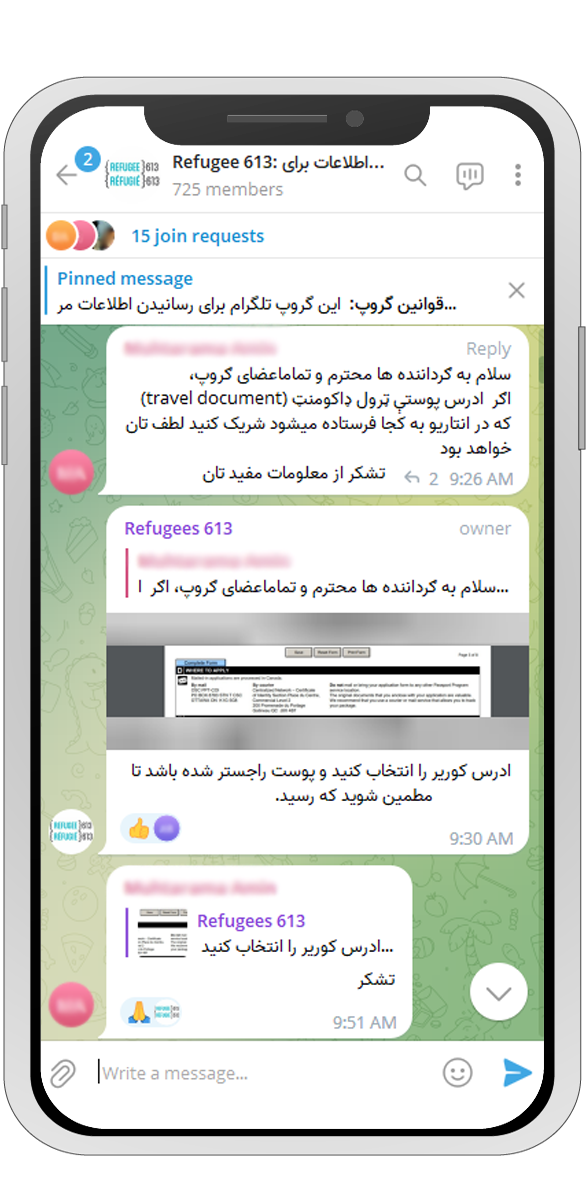
With concerns mounting, Refugee 613 launched a Whatsapp group for Arabic-speaking refugees, bringing in a volunteer Syrian refugee as a moderator. Later, when the federal government began receiving Afghani refugees in 2021, the team realized that they needed to expand the capacity of the messaging group. In response, they created a digital messaging group on Telegram, responding to queries in Pashto and Dari.
Today, there are over 750 refugees, spread across eight Canadian provinces, in the Telegram group that Refugee 613 launched in March 2022. Many are using the group to pass critical information onto friends and family outside the group, and the group is moderated by both staff and volunteers due to the influx of queries.
Behind-the-scenes, the staff and volunteers moderating the Telegram group also manage a large database, in which they collate all of the questions asked by refugees arriving in Canada. Frogh estimates the database currently has between 40,000 and 50,000 entries.
“The number one category [of questions] is immigration-related, because of the cost of hiring a lawyer or legal consultant,” she says.
“People ask about delays in issuing permanent residency cards, sponsorships for spouse and family, and how they can attain relevant travel documents.”
The chat groups filled in critical information gaps, such as telling refugees that using their own country’s passport for travel could lead to their permanent residency being revoked, Frogh says.
The team also sees consistent questions around employment, healthcare, education and legal systems. “This information is so critical to people’s functioning, especially if someone is having a dispute with their landlord, or if they have a [driving] license from their home country,” Frogh adds.
The chat groups also provide Refugee 613 with unique data that reveal larger trends, like that it’s primarily men accessing the information provided. “That tells us that women’s access to tech is limited,” Frogh says. “How should settlement organizations deal with that through a gendered lens, especially if they are providing employment support?”
Moderators also realized that low literacy levels meant text-based messaging alone wasn’t enough. So they pivoted to audio and video messages.
Can digital messaging platforms fill all information gaps?
Nargis Ehsan, a digital content specialist at Refugee 613, says it’s important to contextualize these information gaps. “IRCC spends millions of dollars on communications and settlement information,” she says. “But when refugees enter the country is not the right time to receive information in one go. Refugees should be able to access information at their own pace, when they are ready for it.”
Ehsan speaks from personal experience. She was put-up in a hotel after arriving from Afghanistan in 2021, where she and other refugees were taught about financial management — but they weren’t provided with any information about housing or family reunification.
Future of Good reached out to IRCC for comment, who say that government-assisted refugees are eligible for a number of services through the Resettlement Assistance Program. Services include 12 months of income support, pre-departure support, temporary accommodation and help finding permanent accommodation.
In response to a question on testing the effectiveness of their communications to refugees, IRCC pointed Future of Good to a number of annual and longitudinal surveys that are undertaken to track the outcomes of all newcomers, including refugees.
But a lot of communication received by refugees specifically isn’t tailored or timely, Ehsan says. “There is a huge difference between the experience of a newcomer – someone who comes to visit or work – and a refugee – someone who has waited for months and arrives without resources. Information for this group needs to come from a trauma-informed lens. We see people constantly asking the same questions because their attention spans are scattered.”
Stein Monteiro, a senior research associate at the Canada Excellence Research Chair in Migration & Integration at Toronto Metropolitan University, echoes this sentiment. “Social media users are young and tend to be wealthier. When you apply that to new immigrants, especially those who have been awarded permanent residency, they’ve been selected from a highly skilled category, and digital skills tend to be better than other [newcomer] groups,” he says.
Ehsan suggests that, rather than considering social media as one umbrella tool, settlement organizations should examine the specific functionalities of each platform. “Social media allows you to communicate with larger communities, while social messaging connects people on a one-to-one basis,” she says.
The Afghan Digital Service group, which Refugee 613 runs over Telegram, is an “experimental pilot” being funded by IRCC until March 2024, Frogh says. IRCC added that it is “currently starting to plan for [its] next national Call for Proposals 2024 funding process, which the department is aiming to launch prior to the end of fiscal year 2023-24.”
But there’s still much work to be done before settlement organizations are comfortable communicating with newcomers through social media and digital messaging.
“There are thousands of Afghan refugees who entered the country and we only have [around] 700 in the group,” Ehsan says. “That means there are still a large proportion of people who are struggling to access daily settlement information, or to find resources that exist in their communities.” In a video where group members share testimonials about how they’ve benefited from being a group member, one person suggests more awareness is needed.
Moderation is key, but resource-intensive
Providing services over digital messaging or social media tools requires a lot of moderation and management, Frogh and Ehsan have learnt. The group officially ‘opens’ for questions at 9am Eastern and closes at 5pm Pacific to accommodate different time zones. Staff and volunteers need to be tech savvy to deal with huge inflows of questions and information, but also culturally sensitive and understanding of the communities they’re working with, Frogh and Ehsan say.
Before the group was formed, Refugee 613 spent six months developing moderation and community management guidelines to ensure the digital space felt safe, particularly for women.
“Timeliness is very critical for refugees, especially as we have people who are complaining about month-long delays from caseworkers,” Frogh says. “Some of the questions people ask us are technical – not everyone can moderate the group.”
Can social media drive innovation?
Monteiro says a lot of online communications focus on which services are available to newcomers, but don’t often explain why they’re useful or how they function. A research project he participated in found that newcomers who used social media before arriving in Canada were three times more likely to quickly establish themselves in the Canadian labour market.
“Nearly 80 per cent of immigrants who secured high-paying jobs were found to have used social media before arrival, while nearly 75 per cent of immigrants who gained precarious, low-paying employment did not use social media before arrival,” according to research published by Toronto Metropolitan University.
These findings have implications for how policymakers consider equitable access to social media and the internet, particularly in improving employment outcomes for newcomers, Monteiro writes in another research paper. They also have implications for settlement organizations, only a quarter of whom seem to be extensively using social media, according to the findings.
And it’s not that these organizations don’t want, or see the value, in using social media, says Nick Noorani, founder of Immigrant Networks, which facilitates professional networking between newcomers in Canada. Their reluctance can be pinned to the fact that IRCC hasn’t historically allowed settlement agencies to expense cell phone usage, or for frontline staff to use social media in their work.
Noorani says the IRCC’s commitment to funding Refugee 613’s digital messaging services does indicate change is coming, but it’s coming very slowly. He describes the current situation as “the wild west of pre-arrival information.”
The current information vacuum creates an environment where refugees are vulnerable to scams, he says, citing one person – unfamiliar with Canadian pricing – who paid $3,000 for a resume. Scams like this are financially devastating, he adds.
Of the 500 newcomers surveyed during Toronto Metropolitan University’s research, 166 said they came across misinformation when trying to learn about the Canadian labour market. Ninety-nine people shared that they did not have confidence in the information they found and 67 people said they experienced fraud, identity theft or security threats.
“If the government is not there, the scammers are,” Noorani says. “Immigrants are now suspicious of social media.” Frogh adds that case workers often tell refugees not to join social media groups when they arrive at the airport, which naturally makes people cautious.
IRCC says that licensed immigration and citizenship consultants are now regulated under the College of Immigration and Citizenship Consultants, which officially launched in November 2021 and has recently had a new Code of Professional Conduct issued by the Government of Canada. The department also “offers extensive information on [its] website regarding how to detect, prevent and report fraud.”
Constraints
Digital messaging services require a dedicated staff member or volunteer to manage, not just because of the potential for misinformation and disinformation, but also because of the pace at which they have to generate content and answer questions, Monteiro says.
“You often see in settlement organizations that someone who is running the programs for newcomers is also doing a lot of other administrative work, including managing social media,” he says. “It’s very common for staff in the sector to be doubling-down on tasks.”
These resource constraints, he says, often hinder settlement organizations thinking outside the box, and it’s often the organizations located in smaller, rural, remote and Northern areas that struggle the most to communicate to the newcomer population.
Your job. Your mission. Your news.
With your support, the sector you're building gets the journalism it deserves, and you get a tax receipt.

Author

Related Articles
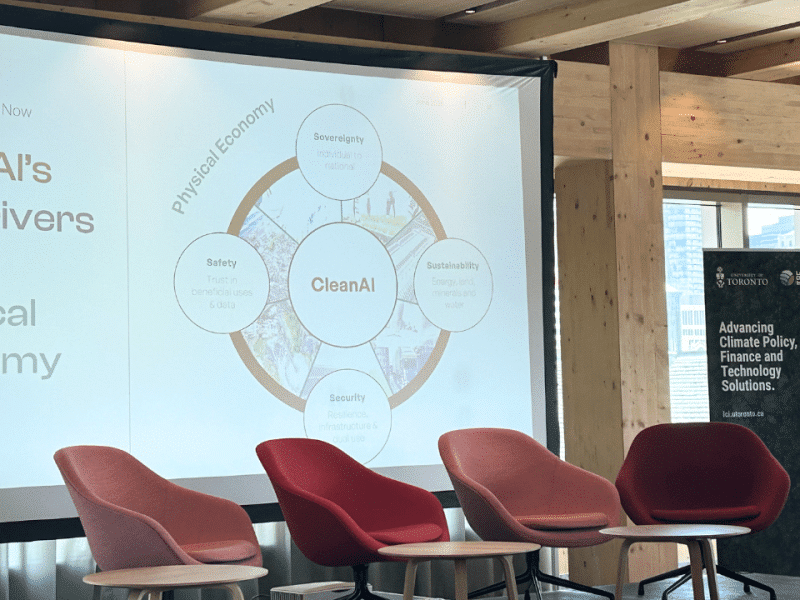
Quarter of all Canadian AI ventures could be categorized as ‘clean AI’: new research
At Toronto Climate Week, the global CleanAI Initiative shared research on the Canadian ecosystem, finding growing investment hubs in Vancouver, the GTA, and Kitchener-Waterloo.

Partnered Partnered content Non-profits are increasingly being targeted for cybercrime. Here’s how your organization can help protect itself
Being cybersecure doesn’t have to be daunting or expensive. A panel of experts discuss ways the non-profit and charitable sector can help protect itself in a constantly changing AI landscape.
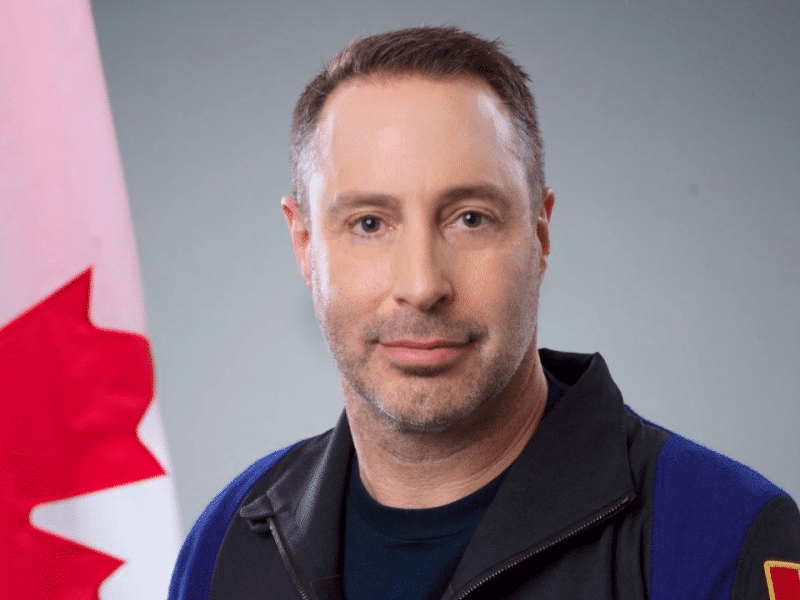
Canadian astronaut, entrepreneur donates $15M to Concordia to launch new space school
Montreal’s Concordia University will be the home of the Mark Pathy Space Institute.
