This small foundation “turbocharged” its assets — but at what cost?
The Community Foundation of Orillia and Area grew its assets from $1.5 million to $15 million in just 10 years.
Why It Matters
The growth strategies used by the Community Foundation of Orillia and Area have increased granting and improved some local charity’s investment returns. Experts are celebrating these wins, but caution there could also be downsides.
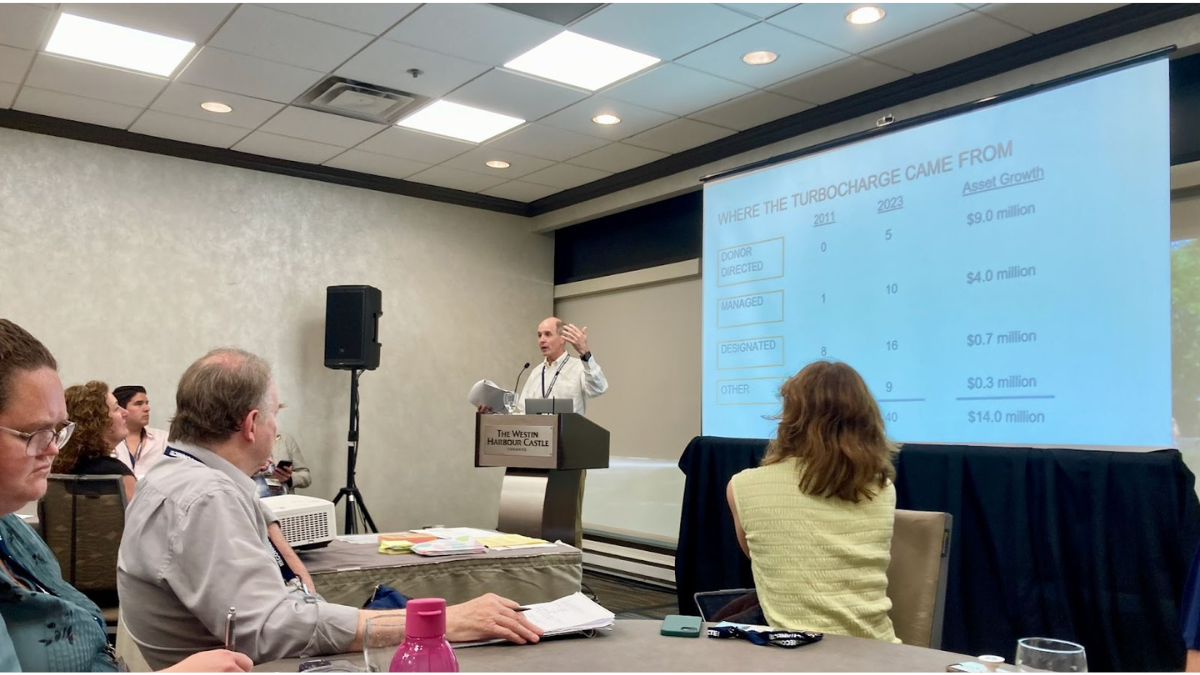
TORONTO/TREATY 13 – Michael Gordon has a remarkable story to tell, one detailing how the Community Foundation of Orillia and Area “turbocharged” its growth over the last decade, accumulating more than $15 million in assets and increasing its annual granting by over $400,000.
But a presentation by the foundation’s board president was met with mixed feedback and a barrage of questions during the Community Foundations of Canada annual conference in Toronto earlier this year.
To some, it’s a Cinderella story. “I just want to compliment you because truly, you are working side-by-side with the charitable organizations in your community,” says one executive.
But others aren’t so sure.
Some conference goers ask Gordon if the Orillia Foundation’s methods can be duplicated in smaller communities, where super-volunteers like himself might be tough to find. The move also comes with trade-offs, they note.
To minimize costs, the foundation eliminated work some executives consider central to a community foundation’s core purpose — donor education, community research and fostering links between local organizations.
“This is a great model for the transactional services between donors and charities,” one participant says, but asks if it leaves space for the foundation to be a true community leader.
Gordon is conciliatory, but resolute. The approach was “radical” but necessary, he says.
Between 2016 and 2026, approximately $1 trillion in personal wealth will be transferred from one generation to the next in Canada, according to research from Investor Economics. Gordon says high-net-worth donors are particularly sensitive to administrative costs, and foundations must work to “minimize overhead” to keep wealth in rural communities.
“The children of these wealthy older donors, in many cases, don’t live in Orillia,” he says. “If we don’t get some of those donors’ money into an endowment fund for local charities, it will leave the community entirely when those people pass away.”
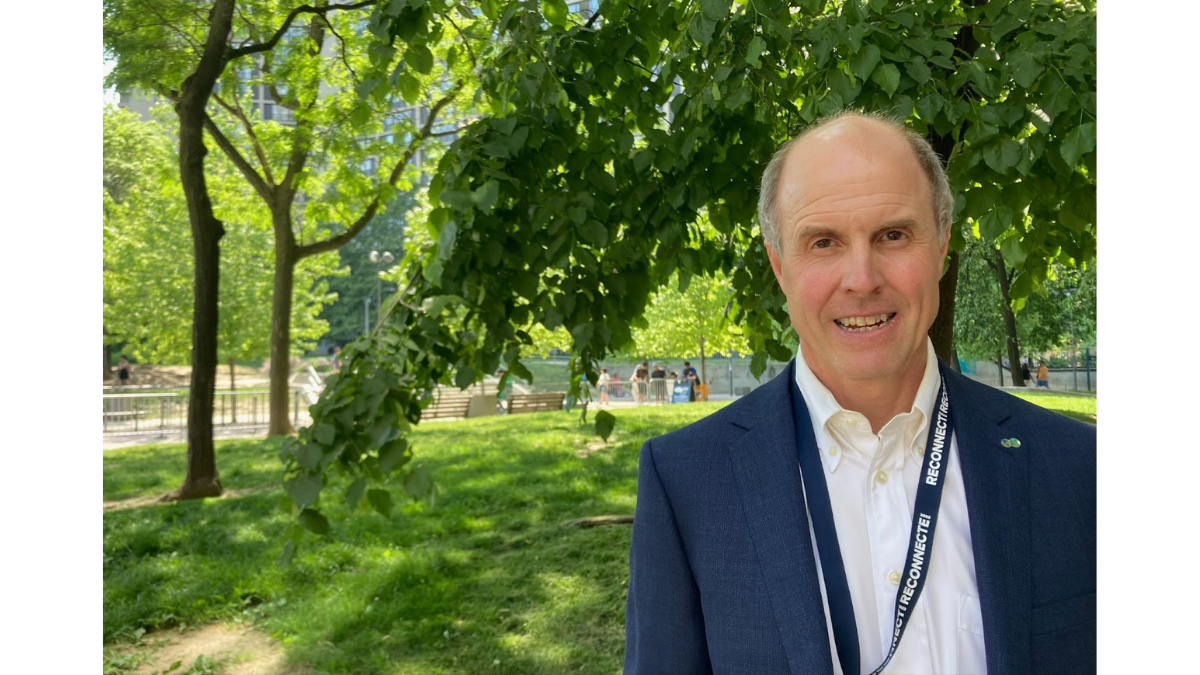
Michael Gordon poses for a photo on June 2, 2022, following his presentation at the Community Foundations of Canada conference in Toronto. Photo: Gabe Oatley
Doing the “social impact math”
Gordon, a former management consultant with McKinsey & Company, didn’t like what he saw when joined the foundation’s board in 2011 and looked over its financials.
The foundation had about $1.3 million in assets and competed with local charities for donor dollars — hosting dragon boat races, ski days and other events — to raise the roughly $65,000 needed to pay its full-time executive director and provide about $25,000 in annual grants.
While some board members found meaning in the fundraising events the foundation hosted, Gordon viewed them as net-negative, given the amount they were spending on the foundation’s own administrative costs.
“I said, you know, ‘[Local charities] would be better off without us. We’re destroying value.’”
When the foundation’s executive director resigned a short time later, the board made the unusual decision to outsource its administrative work to a local organization. The federally funded Orillia Area Community Development Corp. agreed to answer the foundation’s phone calls, host their board meetings and execute their funding agreements for $25,000 per year.
The board then turned its attention to fundraising, focusing on building its “managed funds” program, through which they invest the money of local charities for a small administrative fee. Gordon used CharityCan, a platform that aggregates Canada Revenue Agency data, to identify Orilla charities with the most assets. “Fish where the fish are,” he says.
List in hand, Gordon then made his pitch to local charities: focus on programs and services — what you do best — and let us focus on growing your charitable assets over time. To sweeten the deal, the foundation also reduced its administrative fee from two per cent to 0.5 per cent.
His message resonated. In 2011, the foundation managed the funds of just one charity — today it manages the funds of 10 charities, who have invested about $4 million in total.
The Couchiching Conservancy, a local non-profit land trust, invested over $1 million with the foundation. It was a simple choice, says the trust’s fundraising manager Tanya Clark, because the foundation offered higher returns at a lower cost than competitors and provided the non-profit with access to investment products they couldn’t get into if they invested alone.
It’s worked out well for the foundation, too, Clark says. Despite fluctuating markets, their investments have gotten good returns, providing the trust with considerable stability during the pandemic, she says.
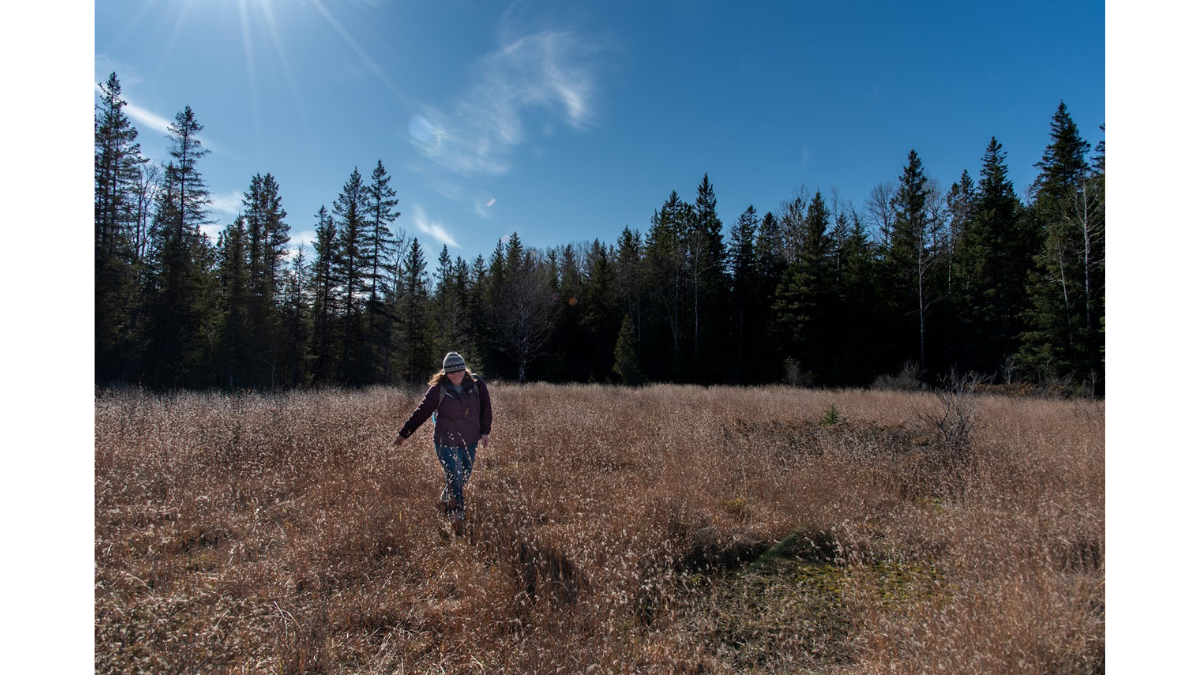
Tanya Clark is the fundraising manager with the Couchiching Conservancy, a non-profit land trust in Orillia, Ontario. The organization has invested over $1 million with the Community Foundation of Orillia and Area, motivated low fees and strong investment performance. Photo: courtesy of Tanya Clark
Successfully Targeting the wealthy
In addition to growing their managed funds program, the foundation also focused on securing big gifts from high-net-worth donors. The success has been “unbelievable,” Gordon says, resulting in five new donor-directed funds worth $9 million.
To do it, the foundation’s volunteers researched well-heeled Orillia donors — local sponsorship plaques and donation notices in the newspaper provided clues — and met with every lawyer, accountant and financial advisor in town over the course of several years.
Gordon says volunteers told the foundation’s new story in every conversation, explaining how the foundation had been going “sideways” for a decade, stuck on the fundraising treadmill, but had since cut costs and administrative fees, and was now focused on growth through endowment funds.
Accountants saw right away how donations to the foundation during their client’s high-income years could achieve both philanthropic and tax management goals.
“We’ve got a couple of local accountants that these donors work with that have really figured it out, ‘Look, you can either pay taxes or donate to charity, and you choose which.’ And they’d much rather donate,” Gordon says.
The foundation also incentivized financial advisors to encourage their clients to give, by allowing advisors to continue managing their client’s assets after they’ve been donated to the foundation. This enables advisors to continue accruing investment management fees.
This strategy was pioneered by the country’s independent and commercially-affiliated donor advised fund foundations, including Charitable Gift Funds Canada Foundation, Canada Gives, and Charitable Impact Foundation. Gordon says its critical community foundations follow suit.
Independent and commercially-affiliated DAF foundations are “eating the community foundation network’s lunch in a wild way,” he says. “So any foundation that’s not doing this [has] their head buried deep in the sand.”
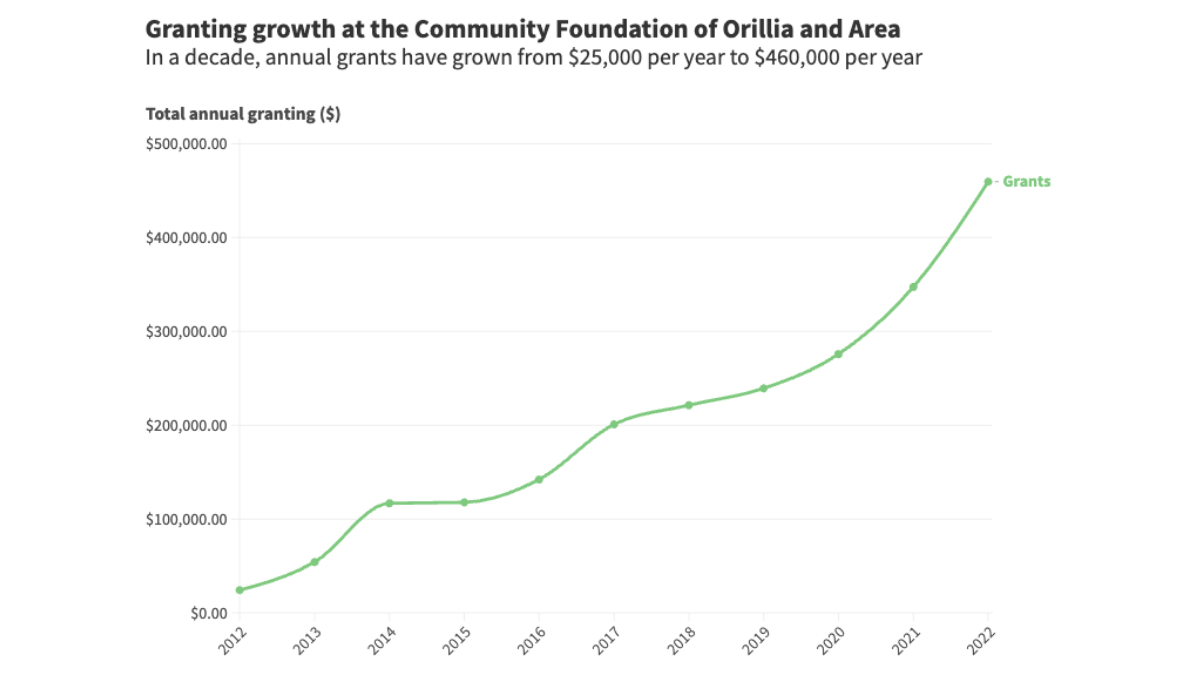
Over the past decade, the Community Foundation of Orillia and Area has grown their annual granting from about $25,000 to about $460,000 — an 18 fold increase. Graphic: Gabe Oatley
Unintended consequences?
But while local charities and philanthropic observers applaud the foundation’s success, some worry about the unintended consequences of this strategy.
Bill Young, chairman of Social Capital Partners and a longtime impact investment advocate, worries the foundation’s decision to allow independent financial advisors to manage donated capital will reduce the amount of philanthropic money invested in impact investments.
Young says it’s taken years to get to a point where many foundations either have some impact investments or are considering future investments and he fears this strategy could stall progress. “Those investment advisors are never going to put it into impact,” he says.
Victoria Gibb-Carsley, executive director of the Perth and District Community Foundation, located about an hour south west of Ottawa, Ontario, also worries Orillia’s decision to reduce headcount may mean the foundation won’t be able to act as a community builder, engage in local research or advance emerging practices like granting to non-qualified donees.
Gibb-Carsley, whose foundation has about $6 million in assets and granted about $125,000 in 2022, sees “huge value” in the effort her peer foundation has placed on raising funds for charities, but says she doesn’t see how the model will allow for “community building.”
Kristi Rivait, co-founder of Victoria-based social enterprise, Scale Collaborative, also worries the foundation’s decision not to invest in core staff could mean less funding for Orillia’s smaller charities. Foundations with dedicated staff can spend time in community, learning about pressing needs and transmitting that information to donors when they’re considering where to give, she says.
Bre LeFeuvre, executive director of Couchiching Jubilee House, an Orillia-based women’s transitional home, agrees. Bigger organizations have the capacity to get more media attention and do more marketing, which makes them more likely to attract donor dollars, she says.
“It would be like you opening a pop shop and trying to go against Coke. It doesn’t mean your product is any less, it just means you can’t compete,” she says.
But while Gordon says the foundation has indeed cut down on community building work, and won’t be first-out-of-the-gate to support non-qualified donees, he disputes the characterization that his donors are out of touch.
The foundation’s fund holders are “thoughtful, caring, community people,” whose donations aren’t going to the “golf club and the hunting club” but rather to the homeless shelter, food bank, and other local organizations, he says.
A review of the foundation’s recent grants suggests Gordon may be right.
In 2021, the foundation granted to 39 registered charities, most of them locally based, with gifts ranging from $45,000 (to the Orillia Soldiers Memorial Hospital Foundation) to $2,250 (to the Twin Lakes Secondary School). Other recipients included local churches, the library, two shelters, a hospice and a camp.
Gordon says regardless of which charities within the community get support, their work is vital.

Bre LeFeuvre is the executive director of Couchiching Jubilee House, a transitional home for women in Orillia, Ontario. Photo: Diamond Crown Photography
Snowball effect
Gordon says the real magic in the foundation’s “turbocharged” strategy is that now it’s like a “snowball” rolling downhill.
Orillia is a small place where wealthy donors know each other and board members do too. When one donor creates a fund or one charity chooses to invest with the foundation, others soon follow suit. “Now, the calls are coming to us, because they’re seeing the impact,” Gordon says.
Rivait says given its success, she hopes the foundation will consider adding staff to further expand their impact and make the case to donors for why the extra expense is important.
“Kudos to them for…raising those resources,” she says. “Now, I think they’ve got a real opportunity to actually come back to being a community foundation — to be grounded in community.”
Your job. Your mission. Your news.
With your support, the sector you're building gets the journalism it deserves, and you get a tax receipt.

Related Articles

New donation platform to help communities directly pay down mosque debt
Own Your Masjid is a project of boutique marketing agency Process Plus Marketing

Explainer: The divergent fix-it paths of Ontario and B.C.’s condo oversupply problem
Both provinces have too many tiny, shoebox condos, but both are taking different approaches to fixing it.

Elbows up: Spring Impact Capital calls for a giant spreadsheet of available early-stage Canadian capital
The Vancouver impact investor wants to crowd-source a free, national directory
