
This fintech startup is reimagining fundraising — and the timing couldn’t be better
‘Touchless’ giving platform tiptap’s success through the pandemic could indicate a permanent move toward tech-enabled fundraising
Why It Matters
The COVID-19 pandemic has hit the Canadian charitable sector hard. Without the possibility of social gatherings and with event donations down, it’s difficult for non-profits to advance their missions. Charities are being forced to rapidly adopt ‘giving’ technologies to help bridge their fundraising and outreach gaps.

Photo: tiptap
Three hundred percent. That’s the amount of increase in digital donations The Salvation Army experienced when it participated in a 2019 local pilot project with Toronto tech start-up tiptap.
Over the past few years, the rise of sophisticated online donation management platforms and financial technologies (FinTech) are two of the most impactful innovations to ever hit the charitable sector.
Given the COVID-19 pandemic and all the stumbling blocks it has created for for-profits and non-profits alike, these innovative developments could not come at a better time for fundraisers everywhere.
Which is why the point-of-sale product by tiptap, an emergent and self-described ‘tech for good’ company, officially launched its new, touchless giving technology on December 1, 2020, just in time for last year’s holiday giving season. Being able to do so in partnership with The Salvation Army, one of the most recognizable charities in the country, was a further boon to its service and proof that charities are adapting out of need.
The plan was simple: outfit Salvation Army staff at more than 1,400 Christmas kettle stations with tiptap’s touchless giving pads in time for the traditional giving season and encourage easier giving without the use of pocket change or bills. The technology was further enabled by a third partner, Rogers. The company provided its LTE-M wireless network to process the e-donations/payments across the country.
In a release, Salvation Army Canada says the partnership with tiptap was necessary because life had become “more challenging” for fundraisers due to the pandemic.
“This new technology… will help us continue to operate our life-changing programs,” Salvation Army spokesperson Lt-Colonel John P. Murray says. “During COVID-19, the transition to a cash-lite society has accelerated, impacting everything from tip jars to charity donations.”
For the national charity, the tap-to-donate technology was “critically important,” given the lockdowns and continuing restrictions on business operations across all provinces due to COVID-19. As a result, he says some kettle locations needed to be shut down while others struggled to find volunteers. “The new digital donation option helped curb the spread of COVID-19 by reducing the amount of physical touch and handling of cash associated with giving, and allowed for donations to be accepted where there was no bell-ringer next to the stand.”
The 2020 national kettle holiday campaign raised $17.9M, with over $500,000 of those donations coming exclusively through use of the tiptap technology, Lt-Colonel Murray adds. However, like many charities last year, the Salvation Army’s 2020 campaign was severely hampered by the pandemic, falling short of its 2019 total of $23.6M. That said, the charity reports that donors reacted “very positively” to the giving technology.
Chris Greenfield, CEO and founder of tiptap, explains that the genesis of his company and the concept of ‘touchless giving’, as he refers to it, came from finding himself in a prototypical current-day situation: he couldn’t tip a service person because he had no actual money on him.
“Empathy triggered the idea for tiptap and for quick, easy, fixed amount payments,” he says. “Like so many others, I no longer carry cash, using debit and credit cards, and my apple wallet regularly.”
Like Lt-Colonel Murray, Greenfield notes that the demand for charitable services has risen substantially since the pandemic hit.
“With less people carrying cash, [charitable] collections are at all-time lows. Charities have to resort to touchless, impulse giving solutions like ours and to online donations. Everyone is now used to tapping for everyday purchases. Why should giving to your favourite cause be any different?” he asks.
“Everyone is now used to tapping for everyday purchases. Why should giving to your favourite cause be any different?”
He also notes that according to his company’s research, there is a $3.6 billion opportunity in Canadian charitable donations alone. It is a similar number to the revenue lost by Canadian charities in 2018 due to a reduction in cash and coin donations, Greenfield adds.
Imagine Canada President and CEO Bruce MacDonald, also notes the critical pivot by non-profits toward technologies hastened by the pandemic.
He says his organization’s research, via their 2020 report Sector Monitor: Charities & the COVID-19 Pandemic, reveals that donors are increasingly turning to digital means to make their gifts.
“That being said, we aren’t hearing that the ‘method’ itself is making up the difference for the loss of the triggers to give,” MacDonald says. “For some, not having a special event to go to is likely driving traffic to online giving platforms, as they proactively seek to support their favourite cause.”
However, he says, many donors aren’t self-motivated and don’t actively seek out online giving platforms. So losing the ability to hold events means that organizations don’t have the emotional, in-person experiences where people give reactively. “This means that while online giving is up via the smaller group of proactive donors, overall donations are down” due to the larger portion of lost reactive donors.
Beyond that, MacDonald notes that one of the things he is hearing from sector partners is that there is “a direct link between the ability of an organization to adopt new technological solutions and the ongoing investment in its organizational health and resilience. Those that have had business models and/or funders that have enabled them to invest in technology have been better equipped to weather the storm of this pandemic.”
It is an investment that newer charities like The Food Stash Foundation in Vancouver are exploring increasingly.
Founded in 2016, the foundation’s executive director Julia Hunter explains that with each year, her organization continues to see the merits of adopting new tech to fulfil its mission, particularly with the impact of COVID-19.
“This past Spring, we signed up for Keela, a donor management software provider that has allowed us to centralize our donor information and execute more efficient outreach, especially when it came to our first ever online fundraising campaign this past November.”
Hunter adds: “As Food Stash Foundation adapts and grows, the role of technology continues to be a key way to drive efficiency and productivity. Like any start-up or grassroots effort, it takes time to develop processes that enable you to do more.”
She notes that for her charity, her team’s perception of technology is that it allows them to maximize resources and streamline data while also staying true to a core value of personal connection with their community. “We believe there is a time and place for technology in our operations and communications especially when it comes to data and logistics. Having the right technology allows us to focus our time on the people we serve and partner with.”
Bhupesh Shah, principal at BGSHAH Consulting in Richmond Hill, Ontario, says his advice to non-profit clients is to adapt to fundraising and marketing technologies quickly.
“There are more and more organizations chasing fewer and fewer dollars. Successful organizations are effectively using technology to gain an edge. I’ve been working with clients to bridge the knowledge gap and show what is possible with some of the newer technologies,” he says.
Shah echoes what tiptap and other emerging, fundraising technology providers have figured out — primarily that for donors, a e-Transfer is “painless and easier than having a donor key in their credit card number, expiry date and three-digit CVV, name, email, and mailing address.”
At Toronto’s Future Possibilities for Kids charity, executive director Rickesh Lakhani says his organization has made it a point to reach out expansively to its stakeholders via technology.
“With the pandemic pushing many people to have to learn new ways to interact with the world, we’re seeing more adoption of technology to engage. Since COVID-19 began, we have further engaged [the] community using peer-to-peer platforms,” he says. Lakhani notes his organization has used YouTube livestream, Zoom town hall-style evening events for volunteers, program participants and donors, and software such as BombBomb to send personal video messages to donors and supporters. “All have helped and been successful… to enhance both fundraising and programming.”
With the pandemic set to remain part of our everyday lives for the foreseeable future, its impact on charitable giving and the ways in which non-profits will need to adapt become more evident.
A recent report published by RBC Economics, COVID Upends the Charitable Playbook, noted the overall dampening effect on donations during the pandemic in 2020. Some key findings from the report include: metrics noting that charitable donations from consumers fell four per cent in Canada last year which translates into approximately $60 million; and that there was “a sharp divergence between charities that were able to quickly adjust to the digital world and those that relied on traditional methods like events and failed to reach consumers in the pandemic, with some charities receiving zero dollars in 2020.”
Lakhani sums up the lasting impact COVID-19 will have on many decision-makers and leaders in the charitable sector going forward.
“The pandemic has pushed us to do things that we had in the backs of our minds for a while, such as running fully virtual programs to increase reach into new geographies, and remote and rural areas. It’s also encouraged us to be creative about finding new approaches,” he says. “We would not have done anything like this before, but now it’s a new strategy we will continue.”
Related Articles
New AI tool aims to make federal politics easier to track
“CanadaGPT” is designed to simplify complex government activity by giving users a clear understanding of what’s happening in Ottawa.
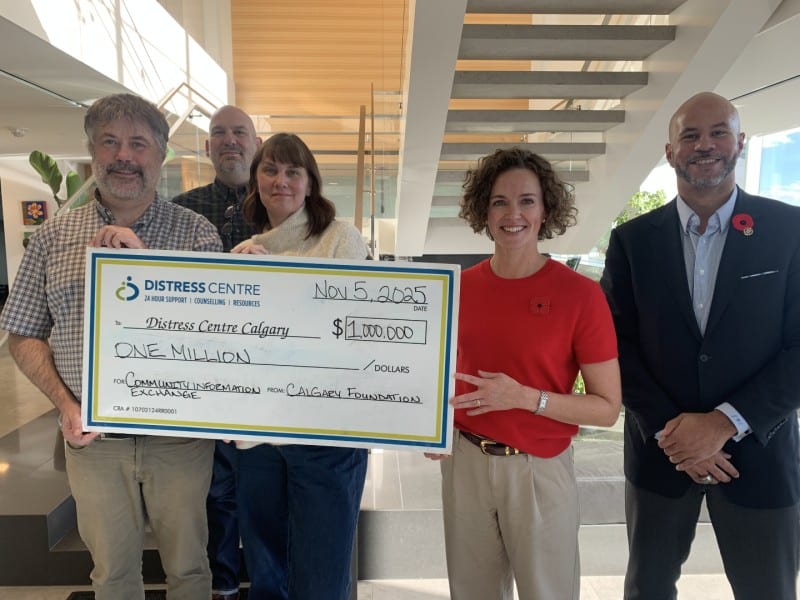
Calgary community services to begin sharing data, promising ‘more reliable support’ to vulnerable clients
Distress Centre Calgary has been piloting a Community Information Exchange (CIE) in the city in partnership with other non-profits and public sector services. It would allow organizations working with the same individuals to enter and view data about that person’s journey through various frontline systems.

Housing, mental health care are Canada’s largest unmet needs: new 211 dashboard
Data from call reports made to 211 services across the country show that mental health and housing remain the most urgent needs in Canada. Housing makes up 35 per cent of all callers’ unmet needs. 211 data shows that the agencies people are being referred to for their housing needs are either full or struggling with limited resources.