This inclusion expert says unconscious bias training is doing more harm than good — here’s why
Colonialism in social change, and why good diversity plans need to be based on results
Why It Matters
Unconscious bias training is one of the mainstays of diversity and inclusion consulting. But while the practice has long been used to address the idea of unconscious prejudice, some practitioners say it provides cover for discrimination to continue, and hurts the people it aims to protect.
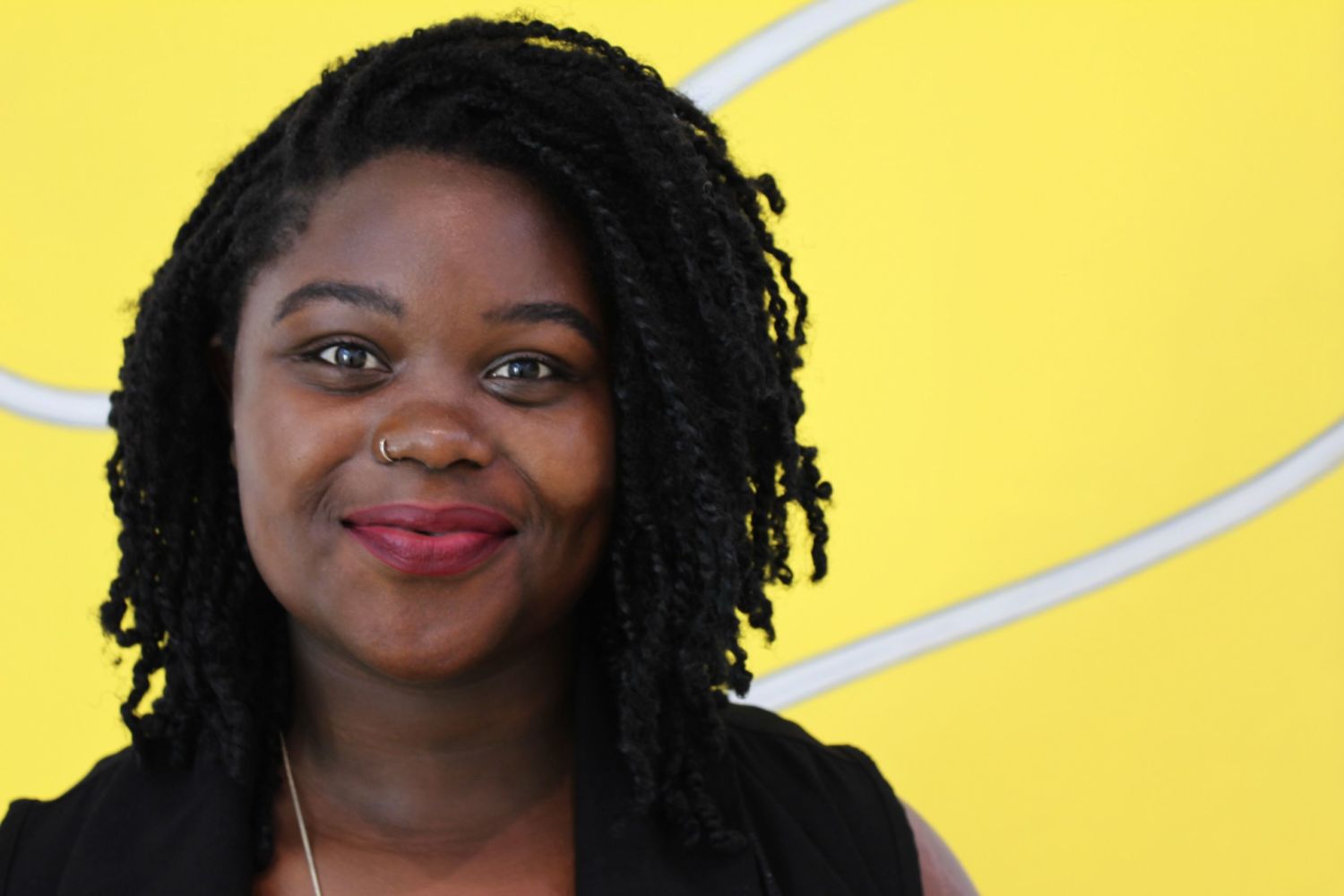
Sharon Nyangweso’s answer to unconscious bias training is simple. Don’t do it.
It might seem odd for the CEO of QuakeLab, an inclusion and communications agency, to advocate against a trusted method of anti-discrimination work in corporations and nonprofits alike. Put simply, the practice involves teaching employees that subconscious discrimination permeates our interactions with others. Therefore, an active awareness of these tendencies can blunt their impact. Unconscious bias training is used by everyone from diversity consultants to the Government of Canada’s school of public service. But criticisms of the practice have grown in recent years.
In an August post on QuakeLab’s website Nyangweso argues against this conclusion. She cites organizational behaviour research suggesting that diversity training causes some hiring managers to actually discriminate against job candidates. “People with long-held biases are highly likely to have their views reinforced by a training that talks about them as commonly held,” she writes. She also says unconscious bias training can allow an organization to claim it isn’t racist or discriminatory, while continuing to uphold racist institutional structures.
Nyangweso says her post provoked a fair bit of criticism from consultants in the diversity, equity, and inclusion sector, who saw her argument as a bit alarmist. She didn’t just suggest unconscious bias training doesn’t work, she accused it of actively perpetuating harm against the marginalized employees it was intended to protect.
Features Writer Brennan Doherty spoke with Nyangweso about the harms of unconscious bias training, her process when working with organizations, and why social impact is a concept that’s far older than we think. The following conversation has been edited for both clarity and length:
Future of Good: Let’s get right into it. Why shouldn’t managers consider unconscious bias training?
Sharon Nyangweso: I’ll give you a bit of an example: If you were to have a toothache and you went to your dentist, your dentist wouldn’t leave you in the waiting room and say ‘Oh, we’re going to do a root canal.’ They’re going to go through the process of looking at your health background. Are you allergic to anesthesia? Do you have a history of toothaches? And then – actually deep dive into the challenge.
When we go straight to unconscious bias training or any kind of anti-oppression or anti-racism training, we’re literally sidestepping that entire process of intimately understanding a problem, understanding the people who are most disenfranchised or harmed by that problem. We’re going straight to the solution – straight to tactics. And that’s incredibly problematic if this were any other organizational challenge that we’re dealing with.
Future of Good: Was there an experience that made you realize that this approach didn’t work?
Sharon Nyangweso: On the research side, there’s so much data out there. We’re so fortunate that this isn’t 20 years ago, where we were just starting to have some of these conversations. Today, we have so much research about the ways that unconscious bias training long-term just does not work. If anything, it can cause quite a bit of harm. There are studies about the potential for unconscious bias training to reduce upward mobility for marginalized folks because it makes stereotypes seem more significant.
On the other hand, when it comes to just personal experience and the experience of folks I know, it is incredibly stressful to be in my situation – a woman, a person of colour, and an immigrant – in a room where this training is happening. I’m sitting there knowing full well this conversation that’s happening around the stereotypes around Black people or Black women, or the ways in which we are very marginalized – we’re talking about me. It’s not conceptual. It’s not theoretical. It’s very real. And I have to sit with that information and sit with the fact that, ‘Hey, this is what my colleagues think of me. This is how they approach my work.’ It is an awful feeling.
“It is incredibly stressful to be in my situation – a woman, a person of colour, and an immigrant – in a room where this training is happening.”
Just yesterday, a young woman of colour commented on my article. She said that doing a session like this in her former workplace was the first time she had a panic attack. There are very real consequences to the ways in which this type of training is employed.
Future of Good: It sounds like the effect is almost like rubbing salt into the wound it’s actually trying to heal.
Sharon Nyangweso: Yeah, absolutely. And I know that there was some prickliness too – there was a bit of a not-great reaction from some folks who thought that saying things like ‘unconscious bias causes harm’ was a little bit alarmist. I truly don’t think that’s the case. Among the folks who are most disenfranchised, and most harmed by this way of doing things, we know how devastating it can be. Perhaps other people don’t.
Future of Good: You mentioned one of the responses you received to your piece – what’s the reaction been overall?
Sharon Nyangweso: I’ve had a lot of [diversity, equity, and inclusion] practitioners who’ve reached out and they’re like ‘This is interesting, we want to obviously make sure the work we’re doing does not cause harm.’
But there are some practitioners specifically who’ve built a career out of unconscious bias training. I don’t want to demonize anyone for feeling a little prickly about the ways in which this [argument] was set out, but I think it’s important to understand that training has been easy, has been accessible, and it’s been where a lot of practitioners have made their money from. This is quite a big industry, but I think their reaction to it is not as critical as the harm that unconscious bias training does. I think sometimes we need to take a step back and think: yes, your career and security about your work are important, but what is the value of all that if we are creating an environment in which we’ll just be creating an awful cycle of harm?
Future of Good: You mentioned research and personal experience, and I can see how the two are fused together. Is there a specific moment for you when realized this doesn’t work?
Sharon Nyangweso: I can’t even honestly say there was a specific moment. My work and my career started in visual communications. Specifically, I was using design thinking frameworks to build digital solutions for youth and women across the world – in Africa, the Middle East, and sometimes Canada.
It’s very clear that you need to be able to understand what you’re doing, understand your challenges really well, understand the people you are working in service of, and then make sure that you are creating a process in which the solutions you build are measurable. As someone who is doing the work I’m doing, it becomes increasingly frustrating to see organizations refuse to solve [discrimination] with the rigour that we solve any other challenge.
Future of Good: Let’s talk about that. What is your framework when approached by an organization saying: ‘we need help’?
Sharon Nyangweso: There’s two key questions I ask a potential client. What are the things that have brought you to this moment? And what interventions have you applied this far – and how have they turned out? These two pieces of information are important for me to understand if they have the information they need to move forward. If we don’t have the information we need, I usually recommend starting off with an audit or assessment.
Future of Good: What kind of information are you looking for?
Sharon Nyangweso: Generally, I’m looking for a couple of layers of information. For instance, the demographics of their organization: who has been fired, who’s been hired, who’s getting promoted. Then I collect what I call experimental data – talking to folks in a really casual, informal way about what it means to navigate the organization. From all of that, we’re able to start building sources of information that informs the way we move forward. What does it mean to be someone who is disabled, someone who is Indigenous or Black? What does it mean to navigate this space? Who do we need to start designing for?
When you start narrowing down your stakeholders, you get specific. You start seeing information you cannot ignore. For instance, you start seeing that for Indigenous women, there is a point right here where things become very difficult and their retention is very low.
It’s not about throwing unconscious bias training at a thing because, at the end of the day, we’re really fortunate in 2020 to have some really great data that validates a lot of what folks in marginalized communities have been telling us. It’s not a matter of ‘feelings’ when we know that Black women make 60 cents on every dollar a white man makes, when we know that Black people in Toronto are 20 times more likely to be killed by police, when we know that Indigenous people disproportionately make up incarcerated populations. To throw unconscious bias training at that makes no sense. We need results-based goals.
To throw unconscious bias training at that makes no sense. We need results-based goals.
Future of Good: Back to your piece for a second – you talked about moral licensing. A lot of social impact organizations exist to do good and take pride in doing good, but some of them have a history of being particularly toxic places to work. Do you feel they are particularly vulnerable to the harms of unconscious bias training? And if so, how would you suggest they change that?
Sharon Nyangweso: This is something I’m very candid about with a lot of my clients, especially when they come to me from non-profit or social impact backgrounds. There’s this idea that people you’re working to alleviate some kind of social harm, you are doing good. And when you have that starting point, it means you are less likely to do those really important self-assessments and analyses that show where you are inherently not doing good, where you are, in fact, doing harm.
There is a feeling that the industry is inclusive. But at the end of the day, you need to understand that [social impact organizations] were not built to be inclusive at their inception. People like me were not meant to lead in these spaces. When you start from understanding that we are not just trying to fix some random flaws in the system, but rather deeply-rooted structures that were designed to look like this, then you start having to think a little bit differently about the way you approach that challenge. What do we need to redesign? Sure. But then what do we need to be completely dismantled?
For instance, the way [social impact organizations] are required to measure impact in the past has been so incredibly steeped in our colonial understanding of what value is and how we know when we’re doing something right. Those just inherently conflict with the ways of knowing and ways of doing of so many different communities.
Future of Good: How can social impact organizations implement better anti-racism policies and practices, especially if they have limited budgets, limited capacity, or limited time?
Sharon Nyangweso: One of our newest offerings is what we’re calling a DIY course. It’s a self-guided toolkit that allows you to build a strategy without bespoke consulting. The idea is for smaller organizations who may not have the budget, but know they want to [improve] in a more purposeful and strategic way. I think the important thing is to approach this the way you would approach any other challenge in your organization – with thoughtfulness, with ensuring you have all of the information needed to solve a problem before you start solving for the problem.
I want to be mindful of the fact that we are in an economic recession. This is not a hypothetical question; this is a very real thing. That being said, even in the best of times before the pandemic, I know very few, if any organizations that a budget line for this kind of work. It just did not exist. It is considered, at the best of times, a policy that is couched within HR, maybe on a website that no one really looks at. For a lot of organizations, perhaps now is the time to sit with this information and think about the fact that if we want to tackle equity and inclusion with strategy leading tactics, how would we approach this for anything? How would we approach this if it was within finance, within HR, within communications – and then start to come to terms with the fact that it is within finance, it is within HR, it is within communications.
This is not about creating a policy that lives on a website. It’s about having a deep and conscious look at every part of an organization.
Your job. Your mission. Your news.
With your support, the sector you're building gets the journalism it deserves, and you get a tax receipt.

Related Articles
Migrant-led non-profits prioritized through RADIUS’s participatory grantmaking
RADIUS’s participatory grantmaking process shows how community voices and lived experience can shape funding decisions.
7 short documentaries about Canadians making change you should watch
Citizen Minutes looking for Canadian changemakers for fourth season docs
Homelessness organizations dealing with increasing legal attacks, anti-poverty rhetoric: Ontario Nonprofit Network
In a recent brief, the ONN said “hostility against people experiencing homelessness and/or mental health and addictions challenges” is rising.