Ottawa chooses Canadian Housing Acquisition Fund to manage $1.5 billion affordable housing money
The massive new fund will help grant Indigenous, cooperative and non-profit housing providers easier access to capital to help buy and develop homes for lower-income Canadians.
Why It Matters
Affordable rental homes have increasingly become lost to redevelopment, rising rents and competitive housing markets, leaving more Canadians in precarious housing situations. The federal government’s Build Canada Homes aims to change that, but it’s becoming more apparent that several approaches are needed.
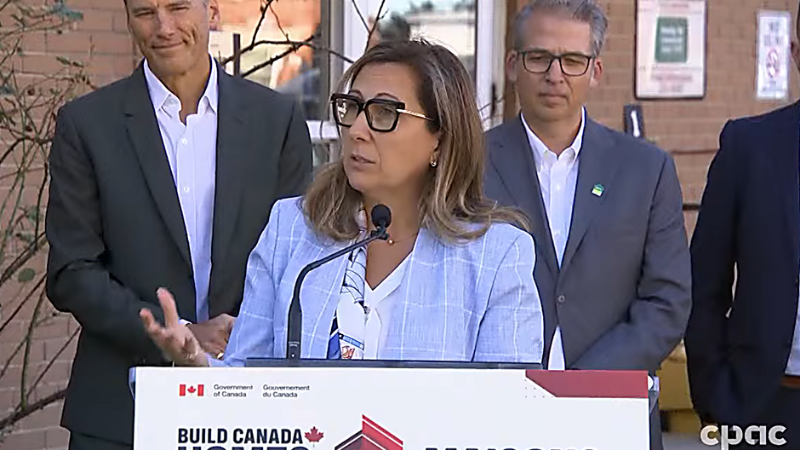
The Canadian Housing Acquisition Fund (CHAF) has been selected to manage a $1.5 billion fund to maintain affordable rental housing across Canada.
The federal government chose the non-profit following an open call for applications to protect affordable rental housing and expand community ownership.
It will give non-profit, co-operative and Indigenous housing providers access to capital to buy existing rental properties and keep them affordable for the long term.
Funding could involve a combination of repayable and forgivable loans to bridge the gap between what an organization can sustainably finance and the funding needed to acquire and renew a property.
According to a federal announcement on Tuesday, the fund has the potential to protect 7,000 affordable rental homes in the first five years.
“We know that there are thousands of rental homes across the country that are affordable today but could be lost as properties change hands, rents increase, and buildings are redeveloped,” said Minister of Housing and Infrastructure, Gregor Robertson, during Tuesday’s Ottawa event.
“Our priority is to move things forward, to lift obstacles, and to ensure that federal investments are translated by the construction of housing in communities across the country,” Robertson said.
The CHAF will make investment decisions using funding through the Canada Rental Protection Fund (CRPF), which is part of Build Canada Homes.
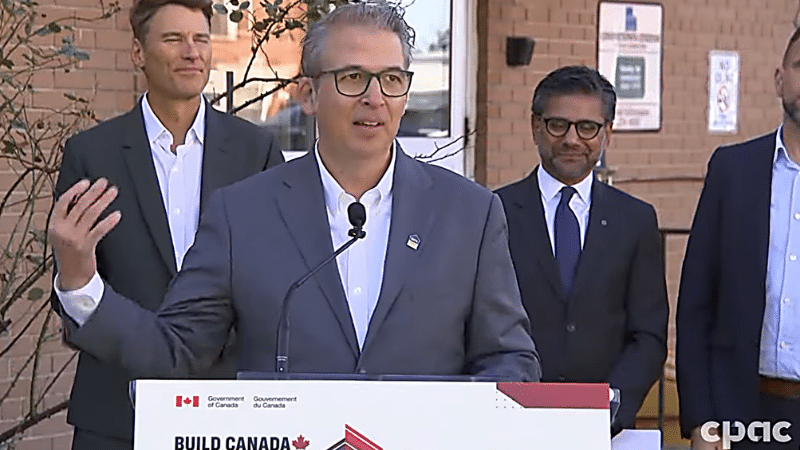
CHAF Board Chair Ray Sullivan speaks in Ottawa Tuesday. (CPAC/Screenshot)
In just a decade, Canada lost about one million rental homes priced below $1,000 per month, representing 20 per cent of the country’s entire rental market, according to Ray Sullivan, CHAF’s board chair.
“The answer to solving our housing crisis is not just about any supply, it’s about having the right supply,” said Sullivan.
“That includes a supply of housing that is affordable and housing that has non-market outside of the speculative marketplace.”
Robertson called the announcement the “first step” in his government’s affordable housing toolbox.
“Properties that have provided affordable rents for years are today being sold and redeveloped, repositioned in ways that put affordability out of reach. And once these homes are lost, they’ll be lost forever,” said Ana Bailão, CEO of Build Canada Homes.
“That is why the Canada Rental Protection Fund is so important. It recognizes that protecting affordable housing is an essential part of protecting affordability in this country. Not just building new homes, but preserving the homes that communities already rely on. said Ana Bailão, CEO of Build Canada Homes.
Lessons from rental protection funds
During Monday’s press conference, Robertson pointed to existing provincial funds as examples of how this new fund could work nationally.
“We’ve seen great examples across the country, B.C. and Toronto, two great examples that this model is based upon. We want to make sure we’ve got a great national model that the team at the Canada Housing Acquisition Fund are ready to scale, but certainly we’ll be looking at increasing that as we go forward,” said Robertson.
The province of B.C. announced its Rental Protection Fund in January of 2023. The $500 million initiative helps non-profits buy buildings with lower-than-market value rents.
It has since protected nearly 2,200 homes, helping renters stay in their communities with affordable rents, according to the B.C. government.
Toronto uses a similar approach through its Multi-Unit Residential Acquisition (MURA) Program.
Since its launch in 2021, MURA has provided $165 million in funding to 21 community housing providers to preserve the affordability of more than 1,000 rental homes in 34 projects across the city.
The Cooperative Housing Federation (CHF) called the new fund a “milestone” announcement.
“It has been decades since acquisition by the non-market community housing sector was supported by at-scale, dedicated investment, despite the growing precarity experienced by households renting in the private market,” the CHF posted in a statement online.
It said some of the strongest co-op communities across Canada started as acquisitions, protecting residents from the housing crisis and showing that it’s a proven model.
The community housing sector has advocated for years for the need for government financing to stop the erosion of affordable rental homes, Katie Maslechko, CEO of the Rental Protection Fund previously told Future of Good.
“For every new affordable rental home built in B.C., four more are lost to investors, conversions, demolition and rent increases,” said Maslechk said.
“We all need to plug the hole in the bottom of the ship if we’re going to stand a chance of staying afloat, let alone make a net positive progress in terms of the overall supply meeting the needs of Canadians.”
Your job. Your mission. Your news.
With your support, the sector you're building gets the journalism it deserves, and you get a tax receipt.

Author

Related Articles

New donation platform to help communities directly pay down mosque debt
Own Your Masjid is a project of boutique marketing agency Process Plus Marketing

Explainer: The divergent fix-it paths of Ontario and B.C.’s condo oversupply problem
Both provinces have too many tiny, shoebox condos, but both are taking different approaches to fixing it.

Elbows up: Spring Impact Capital calls for a giant spreadsheet of available early-stage Canadian capital
The Vancouver impact investor wants to crowd-source a free, national directory
