How has Trump’s presidency changed social justice in Canada?
Far-right extremism, the climate crisis, and reproductive rights issues are all taking root here — but Trump isn’t entirely to blame.
Why It Matters
Social impact organizations must learn how Canadians are accepting or rejecting U.S. ideas in order to stay relevant. Any major advancements in climate justice, police brutality, misinformation, or gender equity will most likely be inspired by efforts (or setbacks) south of the border.
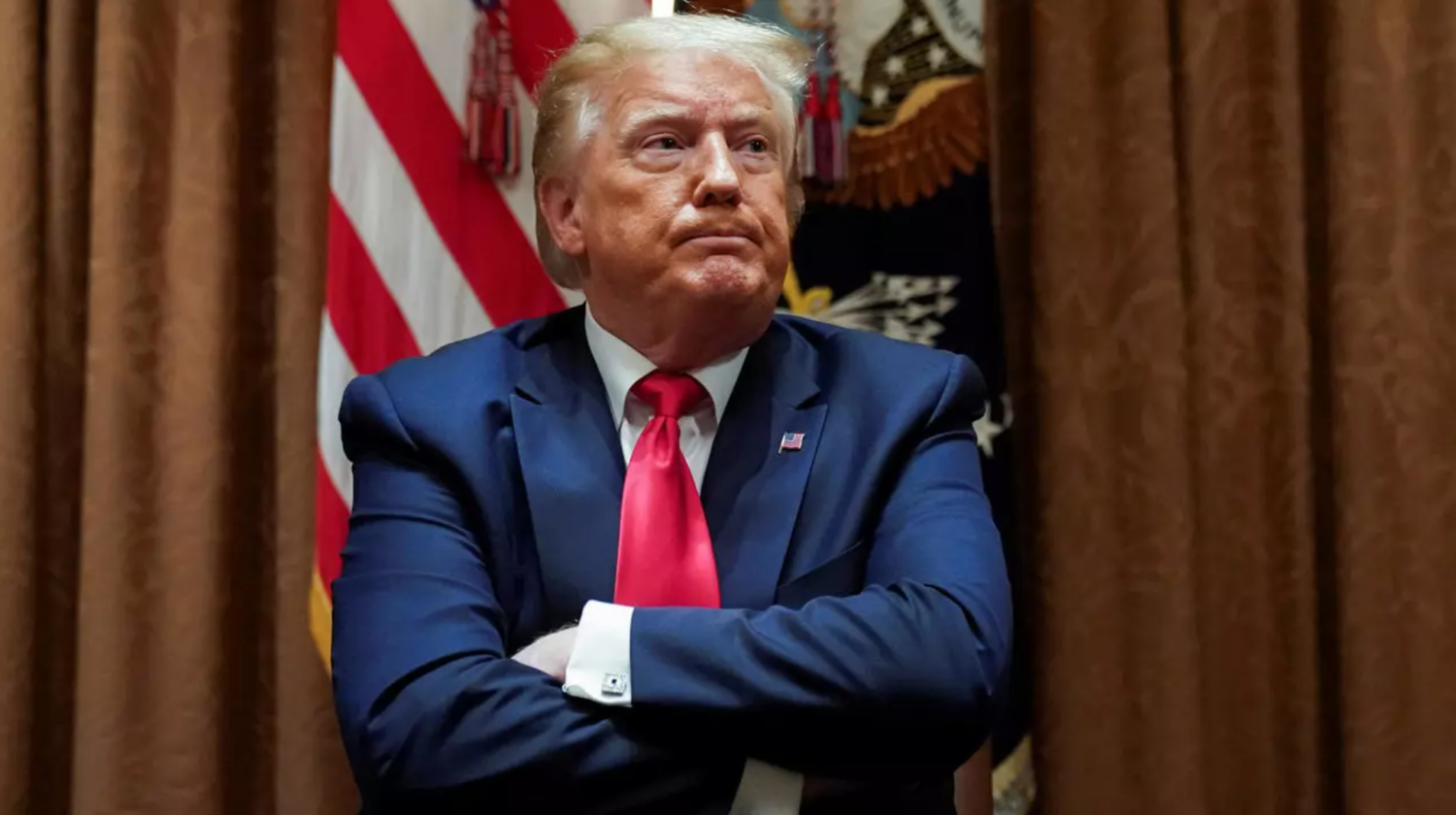
Photo: Kevin Lamarque, REUTERS
Canadians share an official language, the longest non-militarized border in the world, and a shared colonial history with the United States. We frequently love to insist, however, that the social and political contexts of our southern neighbour are completely different from ours.
That is true in many ways. Canadians are far more socially and fiscally liberal than Americans, choose our leaders under a parliamentary electoral system, and do not generally see the same displays of naked partisanship common in U.S. presidential races. However, Canadians follow U.S. culture closely and, inevitably, major social movements in America drift north.
The election of Donald Trump to the White House in 2016 was no different. The bow wave of xenophobia, white nationalism, protectionism, and disdain of elites did cross into Canada, albeit in subtler form. Climate justice organizing around the Green New Deal and a radical transformation of our economy found fertile ground among Canadian organizations, too. Established social impact organizations and grassroots social movements in Canada found themselves responding to some of the most volatile social upheavals in American society.
Here’s a list of some — but not all — of the biggest issues Canadian social impact organizations have confronted since Trump took office:
Green New Deal
Bridging concerns around the climate crisis and economic stagnation from high-polluting industries wasn’t new to the 2016 election. Columnist Thomas Friedman wrote about the idea of a massive green industrial effort in 2007. After Trump won, Congresswoman Alexandria Ocasio-Cortez and Senator Edward Markey actually advanced the Green New Deal Resolution, an attempt to bring a vague concept into political focus. It failed, but the idea eventually spread to the mainstream global environmental movement.
What has this American concept meant for Canada? It is now one of the biggest policy demands of Climate Justice Toronto, a youth-led movement, along with other organizations fighting the climate crisis. Both the federal Green Party and the NDP now use the term in their platforms. However, Sebastián Mendoza-Price, an organizer with Climate Justice Toronto, says the various components of a Green New Deal already existed in Canada before 2016. Indigenous peoples have stewarded land during the entirety of Canada’s colonization, she says, while the Canadian Union of Postal Workers has talked a lot about solar energy. “I think when we use Green New Deal framing for what are fundamentally Canadian ideas and Canadian solutions, we really do a disservice to the imagination and ingenuity of Canadian society,” Mendoza-Price says.
When we use Green New Deal framing for what are fundamentally Canadian ideas and Canadian solutions, we really do a disservice to the imagination and ingenuity of Canadian society.
Regardless of its label, climate justice and a green recovery have moved to the forefront of political debate in Canada, especially surrounding the Trans Mountain pipeline expansion project. Protests by land defenders opposed to it, along with rail blockades earlier this year and ongoing resistance to the expansion of Coastal GasLink’s liquified natural gas project in northern B.C. has bound together aggression against Indigenous peoples and climate justice. Wall-to-wall coverage of these issues at the time ensured that they remained top-of-mind for Canadians, Mendoza-Price says.
However, she says a radical transition towards a green Canadian economy is still not top-of-mind for the Liberal government. Trudeau’s policies on clean energy and tree-planting are muted by the purchase of the Trans Mountain pipeline expansion plan. Mendoza-Price says the NDP opposition is not much better. “It absolutely enrages me that the NDP has been presented with Liberal ideas and then tweaked them slightly to make them better,” she says. “They’re not even coming in with their loaf of bread — they’re just figuring out how many slices they can add.”
Police brutality
One of the most frustrating aspects of campaigning against racist police violence in Canada is how the American experience takes over the conversation. Canadians are often quick to insist that our nation’s officers do not engage in the same sort of racist, heavy-handed violence against Black men and other racialized groups. This is not true. Canada has a long history of violent policing, starting with the creation of the North West Mounted Police — later known as the RCMP — to put down Indigenous rebellions.
#BlackLivesMatter started as a social media hashtag after George Zimmerman, a white man who killed 17-year-old Trayvon Martin in 2012, was acquitted of his murder. The killings of other unarmed Black men in the U.S. by police — Eric Garner, Michael Brown, and George Floyd – have sparked international outrage. Floyd’s death in particular prompted huge protests and arson in Minneapolis and clashes with riot police across the U.S. During that time, the deaths of Andrew Loku, Abdirahman Abdi, and Regis Korchinski-Paquet, all Black or Indigenous Canadians killed during police encounters, have not provoked the same response.
The death of Korchinski-Paquet, a young Toronto woman who fell from an apartment balcony after police arrived to apprehend her, inspired a 10,000-strong protest march and calls for change, but some activists believe Canadians too often see police brutality against Black or Indigenous peoples as one-off events. “If Minneapolis hadn’t burned, would we be having this conversation about Toronto?” Desmond Cole, a writer and activist, asked on an episode of CBC’s The Current earlier this year. “I doubt it and that’s what’s wrong with the way that our media is covering these issues.”
Still, Canadian activist groups such as Black Lives Matter Canada are organizing around police brutality here. America’s public conversation is also forcing Canadians to consider the similarities between policing — and racism — in both countries.
Populism
Trump’s 2016 election victory represented the high water mark for a wave of far-right populist movements around the world, as well as an accompanying disdain for democratic institutions. In the U.K., the Brexit campaign scored an unexpected victory in 2017, paving the way for a highly contentious withdrawal from the European Union. India saw BJP party leader Narendra Modi, a fiercely anti-Muslim populist, surge to power. Several Canadian politicians such as Maxime Bernier and Kellie Leitch have also emulated Trump’s playbook of divisive politics, disdain for ‘elites’, and thinly veiled Islamophobia.
But Mike Morden, interim executive director of The Samara Centre for Democracy, a nonpartisan think tank, doesn’t believe U.S. style right wing populism has gripped Canadian politics. “Politicians are hugely overestimating the appetite for this kind of rhetoric,” he says. “We went looking for evidence that Canadians were becoming more populist. We expected to find it and we just didn’t.” Morden points to the records of Bernier and Leitch, both of whom have attracted a lot of media attention, but little electoral success.
The Samara Centre found the use of the term ‘elite’ in Parliament has risen dramatically since 2011, and particularly after 2015.
Between 2014 and 2019, The Samara Centre also found small but noticeable increases in the confidence of Canadians in their MPs and the nation’s democratic system writ large. However, it also found the lexicon of U.S. populists is sticking. In a May 2019 report, The Samara Centre found the use of the term ‘elite’ in Parliament has risen dramatically since 2011, and particularly after 2015. Morden is still worried about the rise of populism in Canada. If leaders start using abrasive populist language, he says, these concepts will become more acceptable. “I really do think that leaders occupying prominent places in the public and talking a certain way is enough to alter our politics and change minds,” he says.
Reproductive rights and gender equality
Trump’s election also sparked fears of a major regression on women’s rights in the United States. One day after his inauguration, roughly 200,000 people, including Canadians, marched on Washington, angered by Trump’s misogynistic behaviour. March organizers vowed to help more women run for office. After the 2018 midterm elections, a record 117 female candidates won their races, a massive jump from 2016.
In 2017, Trump decided to double down on a decades-old rule known as the Mexico City Policy or, among reproductive rights organizations, as the global gag rule. It forbids U.S. global health assistance funding for any organization that provides legal abortion services. Laura Neidhart, director of communications and government relations at the Action Canada for Sexual Health and Rights, says Canadian organizations have had to step up in the absence of American funding.
The gag rule, along with other American anti-abortion policies, has also forced Canadians to not take abortion rights for granted. “When we’re seeing abortion rights under attack in the United States, I think it has helped a lot of Canadians be more aware of what’s happening on the ground here,” Neidhart says. She points to concerns about the closure of Clinic 554, New Brunswick’s only private abortion clinic. The province does not cover out-of-hospital abortions and the clinic’s medical director told CBC News it could not continue to provide free abortions and keep its doors open. “There are plenty of cities, even within Canada, where there aren’t actually reproductive healthcare providers,” Neidhart says.
Some of Trump’s appointees have also been quite sympathetic to the possibility of total abortion bans, including recently-appointed Supreme Court justice Amy Coney Barrett and Vice-President Mike Pence. All three major political parties in Canada have chosen not to restrict abortion, but Neidhart says Canadians still need to be wary.“We know there is an interest in opportunities to take us back on abortion from certain groups,” she says. “But we are also starting in a very different place from the United States.”
Extremism and misinformation
Far-right extremists existed in Canada well before Trump took power. The Klu Klux Klan had chapters in Alberta and Ontario for much of the 20th century, while the neo-Nazi Heritage Front remained active in this country until the late 1990s. That said, when Trump began using his platform as president to amplify (or at the very least, not disavow) white nationalism, especially in the wake of the 2017 Charlottesville attack, sympathizers in Canada took note. “When there is significant violence in the United States, we have hate groups here that are super pumped up by it,” says Evan Balgord, executive director of the Canadian Anti-Hate Network (CAHN), an organization inspired by the Southern Poverty Law Centre that monitors domestic hate groups.
Many of these Canadian far-right groups are now identifying with QAnon and other conspiracy theories touted by Trump supporters. Disinformation has become a common tactic of the far-right in both countries, especially when it relates to racist or Islamophobic tropes. When Motion 103, a non-binding bill to condemn Islamophobia, was tabled in the House of Commons, far-right extremists quickly used it to claim that Trudeau was trying to suppress all criticism of Islam. Extremists in Canada are imitating their southern comrades whenever they falsely claim that hostile Muslim immigrants are pouring into the country unchecked. These campaigns have caught the attention of CAHN’s researchers.
Balgord says far-right extremists in Canada are also more readily considering violence as an option to achieve their political goals. One horrific example is Alexandre Bissonnette, a Quebec man who murdered six Muslims praying at a mosque in Quebec City in 2017. However, Balgord says many Canadian organizations didn’t take action on the issue at home until about a year and a half ago. CAHN is now providing information and guidance to organizations such as the National Council of Canadian Muslims. Why the shift? “I think it’s become too big to ignore,” Balgord says.
Your job. Your mission. Your news.
With your support, the sector you're building gets the journalism it deserves, and you get a tax receipt.

Related Articles
Trailblazing Iraqi-Canadian activist Yanar Mohammed killed outside Baghdad home
The feminist leader’s death is a devastating loss for women’s rights movements in Iraq and around the world, say advocates.
Humanitarian aid groups granted interim injunction to continue working in Gaza
Aid organizations from around the world came together to launch a formal petition to the Israeli High Court earlier this week.
