UPDATE: Canada‑linked aid agencies petition Israeli court to stop March 1 Gaza shutdown
As part of a new registration requirement with the Israeli authorities, humanitarian aid organizations were required to provide personal information of Palestinian and international aid staff working in the Occupied Palestinian Territories. Several aid organizations around the world refused to do so, and are now being told to cease operations by Israeli authorities.
Why It Matters
Humanitarian aid groups have not shared staff lists with Israeli authorities because of safeguarding, legal and ethical concerns. Palestine remains one of the most fatal locations for aid workers, according to the Aid Worker Security Database
Editor’s note: This is an emerging news story and will be updated later today.
Update, 10:20 a.m. ET: Added quotes and information from the press conference.
Update 11 a.m. ET: Added screenshot of Yotam Ben-Hillel.
Seventeen humanitarian aid organizations are collectively petitioning the Israeli High Court to allow them to continue delivering life-saving aid in the Gaza Strip before they’re forced to stop on March 1.
Oxfam and Humanity & Inclusion International, both of which have Canadian chapters, are joining other organizations like the Danish Refugee Council, the Norwegian Refugee Council, Muslim Aid and Christian Aid.
“The effect [of closures] would be immediate, extending well beyond individual organisations [sic] to the wider humanitarian system,” the groups said in a press release.
“In Gaza, families remain dependent on external assistance amid continuing restrictions on aid entry and renewed strikes in densely populated areas. In the West Bank, including East Jerusalem, military incursions, demolitions, displacement, settlement expansion and settler violence are driving rising humanitarian needs.”
“Forcing humanitarian organizations, of whom a majority are Canadian, to suspend their work will only deepen suffering and put countless civilians, especially children and people with disabilities, at even greater risk,” said Anne Delorme, executive director of HI Canada.
“In Gaza, where the number of child amputees per capita is now the highest in the world, restricting humanitarian action is not just devastating, it is unconscionable.”

The Association of International Development Agencies (AIDA) is the lead petitioner in this case, supported by Ben-Hillel Law Offices in Jerusalem.
“Our legal basis as INGOs operating in Palestine is based on our PA [Palestinian Authority] registration,” said Athena Rayburn, executive director of AIDA, in a press conference on Tuesday morning. “That is how we are legally authorized to be in these territories.
“Israel does not have the authority to tell us that we are not allowed to operate inside Gaza or the West Bank.”
Despite organizations being registered lawfully with the Palestinian Authority, closures could begin on Feb. 28, 2026. Under the Fourth Geneva Convention, occupying forces such as the Israeli authorities have an obligation to allow humanitarian relief work to continue.
With the petition filed on Sunday, aid organizations are now asking the court for an interim order to be able to keep their operations running in the Gaza Strip, said Yotam Ben-Hillel, sole partner at Ben-Hillel Law Offices. The court has said that the Israeli state must respond by tomorrow.
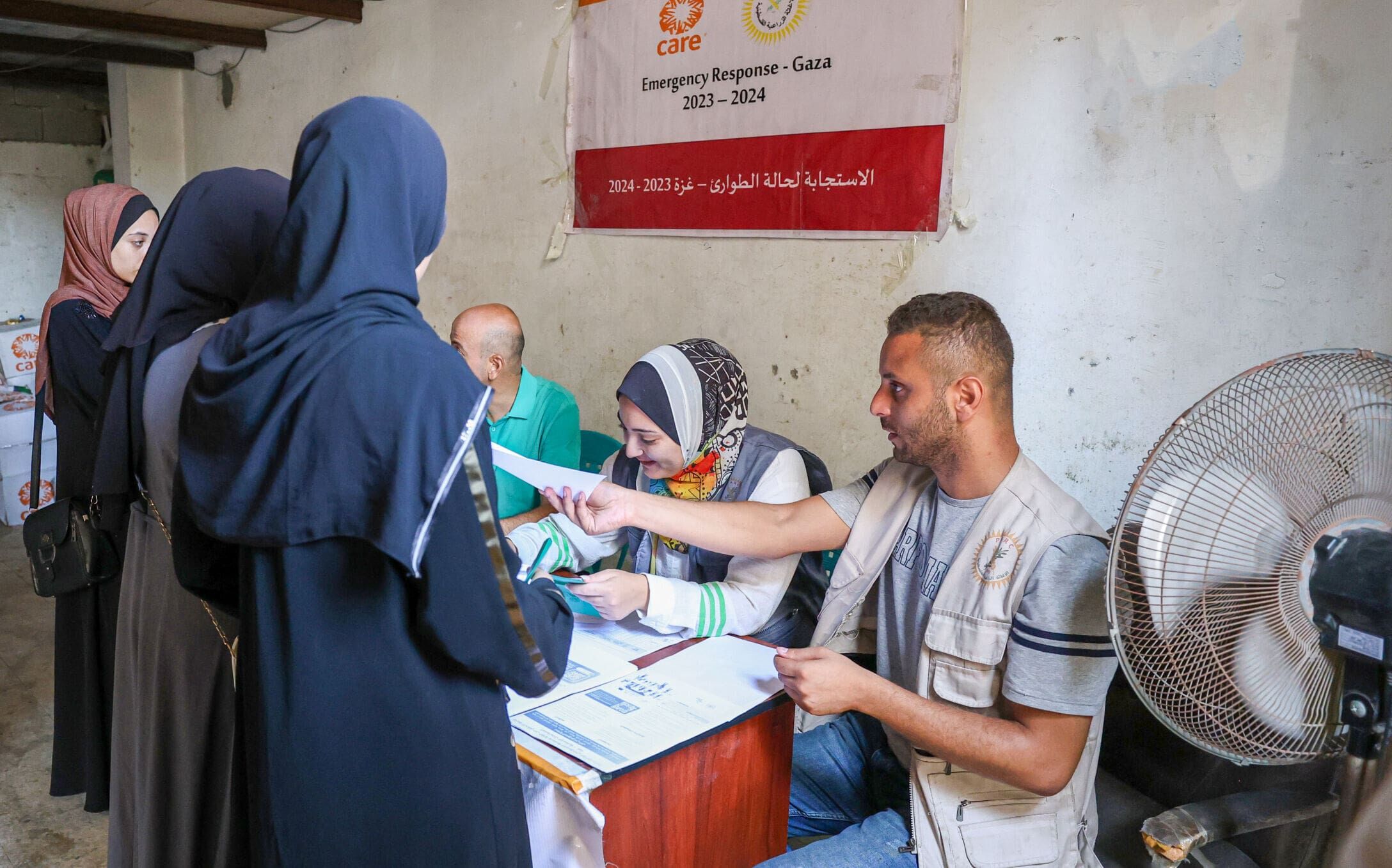
At present, several aid organizations continue to deliver food, healthcare, shelter, education, and hygiene and sanitation services in the Gaza Strip. A statement from the UN Office for the Coordination of Humanitarian Affairs (UNOCHA) lists the sectoral consequences if aid groups are no longer allowed to operate in Gaza.
This would include a removal of half of the region’s healthcare system. Of the 195 cooked-meal provision points operating in Gaza, 68 per cent depend directly on INGOs, according to UNOCHA.
Latest in series of obstructions of aid in Gaza
Israeli authorities notified 37 international aid organizations late last year that they would have to cease operations in the Occupied Palestinian Territories unless they complied with new registration requirements, one of which was a list of staff and their personal details.
Many aid organizations have not provided this information on ethical, legal and security grounds. In some cases, aid organizations are also stuck in a “legal deadlock” because the requirements for registration under Israeli authorities conflict with their obligations under data privacy laws.
Rayburn added that there are some “legitimate, large-scale” aid organizations that have chosen to go through the new registration process.
For those organizations that did not, at the end of 2025, they “were formally notified that their Israeli registrations would expire the following day and that they would have 60 days to wind down activities in Gaza and the West Bank,” the aid groups added.
With the deadline for closures now imminent, aid organizations are seeking judicial review from the Israeli High Court, asking them to “suspend the measures before irreparable harm is done to civilians who rely on [humanitarian] assistance.”
“Conditioning humanitarian presence on sweeping administrative demands, including the transfer of comprehensive national staff lists, alongside vague and politicised grounds for denial, risks disrupting life-saving services and eroding the obligation to ensure civilian welfare under occupation,” the aid groups wrote in the press release.
Previously, aid organizations were registered with the Ministry of Social Affairs in Israel, a relatively straightforward process, said Ben-Hillel.
The Israeli government has since come up with a new process, administered through the Ministry of Diaspora Affairs and Combating Antisemitism.
According to Ben-Hillel, this is “a ministry that has no experience whatsoever in regard to humanitarian organizations.”
The majority of Palestinians still in the Gaza Strip are staying in tents, which, in recent weather, have also been subject to flooding, said Amjad Shawa, the director of the Palestinian Non-Governmental Organizations Network, based in Gaza City.
He added that international aid staff have also become “observers [of] the Israeli violations on the ground,” and that the registration process – and the subsequent removal of aid staff – will result in more isolation of the Gaza Strip.
“I think it’s very clear that what we are seeing in Gaza is precedent-setting and is extremely concerning for what we can see happening in humanitarian responses and conflicts all over the world,” Rayburn said.
Your job. Your mission. Your news.
With your support, the sector you're building gets the journalism it deserves, and you get a tax receipt.

Author

Related Articles


Trailblazing Iraqi-Canadian activist Yanar Mohammed killed outside Baghdad home
The feminist leader’s death is a devastating loss for women’s rights movements in Iraq and around the world, say advocates.
Humanitarian aid groups granted interim injunction to continue working in Gaza
Aid organizations from around the world came together to launch a formal petition to the Israeli High Court earlier this week.
