Canadian board game tackling anti-Indigenous racism takes top honours at United Nations global competition
Canada has 11 numbered treaties with Indigenous peoples, signed between 1871 and 1921.
Why It Matters
Many Canadians have misconceptions about Indigenous peoples. Learning more about Canada’s colonial past can help dispel them.
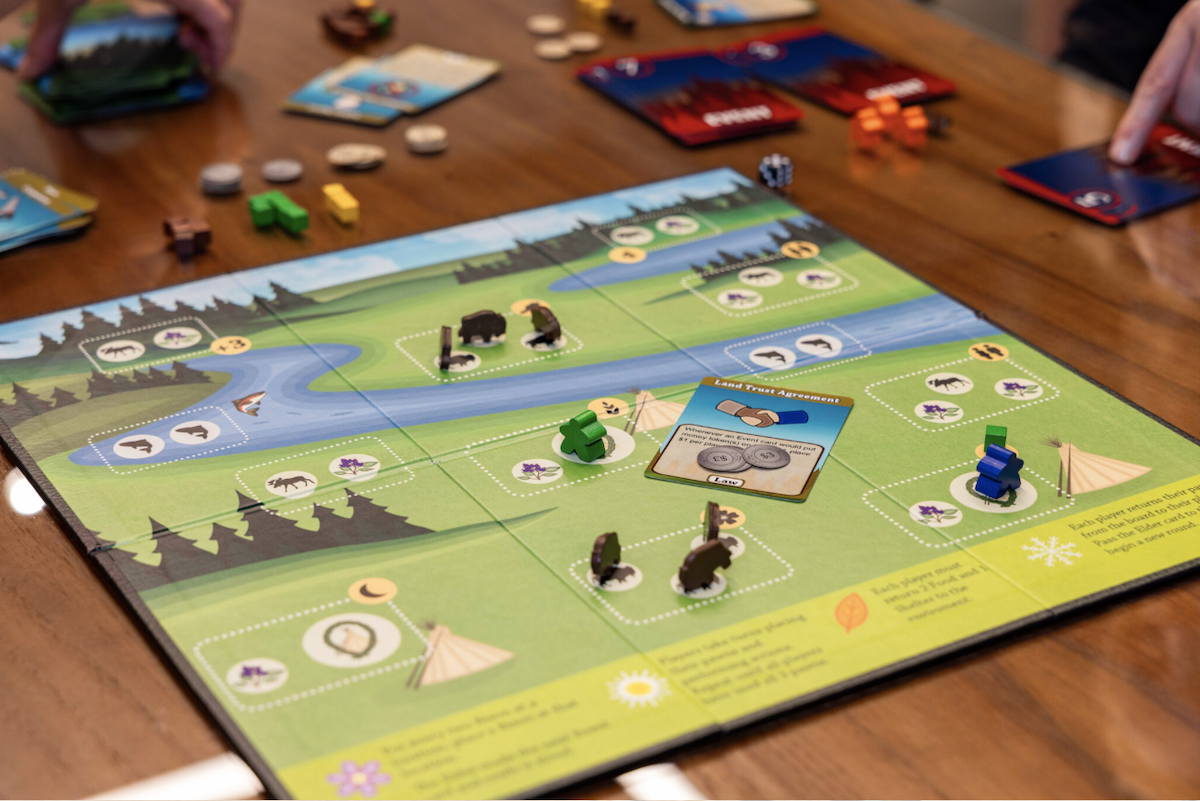
Exploring Wâhkôhtowin. (Photo: Shift Labs)
A board game designed to explore and explain the relationship between Indigenous Peoples, settlers, and the Crown was recognized by the Intercultural Innovation Hub, an initiative of the United Nations, and various commercial partners at a Global Forum in Portugal late last month.
Exploring Wâhkôhtowin—a board game first developed by Shift Lab 2.0, the Skills Society and the Edmonton Community Foundation, in consultation with Indigenous communities and Elder Ron Lameman—beat out 1,790 other contenders to be named one of the hub’s top ten initiatives of the year.
After the initial development phases, the game was handed over to the Indigenous Knowledge and Wisdom Centre and the Yellowhead Indigenous Education Foundation for further refinement and distribution.
“This is the culmination of an eight-year exploration of Indigenous-settler paradigms about our shared history in Alberta,” said Sam Singh, a Shift Lab steward and Yellowhead Foundation associate.
Wâhkôhtowin is a Cree word that loosely translates to “relationships.”
The game’s developers hope it will “spark non-Indigenous people to start thinking about the meaning and impact” of treaties.
“(Wâhkôhtowin) is not merely a noun; it is an active process,” they said. “It is our intention that this game will reveal new perspectives on the many and intertwined relationships involved between Indigenous Nations.”
The game covers the many millennia in which the lands now known as Canada were occupied, used, shared, disputed, and protected by Indigenous Peoples, as well as early trade relationships.
Players are then introduced to the context and history of Canada’s 11 number treaties, signed between 1871 and 1921, and the half-century that followed.
The game begins with the players, representing diverse characters from different cultural backgrounds, arriving in Wâhkôhtowin as new immigrants or travellers seeking to learn and connect with Indigenous culture. However, they quickly discover there are significant misconceptions, stereotypes, and misunderstandings about Indigenous peoples.
In their quest to dispel stereotypes, break down barriers, and build cultural bridges and understanding, players engage in challenges, tasks, and encounters that educate and enlighten them about Indigenous cultures’ diversity, resilience, and beauty.
As players move through the rounds, the event cards guide them through major events in Treaty 6’s history.
A Wâhkôhtowin background document is also available to educators, parents and game hosts to assist them in providing context, historical information, and further resources for information and discussion.
Your job. Your mission. Your news.
With your support, the sector you're building gets the journalism it deserves, and you get a tax receipt.

Related Articles
Partnered Partnered content How construction contracts became the blueprint for social change in Manitoba
Manitoba is a leader in social procurement, with decades of partnerships among government, businesses and social enterprises that have shaped a model other communities can learn from.
‘The need is endless’: Food insecurity highest in Canada’s Black, Arab and Indigenous communities
Food insecurity gaps aren’t closing, so community organizations across Canada are trying new ways to help beyond just providing food.
