7 short documentaries about Canadians making change you should watch
Citizen Minutes looking for Canadian changemakers for fourth season docs
Why It Matters
Citizen Minutes is a series of short films featuring Canadians who are working to improve their communities. Registrations are open until March 16 for a fourth cohort of creators who will spotlight changemakers and share their experiences to help others go faster and farther.
The series Citizens Minutes uses the short film format to spread ideas and experiments for societal change, and they’re looking for their next subjects.
Since 2023, 21 documentaries have been produced for Citizens Minutes, 12,500 viewers attended screening events, and 10,000 more have streamed the documentaries online.
Hot Docs, the non-profit behind the series, recently published an impact report highlighting three intended outcomes: inspiring interest in public affairs; demystifying the engagement process and presenting different ways to engage in democracy; and encouraging the audience to recognize everyday heroes in others and in themselves.
After watching about half the documentaries, I would add two additional outcomes: Provide constructive, creative tips for lobbying for change, and acknowledge that change is hard to come by.
While all of the documentaries are worth watching, here are some standouts:
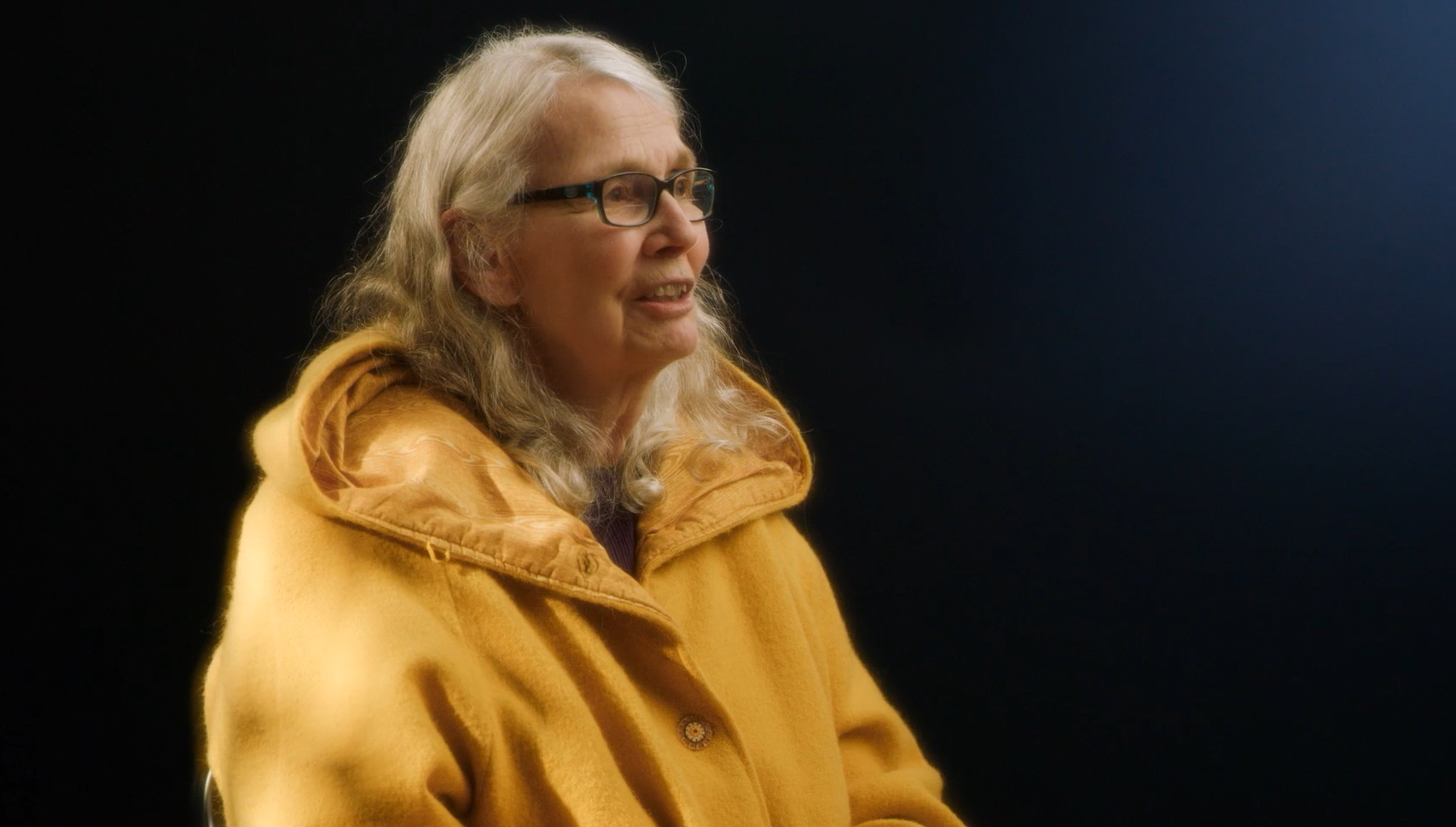
Jean Swanson: We Need a New Map
“I have been involved in a lot of things that have not been successful,” said Vancouverite Jean Swanson, a longtime anti-poverty activist who has been labelled the “Canadian Bernie Sanders.”
In 2017, the annual Vancouver homeless count showed the number of homeless people was up 30 per cent.
The following year, after four unsuccessful attempts, Swanson was elected to Vancouver’s city council, where she stayed until 2022.
At 83, she now volunteers with the Carnegee Housing Project in Vancouver’s Downtown Eastside, one of Canada’s poorest neighbourhoods.
Decades of anti-poverty activism led Swanson to this conclusion: “It was all kinds of avenues to get there: the renters’ avenue, the climate avenue, the homeless avenue. Push in the direction that suits you the best.”
One daunting question for any changemaker is how to measure success.
“ I do not think that Jean’s biggest accomplishment is any piece of legislation, but instead this continued movement and group of people that she brought together,” said Ishmam Bhuiyan, a young colleague of Swanson’s.
Lesson to learn: Advocacy requires multiple entry points
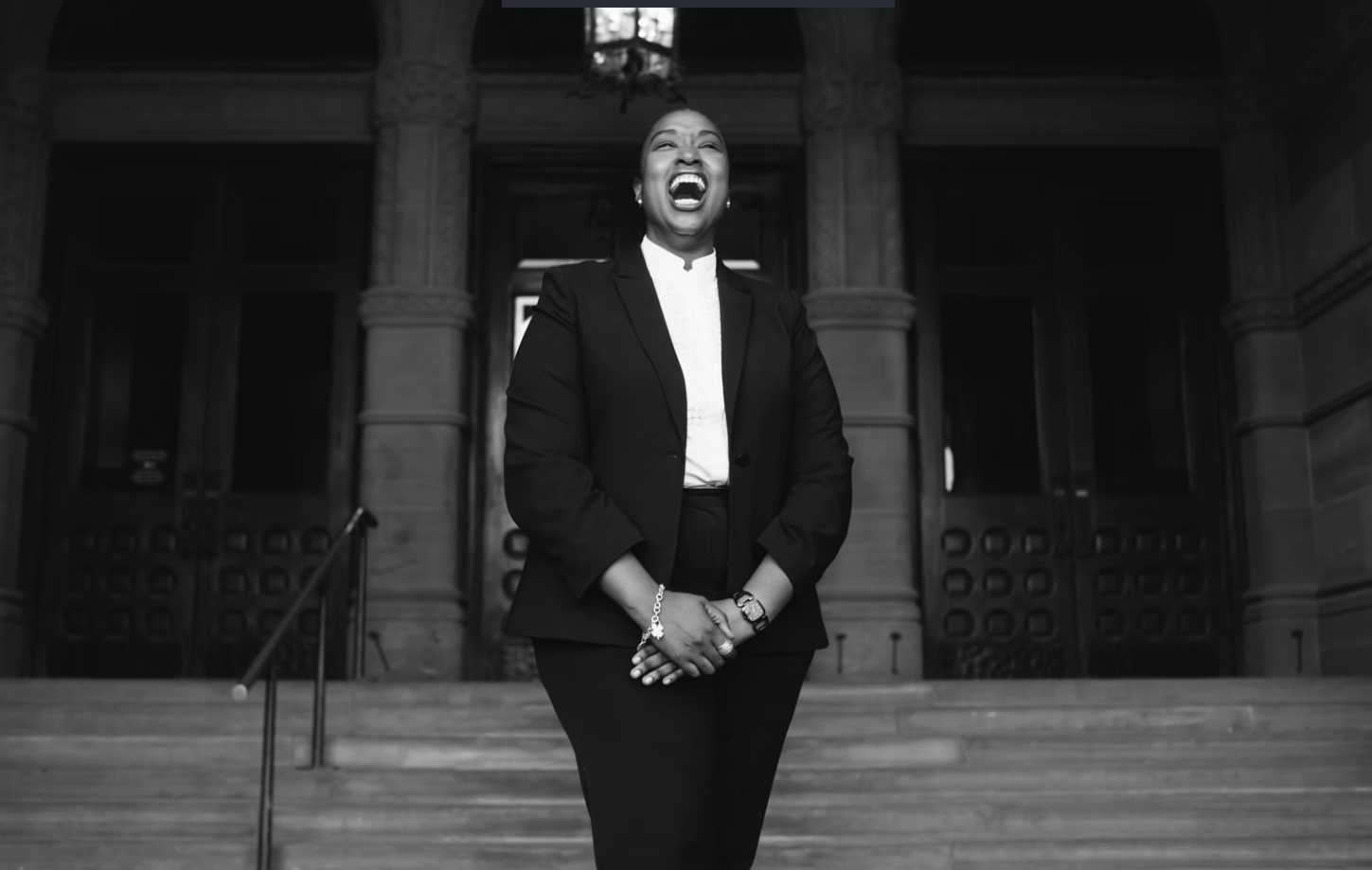
Body Politics
“As deflated as I feel in the Chamber, I am there, I am in the house. Some battles I will lose, some I will win, but I’m there. They can’t erase me.”
These are the words of Jill Andrew, former Toronto-St-Paul MP from 2018 to 2025. “To be elected, to be fat, to be Black, to be a woman, it opens a window for so many people to come through.”
Andrew was instrumental in a bill recognizing the first week of February as Eating Disorders Awareness Week in Ontario.
“It is the anxiety of failure that is where I get my strength from,” she said. “It is never enough. When I close shop and leave, there are still people who do not have paid sick days.”
Swanson and Andrew’s portraits inspire interest in public affairs, but they also show how difficult it is to push for change.
“Sometimes I wonder if it is the right spot for me,” said Andrew. That is when veteran activist Swanson’s wisdom comes in handy.
“Try to take care of yourself. Try to have a good time. Try to have a nice life.”
One tip that helped her: Swanson knitted during council meetings because sometimes she got angry, and knitting helped her refocus, she said.
Lesson to learn: Change is hard. Take care of yourself

Ride Fair
Ride-hailing apps are convenient; however, convenience comes with a price. Non-profit RidefairTO makes it visible.
“We are a coalition of groups and organizations having an interest in establishing fair rules for companies like Uber and Lyft to make sure that their growth does not undermine the City’s social and environmental goals,” said Brendan Agnew-Iler, a RidefairTO organizer.
For any social or environmental issue, it takes significant mobilization and community work to ensure the public interest remains at the centre of policymaking, he said
“We draw attention by helping people understand the impact of those platforms,” said Thorben Weiditz, a RideFairTO organizer.
In 2021, the coalition published a report detailing how the Toronto Transit Commission lost $74 million to Uber and Lyft.
Pointing out the impacts of ride-hailing apps is one part of the coalition’s strategy; it also proposes an alternative.
RidefairTO offers a vision for future mobility systems that can support sustainable, resilient, healthy cities and create quality jobs, added Weiditz.
The short film stresses that without an articulate alternative, it is difficult for people to consider giving up a convenient innovation.
Lesson to learn: Propose a concrete solution
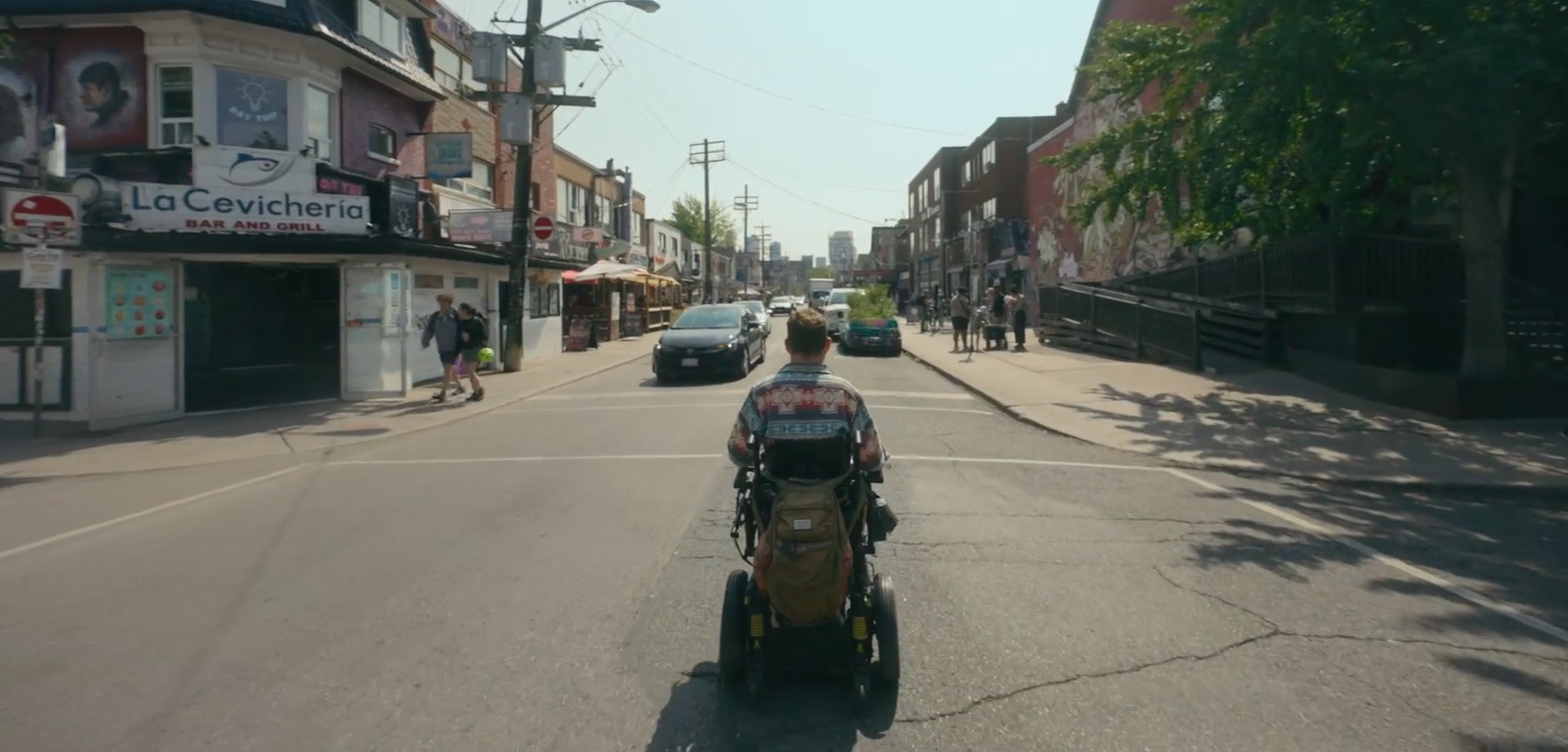
A Stop Gap Measure
“I have never been out on my balcony,” said Luke Anderson, the executive director of StopGap Foundation.
Anderson’s balcony is located in “inaccessibility land”; the height gap between the living room floor and the exterior prevents a wheelchair from passing through.
He would rather live in accessibility land, “where spaces are designed for everyone.”
“In new buildings, there are requirements for 15 per cent of the units to be accessible, but no requirement for the balconies,” he said.
When Anderson worked at an engineering firm, the firm had to install a large folding aluminum ramp for him to get in or out. It was the spark that started the movement.
SpotGap Foundation’s most visible work is a four-piece wooden structure made by a contractor and volunteers. These ramps draw attention to the accessibility issue, and the website is stencilled on the ramps.
However, the coloured ramps are a temporary measure, said Anderson, and they cover the visible part of the StopGap movement work.
“We’ve been very successful at building and placing these simple four pieces of wood all over the country. Some people are ordering their third ramp from us. That, to me, is a bit of a failure. It means a permanent ramp has not been installed.”
In 2005, the provincial government passed the Accessibility for Ontarians with Disabilities Act. However, 21 years later, the accessibility goal has not been attained.
Policies are not enough, said Anderson, adding that creating connections with architects, engineers, developers, and planners is critical.
Lesson to learn: Demystify the engagement process: policies are not the end game
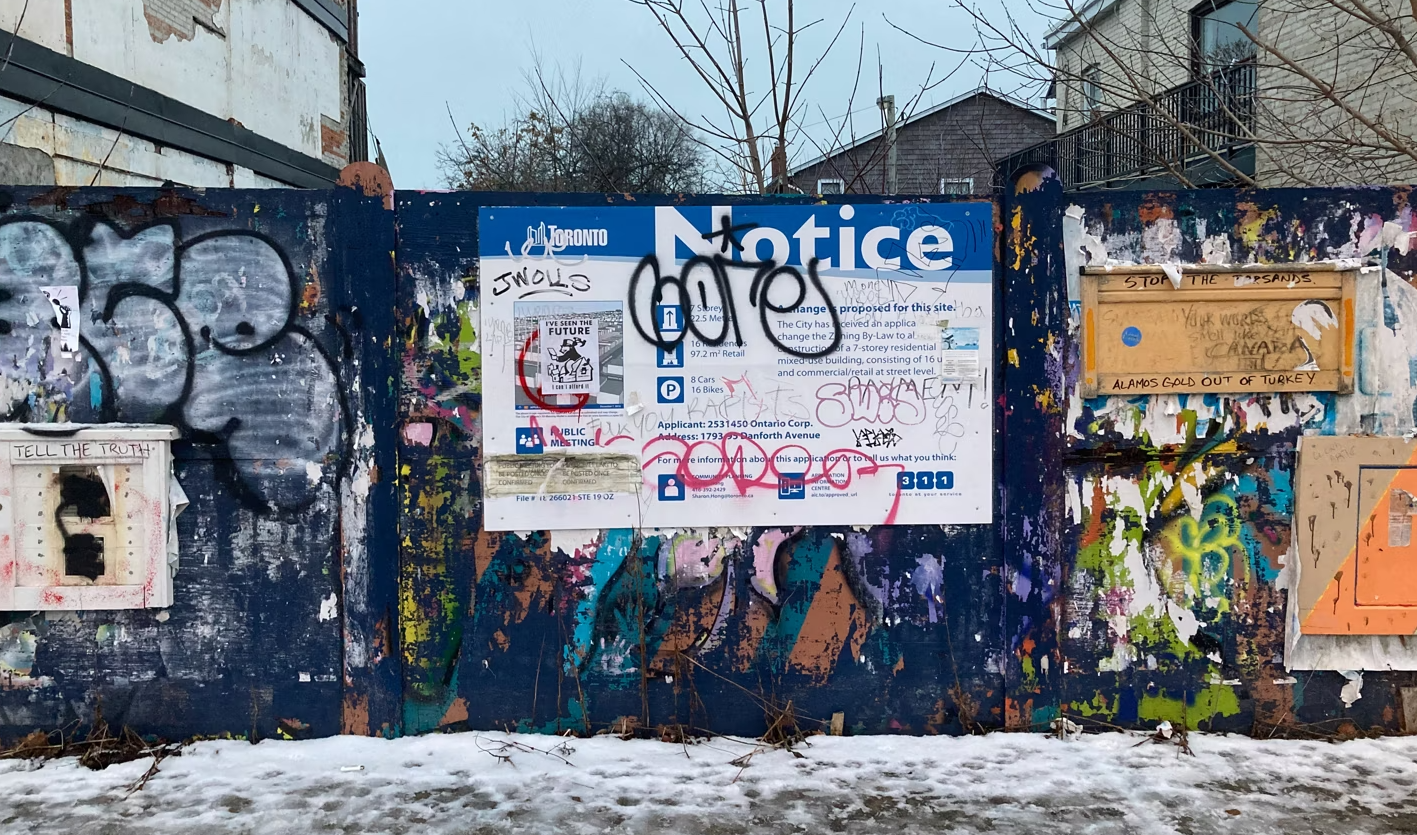
Excluded by Design
Dave Melsin targets another design exclusion: public notices.
These posters on doors, buildings, and panels inform people that a project is planned for their neighbourhood and invite public input.
How many of us feel a burning impulse to participate?
“I am not a conspiracy theorist,” said Meslin, a community organizer and the author of the book Teardown: Rebuilding Democracy From the Ground Up.
“I do not think that the bureaucracy sits down and says, ‘Ok, let’s use a language no one can understand, let’s not add colour so no one notices it.’
“It is a passive negligence. They are not trying to exclude us, but by not making the effort, it becomes exclusion by design.”
To prove his point, he asked two graphic designers to give public notices a makeover. The result is stunning; instead of a dreadful black-and-white block of text, the information is organized into small boxes, making it easy to identify the what, why, and where.
Meslin’s crusade for clearer public notices is a lesson in participatory communication. As he points out, it should look pretty to catch your attention. It must highlight the most important information: What is it about? Why should I care? It must include the point of engagement: is there a survey? A meeting? And it should stress a call to action: your voice matters.
When you think about it, what’s good for public notices applies to any communication that rallies and mobilizes people.
Lesson to learn: The content matters as much as the message
Loud & Here
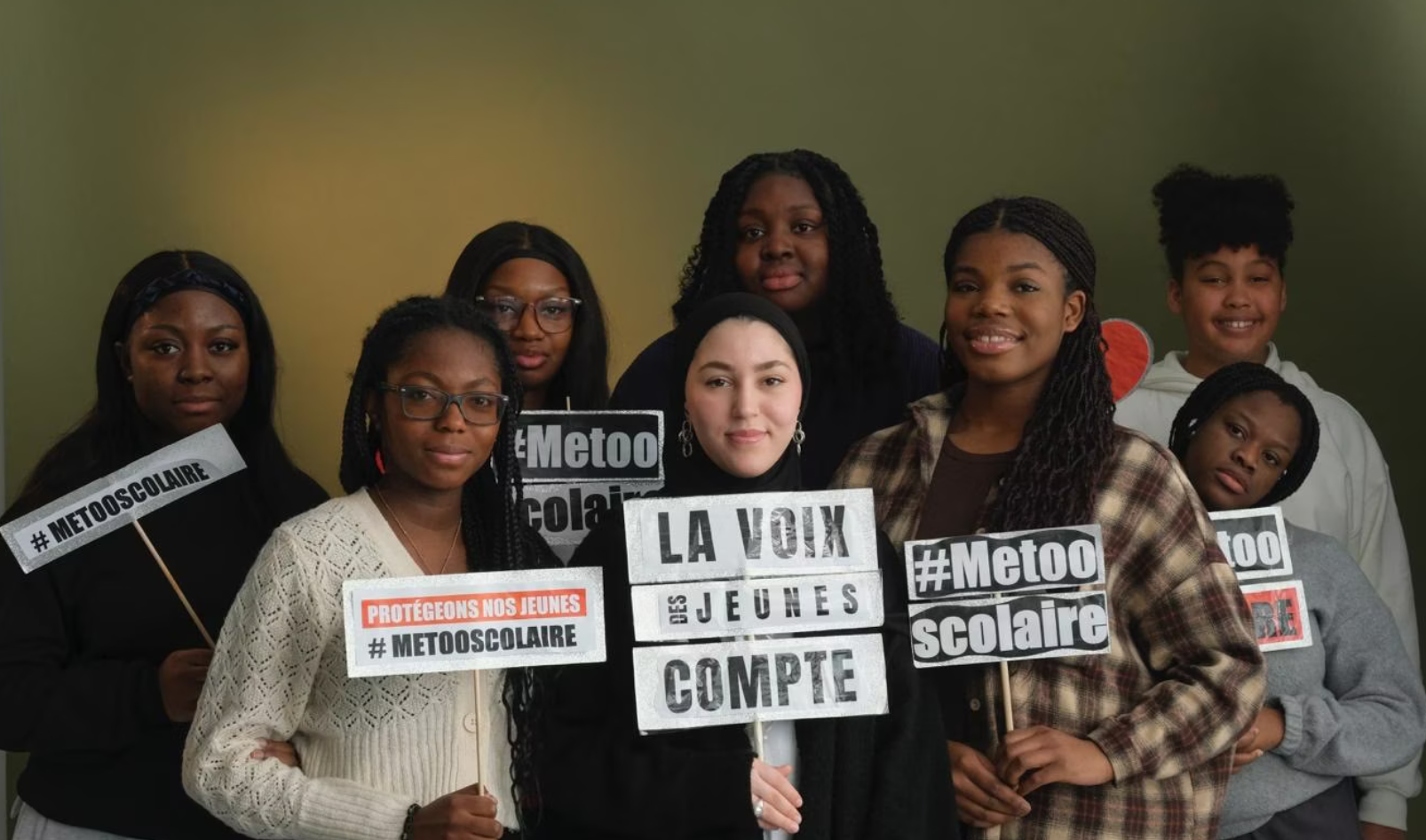
The documentary Loud & Here opens with these stats: more than 60 per cent of sexual violence victims are minors, but they only represent 20 per cent of the overall population.
“If we were to publish all the incidents in the newspaper, there would be no place left for any other information,” said Sha’nyce Mocombe, from the collective La voix des jeunes compte (Young people’s voices count).
“When I was in school, it was normal to see a guy walk by and slap a girl on the butt, and just leave laughing. There was no consequence,” added Youvenil Genil.
“Even if many others live the same thing, you are alone because the subject is so taboo,” said Kenza Chahidi.
The group was created in 2018 in the wake of the #MeToo movement.
Speeches, op-eds, press conferences, interviews, and training, this group of 25 young women tried every tactic to make their voices heard. That tenacity led them to the Quebec Legislative Assembly, demanding a law covering every type of violence happening in primary and secondary schools in Quebec.
Their ask includes hiring sex educators, psychologists, mediators, sexual education classes adapted to today’s reality, surveillance with functioning cameras, intervening in aggression, and also detecting problematic behaviour before aggression happens.
During the early years of the Collective, Quebec established a National Student Ombudsman office with the primary mission of processing complaints.
“When we finally met with the Education Minister, he sent us back to the new Ombudsman; ‘Let’s see if it works, ’ he said. All this office offers us is an online form that you fill out after an aggression,” said Chahidi.
It was a cold shower in reality.
“I am sad, it feels like we did everything we could,” said Clorianne Augustin. “We need to change the way we are campaigning,” she added.
“We are taking our fight to the national level,” added Genil. “However, we need to appreciate the small victories. Because of our intervention, the Minister of Education added mandatory training for all school staff.”
Lesson to learn: Celebrate small victories to keep the faith
Nourrir les Rêves
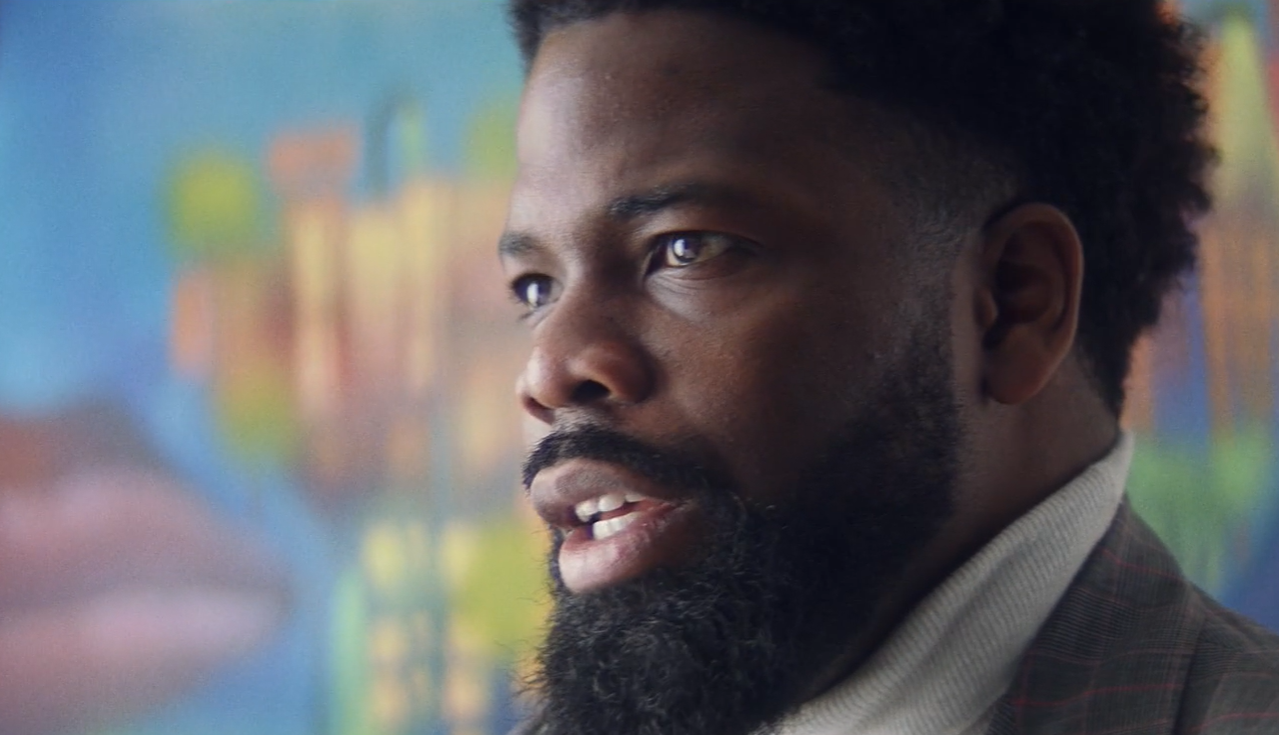
When Paul Evra became general manager of Centre Lasallien/Saint-Michel, he created a “dream box” where children could deposit their dreams for themselves and their neighbourhoods.
Despite being familiar with Saint-Michel and its residents, Evra was shocked.
“I thought the kids would dream of meeting a celebrity or going to Disneyland, but half of them dreamed of an additional daily meal,” he said.
The federal constituency of Saint-Léonard/St-Michel has the third-highest child poverty rate in Quebec; one-third of the youth there eat fewer than three meals a day.
When people talk about St-Michel, economic poverty and food security are top of mind, said Evra
“We should also talk about youth, we are one of the youngest neighbourhoods in Canada, meaning we can make a difference for the future,” he added.
“We won’t run the race for the kid. However, we will make sure they start from the same place as everyone else,” he added.
Lesson to learn: Feed the dreams, change the conversation
Your job. Your mission. Your news.
With your support, the sector you're building gets the journalism it deserves, and you get a tax receipt.

Author

Related Articles

Half of Filipino immigrants to Canada are overqualified for their jobs: StatCan
‘For the relationship that Canada has with the Philippines, it seems like it’s lopsided.’
Partnered Partnered content How construction contracts became the blueprint for social change in Manitoba
Manitoba is a leader in social procurement, with decades of partnerships among government, businesses and social enterprises that have shaped a model other communities can learn from.