Federal court rejects Ottawa’s bid to quash youth-led climate case
Federal Court says youth climate advocates deserve a full hearing on whether Ottawa weakened Canada’s 2030 plan.
Why It Matters
The ruling affirms that young people and public‑interest groups can challenge federal climate decisions when they believe statutory obligations aren’t being met. It also strengthens the Net‑Zero Accountability Act's role as a tool for democratic oversight, signalling that governments must justify their climate commitments.
By Hope Lompe, The Energy Mix
The Federal Court of Canada has rejected the Carney government’s bid to block a climate accountability case, arguing that Ottawa failed to bring Canada’s 2030 climate plan into line with its obligations.
The case alleges the federal government has abandoned or weakened key measures in Canada’s 2030 Emissions Reductions Plan, and failed its legal obligation to update it under the Canadian Net-Zero Emissions Accountability Act (CNZEAA).
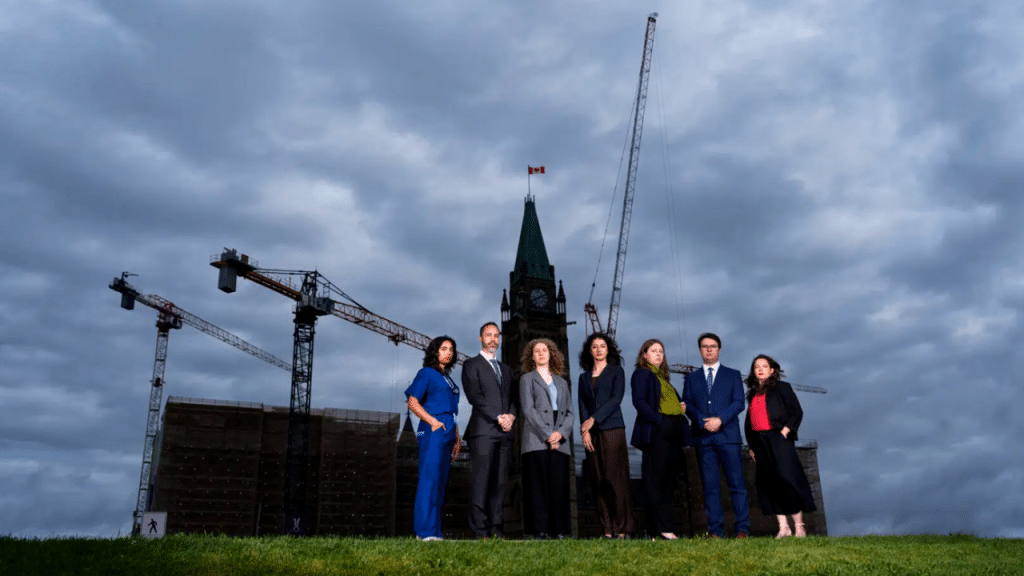
It was initiated by youth advocates Sophia Mathur, Marie Maltais, and Shirley Barnea, alongside Environmental Defence Canada and the Canadian Association of Physicians for the Environment.
In its arguments to strike down the case, the government argued the effort was “bereft of any possibility of success,” Ecojustice staff lawyer Fraser Thomson told The Energy Mix.
“They were bringing a procedural motion trying to strike the case,” he said. “Rather than defending their climate plan, they were trying to deny the youth and public interest organizations their day in court.”
The court found no legal or factual basis to dismiss the case.
In his decision, Justice Patrick Gleeson wrote that he disagreed with the assertion by government lawyers that the case “is doomed to fail” and should be struck down.
“The Applicants’ position on standing is not bereft of any possibility of success,” Gleeson wrote.
“This is the kind of thing that we unfortunately see quite commonly from governments in climate litigation,” Thomson said.
“Rather than deal with the crisis, unfortunately, we’re seeing governments that want to avoid accountability, and they pull out all the stops to try and avoid having to answer for their climate records in court.”
CNZEAA sets two legally binding requirements: that the federal government must have a science-based target, and that it must have a credible plan to achieve that target, Thomson said.
However, he added, Carney’s government has made it clear it doesn’t have a plan to hit its 2030 climate targets, rolling back climate policy and gutting key pillars of Canada’s climate strategy over the past nearly 18 months.
“This isn’t just irresponsible, it’s against the law, and it puts Canadians’ futures at risk.”
By the federal government’s own numbers, Thomson said, Canada is set to drastically exceed its 2030 limit on climate-destroying carbon pollution. Earlier this month, based on policies currently in place and fully detailed, the Canadian Climate Institute concluded the country is more than 20 years behind its 2030 climate targets.
“We know that this kind of carbon pollution will fuel more dangerous wildfires, increase the chances of more fatal heat waves and catastrophic storms,” he said.
The youth are asking the court to order the Minister of the Environment and Climate Change and Nature to set a lawful climate plan that reduces climate pollution and protects Canada from the worst impacts of climate change.
“Our position is simple: these are the laws on the books under CNZEAA,” Thomson said.
“Where the government sets a climate target, it is obligated to provide an emissions reduction plan that can achieve that target.”
This story is part of The Energy Mix’s partnership with Small Change Fund and is republished as part of a Creative Commons licence. Read the original story here.
Your job. Your mission. Your news.
With your support, the sector you're building gets the journalism it deserves, and you get a tax receipt.

Related Articles
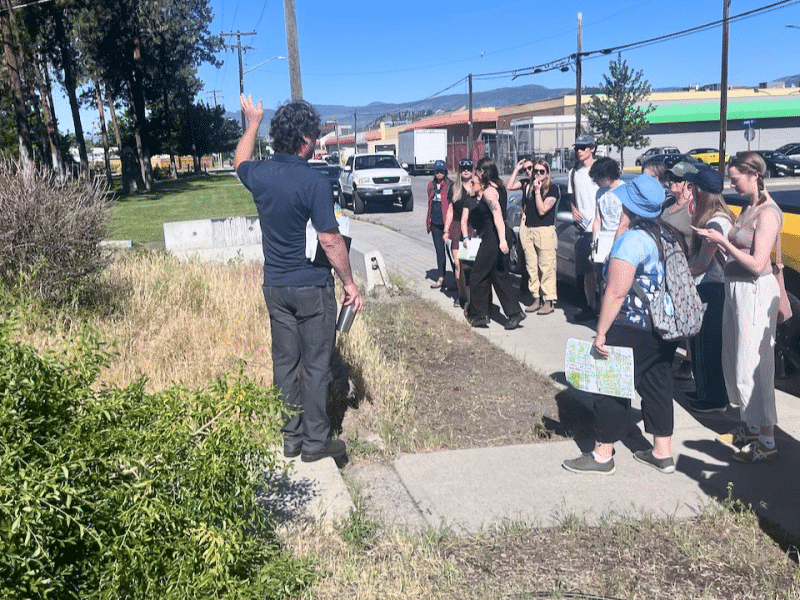
New UBC-Kelowna tool helps cities plant trees where they’re needed most
CanopyFit maps physical barriers alongside heat and equity data to maximize shade and cooling.
Canada’s Sustainable Finance Taxonomy: What it is, what is happening and what’s coming next
Canada’s sustainable finance taxonomy faces big challenges, from oil and gas, Indigenous rights and the real meaning of the word ‘transition.’
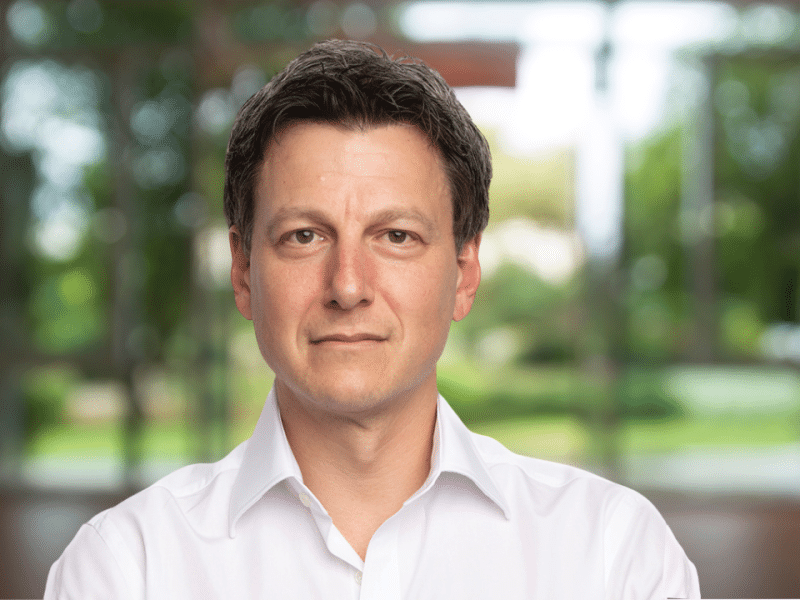
Q&A: Climate action, community resilience begins with who owns our economy, Jon Shell says
Canada can’t tackle climate resilience until it confronts who owns its economy, and how inequality is rising.
