Q&A: Climate action, community resilience begins with who owns our economy, Jon Shell says
Canada can’t tackle climate resilience until it confronts who owns its economy, and how inequality is rising.
Why It Matters
Shell argues that Canada’s climate response is structurally constrained by foreign ownership, U.S. tech dependence, and rising inequality — all of which weaken community resilience and democratic capacity. Shifting from efficiency to resilience, and redistributing economic power, is now a prerequisite for meaningful climate action.
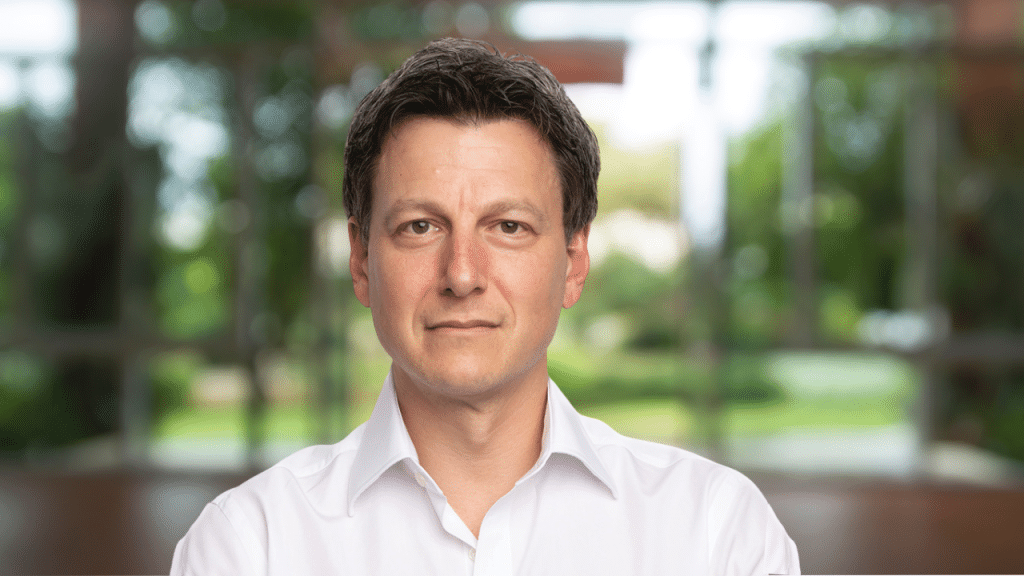
Jon Shell is chair of Social Capital Partners and executive director of the Gloves Off podcast. In this feature interview with The Energy Mix Publisher Mitchell Beer, he talks about who owns the Canadian economy, digital sovereignty, how working on inequality is one way of working on climate change—and why he no longer follows U.S. midterm elections.
This interview has been edited for length.
The Energy Mix: Let’s begin with the starting point for your work at Social Capital Partners. And it’s on your website: that “who owns the economy matters.” How is Canada doing with that right now?
Jon Shell: Well, I think we’re doing pretty badly. There are a number of different waves that are reducing ownership by those who have the right set of incentives. One of those waves is foreign direct investment, where the majority of investment into Canada is not to build things in Canada, but to buy Canadian assets.
So as ownership becomes non-Canadian, the interest from those companies in ensuring that Canadian companies are acting in the best interest of their community or their workers or the country itself goes to zero. And we’ve seen that play out in a few different companies over both of our lifetimes.
The other is the rise of private equity and the ownership of so many Canadian businesses by people who will never visit those companies, right?—who don’t care about their clients, who don’t care about their employees, and whose only objective is to sell that company at a profit within a certain time period after layering on a pile of debt.
A third would be our inability as a country to help our most promising technology companies and ideas grow until they’re mature. After decades of whining about this, we just haven’t been able to figure out a path to prevent those companies from being acquired primarily by American competitors. And so, if we think about the future of Canadian ownership at this moment, all of it looks like it will become worse than it is today—progressively worse—and the ways to prevent it are very difficult.
The Mix: You mentioned the risk of being bought up by American private equity. How do issues around ownership and social capital tie in with the #ElbowsUp moment we’ve been in since Donald Trump began his second term?
Shell: At Social Capital Partners, we focus on policies that lead to a broader ownership. We’ve spent a lot of time on employee ownership, which is one of the clearest pathways to keeping companies Canadian-owned and rooted in their local communities, and also one of the clearest pathways to increasing the wealth of workers and therefore reducing inequality.
That in itself is a useful but relatively small part of the answer. We’re also focused on policies where it’s easier for Canadians to buy companies from retiring business owners as we face a wave of succession over the next 10 years. We have been, at least tangentially, expressing our view on the #ElbowsUp moment and what it could mean for the future of Canadian ownership.
Donald Trump is a wake-up call to the danger of being overly exposed or overly owned by any one country, and especially the U.S. And it’s not just ownership. It’s all of the infrastructure we depend on, which includes digital infrastructure. It’s about understanding the dependency we have on the U.S. and trying to look for solutions on how Canada can win in this moment. And there are things that we can do, especially if we choose to work more closely with our middle power peers.
The Mix: What are some of those steps? And where do the alliances with middle powers come in?
Shell: Probably the most urgent one is the reduction of reliance on American technology. You’re seeing that play out in a couple different ways.
A dozen-plus countries are looking at restrictions on social media in their countries. That’s an attempt to reduce the power of American social media companies within their borders, which obviously have significant harms for kids, but also is anti-democratic in many ways, or at least encourages anti-democratic tendencies. There is a movement, largely in Europe, to get off of American technology platforms. It’s a long process because of how dominant those platforms are.
You’re seeing Spain, France, Germany with a concerted effort to stop using Palantir, the American data company with leaders who have voiced anti-democratic views. You’re seeing it in some [countries] of the EU moving off of American search engines, France and Germany trying to switch off of Microsoft Office. All of these are initial steps, but the American economy right now is highly dependent on the success of their technology sector.
They made this huge, leveraged bet on their ability to dominate global technology. So as large, rich Western countries begin to move away from the use of those companies, it could have massive implications to American policy, to American power—not just technology power, but economic power.
The Mix: Can you connect those dots back to the really alarming issues around digital sovereignty that you’ve been raising lately?
Shell: There’s been some great work done by the Shield Institute, who’s worked with us on the Gloves Off podcast, to show exactly how dependent we are on the U.S. technology companies by tracing an individual’s day and how often they interact with American technology. And that is a dangerous dependence, especially given the willingness of the U.S. to weaponize it.
The Cloud Act, which allows the U.S. access to data stored on American companies’ platforms—even if that data is not American in any way, shape or form—is a danger to every other country. And, beyond the Cloud Act, [I cite] the recent story of the International Criminal Court Judge Kimberly Prost and how her life was turned upside down through an executive order by Donald Trump, who was upset at her investigation of Israel and the U.S. She’s a Canadian who is a judge on the International Criminal Court and a few of her colleagues, including children of her colleagues, were targeted directly and specifically. It’s a real wake-up call to [illustrate] the position that we’re in.
But it’s not just that kind of dependence. It’s also what it does to our entrepreneurship and economic future. The more and more dependent we are on American tech, the less opportunity we have to build our own innovative new companies.
And so what we’re seeing out of Europe in their initial movements away from American tech, and what we’re seeing in Canada, with trying to find sources of military equipment other than the U.S., is all part of a piece to reduce dependence on the U.S., which is just a major risk for all of us.
The Mix: You were talking about the risk in U.S.-dominated digital technology to entrench and distribute anti-democratic views. We’ve just seen some pretty anti-democratic views coming from somebody who’s supposed to be an iconic Canadian technology entrepreneur. In the context of what you’re saying, is Shopify founder Tobi Lütke part of the centre of the problem or just a symptom of something that needs to be solved at a bigger level?
Shell: My view is that there are definitely Canadian tech leaders, not many, who share the anti-democratic views of their American counterparts, but our version is kind of a milquetoast, pedestrian version of what they see in America. That’s partly for systemic reasons, because money is so much less important in Canadian politics than it is in the U.S. The wealth of those folks is just not as important here in Canada, and they don’t control the media narrative in the same way as the American versions do. I also think they represent a smaller percentage—a much smaller percentage—of that community than in the U.S.
Is it irritating for a Canadian business leader to talk about disenfranchising certain Canadians from the vote? Sure, it’s irritating. Did it make me angry? Yeah, it made me angry. Does it matter? Probably not.
The Mix: In the clean energy space, we’ve been paying a lot of attention to the high proportion of foreign, and especially U.S., ownership in the oil and gas industry. Is the ownership structure of the fossil fuel industry an added layer of threat?
Shell: I guess what I’d say is this. It’s been that way for so long that economically that I’m not sure it’s an added layer of threat.
Is it a risk that those companies could be weaponized against us? I think it is.
The recent sale of Parkland to Sunoco, which was subject to review by the government of Canada under the Investment Canada Act but was approved, was a surprising concession and a dangerous path for Canada to walk down. The chair of Sunoco is an ally of the [U.S.] president. It controls a significant proportion of Canada’s gas distribution infrastructure. And if anyone is willing to say, ‘well, that’s a step too far for Donald Trump, he would never do that,’. I think that person needs to read more news.
What we can do from here is prevent the growth of American ownership of Canadian infrastructure. That’s an action we can take. And I’m very much hoping, especially as the Canada Investment Summit approaches in September, where a lot of American capital is going to be in Toronto looking to make investments, I very much hope we keep that top of mind, at least as long as we are under the threat that we’re under today.
The Mix: That was one of the things I wanted to ask you about. What prospect do you see for the issues and frame of thought that you’ve been talking and writing and podcasting about to get into the discussion during the Canada Investment Summit?
Shell: I think there is a best case scenario for the Investment Summit, where foreign investment is used to build the kind of infrastructure that is required in Canada that we haven’t been spending money on, where that money wouldn’t have come in, in the absence of leadership by Mark Carney and the organization of the Summit in this fashion.
And there is a worst case scenario, as well, and risks that we need to worry about. And those risks are things like, are we approaching trade negotiations with a view to getting a deal done so that the investors who come in September feel like we’re making progress? Are those investors putting any current pressure on the Canadian government to get a deal done before they arrive? Will we be seeking money to build things in Canada that we otherwise wouldn’t have built? Or are we going to be willing to sell Canadian assets that will reduce our sovereignty in order to hit a foreign investment number?
I know that the people involved understand the difference between greenfield investment, where we’re building something we didn’t have before, and mergers and acquisitions, where we’re selling something that we currently own. Media are not always live to that distinction, and often reports foreign direct investment as a number that includes both of those things. Those are very, very different things.
And as long as the very smart people who are involved in organizing the Summit are willing to confront that difference—despite the fact that the media likely won’t—that will, I think, go a long way to determining whether this is a good outcome for Canada or maybe a bad outcome for Canada.
The Mix: One thing we’ve been watching closely over a number of years is that dozens of other countries around the world are getting more serious than Canada about defining what is and is not a legitimate low-carbon or energy transition investment. Will we get to the point where Canada’s continuing focus on shoring up the fossil fuel industry makes it harder for other high-emitting sectors to compete in global markets and undercuts our own trade diversification agenda?
Shell: I think we are in a tough spot, where we won’t be able to do all the things that we want to do in the way we want to do them.
Our survival as a country is likely going to depend on our economic resilience, which is the ability to pivot from one approach to another approach, depending on what the market dictates. It’s hard right now to predict what the other middle powers are going to need and want and do in order to get the materials that they need.
To be honest, I am supportive of efforts to build resilience. If they build a pipeline they never use, I don’t really care. The best result is they build a pipeline that we don’t use because demand for oil has collapsed.
Because if the world continues to need that oil, t at least we’ve built a level of resilience that will allow us to protect ourselves against attack from the south. This means some shitty choices right now. But I don’t think we can shy away from those shitty choices.
The Mix: Will that level of urgency dissipate any if control of one or both houses of the U.S. Congress changes hands in January? Or are we waiting until Trump is actually out?
Shell: I think your faith in the future of American democracy is misplaced, period. And I don’t mean that as an insult.
After a lifetime of caring about who the second senator from Georgia was, I am out, all the way out. I’m not spending one second thinking about the American midterms because I don’t have any faith in their democracy.
The Mix: If I could follow your lead, I would free up an hour a day.
Shell: I believe the productivity fix for Canada over the next three months is to ignore American midterms, turn off CNN, get off the websites. You won’t know, you don’t know what’s going to happen. Why put yourself through it?
Go do something better. Spend time with family. Learn how to vibe code an app. I don’t know, but just don’t spend any time focused on the American midterms. That’s the best advice I can give any Canadian right now.
The Mix: That’s the “productivity fix”, and you’ve also done a lot of work on the inequality fix.
Shell: I have never believed that we were going to act on climate as inequality rises.
Collective action in an age of increasing inequality is impossible. My kids ask me why I’m not working on climate because that’s the thing they’re worried about. My answer is I don’t think we can solve climate if we don’t put a dent in the path of inequality.
So to me, they are intrinsically linked. My general advice to anyone who cares about climate is to also care deeply about inequality.
The Mix: Through that lens, honestly, presumptuously, what I would say back to your kids is that you are working on climate. Just like we’re [at The Energy Mix] working on inequality. And that points back to the issues, the challenges, the constraints you’ve been talking about. What is the pathway to successfully making a big, permanent dent in inequality, given all of the existential distractions that we’re dealing with?
Shell: I have come to believe that maybe the most exciting political idea of my lifetime is a middle power alliance. And the only way to start affecting the path of financialization, of massive wealth accumulation, is through a group of wealthy countries with consumers that matter, with investors that matter, beginning to act deliberately to halt the growth of wealth concentration and ownership concentration.
I think it’s actually the only possibility [given] that a bunch of countries working on their own, where their paths could shift overnight, is never going to be enough. And it is, again, a potentially helpful thing that Donald Trump has woken us up to how dangerous our path currently is, and has caused a lot of people to start saying some things that make me more hopeful about the future. One of the things about Carney’s speech [to the World Economic Forum in Davos] that I think is underreported is his description of not just the middle powers being in danger and that the global order has changed, but that our pursuit of efficiency needs to be replaced by a pursuit of resilience.
That’s an economic idea that he wouldn’t have supported for most of his career, and that most of the people he has spent time with wouldn’t have supported. But it might be the only path for us to get off our current trajectory.
The Mix: You’re talking resilience in all respects: economic, environmental, climate, social, all of that.
Shell: The pursuit of efficiency [results in] fragile supply chains, concentrated ownership, millions of consultants. The pursuit of resilience is more community-oriented. More competition. More options. More innovation. That shift from efficiency to resilience as the ultimate goal of capitalism is a huge one, and we see it playing out.
There are countries that have pursued a more resilient agenda that are very successful as a result. The Nordics are the example that people always use, and I think it’s a fair one. They have advantages, obviously, but the Danish don’t have a bunch of oil and they pursued more of a resilient approach, and it’s been successful. So, yeah, I think capitalism comes in many flavours.
This feature interview was recorded and transcribed using artificial intelligence tools. The questions and discussion, writing, editing, and production were all in human hands.
This story is part of The Energy Mix’s partnership with Small Change Fund. Read the original story here.
Your job. Your mission. Your news.
With your support, the sector you're building gets the journalism it deserves, and you get a tax receipt.

Related Articles
Federal court rejects Ottawa’s bid to quash youth-led climate case
Federal Court says youth climate advocates deserve a full hearing on whether Ottawa weakened Canada’s 2030 plan.
New UBC-Kelowna tool helps cities plant trees where they’re needed most
CanopyFit maps physical barriers alongside heat and equity data to maximize shade and cooling.

Canada’s Sustainable Finance Taxonomy: What it is, what is happening and what’s coming next
Canada’s sustainable finance taxonomy faces big challenges, from oil and gas, Indigenous rights and the real meaning of the word ‘transition.’
