Growing provincial use of notwithstanding clause a risk to Canadian human rights: Amnesty International
The notwithstanding clause has been invoked by provinces looking to push ahead with their agendas on religious symbols, the rights of transgender youth, and to prevent strike action.
Why It Matters
Despite being enshrined in the Charter for more than 40 years, the use of the notwithstanding clause has risen significantly in the last five years, with provinces looking to bypass fundamental rights to fast-track projects and policies, said Amnesty International Canada.
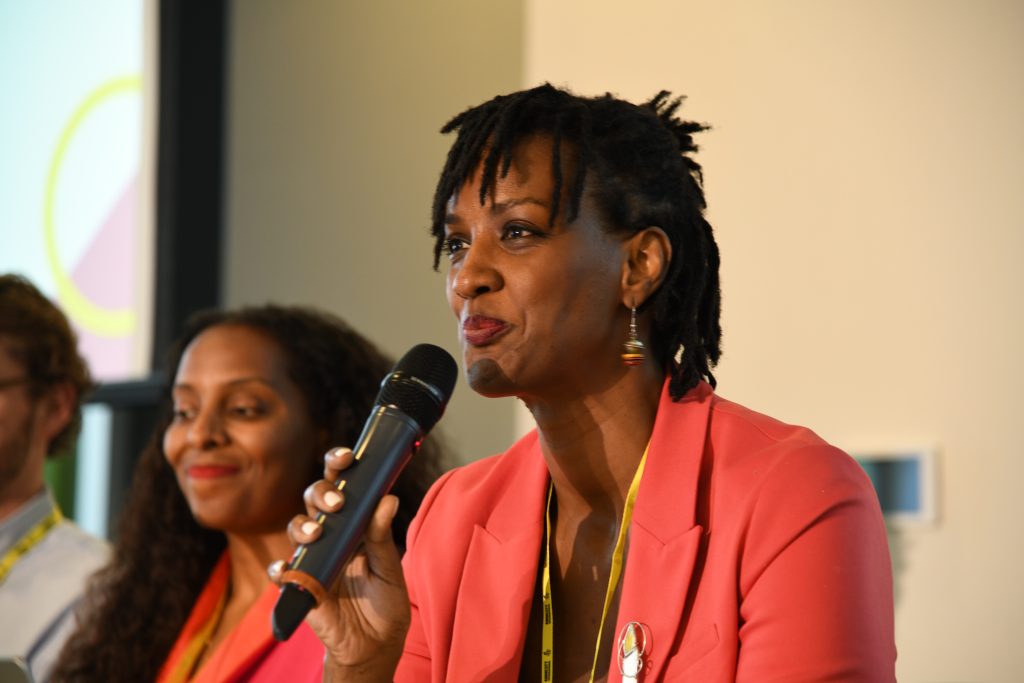
Amnesty International says in a new report the growing provincial use of the notwithstanding clause is eroding human rights protections in Canada.
The notwithstanding clause – Section 33 of the Canadian Charter of Rights and Freedoms – “allows Parliament or the legislature of a province to derogate from certain sections of the Charter,” including fundamental freedoms, legal rights and equality rights.
Amnesty International’s Canadian arm has been documenting the growing invocation of this clause by provinces to rapidly move ahead with certain projects and policies, including anti-trans policies in Saskatchewan, secularism policies in Quebec, and to force striking teachers back to work in Alberta.
In Ontario, Premier Doug Ford has threatened to use the notwithstanding clause to clear homeless encampments.
There has been an “acceleration” of the use of the notwithstanding clause, said Ketty Nivyabandi, secretary general for Amnesty’s Canadian chapter, particularly in the last few years.
Nonetheless, “that section of the Charter being used to betray the very spirit of the Charter is actually what is very shocking, and should be very shocking for every Canadian,” she said.
“It seems as though provinces have discovered this magic cause and are misusing it,” she added, adding that it sets a precedent for others.
The Canadian Charter of Rights and Freedoms recently celebrated its 44th anniversary. Amnesty International Canada was one of 51 organizations, human rights advocates and legal scholars that requested that federal political party leaders hold a public consultation on the notwithstanding clause prior to the formation of a new government last year.
Nivyabandi confirmed that there has not been an update on this request.
Canada slips away from foreign policy commitments
Along with the increased use of the notwithstanding clause at home, Nivyabandi also pointed to Canada’s foreign policy as an issue, especially in a time of deep global unrest, genocide and violations of international law.
On the global stage, Canada has been focused on its economy, building trade partnerships, sometimes with countries that have “very troubling” human rights records, she said.
The country’s foreign policy, on the other hand, does not always reflect the values that Prime Minister Mark Carney called for in his speech at Davos, Nivyabandi said.
Canada is one of several Western countries that has rolled back its international development budget. In a briefing published by the Canadian Centre for Policy Alternatives, the country’s Official Development Assistance (ODA) will decrease from $9.9 billion in the 2024-25 fiscal year to $6.1 billion in 2028-29.
“Cuts in ODA and almost every other department are being diverted to fund much higher defence spending,” wrote the Canadian Centre for Policy Alternatives.
“It begs the question: is Canada abdicating its role in terms of the promotion and protection of human rights internationally, and prioritizing economic ground and trade partnerships?” Nivyabandi said.
“What role is Canada going to take on the world stage with the retreat of the United States?”Amnesty International’s State of the World’s Human Rights report, released Tuesday, also warned of an overrepresentation of Black and Indigenous people in the Canadian criminal justice system, a rollback on migrants’ and refugees’ rights through Bill C-12, and several federal and provincial commitments to major infrastructure projects that threaten the rights of Indigenous communities.
Note: A previous version of this story stated that the use of the notwithstanding clause has been challenged and stopped in courts. This is incorrect and has been removed.
Your job. Your mission. Your news.
With your support, the sector you're building gets the journalism it deserves, and you get a tax receipt.

Author

Related Articles
Deadline looms for non-profits, charities to report ‘foreign principals’ to Ottawa
Charities, non-profits and institutions must now register any arrangements with foreign principals working to effect government behaviour

Explainer: The divergent fix-it paths of Ontario and B.C.’s condo oversupply problem
Both provinces have too many tiny, shoebox condos, but both are taking different approaches to fixing it.
‘Canada must not go down that road’: More than 250 organizations demand investigation into CBSA after student protesters issued exclusion orders
The students were protesting after being denied post-graduation work permits they say they were eligible for when they enrolled at Portage College.
