‘Impossible choice’: Doctors Without Borders to share personal info of Palestinian, international staff with Israeli authorities
Israeli authorities made registration of all staff a requirement for humanitarian aid groups to continue operating in Palestine. Many organizations that Future of Good spoke with said this was a “red line” they would not be crossing.
Why It Matters
In handing over personal information about aid workers and their families, Doctors Without Borders could be violating data privacy laws and putting aid staff at further risk of targeting. According to the Aid Worker Security Database, 122 aid workers were killed in Palestine in 2025, and 194 in 2024.
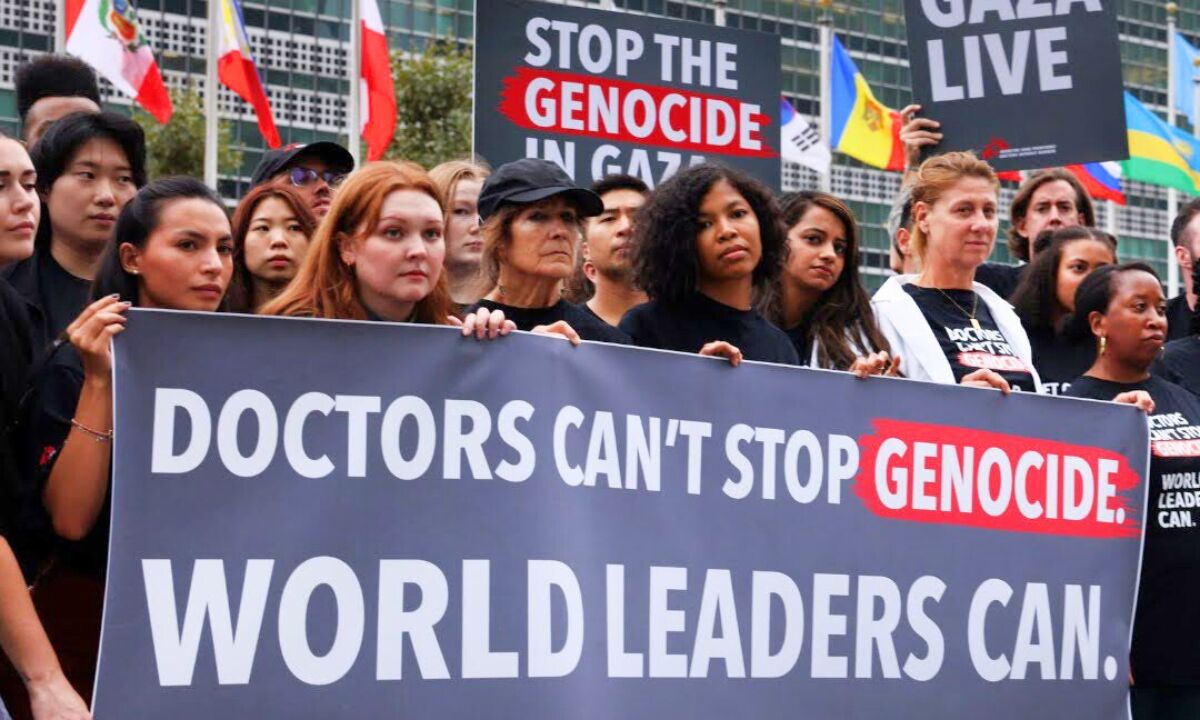
On Jan. 24, 2026, Doctors Without Borders / Médecins Sans Frontières announced that it would provide Israeli authorities with a list of details about local and international employees on the ground in the Occupied Palestinian Territories (Médecins Sans Frontières / Doctors Without Borders / Facebook)
Médecins Sans Frontières / Doctors Without Borders (MSF) says it will share a list of Palestinian and international staff names with Israeli authorities.
In a statement released on Saturday, they said the decision was made “to avoid being forced to suspend [MSF’s] operations in the Occupied Palestinian Territory from March 1, 2026.”
“This position follows extensive discussions with our Palestinian colleagues and will only be done with the express agreement of the individuals concerned,” the announcement read.
“After months of engagement with the Israeli authorities and with governments involved in these discussions, during which we have explored all other options, our priority remains the safety of our staff while continuing to provide independent essential healthcare for Palestinians across the West Bank and Gaza in dire need.”
MSF added it was an “impossible choice” between providing the information that Israeli authorities had been demanding, or to “abandon the hundreds of thousands of Palestinians who need vital medical care.”
The New York Times reported on Jan. 26 that Israel said it would reopen the border between Gaza and Egypt to foot traffic “within days”.
Future of Good spoke with several Canadian aid organizations in light of aid airdrops sent to Gazans. Both Médecins du Monde and Humanity and Inclusion Canada stated the registration requirements – which include providing extensive information about Palestinian ground staff and their families – were a “red line” that they were not willing to cross.
According to the Israeli ministry responsible for issuing the guidelines to NGOs, registration includes providing information about an organization’s activities and “actual necessity of the organization’s activities in promoting the welfare of Palestinian residents.”
Since records began, Palestinian local aid staff have made up almost a fifth of all aid workers killed globally, according to the International Rescue Committee. In the Aid Worker Security Database, which has tracked incidents in each country between 1997 and the present day, Palestine was considered the second most fatal location for aid workers, with Afghanistan being first.
As for their staff, organizations need to provide resumes, forms of identification, and a Certificate of Good Conduct, as well as the employee’s personal details and those of immediate family members.
Several global aid groups, including Islamic Relief, CARE Canada and Oxfam, have warned of the Israeli government’s registration requirements impeding humanitarian aid. Many received notice at the end of 2024 that their registrations would expire at the end of 2025, and they would then have 60 days to cease operations in the Occupied Palestinian Territories, according to a joint statement.
Over the weekend, Dr. Ghassan Abu-Sittah, a British-Palestinian reconstructive surgeon who spent extensive time working in Gaza, said this move by MSF will endanger the lives of Palestinian staff and their families and is “in clear contravention to EU Data Protection Law.”
Dr. Abu-Sittah added that MSF’s “moral bankruptcy lies in the implication that during the genocide Palestinians are capable of making free consent.”
Dr. Yipeng Ge is a Canadian family physician who was previously suspended from the University of Ottawa for creating social media posts in solidarity with Palestinians. Dr. Ge shared anonymous testimonies from MSF’s Palestinian staff on his Instagram.
“Sharing names means not only targeting employees but also filtering who can continue working and who cannot,” one employee wrote. “This is in the hands of the occupying authorities, meaning we don’t know how they classify people.”
“The occupation’s classifications of those it considers collaborators or not are based on no logic or right and wrong.”
Another wrote about the potential ripple effects on the aid sector more widely: “By complying, MSF risks creating a precedent that will be used to normalise similar demands across organisations. It will make it easier for authorities to impose this on others – and harder for any humanitarian actor to refuse.”
Future of Good reached out to MSF’s Canadian office and was informed that the organization could not conduct interviews at that time, as it was awaiting further information. Future of Good also reached out to Dr. Abu-Sittah’s team, but did not hear back before publication.
Your job. Your mission. Your news.
With your support, the sector you're building gets the journalism it deserves, and you get a tax receipt.

Author

Related Articles

Trailblazing Iraqi-Canadian activist Yanar Mohammed killed outside Baghdad home
The feminist leader’s death is a devastating loss for women’s rights movements in Iraq and around the world, say advocates.
Humanitarian aid groups granted interim injunction to continue working in Gaza
Aid organizations from around the world came together to launch a formal petition to the Israeli High Court earlier this week.
