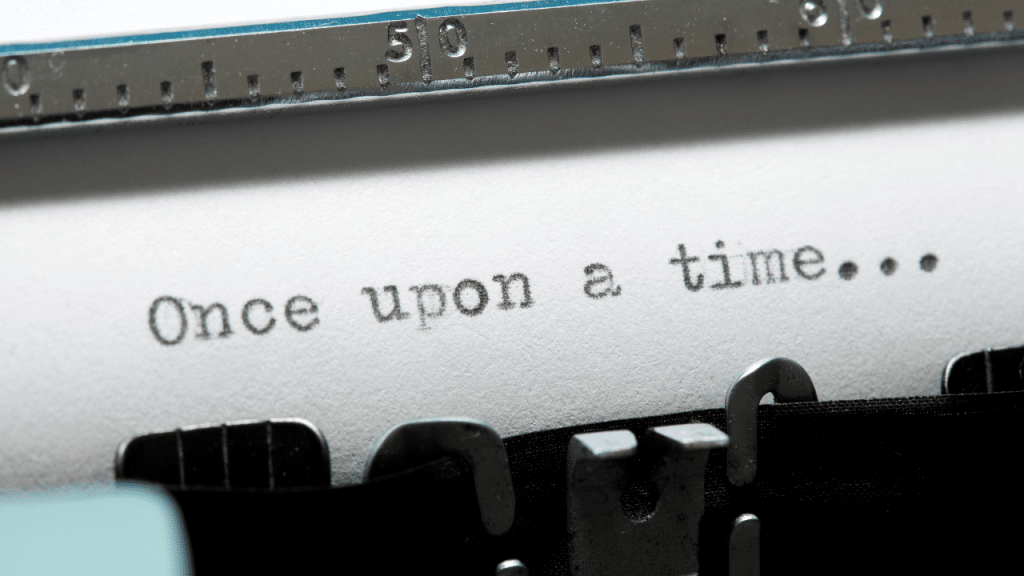
Once upon a time…
… in a board room far, far away
Board trainers, educators, and strategic consultants all suggest that effective stewardship for non-profits is about boards working together to ensure good governance, effective internal controls, and the management of donated assets in accordance with fiduciary standards.
It’s all important work. Vital, in fact, to expanding the impact nonprofits have in the communities they serve.
That is the definition of stewardship: responsibly caring for something entrusted to you. But stewardship is not simply compliance; it’s a call to deploy resources in a way that honours donors’ intentions, serves present needs, and protects future capacity.
But as data analysis becomes more prevalent, board meetings are getting overwhelmed with numbers. Investment returns. Tax figures. Hits on social media sites.
Why stories matter
Years ago, my group was responsible for brand management and advertising at a large Canadian financial services company. One of the first exercises we ran with the executive leadership team was to give everyone an index card and a pencil, asking them to silently write down the corporate mission and how they would describe that to an outsider.
Think of it as a very slow, very quiet elevator pitch.
No surprises. For the most part, management aligned with the firm’s overall mission. However, they were completely disconnected when it came time to explain that mission to others.
Many organizations end up this way if they don’t spend enough time building, sharing, and creating new stories internally.
Stories are important. They align with the way the human mind works. Facts, abstractions, or instructions are easily forgotten. However, we remember experiences, emotions, and meanings.
Stories provide the foundation for connection and memory. If management had a series of shared stories to draw on, the results might have been different.
Most will never remember the opening lines to this year’s annual report, but decades later, you’d probably remember reading “Call me Ishmael”, “It was the best of times, it was the worst of times”, or “It was a bright cold day in April, and the clocks were striking thirteen.”
Good stories are memorable. Great stories are unforgettable.
Stewardship as institutional memory
Every donated dollar is an untold story, because someone made the active decision to support one specific organization: yours. For those who give, donations are powerful expressions of personal values.
But as board binders get heavier and dashboards become flashier, meetings get filled with metrics instead of meaning. Integers over inspiration.
Somewhere along the way, the “why” gets lost, and stewardship slips into administration.
Incorporating story collecting and storytelling into your process helps unify entire teams and provides institutional memory as people change and strategies evolve. Reports are a great tool for telling people what happened.
But it’s a story that would connect people to why it matters at all.
Boards often treat storytelling as an external function. It is! Donor communications, annual reports, and campaign videos are important.
But, from a governance and strategy perspective, the most important audience for stewardship stories is internal because it creates shared language about:
- The impact the work has on communities,
- How donor intent is respected,
- Why certain risks are taken and others avoided,
- How today’s decisions impact the mission.
When boards stop creating stories and start curating them, something important shifts. Board members become more than just responsible for assets and administration, they become custodians of the stories.
Stories as a strategic asset
A five‑year return figure tells you how the portfolio performed. An auditor’s report shows that you are operating with honesty and transparency. Yet, it’s a story that explains what good governance made possible.
In this sense, storytelling is a strategic asset. It guides decision-making, influences behaviour and ensures that stewardship survives transitions of leadership and membership.
If stewardship is the responsible care of what has been entrusted to a board, then stories are how that care is remembered, transmitted, and renewed.
Because long after the charts are recycled and the reports are forgotten, it is the story that remains:
Once upon a time, we told someone a story and built a connection.
They supported us with a donation.
We told them what their trust made possible.
We remember. They do too.
What’s your story?
Your job. Your mission. Your news.
With your support, the sector you're building gets the journalism it deserves, and you get a tax receipt.

Related Articles


Gratitude is not stewardship: How to go beyond thank you’s to real understanding
Stewardship isn’t about thanking donors — it’s about learning something today you can use tomorrow.

When non-profit trust isn’t a given: Clarity early, or doubt wins
In a crowded, skeptical landscape, clarity—not volume—is now the defining factor in donor trust.
