
0.1 percent of the world’s philanthropic money goes to Black feminist activists — this global organization is working to change that
The Black Feminist Fund is a Black women-led initiative aiming to raise $100 million for Black feminist movements globally
Why It Matters
Black feminist activists are at the forefront of political and social change worldwide, yet they receive a miniscule amount of global philanthropic dollars. Closing that gap requires a new approach to grantmaking — one that’s Black women-led, trust-based, and community-first — and resources from the rest of the sector.
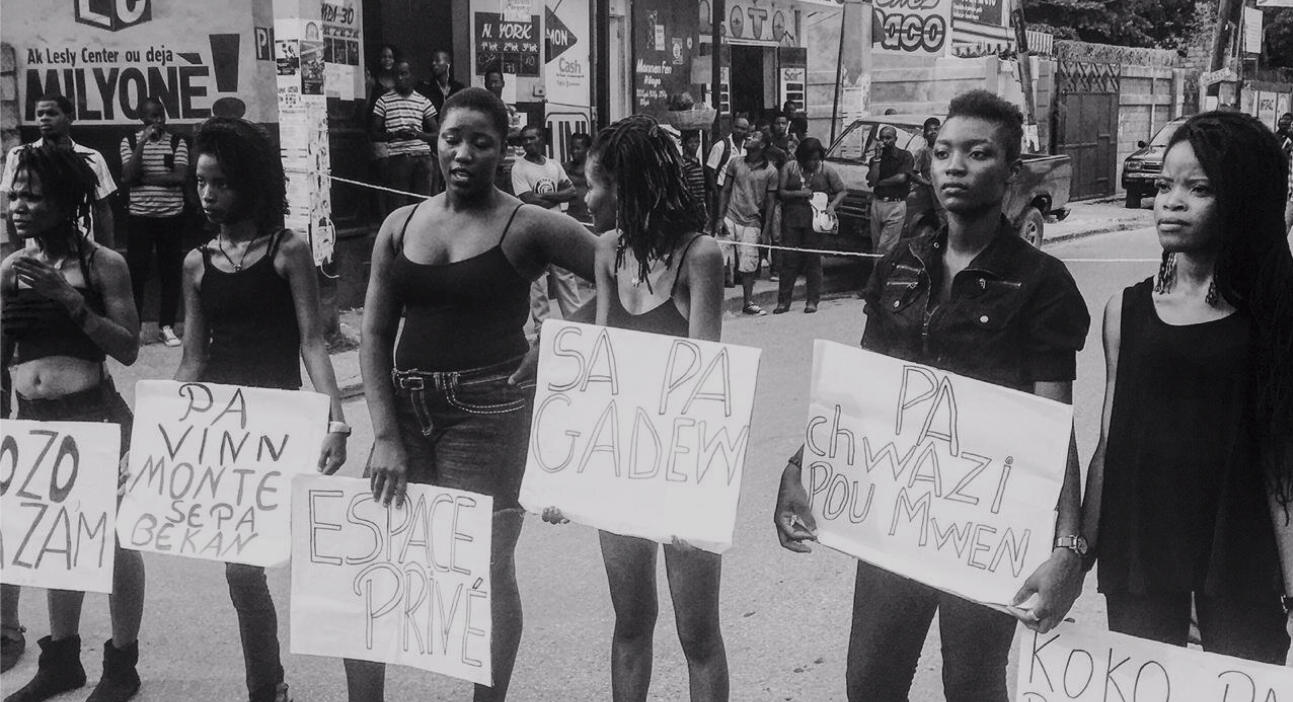
Photo: Black Feminist Fund
Ten years ago, Amina Doherty was sitting around a kitchen table — “like all amazing things that come from Black women, this came from kitchen table conversations,” Doherty says — with her friends Hakima Abbas and Tynesha McHarris. They’d all worked in and around philanthropy for years, and were frustrated, to say the least, with the lack of funding accessible to the Black feminist movements they saw making systemic change around the world.
“What would it look like for a fund to be led by and for Black women?” they asked each other. “We just had a real, strong sense that the kind of political organizing and activism that was being led by Black feminists was just not being resourced,” Doherty says. (Spoiler: Abbas is leading research now that’s found that around 0.1 percent of philanthropic money globally goes to Black feminist-led organizations.)
The three “co-conspirators,” as Doherty calls them, spent the next decade having conversations with people in Black feminist movements and philanthropic spaces worldwide about how to get something like this off the ground — including at a 2016 convening by the Association for Women’s Rights in Development (AWID) in Brazil, which held a 2,000-person Black Feminist Forum. Doherty presented the idea for the fund at the forum, and was met with “so much support, so much affirmation, real encouragement and agreement,” Doherty says, “everyone saying that, absolutely, yes, there needs to be a fund like that.”
Fast forward to the end of 2020, and the Black Feminist Fund (BFF) received a $15 million seed grant from the Ford Foundation as a kick-start. Since then, they’ve also raised around $10,000 from individual donors, too, from “folks who don’t have a lot to give,” Doherty says. “I’m talking on the $10, $50, $100 level. [They’ve] just stepped in and said, ‘However we can, we want to support this community, because it’s for us. It’s for and by us.’”
And finally, after a decade of work, the BFF officially launched last month: a Black women-led global fund for Black feminist projects, with Doherty, Abbas, and McHarris as co-founders. The organization has a fundraising goal of $100 million USD over 10 years, and wants to grant those dollars out over the next 10 years. The BFF team will announce its first cohort of grantees in early 2022. But first, they’ll hold a global gathering of Black women philanthropists this fall.
As Black Philanthropy Month wraps up, Future of Good sat down with Doherty to learn more about the journey of building the BFF, and her vision for the future of the global initiative.
This conversation has been edited for length and clarity.
Kylie Adair: The conversation that sparked the idea for the Black Feminist Fund happened 10 years ago — what were some of the major challenges along the way?
Amina Doherty: There are so many challenges. I came into philanthropy very fresh. I was 22 or 23, and had to learn as I went along. As a young, Black woman, I was often the only one in conversations and spaces who was talking about how to adequately resource movements — feminist movements. The conversation often would not address the intersections of race and class, disability, sexual orientation, and all of those things. Philanthropy is a hard place to be if you’re a young, 22-year-old woman trying to mobilize resources for work that means so much to you. The challenge has been to find my community, find my family, find folks who have similar passions.
Also, it’s just the reality that when you say, ‘Black feminist work,’ people tend to shy away. There’s a lot of interest in funding mainstream development work. If you’re talking about funding poor, Black women in Africa, people are like, ‘Yeah, let’s do that. Let’s build a school, or something like that.’ But when it comes to actually looking at rights, and what I call ‘the big P’ — the political — behind movement-building work, the work that feels less pretty, or not very sexy, that work of 10 years in the making, activists mobilizing somewhere like Nigeria, or Colombia, or Brazil, to have laws changed — that kind of work is what was not getting resourced. And that continues to be a challenge. In places like the recently-held Public Policy Forum in Paris, there were commitments to gender equality upwards of $1 billion, right? But where are those dollars going? They’re not going to movements that are really at the frontlines.
Kylie: We also know that the type of funding available is key. Do you have a sense of what the BFF’s granting process will look like?
Amina: What are some of the limitations that Black women face when accessing philanthropic dollars? Oftentimes they’re questions of trust. They’re questions of not being sure how to support movement work. But we know that the kinds of organizations that we intend to support are the ones leading social change and therefore should be trusted, and should be resourced well, and should be resourced with the core funding that pays staff, keeps the lights on, enables activists’ wellbeing, and supports the work to get done.
We want to provide core, long-term grants. For us, when we say long-term, we’re not talking about one to three years. We’re looking at five to eight years of funding, recognizing that it takes about 10 years for even the smallest change to really come forward. We certainly will prioritize trust-based giving. We absolutely want to have a participatory model to our grantmaking. Closer to the end of this year, we’ll be engaged with different focus groups in different regions of the world to really understand participatory grantmaking — because it means different things in different places. One of the things that we are really solid about is that our community has to develop our grantmaking strategy.
Kylie: You’ve also spoken about the need for a community of Black women philanthropists. Can you tell us a bit about what you’re doing to build that community?
Amina: A big priority for us is around learning and exchange — we’re hearing from our constituency that Black women in Brazil want to connect with Black women in Angola, and they want to connect with Black women working in Canada and the U.S. and in the Caribbean and in Africa. Oftentimes language is a barrier, and one that is really challenging. Funders don’t want to fund translation. But we need to be able to talk to each other and learn from each other and share with each other.
Another core aspect of our work is around strengthening Black women in philanthropy. The fact is, there are so few Black women who are working in philanthropy and who are leading philanthropic organizations, so we are actively working to shift that, to help shift those power dynamics, to support that young, 22-year-old woman who starts in a foundation and needs that support — we’re creating that network of support.
There currently are more Black women donors than ever before in history. To bring Black women donors together and in front of movement folks, we want to be able to say that all of the grants that we raise from Black women, Black folks, are going to Black-led movements. Oftentimes there is this dynamic or this perception that funding comes only from the Global North to the Global South, and we want to shift that. We want Black women who are philanthropists in their own right in South Africa and in Kenya and in Nigeria to be resourcing our work, in the same way that a donor in Canada or the U.S. might.
Kylie: What’s your wildest dream for the BFF?
I want us to say we’re fundraising for $100 million and get to $1 billion. My colleagues don’t want me to say that — they’re like, ‘You’re setting us up for failure!’ But for real. I think the need is so strong and the resources exist in the world, so our job is just to funnel those resources. And then, I would love for, in a decade, the Black Feminist Fund to create some of the most powerful, engaging, dynamic learning spaces for Black feminists, so that Black feminists — whatever their age, whatever their identity — can see themselves represented [in our work] and can say they have benefitted from exchange opportunities, learning opportunities, grantmaking opportunities. That it has been a space for Black women of all backgrounds, all ages, classes, dynamics. I would love for the Black Feminist Fund to be that representation.
Related Articles
Migrant-led non-profits prioritized through RADIUS’s participatory grantmaking
RADIUS’s participatory grantmaking process shows how community voices and lived experience can shape funding decisions.
7 short documentaries about Canadians making change you should watch
Citizen Minutes looking for Canadian changemakers for fourth season docs
Homelessness organizations dealing with increasing legal attacks, anti-poverty rhetoric: Ontario Nonprofit Network
In a recent brief, the ONN said “hostility against people experiencing homelessness and/or mental health and addictions challenges” is rising.