Realities of “a very uncertain world” drive inflation, create challenges for charities working overseas
With the American dollar at a 20-year high, Canadian aid and development organizations feel the pinch
Why It Matters
Long-term development goals around health, education and the rights of women and girls have been pushed aside by the Covid-19 pandemic, inflation, conflict and climate disasters. Global Affairs doesn’t index grants to inflation and many Canadians are giving less as they deal with inflation at home.
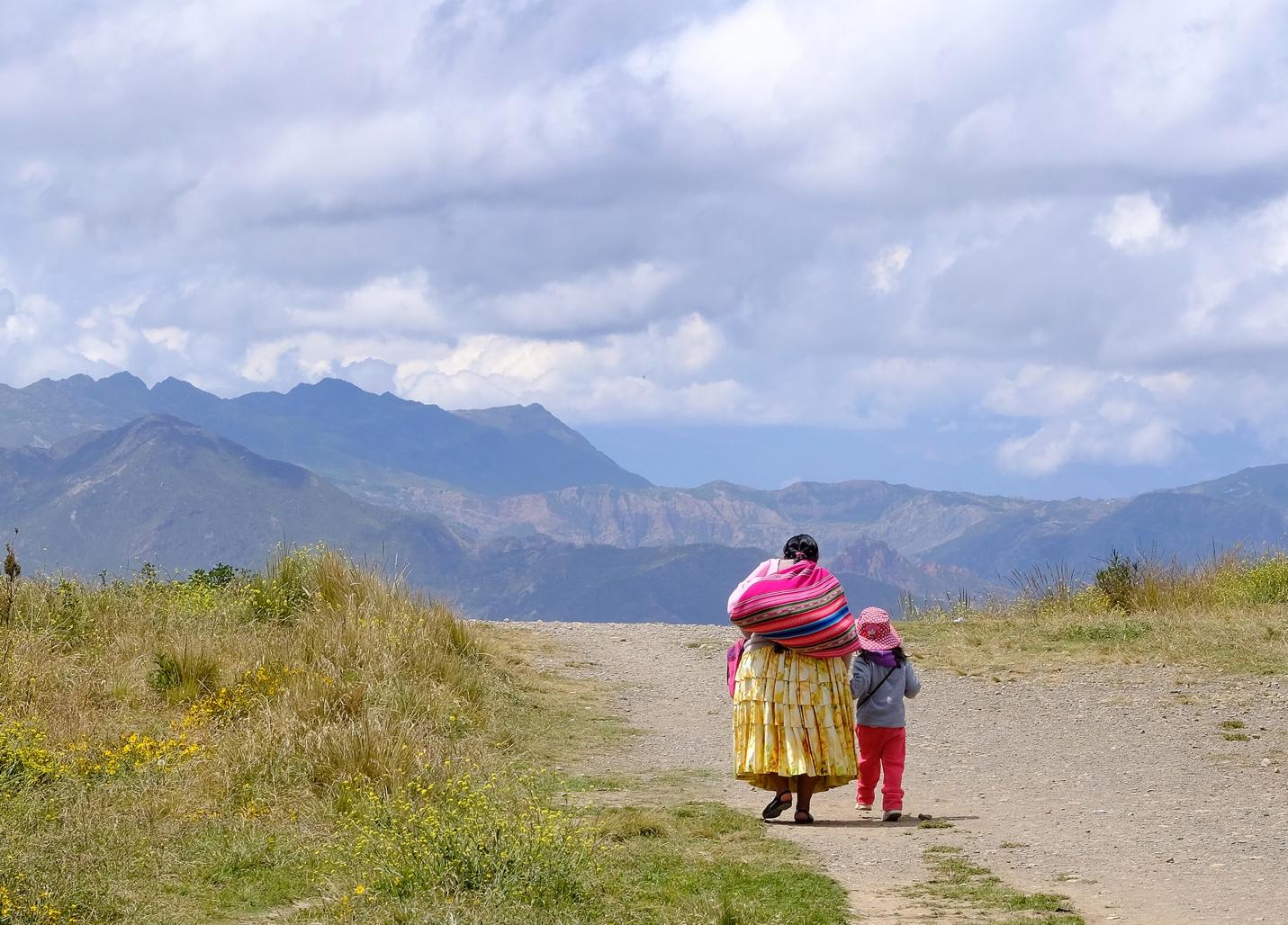
A woman with two children walks a footpath on the outskirts of El Alto, Bolivia. (Photo: Shannon VanRaes)
This story is part of a special report on the effects of inflation on social purpose organizations and the communities they serve. Stay tuned for more reporting on this.
In 2018, Matt and Lydia Hill travelled to Bolivia to visit a community centre in the high-altitude city of El Alto, home to a largely Indigenous population. They’d been there before, but this time was different.
“Initially, we were going to help them get some computers,” Lydia Hill recalls. “But then we found out their funding was running out and there was no lunch program … I’ll never forget the look in one father’s eyes, he just looked at me and I could barely speak Spanish and he didn’t speak English, but they just needed help.”
By the time their plane touched down in Canada, the Help Bolivia Foundation was taking shape.
Four years later, the foundation works with the Tahuantinsuyo Community Centre and Villa Ingenio, focusing on health, education and lunch programs. A cook, three educators and a part-time psychologist have been brought on to assist children — and their parents — overcome trauma, learning disabilities and poverty.
But in recent months, inflation has made their work more challenging.
“It does alter some logistics,” says Matt Hill. “Every year we set a budget and that includes a budget for food … so inflation, high costs, impacts what they can actually purchase with the funds we send.”
However, the biggest challenge facing international aid and development charities may be the strength of the American dollar, driven ever-higher by the U.S. Federal Reserve’s attempts to stymie inflation. In recent months, it hit a 20-year-high.
“We have to send everything in American funds, U.S. dollars, so we lose money right there,” Lydia Hill says. “And the banks charge at both ends of course.”
Even when aid work is accomplished with local currency, those funds are often purchased with American dollars.
“It’s just part of the process,” says Andy Harrington, executive director of the Canadian Foodgrains Bank. “But we’ve seen the Canadian dollar go through a dramatic decline — it’s fallen about 10 per cent from where it was this time last year. That’s significant.”
In Ethiopia, one of the many counties where the Foodgrains Bank and its partners work, inflation topped 37 per cent earlier this year. While in Sudan, food prices increased 144 per cent over the same period. Syria saw inflation jump 22 per cent in just four months.
“All this represents a big decline in our purchasing power,” Harrington says.
Higher costs for food, transportation and housing — along with climate-related disasters, war and near-famine conditions — are also driving up demand for aid programs and international assistance, placing further pressure on non-profits working in the international aid and development sector.
“It’s probably important to recognize that, while inflation is a global trend at the moment, it’s driven by a range of things,” says Richard Morgan, executive director of the Humanitarian Coalition. “It’s driven by the conflict in Ukraine, it’s driven by climate change and it’s driven by Covid.”
Many people living in countries recovering from colonialism continue to struggle with the economic fallout of the pandemic’s first waves, which saw economies shutdown in an effort to protect lives and fragile healthcare systems.
Lydia Hill says Help Bolivia has seen first-hand how the pandemic pushed more people into precarity. Many tenuously employed Bolivians lost their income during lockdowns and haven’t yet been able to rebuild their lives — now they’re also dealing with rising food, housing and transportation costs.
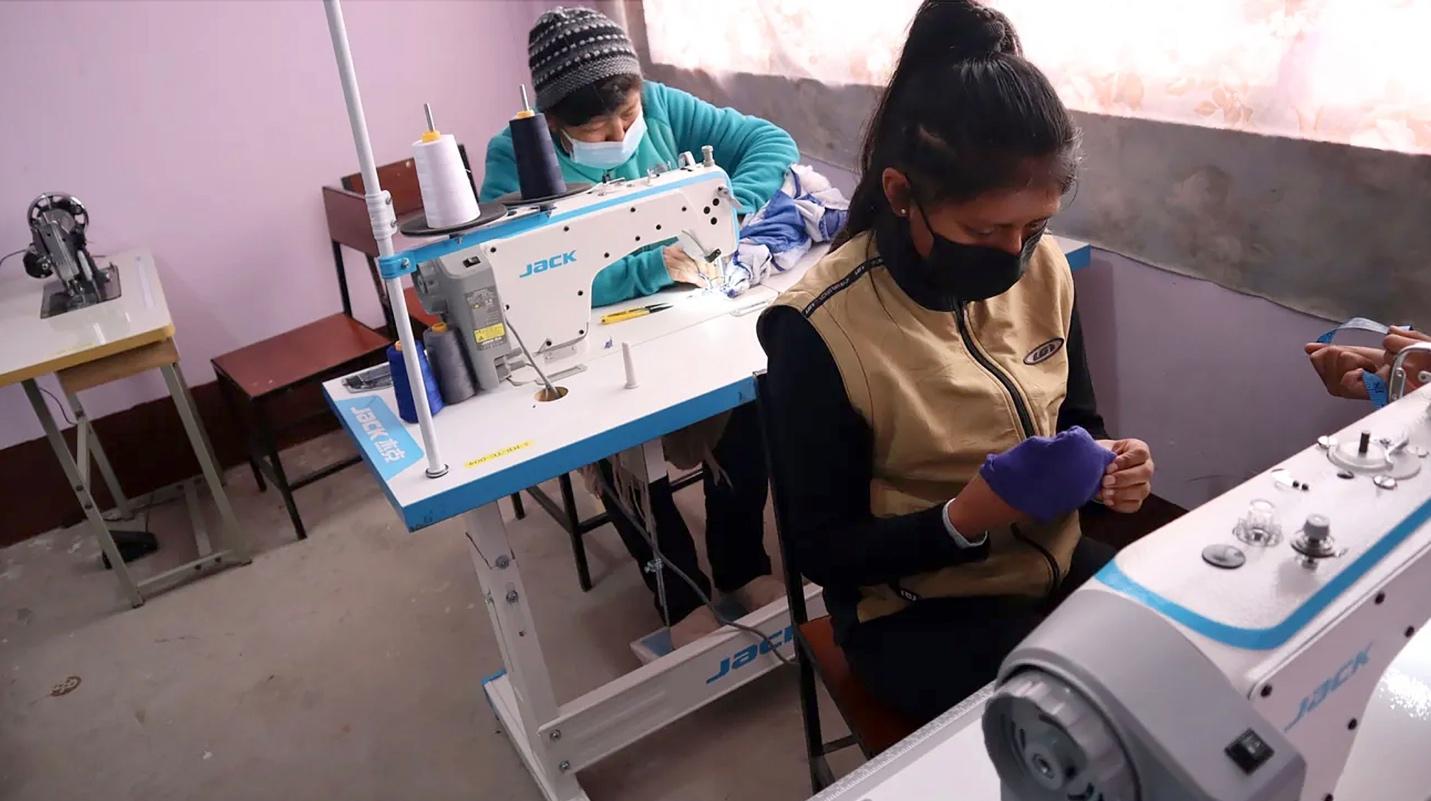 Women take sewing classes at Tahuantinsuyo Community Centre. (Photo courtesy of HELP Bolivia.)
“Things have not bounced back. People, if they had savings, their savings are gone,” Hill says. “So yes, that creates more need in those communities.”
Nicolas Moyer, CEO of Cuso International, says shifts in international currency have also had a direct impact on his organization’s ability to hire and retain international staff.
“It’s forced us to make some course corrections along the way. We’re now paying some overseas staff in Canadian dollars,” he says, adding that, while they haven’t had to cut staff just yet, they’re “certainly preparing for that possibility.”
Institutional donors are often reluctant to address inflationary pressures, Moyer says, particularly when it comes to wages. “It’s very hard to negotiate on that issue, there’s an unwillingness to look at labour market considerations.”
Global Affairs Canada’s grants and contribution funding is not indexed to inflation. According to a department spokesperson, recipient organizations are responsible for accounting for inflation by “factoring a reasonable annual percentage increase in the budget submitted.”
In cases where inflation is higher than forecasted, recipient organizations can review project activities with their program officer. However, “GAC does not have policies or directives to specifically address inflation in international development assistance projects.”
Swapna Nair, senior economist and global commerce centre lead with the Conference Board of Canada, says inflation has led to an overall reduction in what aid and development agencies can do with the dollars they have at their disposal.
“Unfortunately, what happens in an inflationary environment is that commitments might remain the same, but the real impact is reduced because you have less now in real terms,” Nair says. “What earlier bought you a thousand dollars of goods and services would now be $800 worth goods and services.”
Governments are also walking a “tightrope” as they balance concerns about domestic affordability with international priorities, she says.
“To match those kinds of international commitments going ahead might be a bit difficult, because a lot of countries are facing crises back home,” says Nair. “Of course, most developed countries, including Canada, will continue doing development assistance because it’s very much part of a strategic approach.”
How the Canadian government moves forward with international development funding will depend on inflation, but also food prices, changing domestic priorities, geopolitical concerns like the war in Ukraine, and future climate disasters, Nair says.
“A lot of focus has been reprioritized to pandemic induced spending, so this reduces, in many cases, long-term structural development funding,” she says. That means focus on Canada’s feminist development agenda, health and education, particularly in African nations and some regions of Southeast Asia, may now be diminished.
“And when there is less aid going to those countries, it pushes out children from school, it pushes people below the poverty line,” Nair says. “The extent of the poverty just keeps on increasing and it becomes tougher and tougher to catch up.”
In the long-term, shifts taking place in response to pandemic fall-out could create more demand for international aid by diverting resources away from development commitments designed to address the root causes of global inequities, such as climate change and the status of women.
Inflation can’t really be teased out from the larger matrix of issues affecting the global economy, Moyer says.
“We’re watching the broader global economic situation carefully,” he says. “I think this is an issue for non-profits writ large and we need to be aware how vulnerable this sector is. We’re reliant on the donations and contributions of others.”
And those contributions appear to be in decline. A recent survey by the Angus Reid Institute found 27 per cent of respondents planned to cut back on charitable donations as a direct result of inflation. And according to CanadaHelps, 65 per cent of charities believe inflation has decreased donations from individual Canadians.
Matt Hill says donations actually increased during the first year of the pandemic, with many donors signing up for monthly contributions. Now, a number of those folks are dropping off, while an online auction in support of Help Bolivia is failing to generate many bids.
In response, the foundation is pivoting towards philanthropic and corporate grants.
“That’s really an area that we haven’t done any focusing on; corporate donations,” says Bob Laws, who’s been involved with Help Bolivia since day one. “But those grants can be kind of tricky because … often they really want you to spend the money locally, in Canada, not 10,000 miles away.”
Morgan says that, on a macro level, inflation is impacting not just consumer confidence, but confidence in people’s personal economic resilience, which in turn diminishes charitable giving.
“I do really want to highlight the generosity of Canadians this past year, because despite some of the challenges across the board, Canadians have responded with great generosity to Pakistan, to Ukraine and to a lesser degree the hunger crisis,” he says. But general appeals for causes not making headlines have proved more challenging for the Humanitarian Coalition.
“And that’s where we’re nervous that we won’t see that same level of sustained generosity,” he says.
Coalition members try to negotiate prearranged agreements with regional suppliers and transporters to minimize the impact of inflation. But as the world emerges from the Covid-19 pandemic, Morgan says there’s been occasions when vendors have been unable to honour those agreements, leaving them to renegotiate under less-than-ideal economic constraints.
“Whether it’s through taking advantage of currency exchange or prepositioned supplies or, where the markets are functioning, through cash-based goods, we’re always trying to have the most impact,” he says. “But there’s no question that inflation is going to make that more challenging.”
And while inflation in Western countries is slowing — Canadian fuel prices have already dropped — nations struggling to break free of colonialism’s long economic shadow are unlikely to see relief.
“There’s no question that inflation will always be an issue in countries where the economy is more precarious, where you’ve got more currency volatility, where you’ve got more vulnerability to climate shocks,” Morgan says. “And inflation in that local context is going to continue to be a problem wherever humanitarian crises emerge.”
Nair agrees lower income countries, particularly those dependent on international aid and trade for their economic growth, will be most affected, even as Canada’s economy recovers.
“Inflation is real, but it’s affecting countries across the world at different levels,” she says. “We still live in a very uncertain world and there’s a lot geopolitically happening outside Canada.”
Back in Matt and Lydia Hill’s Alberta home, which doubles as the Help Bolivia Foundation’s headquarters, a strategic plan has been assembled. They’d like to see the foundation grow by five per cent each year and turn their second project in Villa Ingenio into a full-fledged centre.
“We’ve also had a third organization contact us asking for help. And I said, ‘Let us know, contact us again in a few years,’ because we’re financially not in a position to do anything right now,” says Lydia Hill. “There’s so much need out there, but I think we still have optimism.”
Your job. Your mission. Your news.
With your support, the sector you're building gets the journalism it deserves, and you get a tax receipt.

Related Articles

Trailblazing Iraqi-Canadian activist Yanar Mohammed killed outside Baghdad home
The feminist leader’s death is a devastating loss for women’s rights movements in Iraq and around the world, say advocates.
Humanitarian aid groups granted interim injunction to continue working in Gaza
Aid organizations from around the world came together to launch a formal petition to the Israeli High Court earlier this week.
UPDATE: Canada‑linked aid agencies petition Israeli court to stop March 1 Gaza shutdown
As part of a new registration requirement with the Israeli authorities, humanitarian aid organizations were required to provide personal information of Palestinian and international aid staff working in the Occupied Palestinian Territories. Several aid organizations around the world refused to do so, and are now being told to cease operations by Israeli authorities.
