Big changes are coming to immigration in 2025: Are newcomer organizations ready?
The federal government will decrease the total number of non-permanent residents by 445,000 this year, followed by an additional 445,000 in 2026.
Why It Matters
With reduced immigration targets at home and mass deportations threatened south of the border, newcomer organizations are rethinking their communication strategies. Successful resettlement needs political will, but true inclusion requires societal buy-in.
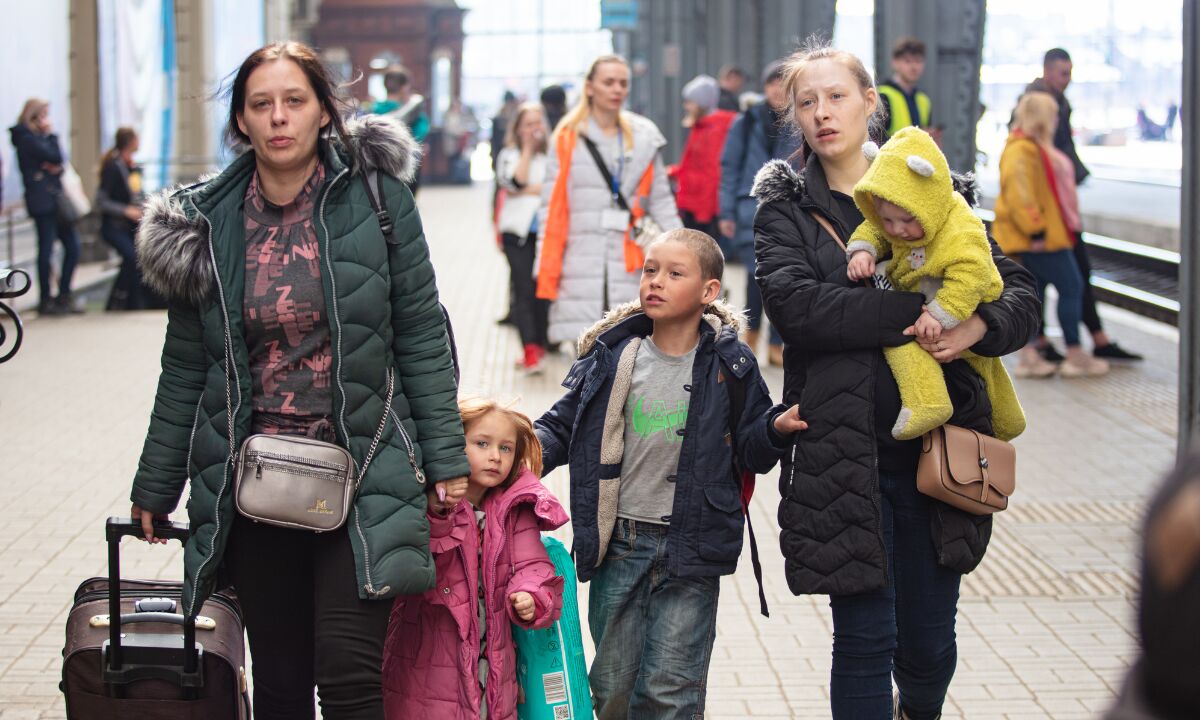
Refugees from Ukraine arrive at a train station. (Canva/Supplied)
Amid finger-pointing, threats of mass deportations and electoral upheaval, newcomer-serving organizations across Canada are working to meet complicated demands, even as potential chaos looms and funding remains uncertain.
“We are seeing more and more people really needing that additional support, particularly in areas such as housing, accessing employment, mental health, and then also dealing with anti-immigrant sentiment and racism,” said Katie Crocker, CEO of the Affiliation of Multicultural Societies and Service Agencies of BC, better known as AMSSA.
Anti-immigration rhetoric, driven by politicians at home and abroad, is having a significant impact on immigrants and the organizations that serve them, according to those working in the newcomer settlement sector.
American president-elect Donald Trump has vowed to deport millions of undocumented migrants when sworn into office later this month, leaving service providers here at home preparing for a potential surge of new arrivals.
“We are concerned with how any irregular border crossings may impact people seeking asylum in smaller communities,” said Shelly Harris, director of education and settlement for the St. Thomas-Elgin YWCA, which services a community of about 43,000 in Southwestern Ontario.
“We don’t have the resources to support any increase in numbers.”
It’s a concern shared by Reuben Garang, director of Immigration Partnership Winnipeg.
“I think it’s a real issue; we saw it happen during the first (Trump) election,” he said.
“So, there’s no doubt that this is going to increase the numbers, and we already seeing that.”
Misconceptions, harmful untruths and scapegoating underpin much of the current anti-immigration sentiment, influencing government policy at home and abroad, Crocker said.
For example, Trump campaigned on baseless allegations about migrants, painting immigrants as violent criminals who eat pets and steal jobs, while Canadian politicians have blamed newcomers for the country’s housing crisis and the shortcomings of provincial healthcare systems.
Real-world impact
After months of heated public discussion, Ottawa announced in October it would significantly reduce the number of immigrants entering Canada, setting a target of 365,000 permanent residents for 2027—a reduction of 135,000 from current levels.
The federal government also plans to decrease the total number of non-permanent residents by about 445,000 this year, followed by an additional 445,000 in 2026.
“We could have acted faster and turned off the taps quicker,” Prime Minister Justin Trudeau said in a video released shortly after the announcement.
More than 185 civil society organizations have since signed an open letter to Trudeau and Immigration Minister Marc Miller, asking the federal government to reverse course.
Authored by the Migrant Rights Network, the letter states that the measures “will force thousands of migrants who have already been in Canada for several years—often with their families—to either leave the country or become undocumented.”
Crocker said these changes indicate a pull to the right across the political spectrum, a shift that concerns her and the organizations AMSSA represents.
She and her colleagues wonder how this will play out during the next federal election, which political observers believe will occur this spring.
“What would a potential conservative government do here? Pull it even further? And what rhetoric is going to surround that?” she asked.
In Winnipeg, Garang sees increasing anti-immigrant sentiment manifest in newcomers’ day-to-day interactions with the community, fostering a growing concern about newcomers’ place in Canadian society.
“Newcomers don’t anticipate that they will be hearing some of the things that they’re hearing, so it affects them mentally; they think they are coming to a safe place,” he said.
Many settlement organizations are also managed and staffed by immigrants, most of whom are women.
This compounds the impact of hateful rhetoric, which disproportionately targets already marginalized groups.
“There’s a tendency to talk about the newcomers as the clients, but I think we also have to remember that many of these organizations are staffed by people who have a newcomer journey to Canada,” said Crocker.
Harris said she regularly hears about racism and microaggressions in social and employment settings from staff and clients, but a lack of funding has prevented the organization from adequately tracking the issue.
Funding fears
Staff at several newcomer organizations declined to comment on these issues (and others) because they feared doing so could jeopardize future funding.
More than 500 settlement organizations across Canada deliver federally funded settlement services. Most are currently engaged in procurement negotiations with the federal government.
“Until contracts are signed, people are going to be very, very hesitant to speak out because there’s a perception that it could potentially impact their funding,” Crocker said.
Complicating the process is that service providers completed and submitted funding proposals before the Liberal government decided to slash immigration numbers.
“I think that there’s always a gap when it comes to finding resources that you need, especially when you are community-centred and dealing with emerging issues,” Garang said.
“But now we also have much more uncertainty.”
Service providers fear reduced immigration numbers, combined with growing hostility towards migrants, will further diminish the political will to adequately fund settlement programming.
Additionally, it’s unclear how parliament’s prorogation will impact funding processes.
When Trudeau promised to resign as prime minister and Liberal leader earlier this month, he also paused parliament until March 24, killing any legislation currently before the House of Commons.
Rethinking advocacy
Crocker said umbrella organizations must find ways to combat harmful rhetoric with facts and data while effectively advocating for their members in a shifting political landscape.
“Every employer in this province, in this country, has a vested interest in the successful integration of newcomers,” she said.
“Whether they’re your staff, your clients or your customers, every single person has a vested interest—and that’s the messaging that we need to get out.”
Changes to Canada’s immigration system mean some families won’t be reunited, and some jobs won’t be filled, Garang said, adding that changes in public perceptions will also negatively impact newcomers’ ability to fully integrate into their new homeland.
He said sharing those hard realities with community members, partners, funders, and government will be an important part of the work settlement organizations do going forward.
“This situation we are going into is heightened,” said Garang. “So we need to encourage ourselves to say, let’s accept that this is a problem and ask how do we overcome it as a society.”
The inconvenient truth, said Crocker, is that Canada still needs newcomers.
“But it’s a lot easier for us to say, ‘Hey, the housing crisis is your fault. Hey, the healthcare crisis is your fault.’ then it is to ask, ‘What is my role to play in all of this? What kind of joint societal role do we have to play in all of this?’”
What’s needed is a thoughtful, compassionate, realistic immigration plan that accounts for Canada’s declining population, she said, calling the current plan a “knee-jerk reaction.”
As both an immigrant and someone who has worked with newcomers for many years, Garang said he is scared by the changes he sees but also hopeful.
“If we humanize these situations and see it from the angle of humanity … we would be able to address some of these problems together,” he said. “
“There is a divide, but we will approach it by listening to people with different needs and different ideas while also making sure that we speak on behalf of the newcomer immigrant communities.”
Crocker added while it’s easy to get caught up in talking about what is wrong with Canada’s immigration system, it’s also important to speak about what is right.
“The immigration system isn’t broken, but It can always get better,” she said. “We see a lot of really, really great things happen through immigration in Canada and through the successful integration of newcomers in our communities.”
Your job. Your mission. Your news.
With your support, the sector you're building gets the journalism it deserves, and you get a tax receipt.

Related Articles

Partnered Partnered content How construction contracts became the blueprint for social change in Manitoba
Manitoba is a leader in social procurement, with decades of partnerships among government, businesses and social enterprises that have shaped a model other communities can learn from.

‘The need is endless’: Food insecurity highest in Canada’s Black, Arab and Indigenous communities
Food insecurity gaps aren’t closing, so community organizations across Canada are trying new ways to help beyond just providing food.
