Editorial Fellowship: Climate Change and Human Health

SERIES
Editorial Fellowship: Climate Change and Human Health
About This Series
Climate change directly affects human health — and it affects some people’s health more than others.
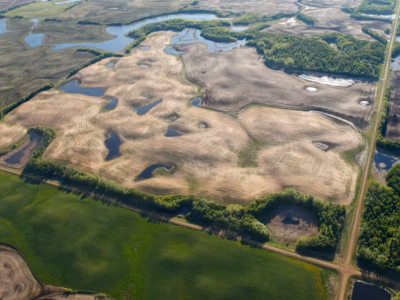
Draining wetlands produces substantial emissions in the Canadian Prairies: new study
Draining Prairie wetlands is driving millions of tonnes of hidden emissions, new research shows.

People with schizophrenia will be vastly overrepresented in this summer’s heatwave deaths. Changemakers can prevent that.
Schizophrenia, along with other severe mental health conditions like bipolar disorder, limit a person’s heat regulation abilities – but social determinants of health also play a role.

Foundations provide funding to address a hospital’s biggest long-term needs. Why aren’t they preparing for climate change?
While hospital foundations do fund research and initiatives that address health issues exacerbated by climate change, none appear to be launching campaigns aimed at climate change specifically.

The Red Cross assessed the world’s preparations for the next pandemic. Canada isn’t ready.
Persistent challenges, especially climate change, will hamper the world’s ability to protect against disease outbreaks, according to the 2022 World Disaster Report.

Governments aren’t taking responsibility for climate change’s human health catastrophe. These changemakers are forcing them.
Two court cases, in Ontario and B.C., are trying to force Canada to better protect the health of its residents from climate change.

Canada’s National Adaptation Strategy is the first plan of its kind to prepare communities for climate disaster. Here are its blind spots.
The National Adaptation Strategy promises a ‘down payment’ of $1.6 billion to prepare Canada’s healthcare capacity, infrastructure, and communities for climate change.
Your job. Your mission. Your news.
With your support, the sector you're building gets the journalism it deserves, and you get a tax receipt.

