CCNDR to expand cybersecurity resources for non-profits with new CoLab
In a recent survey of 8,000 non-profits, CCNDR also found that equity-denied organizations face significant barriers in digital skills and training.
Why It Matters
The Canadian Centre for Nonprofit Digital Resilience (CCNDR) began as a collective between seven co-founding organizations and is now housed within Imagine Canada. Over the next three years, CCNDR will focus on supporting the non-profit sector with data management and literacy, cybersecurity awareness, and emerging technologies like AI.

The Canadian Centre for Nonprofit Digital Resilience (CCNDR) will be launching a new cybersecurity CoLab for the non-profit sector this year.
Increasing cybersecurity awareness in the social purpose space will be one of CCNDR’s focus areas over the next three years, based on a national survey of 8,000 non-profits.
“We hear very loudly and clearly that cyberrisk is very strong in the sector, and there is a major gap there for non-profits that they don’t know how to grapple with,” said Wilfreda Edward, executive director of CCNDR.
Non-profits often handle “deeply personal data” about individuals’ health, immigration status, and housing, and “yet are among the least resourced to protect it,” CCNDR wrote in its new strategic plan.
The CoLab model brings together non-profit practitioners and technical experts to design technology solutions for the needs of non-profits and charities.
CCNDR’s first CoLab, focused on AI upskilling, gives non-profits access to self-paced learning and credentials.
CCNDR is also working on providing Canadian non-profits with a cybersecurity readiness pathway to better equip organizations to respond and recover should their systems be compromised, Edward said.
CCNDR’s national survey, carried out with Open North, also found that non-profits want to work with what they already have rather than looking for additional tools or new staff. According to Edward, non-profits are already “inundated with that information.”
“They don’t want new hires. They don’t want more outsourcing options. They want to work with what they already have, with the budgets they already have, with the tools they already have,” she said.
In its new strategic plan, CCNDR also recognizes that it needs to centre the needs of smaller and equity-denied organizations, many of whom “face unique barriers to digital participation.” For Edward, funders also play a big role in enabling this equity.
“The big takeaway for us was that funders have a responsibility to understand digital infrastructure as an investment rather than a cost,” she said, adding that grantmakers hold the power “in deciding and defining what gets called ‘essential’ and what gets called ‘overhead’.”
While some funders will allocate a predetermined percentage of their grant for overhead costs, others do not allow overhead costs as budget line items at all.
According to Edward, this has “deep equity consequences because [funders] are deciding, essentially, who gets to participate in this work and who gets left behind.”
Wilfreda Edward was one of the panellists in RBC and Future of Good’s webinar on building cyberresilience in non-profits. Access the webinar here.
Your job. Your mission. Your news.
With your support, the sector you're building gets the journalism it deserves, and you get a tax receipt.

Author

Related Articles
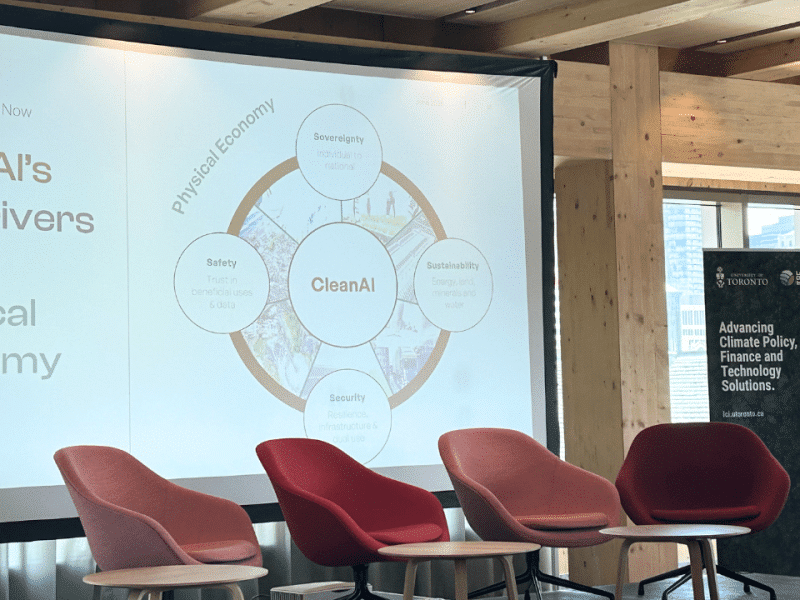
Quarter of all Canadian AI ventures could be categorized as ‘clean AI’: new research
At Toronto Climate Week, the global CleanAI Initiative shared research on the Canadian ecosystem, finding growing investment hubs in Vancouver, the GTA, and Kitchener-Waterloo.

Partnered Partnered content Non-profits are increasingly being targeted for cybercrime. Here’s how your organization can help protect itself
Being cybersecure doesn’t have to be daunting or expensive. A panel of experts discuss ways the non-profit and charitable sector can help protect itself in a constantly changing AI landscape.

Canadian astronaut, entrepreneur donates $15M to Concordia to launch new space school
Montreal’s Concordia University will be the home of the Mark Pathy Space Institute.
