How tough discussions, investment pivots and internal reflection made Toronto Foundation Canada’s most equitable funder
New philanthropy models focused on fighting exclusion and marginalization are key to wellbeing, belonging and trust.
Why It Matters
Equitable funding models ensure that resources are distributed fairly, allowing marginalized and underserved communities to access the support they need. This approach not only promotes social justice but also strengthens the overall impact and sustainability of social purpose initiatives.
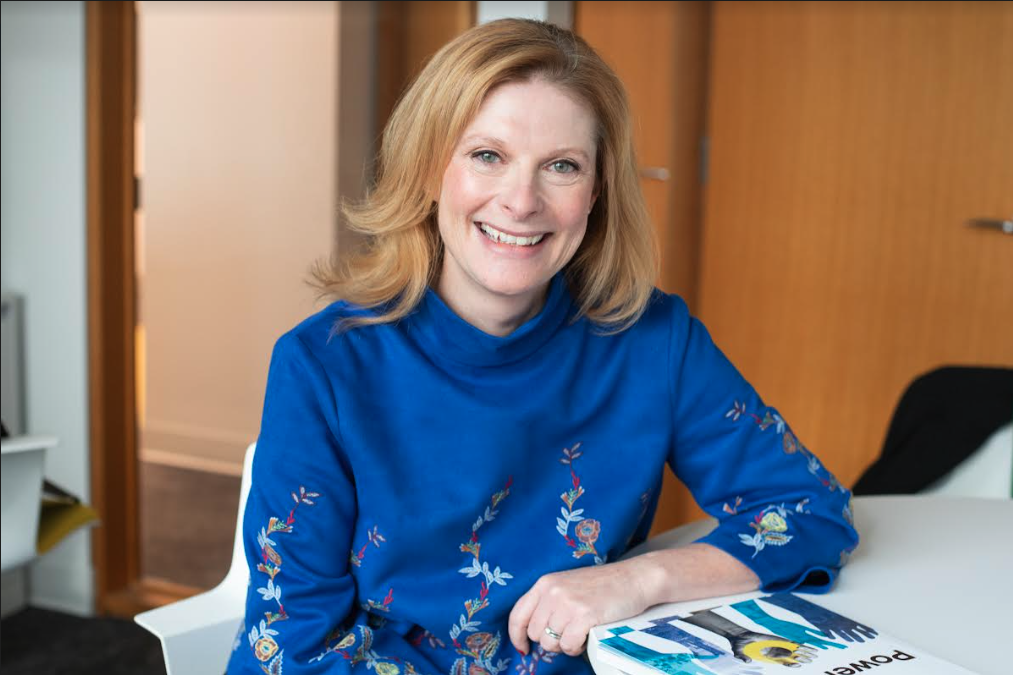
Sharon Avery, Toronto Foundation’s CEO in Toronto, Ont. The foundation was named Canada’s most equitable funder in Future of Good’s new rankings project. (Emily Doukogiannis/Supplied)
The year was 1981, Canada’s prime lending rate had hit a record 22.75 per cent, and North America was in the grips of the worst recession since The Great Depression.
And Fraser Deacon, an unassuming man in the insurance industry, was about to make good on a decades-long dream—creating a community foundation serving Canada’s largest city.
“It was kind of a funny time to start a community foundation, and as a result, it took us a good decade to really get going after being established,” said Sharon Avery, CEO of the Toronto Foundation.
Today, the foundation administers more than $750 million in assets and has been named Canada’s most equitable funder in a new annual ranking published by Future of Good and QuakeLab.
“In a compound interest environment, age matters,” she said. “But being young has also driven our culture in a really positive way because we haven’t been burdened by the weight of history in the way that many community foundations are.”
While the early years were focused on the organization’s financial health, Avery said there was a hard pivot toward defining and centring equity in 2017.
In 2018, its annual Toronto’s Vital Signs Report was compiled with an equity lens and, for the first time, used disaggregated data to track equity issues in the city, including access to resources, anti-Black racism, and various forms of hate and discrimination.
“Vital Signs used to be presented neutrally,” Avery said.
“We talked a lot about, you know, what a great city Toronto is … but if you just go like an inch into the data, you can see that it’s only a truly great city for the rich.”
The foundation also had to confront the fact that, despite serving Canada’s most diverse metropolis, most of its fund holders were largely older white people.
“So we started recruiting fund holders from a whole variety of spaces who we wouldn’t traditionally see as philanthropists,” she said.
“Philanthropy needs everyone, and that’s not just philanthropy in the form of money, but philanthropy in the form of time and talent and other kinds of resources.”
Avery said the foundation also works to flow more money to smaller, local, equity-focused organizations by hosting donor education programs that help disrupt traditional philanthropic practices.
After a few years of externally focused changes, hard conversations shifted inwards.
“We put out a purpose statement in 2019 around inclusion and creating a fairer city, but we hadn’t done the internal work,” she said, adding that having a small and nimble team allowed them to quickly update the organization’s strategic plan to include this crucial aspect.
“This helped us really double down on the equity work that we’d already started,” Avery said.
In 2021, the foundation engaged the services of a diversity, equity, and inclusion consultant to holistically assess and address bias in the organization’s programs, policies, human resources practices, and governance structures and evaluate its anti-oppression and anti-racism work.
This resulted in the creation of a comprehensive DEI policy.
More shifts in granting practices followed, including a commitment to responsible investing.
That same year, the Toronto Foundation onboarded RockCreek as its new outsourced chief investment officer. By 2023, 31 per cent of the foundation’s portfolio was invested in socially responsible investments, with an annual return of 9.9 per cent.
The foundation aims to have 70 per cent of its portfolio in socially responsible investments by 2031.
“That’s huge for us,” Avery said.
“We’re really looking in this strategic plan at the way we’re using our own invested capital. Even though we don’t have as many permanent endowments as other community foundations, we still have a lot of investments.”
Discretionary grants also play an important role in supporting underserved communities.
“We really focus our discretionary grants on the smallest organizations in the city,” she said. “And, from an application standpoint, we keep it very light and allow folks to do verbal applications, video applications, while keeping the reporting to an absolute minimum.”
The organization is also expanding its equity work around regranting.
“It’s great for us to give everything undesignated, but why are we making all the decisions?”
Throughout these processes, the foundation has prioritized transparency. Details of the organization’s evolution in granting practices and governance, along with investment breakdowns, are all publicly available on the foundation’s website.
However, lowering barriers and increasing equity has meant revisiting how impact is calculated.
“This whole idea of measuring impact based on what your grantees achieve with your money is crazy,” said Avery.
“I think that our measurement of impact is how many small, equity deserving organizations did we fund this year? How many undesignated gifts were we able to get out there?”
Despite the progress made and its ranking as Canada’s most equitable funder, the Toronto Foundation describes the last few years as the first steps in an ongoing endeavour.
“We look at equity as a practice, not a project. So, I think we still feel we have a ways to go,” Avery said.
Your job. Your mission. Your news.
With your support, the sector you're building gets the journalism it deserves, and you get a tax receipt.

Related Articles

Caste, corruption, and the collective: Crow’s Theatre’s A Fine Balance confronts India’s enduring inequities with humour and heartbreak
The Giller Prize-winning novel explores the realities of caste violence in India, which has been adapted into a powerful stage production in Toronto.

‘Canada must not go down that road’: More than 250 organizations demand investigation into CBSA after student protesters issued exclusion orders
The students were protesting after being denied post-graduation work permits they say they were eligible for when they enrolled at Portage College.

Half of Filipino immigrants to Canada are overqualified for their jobs: StatCan
‘For the relationship that Canada has with the Philippines, it seems like it’s lopsided.’
