Unlocking DAF potential: New relationships, new possibilities
Donor Advised Funds are at a crossroads in Canada. How do we use them to better serve transformational community change?
Why It Matters
Donor-advised funds now hold more than $10 billion in charitable assets in Canada, yet the communities most affected by inequitable outcomes have little influence over where those dollars flow. As the system rapidly expands, there is a rare window to shape DAFs into a tool for community-defined, systemic change rather than a passive vehicle for tax-efficient giving.
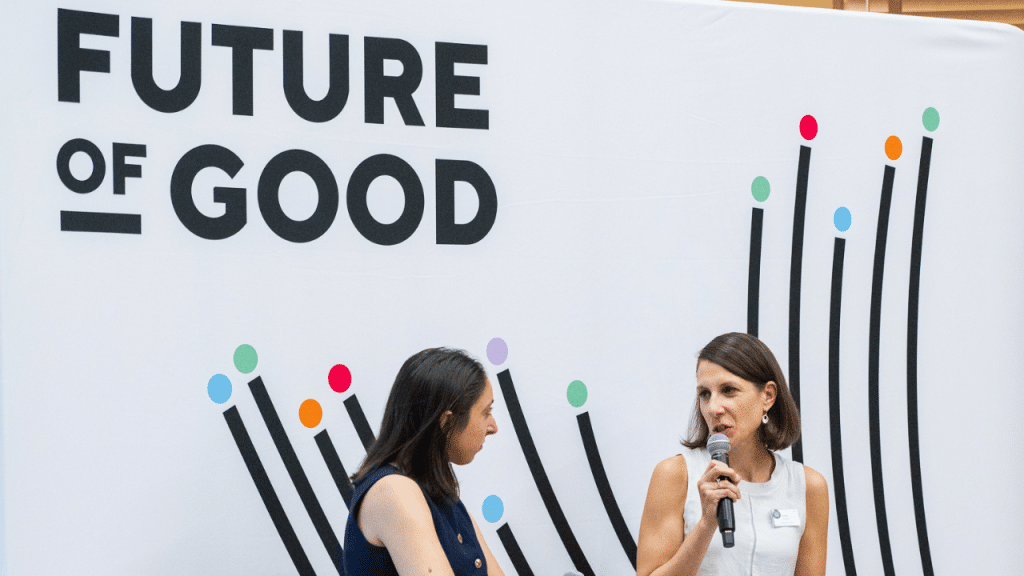
Late last month, I spent a day at St. Michael’s College in conversation about donor-advised funds (DAFs), a program Future of Good dreamed up, designed, and convened. For me, it was a rare chance to talk about this tool with a cross-sectoral group of organization leaders, intermediaries, wealth advisors, and community builders.
I connected with amazing changemakers. I learned a ton. I got a ton of questions answered and formed some new ones.
I left convinced that our conversation on DAFs need not just be about how they are growing and how we can access them, but about how we set the conditions for them to be another tool for transformational change.
A bit on what I’m learning
The significance of donor-advised funds is growing. There are more than $10 billion in charitable assets sitting in DAF accounts across Canada, with $1.4 to $1.6 billion granted annually to a relatively small number of organizations – generally larger organizations, most often in Ontario.
People give to DAFs for a variety of reasons. DAFs can be convenient. They’re tax-efficient in specific circumstances. Deeply trusted advisors often recommend them for these reasons.
What determines where resources flow?
At present, people and communities disproportionately bearing the burden of inequitable outcomes often have little influence over where DAF dollars flow. Decision-making on what gets funded, when, or how remains largely individualized. Too rarely is collaboration around an audacious outcome – like our economic poverty, housing or youth employment crisis – factored into where DAF dollars flow.
That gap is costly in terms of the effectiveness of the dollars and the wellbeing of our communities – but that’s not something we need to settle for. We have the resources collectively to change things.
I met a lot of people that sunny day. A wealth advisor curious about how to connect their clients with community priorities. A DAF intermediary curious about participatory approaches to grantmaking. Dagma Koyi, who knows that her organization cannot – on its own – change the systems that contribute to Black youth homelessness and housing instability and who is doing amazing work with limited resources to align her public policy work with others.
Each of these people was unique – and seemed to share the view that, while the DAF system grows, nearly every measure of human and planetary wellbeing in this country declines.
Each seemed intrigued by the idea that DAFs can be a tool for change, but uncertain about how to get from where we are to where we could be. Most seemed to feel pretty alone in figuring that out.
I can’t find much that says community priorities, equity of access, participatory decision-making, and a centring of what we know about systemic change can’t play a larger role in how DAFs flow (and how other tools get deployed).
The growth of the DAF system is relatively new, and the field remains entrepreneurial and diffuse. The actors (and their roles), technologies, relationships, rules, and flows that interact are in flux. It’s a system that can still be shaped.
Shaping that flow
Shaping that system will take all of us sharing knowledge and building new relationships. Relationships grounded in results and in responsibility for achieving them. Not all DAF donors and advisors know which organizations are collaborating to address community-driven needs.
Not all know that transformational change is possible when organizations agree upon an audacious goal, figure out why we’re so far from it, align the resources to get closer to it, and stay in the work until we get there.
Not all social impact organizations know how DAFs work or how to enter or influence conversations that could lead more DAFs to become another tool for transformational change efforts.
None of us has all the assets we need. Many of us feel a bit alone. We together hold the stones to build new bridges.
Rigorous, community-driven, cross-sector collaborations are a vehicle to build these bridges. They’ve demonstrated that it’s possible to align funders, service providers, lived experience experts, and government around shared outcomes. They know how to hold a table where people with different experiences, types of power, and knowledge make decisions together. They can adapt to emerging opportunities and emergencies.
That is exactly the infrastructure the DAF system doesn’t yet have, and exactly what community collaboratives have been patiently building.
A possible future
What would it look like to bring more DAF donors and advisors into community spaces, not as funders conducting due diligence or site visits, but as people encountering the full picture of a place and the change being built there?
How do we make community-defined success visible and irresistible to the potential partners who are stewarding billions in charitable assets? What would it take for capital to follow community knowledge and systemic change as its primary directors?
The conversation about DAFs is connected to a broader movement across non-profits, communities, funders and others who know that big change is possible. Open letters to philanthropy last year, the Fair Funding Coalition, and Canada’s Collaborative Funding Initiative point to the opportunity to create funding systems that support long-term collaboration and meaningful change for communities. DAFs are one part of that larger puzzle.
Your job. Your mission. Your news.
With your support, the sector you're building gets the journalism it deserves, and you get a tax receipt.

Author