‘Winnipeg Declaration’ calls on faith leaders to transform empty church land into affordable housing
A national call to action by Releven is asking leaders to repurpose their underutilized faith-based spaces and commit to solving homelessness by signing the Winnipeg Declaration.
Why It Matters
Canada faces a homelessness crisis, at the same time many religious spaces are underutilized. Releven believes solving homelessness could mean repurposing religious spaces.
A 12-storey housing complex is pictured on the land of Winnipeg’s All Saints Anglican Church. (Number Ten Architecture Group/Supplied)
As communities across Canada grapple with rising homelessness, Releven is calling on faith groups to help be part of the solution.
The charity is encouraging religious leaders to provide their underused land and buildings through the launch of its Winnipeg Declaration.
“We can end homelessness in Canada. There’s no doubt about it,” said Graham Singh, CEO of Releven.
Leaders who sign its Declaration would be a part of its 20-year public commitment to leverage faith-owned properties.
As congregations shrink and faith buildings age, nearly one-third of Canada’s 27,000 religious buildings could shutter in the next decade, according to Releven’s data.
“People drive by an empty church and see homeless human beings on the street and they think, ‘Why are we not putting those people into that building?’” said Singh.
“Or they see a church building being demolished and luxury condos being built and they think, ‘Well that’s not helping affordability at all.’”
Nearly 60,000 people experience homelessness on any given night in Canada, according to Statistics Canada 2024 data.
That issue is connected to Canada’s housing and affordability crisis, Singh said, and requires creative and collaborative solutions.
Faith-based organizations and community partners are asked to register for pre-launch meetings, ahead of the formal presentation in November.
A framework for moving forward
Religious organizations have responded to homelessness for years, through food programs and cold weather responses, but housing is a permanent solution, said Singh.
Signing the Declaration connects leaders with tools, learning resources, and an ecosystem of builders, funding partners, and non-profit organizations.
“Communities of faith are going through a massive change right now,” said Singh. “They’re trying to manage the property holdings they have, and many are selling land no matter what we do.”
“What they need is guidance, an understanding of what’s possible, a sense of momentum, and focus at a time when it can feel a bit like a fire sale,” he added.
The Declaration is designed to serve as a coordinating platform, helping communities move from intention to action.
Cutting through complexity is important, said Leanne Sawatzky, because uncertainty can be detrimental.
“Faith groups are often run by laypersons, they’re not experts on these topics, and sometimes they proceed in ways that put themselves or their projects at risk,” said Sawatzky, director of Renewable Cities at Simon Fraser University.
Renewable Cities developed a pre-feasibility framework for people working with faith-based organizations.
The framework helps guide organizations through early, values-aligned housing development decisions, providing strategies and resources.
“As you can imagine, oftentimes groups who are undergoing this process, they’re not necessarily in a really great financial position. And they can have really devastating consequences for organizations.
Committing to action
Transforming religious properties has been gaining interest across Canada.
In Winnipeg, the All Saints Anglican Church’s parish hall was quickly declining and too expensive to fix, said Father Rob Schoeck, the rector of the church.
“We see and experience the fullness of the struggle and the suffering of people in our neighborhood, those who have housing and those who are unhoused,” said Father Schoeck.
After securing initial funding, the church was able to launch a request for a proposal to attract a social impact-focused development partner.
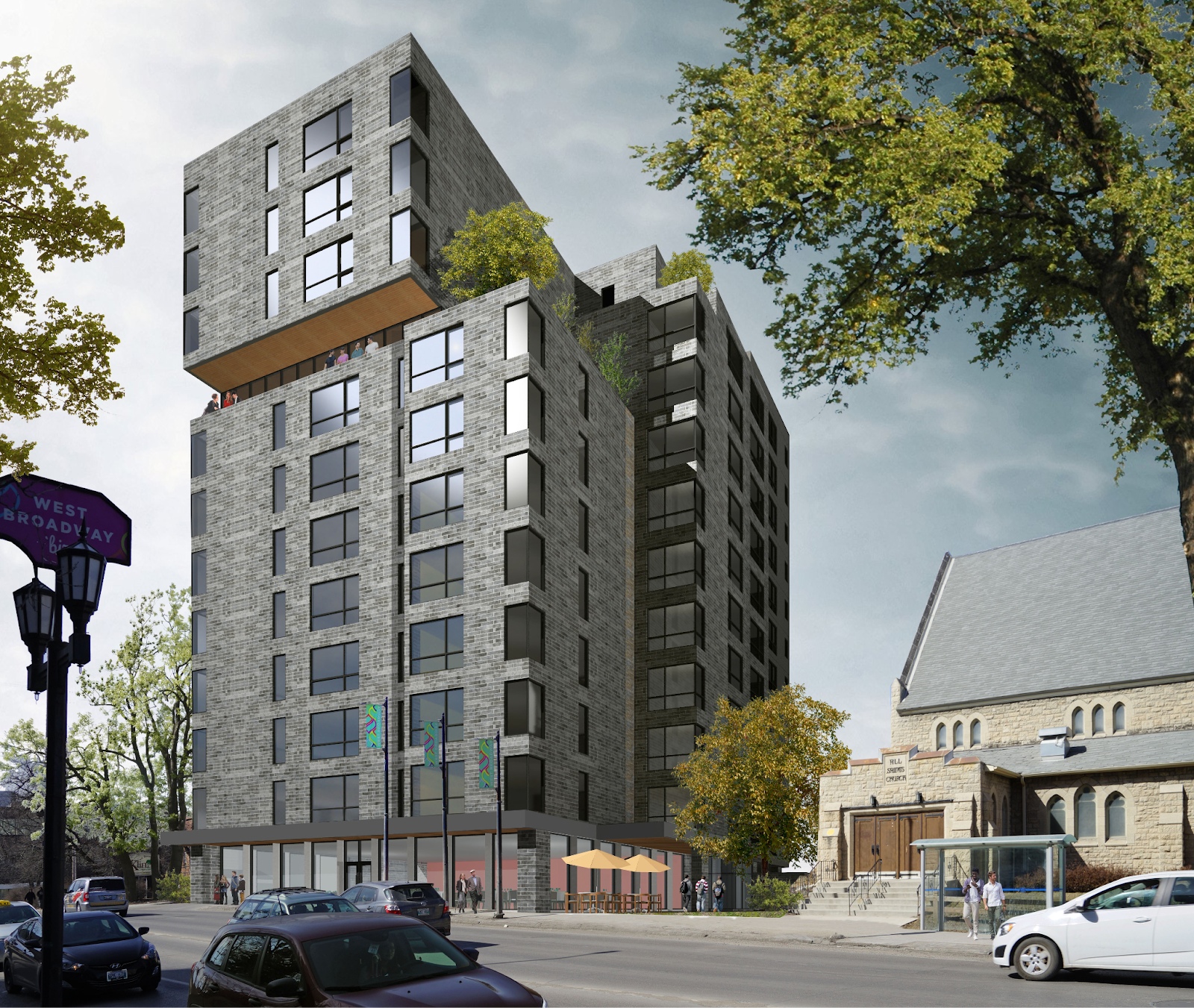
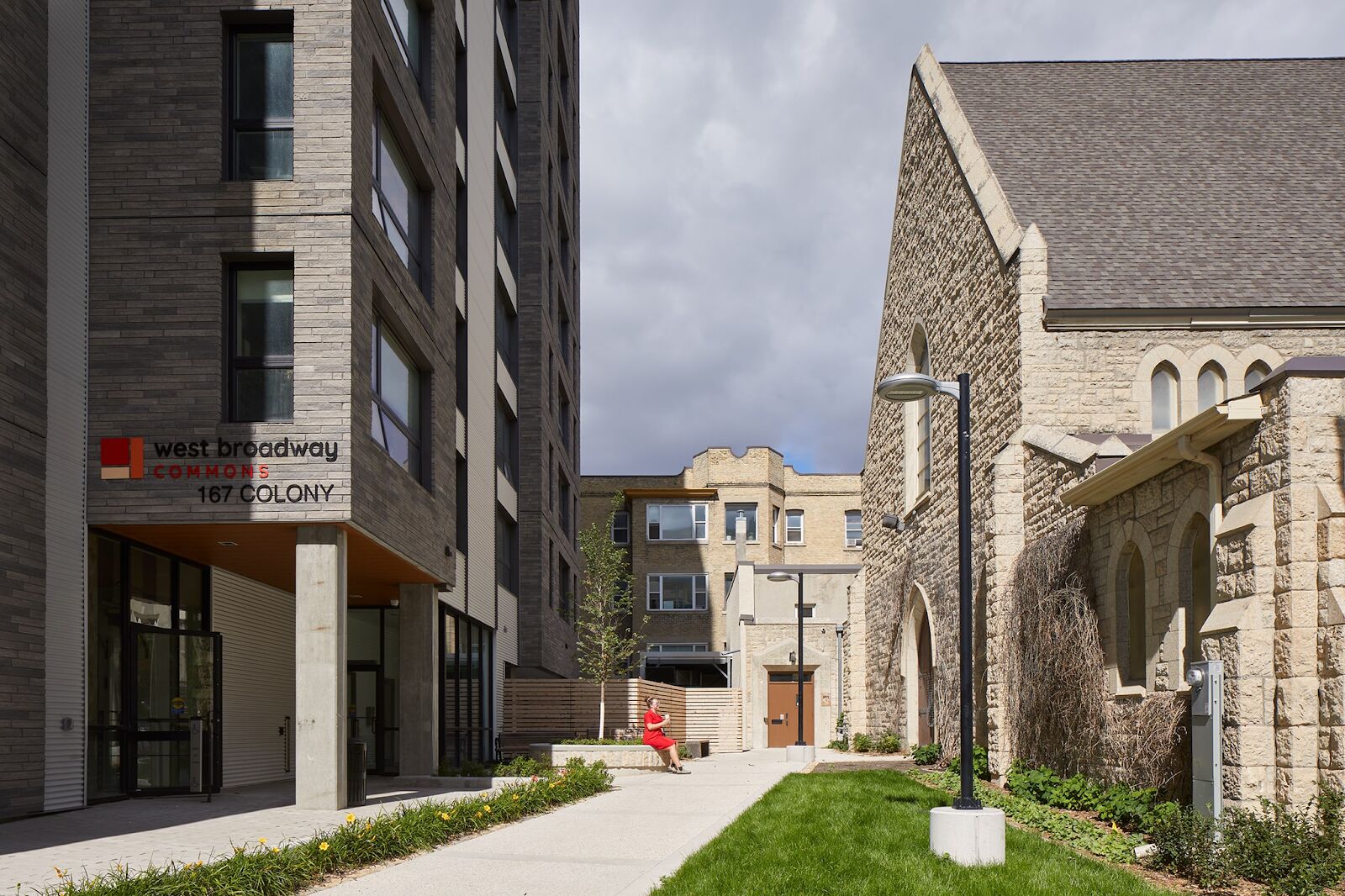
Now, the West Broadway Commons, a 12-story 110-unit housing project next to All Saints Church, with more than half affordable housing units.
“We’re providing housing for people who desperately need it, families, newcomers, all of that. But if it failed, it also meant that we likely would go down with it. So it was a testament to the community, to the parish community, the church community to say, ‘We see a value in this and we’re investing ourselves fully into this’,” he said.
The church now generates revenue from commercial and residential rents, which has allowed All Saints to continue operating.
The project was a joint venture between the church and University of Winnipeg Community Renewal Corporation 2.0, a key element in the redevelopment, he said.
“We don’t have the unique skills of architecture and construction, things that you would naturally need to help move a project like this forward. But finding strategic partners in the community helped us make this a reality.”
(The West Broadway Commons building is pictured next to All Saints Anglican Church in Winnipeg./ Supplied photo.)
Many other religious spaces have also taken this approach in Canada.
In Victoria, Bishop Anna Greenwood-Lee, Anglican Diocese of Islands and Inlets, British Columbia, is leading a project at Christ Church Cathedral.
The project aims to build 500 housing units for 1,500 people on the same land as the current church and towers in the parking lot, but current regulations have stalled plans.
“We would love to accelerate this work, however, without the right access to capital and improved systems especially at the municipal level (e.g. zoning and permitting) this work has struggled to scale,” Bishop Greenwood-Lee said in Releven’s press release.
“What could we do, if we put these challenges together on the table?”
In Kitchener , Historic St. Paul’s Evangelical Lutheran Church approved the development of 57 affordable housing units for seniors on its property.
As well, in Vancouver First United Church will soon open its new centre for housing and support in a space that was once its downtown church.
Putting plans to work
Releven is serving as the fiscal sponsor for the launch and early development of the Winnipeg Declaration.
The initial funding goal is set at $50 million over the next 14 years.
“[The money] will help see some of these sites really become the most impactful neighbourhoods and work with some of Canada’s absolute best housing developers,’ said Singh.
The Declaration will be supported through a shared leadership model, involving signatories in shared oversight, learning, and accountability, said Singh.
Municipalities and partnerships will be crucial to get the Winnipeg Declaration from a pledge to shovels in the ground.
That means Releven is also inviting community-based organizations working in environmental and Indigenous justice, immigrant rights, health and social supports to be part of the work.
“These organizations hold essential insight into community realities, barriers, and solutions, and they are often already partnering with faith communities in the daily work of care, advocacy, and systems change,” reads Revelen’s press release.
By bringing together municipalities, non-profit partners, funders, planners and developers alongside religious organizations, Singh said it will create a shared structure to publicly track progress towards repurposing faith-owned land into housing.
As for the name behind the project, Singh said the Winnipeg Declaration is symbolic.
“It sits at the centre of Canada, Francophone and Anglophone, Indigenous and settler histories intertwined. It is also a city where homelessness is a profound and visible challenge. This is not a regional initiative. It is pan-Canadian. But Winnipeg represents both urgency and possibility.”
Your job. Your mission. Your news.
With your support, the sector you're building gets the journalism it deserves, and you get a tax receipt.

Author

Related Articles

Food-rescue groups turn to processing facilities to respond to waste and insecurity
New facilities in Ontario and Manitoba aim to turn surplus food into repurposed products while expanding access to food assistance.
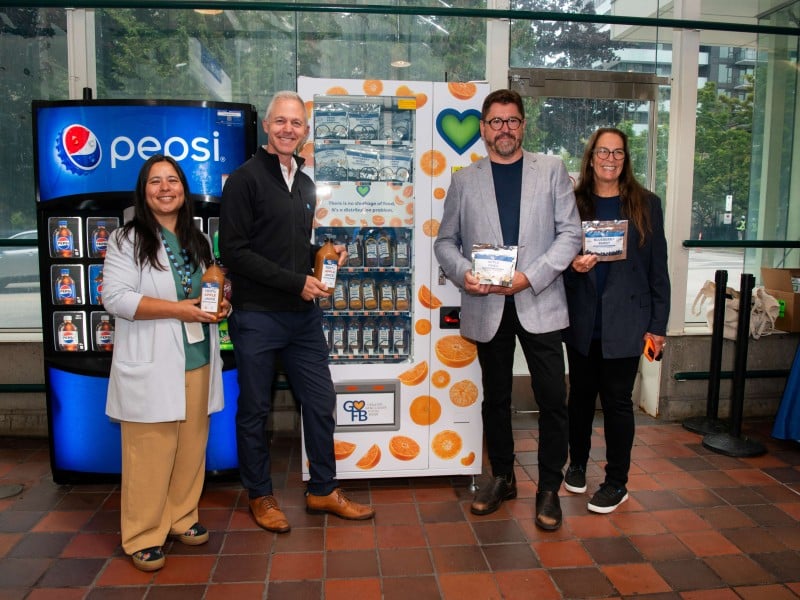
Food bank vending machine launches in 2 Vancouver SkyTrain stations
A new food preservation system is helping the Greater Vancouver Food Bank turn excess fruit into new funding.
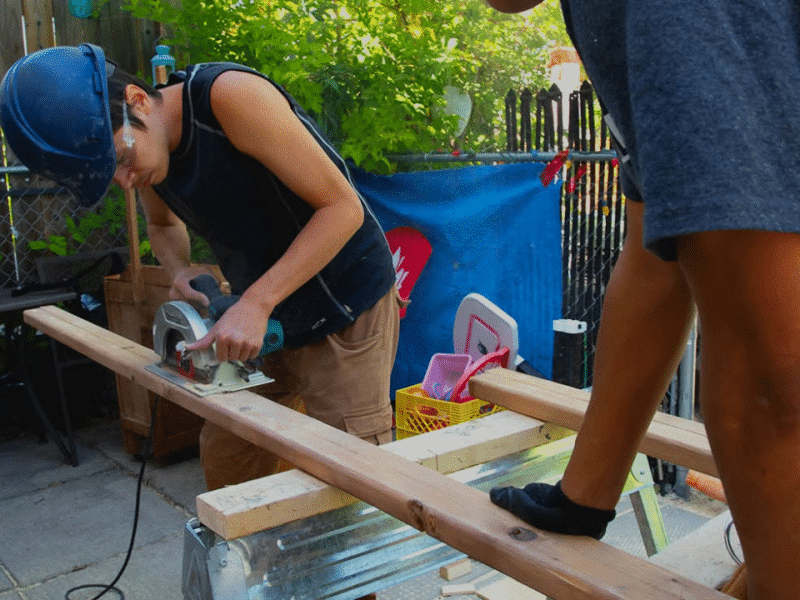
Partnered Partnered content How construction contracts became the blueprint for social change in Manitoba
Manitoba is a leader in social procurement, with decades of partnerships among government, businesses and social enterprises that have shaped a model other communities can learn from.
