10 visionary leaders on the state of social impact in 2030
How do you think social impact will change this decade?
Why It Matters
The 2010s disrupted the traditional world of impact in multiple ways, and the decade brought its fair share of both fears and excitement to the field. But what lies ahead? As we dive into 2020, we asked 10 visionary social impact leaders to weigh in on the changes we can expect over the next 10 years.
As we rung in 2020 on January 1st, we didn’t only welcome in a new year — we ushered in a fresh decade. The last 10 years brought us the global adoption of the Sustainable Development Goals, a new generation of donors, and the mainstream adoption of everything from fundraising platforms to cryptocurrencies.
The 2010s disrupted the world of social impact in multiple ways, and the decade brought its fair share of both fears and excitement. But what lies ahead? As we dive into 2020, we asked 10 transformational leaders to weigh in on the changes we can expect over the next 10 years.
1. Social finance will go mainstream.
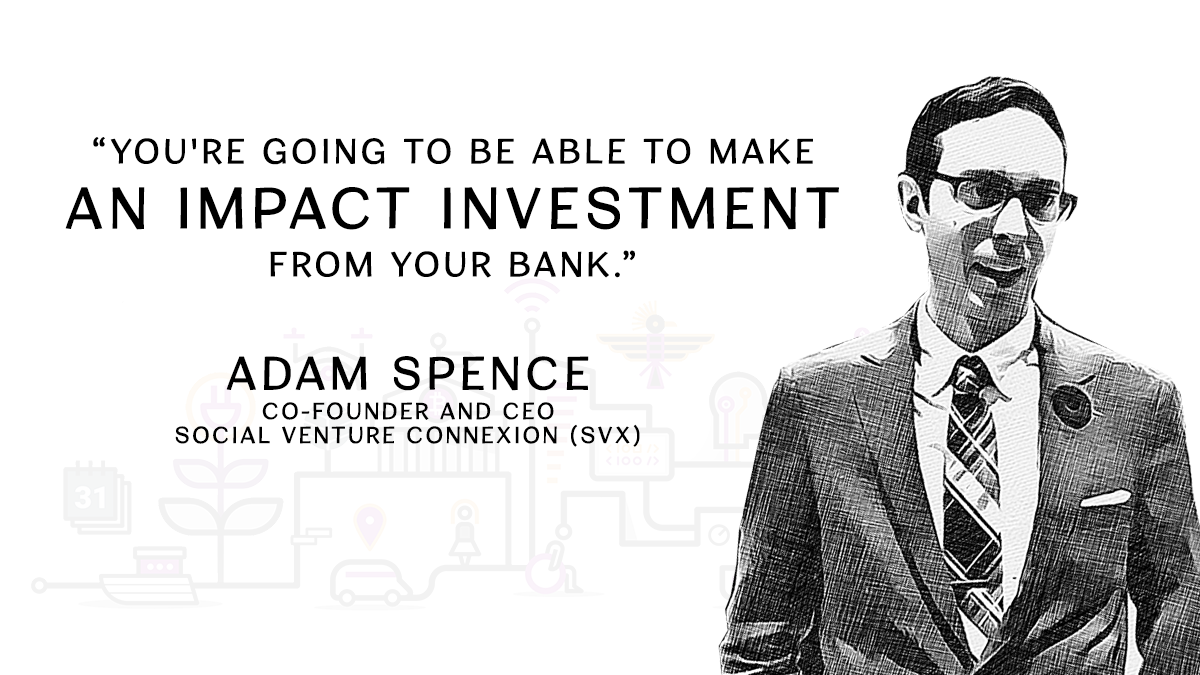
Over the next decade, expect to be left behind if you’re not considering social finance — no matter what sector you’re in.
“Social finance is going to go from interesting innovation to mainstream across sectors. You’re going to be able to go to your bank and be able to make an impact investment,” says Adam Spence, director of SVX. “We’re talking about billions going to go to trillions that are dedicated to this effort. That’s at a global level.”
On the front lines of social impact, he says, “there will be thousands, hundreds of thousands, and millions of dollars dedicated to community organizations and enterprises, so that they are able to access new forms of capital. You’ll be able to directly invest in organizations in your own backyard. I think non-profit organizations are going to make this a mainstream part of what they do.”
2. Impact will be measured against global standards.
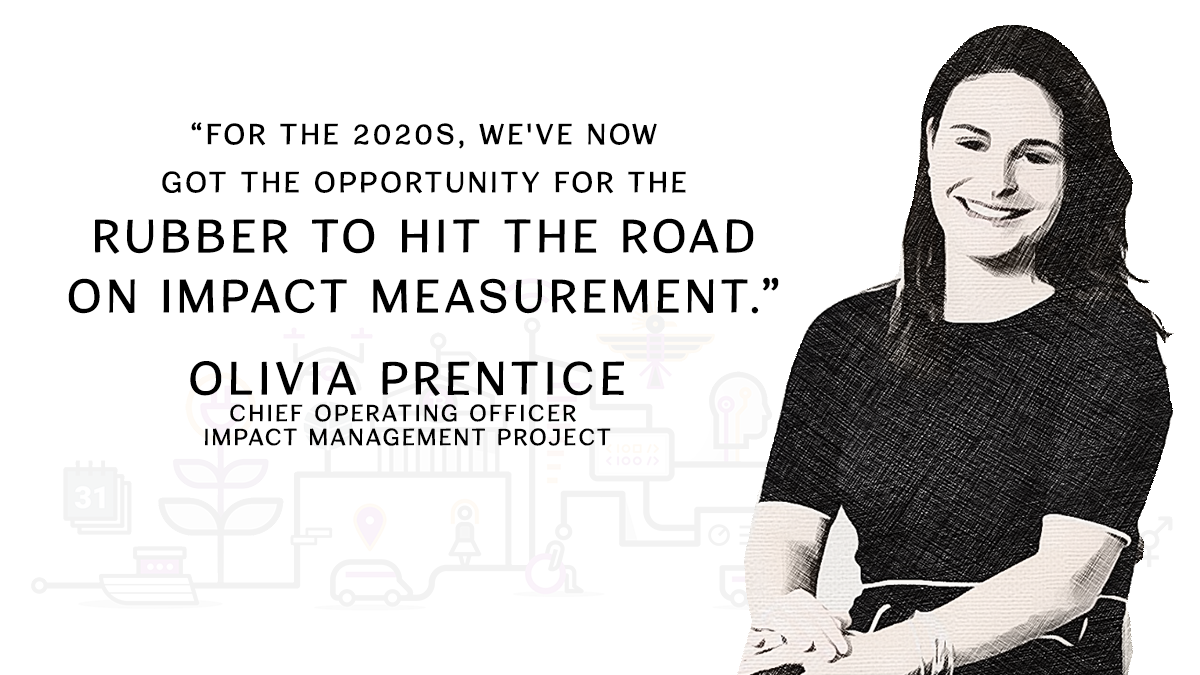
From international development to corporate social responsibility, the world of social impact has always seemed to struggle to solidly define and measure “impact.” But according to Olivia Prentice, chief operating officer of the Impact Management Project, the 2010s did give us a solid foundation to build on.
“There’s a definition now around what impact is: it’s a change in outcome for people or the environment caused by an organization,” Prentice says. With a solid definition of impact and five questions to guide impact measurement, organizations have a solid baseline for creating meaningful impact reports. For the 2020s, “we’ve now got the opportunity for the rubber to hit the road and actually change how investors and companies are practising impact measurement and management,” Prentice says.
In the next few years, the field should expect to see even more definition in the space, according to Prentice: “We need standardized metrics, we need standardized guidelines, and we need standardized principles of practice. That’s really what we’re hearing the market asking for: clarity on which steps to follow and where they can find these resources.”
3. Charitable sector regulation will open up.
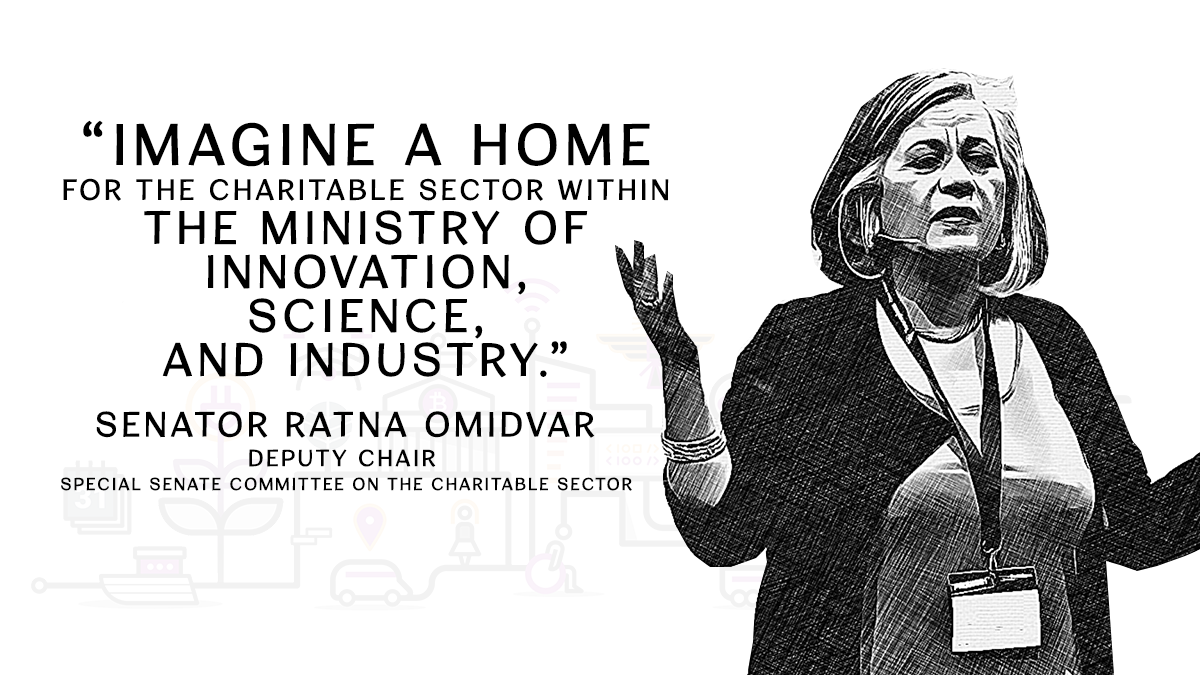
The charitable sector has had an interesting last decade, to say the least — facing everything from a changing generation of donors to crowdfunding platform disruption, with less cash on hand and more competition. And according to Senator Ratna Omidvar, Deputy Chair of the Special Senate Committee on the Charitable Sector, regulation and policy has not evolved quickly enough to fully keep up with these changes.
“The sector’s interests in Ottawa are not well-represented because the only interlocutor it seems to have at this moment is the Canada Revenue Agency,” Omidvar says. “The CRA deals with an important but very limited interest of the sector, which is charitable donations — and the sector has interests ranging from legislation and policy to regulations and services in a whole range of issues.”
Ideally, Omidvar and the Special Senate Committee on the Charitable Sector imagine a home for the charitable sector within the Ministry of Innovation, Science and Industry, with an assistant deputy minister ensuring that “the sectors’ many interests are connected across the agencies and departments of government.”
4. Corporations will play a bigger role in social impact.
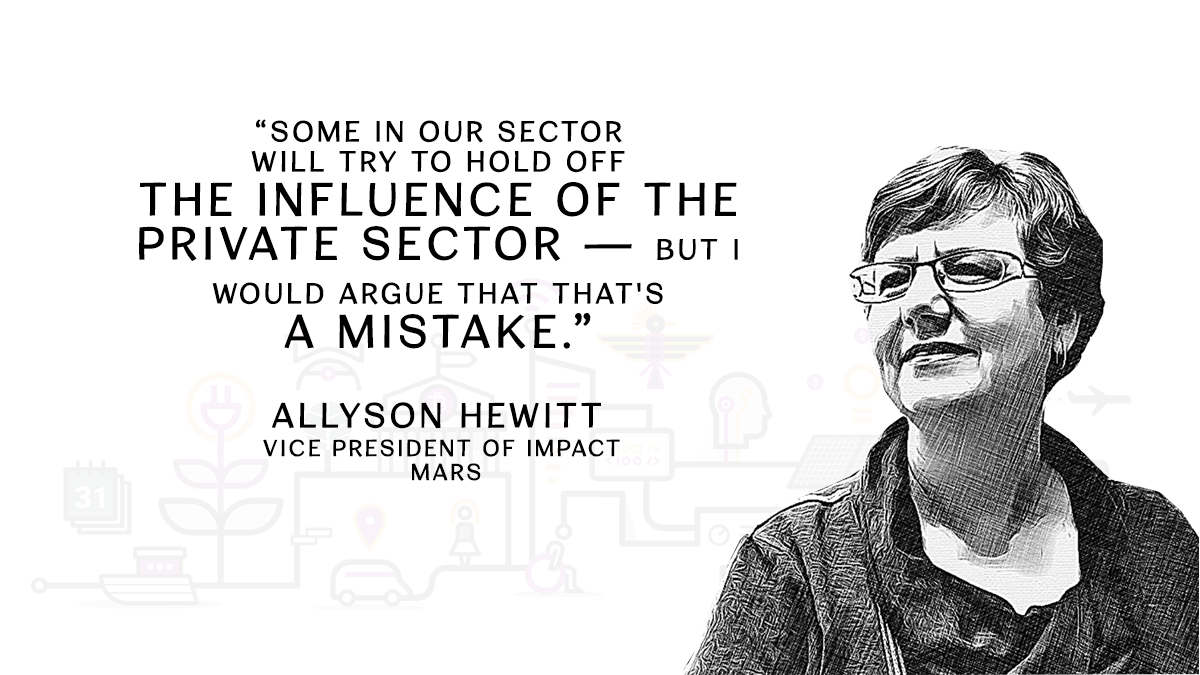
In the past decade, we’ve seen companies start to move away from a narrow focus on corporate social responsibility to incorporate purpose throughout their organizations, according to Allyson Hewitt, vice president of Impact at MaRS. That’s a trend that’s only set to continue.
“This decade, we’ll see the breaking down of silos,” predicts Hewitt. Expect to see corporates move into spaces traditionally dominated by not-for-profits or charities. “I think that some in our social sector are going to fight that — they try to hold off the influence of the private sector — but I would argue that that’s a mistake,” Hewitt says. “The only way we’re going to get to really solving these complex challenges is through collaboration with companies.”
5. The face of giving and philanthropy will change.
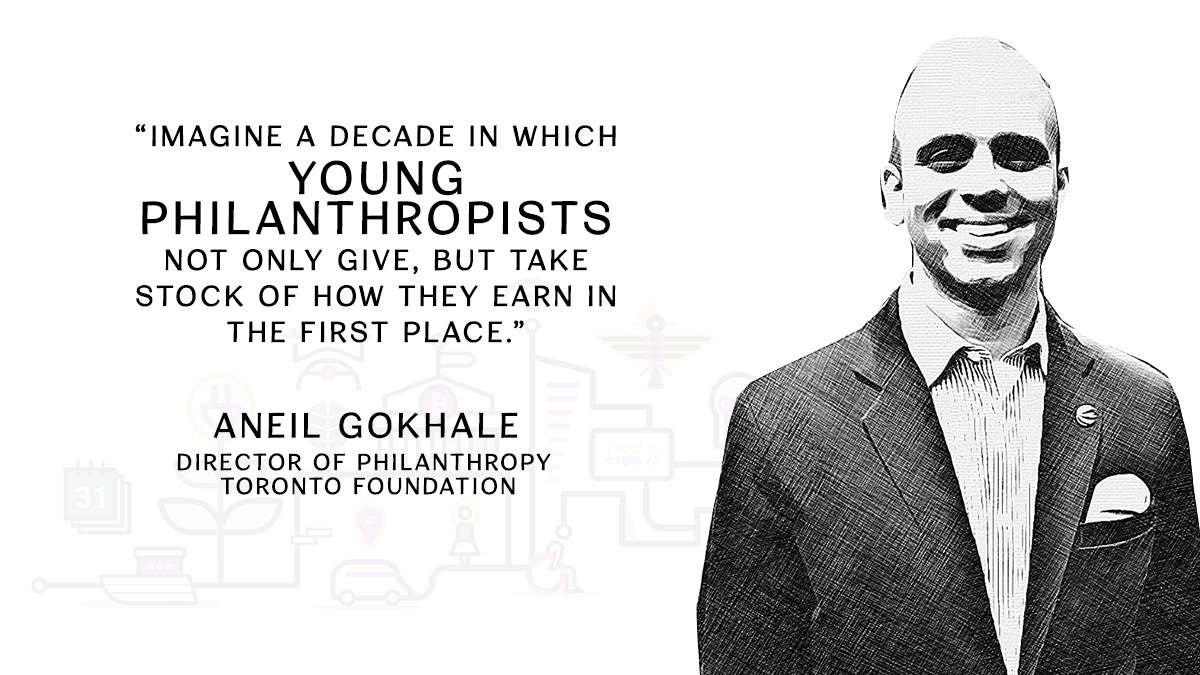
In the 2020s, expect philanthropists to want to get far more involved in social impact outside of signing cheques or attending fundraising galas. Not-for-profits and organizations who involve them should expect them to get personally involved, leverage their networks, and be involved in decision-making.
“In New Power, by Henry Timms and Jeremy Heimans, they talk about how old power works more like a currency: it’s guarded by the few who have a lot to spend,” says Aneil Gokhale, Director of Philanthropy at the Toronto Foundation. “Whereas new power runs like a current: it’s made by many and it’s more open and participatory. So the goal is not to hoard it, but to channel it.”
Looking forward optimistically, Gokhale also imagines a decade in which young philanthropists not only give, but take stock of how they earn money in the first place.
6. Community-led networks will advance the SDGs in Canada.
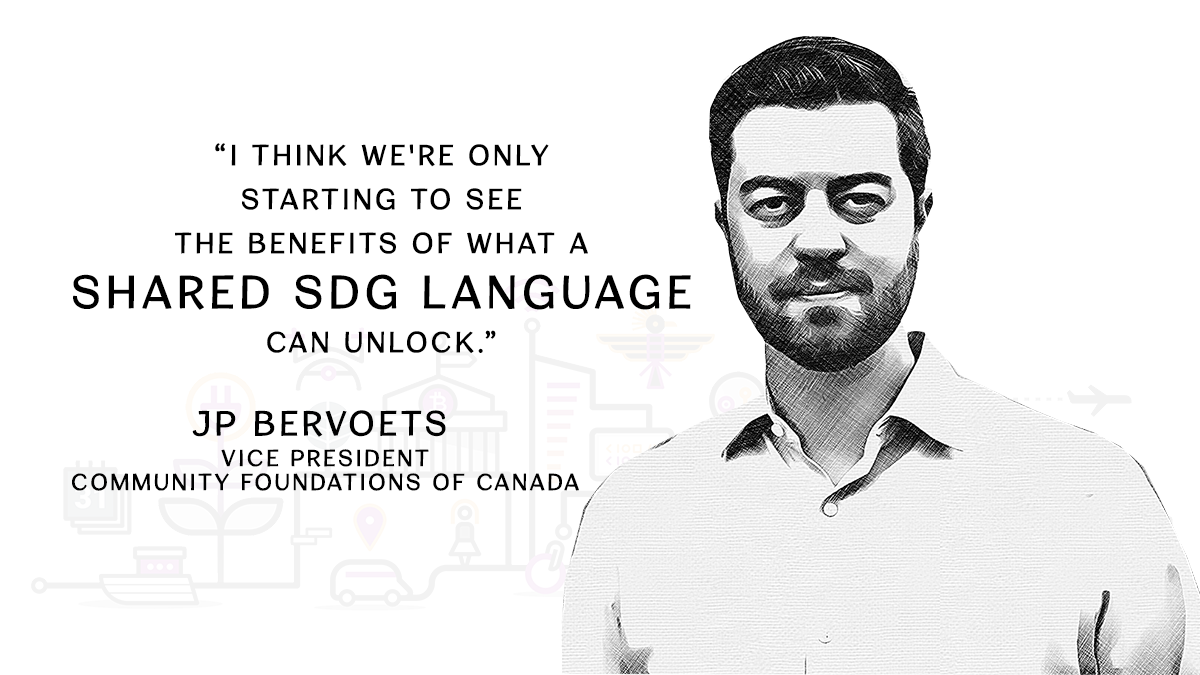
When Canada first agreed to the United Nations’ Sustainable Development Goals in 2015, it was easy to see the historic moment as a tipping point, says JP Bervoets, vice president at Community Foundations of Canada and a catalyst of Alliance 2030.
“But for those of us who were watching the 2030 Agenda for Sustainable Development in its earliest days,” he says, “it actually took us a little while to get up and running.”
Alliance 2030, a network that unites 2,500 organizations across Canada to achieve the SDGs by 2030, wasn’t launched until 2018.
“For the first time, we’re seeing the SDGs provide a common language that’s breaking down silos between places,” Bervoets says, continuing:
“I’m seeing a lot of incredible collaborations and partnerships emerging right now as a result of a framework like the SDGs existing. I think we’re only starting to see the benefits of what a shared language can unlock and we’re going to continue to see that over the next decade.”
7. Social change will experience a shift in power.
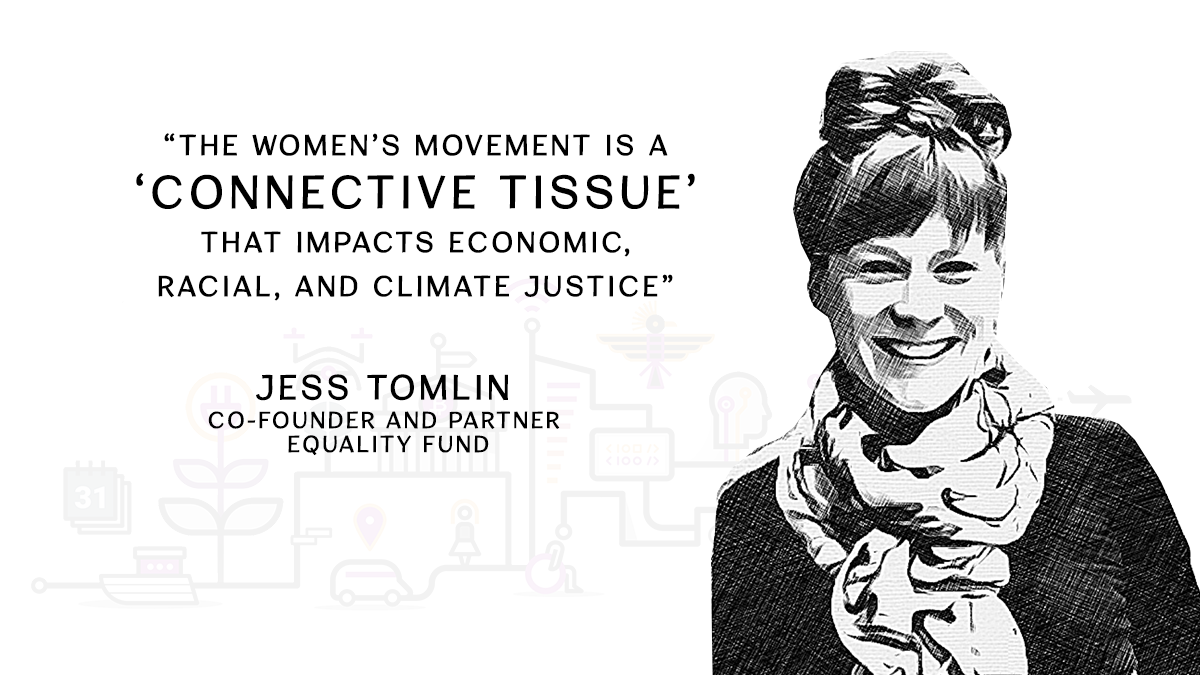
From Me Too to Black Lives Matter to worldwide climate marches, we’ve seen women leading movements on a massive scale in recent years. And in the 2020s, Jess Tomlin — co-founder and partner of the Equality Fund — says women’s impact on global issues will only grow.
“There is no scenario where gender equality is just seen in a vacuum,” Tomlin says, describing the women’s movement as a “connective tissue” that impacts economic, racial, and climate justice.
“We’re seeing a rise to power of those who have not had power in the past. In the next three to four decades, there will be a $30 trillion wealth transfer into the hands of women globally — and many of these are women who have been disenfranchised their entire lives,” Tomlin says.
Considering money is often power, that transfer of wealth will see decision-making placed into the hands of previously marginalized people — including those who see and feel first-hand the impacts of climate change, prejudice, and economic injustice.
8. We will decolonize social impact.
In the last decade, Indigenous people across Canada have celebrated a few hard-won victories — such as the launch of the Truth and Reconciliation Commission and the National Inquiry into Missing and Murdered Indigenous Women — and we’re now seeing those changes slowly trickle into the Canada’s legal, political, and social impact landscapes.
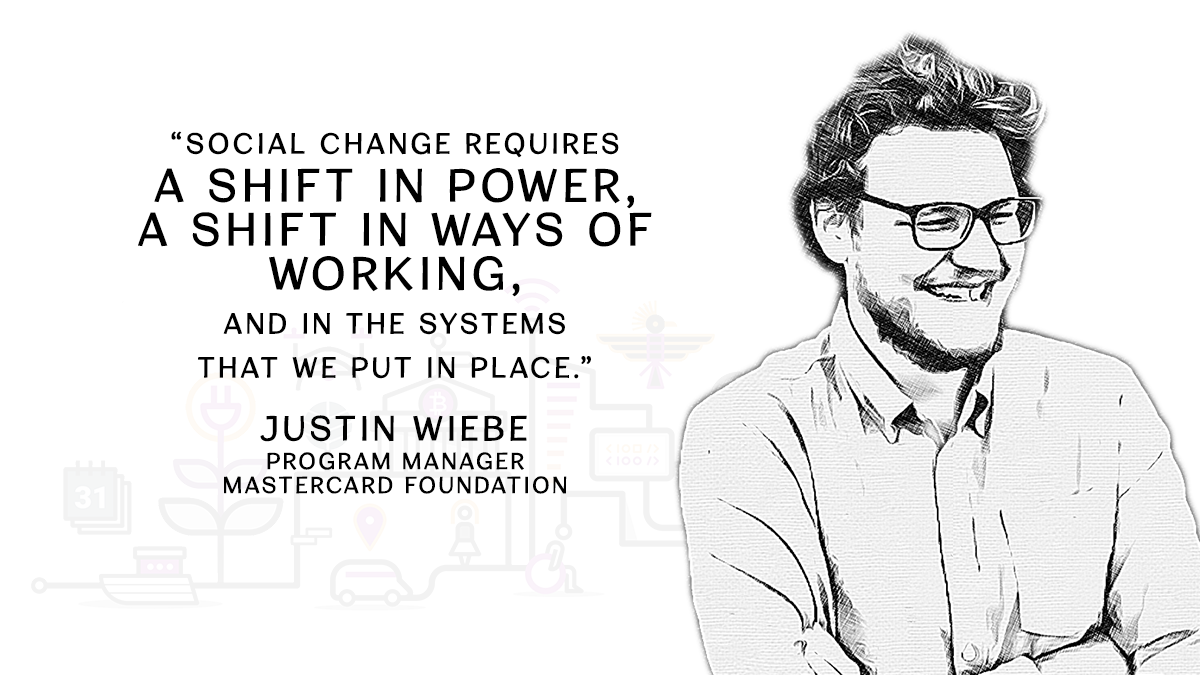
The next shift we need? “Organizations need to change as well,” says Justin Wiebe, program manager of Mastercard Foundations’ EleV.
“In impact work, if we focus on supporting communities and people who have been the furthest from opportunity, that will actually benefit most folks,” Wiebe says. “So if we make a change in the realities that Indigenous communities are experiencing, that will have a huge impact across the country and across communities. But it requires a shift in power, a shift in mindset, a shift in ways of working, and in the systems that we put in place.”
9. Digital transformation will ripple through the NGO world.
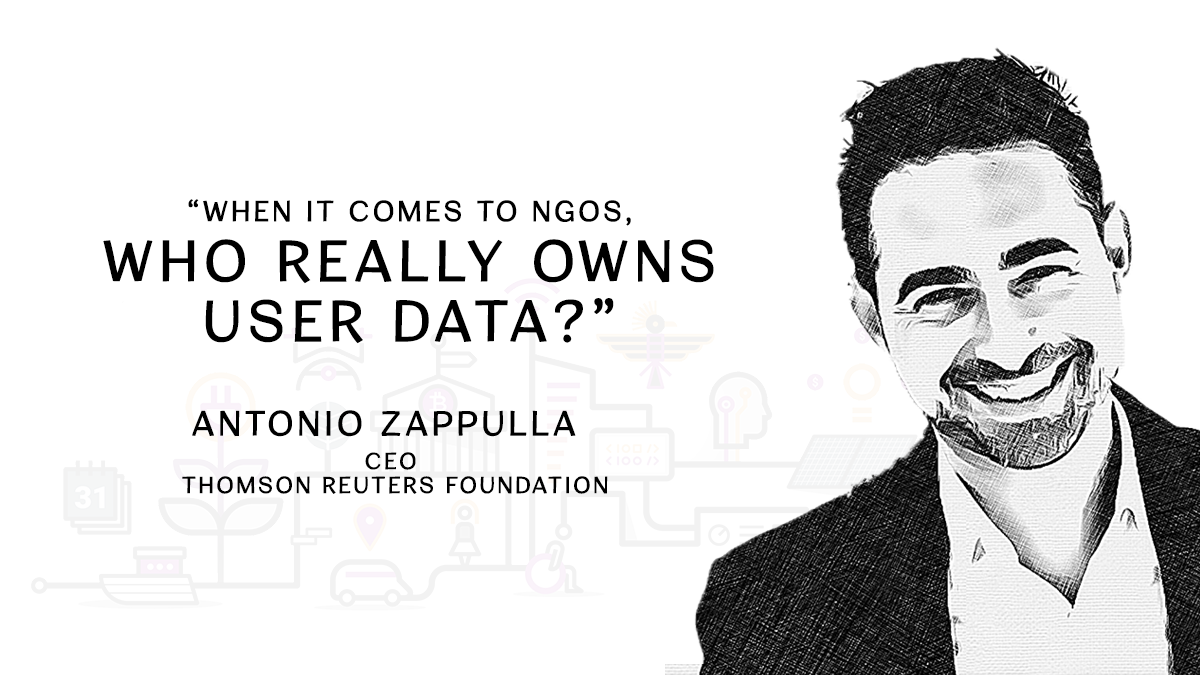
As tech continues to transform the world at an exponential rate, Antonio Zappulla — CEO of the Thomson Reuters Foundation — believes we’ll see two key conversations come up in the 2020s: one centred around data, and the other on trust.
Individuals are slowly becoming more aware of the sheer amount of data that they give up “willingly or unknowingly, but definitely for free,” Zappulla says. It’s a discussion we’re already having when it comes to corporations and platforms like Facebook, but Zappulla believes social mission organizations will soon need to be involved as well: “When it comes to NGOs, which often deal with very sensitive data, [we need to wonder] about the control that they have, who really owns that data, and how the data is actually used and sold.”
On top of that, the world of social impact will need to tackle trust in the digital age: the large majority of American, British, and Brazilian people worry about their ability to distinguish real news from fake, and 48 per cent of American Republicans believe the news media is the enemy of the people. “How do you operate in an environment such as this one? How can you report the truth when the actual truth no longer matters?” Zappulla says.
We don’t have answers today, but these questions — and their solutions — will definitely affect the world of social impact throughout the next decade.
10. Polarization will challenge us to be more inclusive.
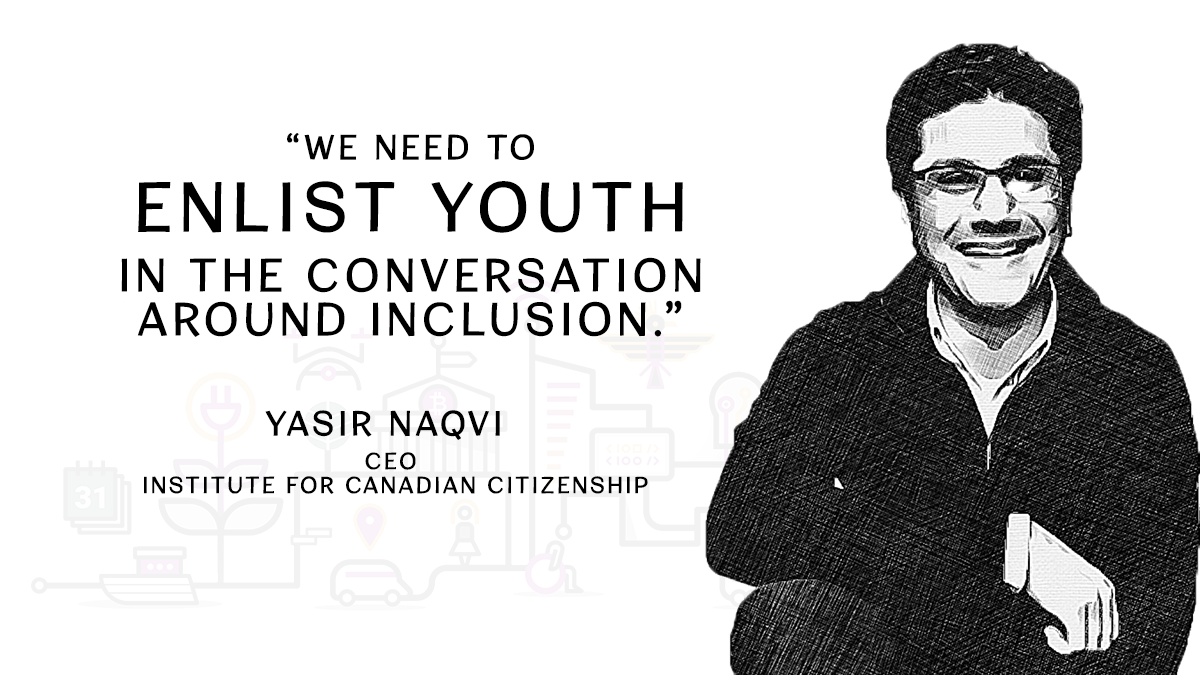
If we want to create social change at a time of disinformation and polarization, Institute for Canadian Citizenship CEO Yasir Naqvi says, we just need to get out of youth’s way.
“The way they think, the way they express ideas, their world knowledge, their understanding of world issues is very different to my own in my twenties,” Naqvi says. “They have so much information available to them, and they have the power to challenge that information. They look at issues at a global scale and they know that they have the capacity to move and mobilize and build coalition at a global scale.”
Looking at the Malala Yousafzais and Greta Thunbergs in the world, Naqvi says youth simply need to be empowered. “We need to enlist them in the conversation around inclusion and empower them to help build inclusive communities — because they already have the capacity to do that.”
Your job. Your mission. Your news.
With your support, the sector you're building gets the journalism it deserves, and you get a tax receipt.

Related Articles

Partnered Partnered content Les microcours ont pour but d’aider les Canadiens à acquérir des compétences professionnelles sans frais
Dans le cadre de l’ambition de RBC de doter les gens des aptitudes nécessaires pour réussir, nous aidons les Canadiens à s’adapter à l’évolution du marché du travail en leur offrant gratuitement des microcours et des outils de perfectionnement.

Partnered Partnered content Microcourses aim to help equip Canadians with job-ready skills at no cost
As part of RBC’s ambition to equip people with the skills for a thriving future, the financial institution is helping Canadians adapt to the changing job market with microcourses and upskilling tools at no cost.
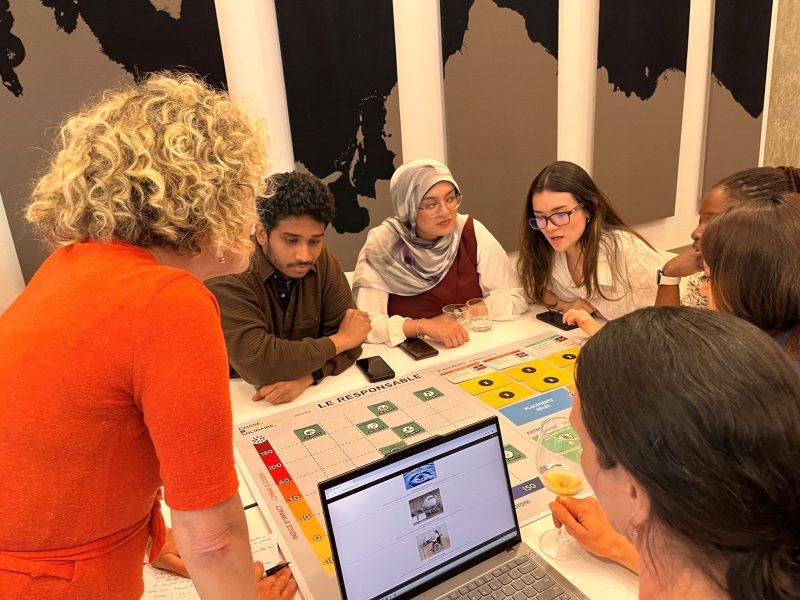
How I experimented with games to change the world
Responsible investment, carbon footprint, and DEI, as well as other serious issues, were all discussed and tried using games.
