The social impact sector has a mental health crisis looming — here’s what to do about it
Leaders in the world of social impact say workers are under immense stress during the pandemic, and it’s time to intervene
Why It Matters
The social impact sector is arguably more needed than ever, as Canadians recover from the devastating social and economic impacts of the pandemic. But years of deprioritizing mental wellness combined with a massive global crisis has led to a burned out, stressed workforce — ultimately hurting the communities it serves, too.
There’s a global mental health crisis looming post-pandemic. In many ways, it’s already begun: according to Health Canada, 11 million Canadians are experiencing “high levels of stress” because of COVID-19.
People working in social purpose organizations are serving those 11 million Canadians, but they’re also included in that statistic. And their stress is compounded by several factors — sector-wide layoffs and closures, rising demand for social services, and major challenges that come with doing it all remotely.
More and more young people are choosing purpose-oriented careers, driven by a desire to do good in the world. Meanwhile, people in their 20s are more likely to experience mental illness than any other age group, according to Youth Mental Health Canada. And the pandemic is only making it worse. Young people could be integral to rebuilding Canada post-pandemic, but their mental wellbeing would need to be supported first.
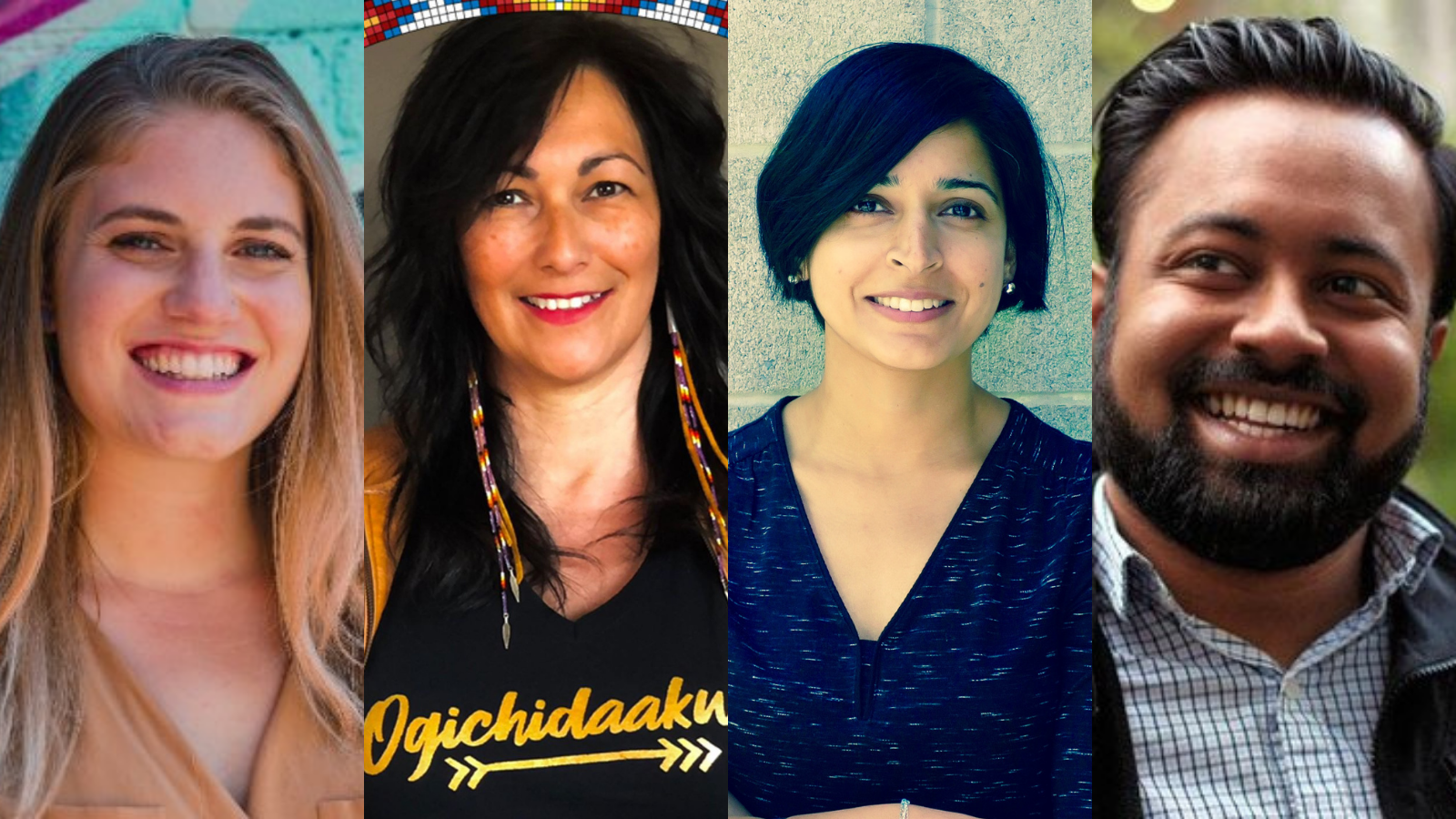
Future of Good hosted a #BuildBackBetter digital conversation with four leaders in the sector to understand the impacts of the crisis on social impact workers’ mental health, particularly younger workers. Their insights reveal that, yes, there are acute challenges — but there are also deeper, longstanding problems that have led the sector to this mental health crisis. Here are their directives:
Stop drawing a line between staff and beneficiaries
People working in social impact are hugely passionate about what they do, the speakers agreed, and for good reason. The stakes are high. Their work has the potential to vastly enhance — in some cases save — lives.
Those high stakes can cause organizations to prioritize the wellbeing of their beneficiaries, or the people they serve, over their staff’s wellbeing, they said. But doing so misses the interconnectedness of communities. While social impact organizations are “working towards improving our communities, our neighbours, families, young people, seniors and new Canadians, we’re all part of that community. So, taking care of our teams and our staff, our program operators is just as important as thinking about our beneficiaries,” said Ayon Shahed, director of strategic development at Choices for Youth.
Diane Roussin, project director for the Winnipeg Boldness Project, used the English equivalent of a phrase used in many Indigenous communities — ”all my relations” — to describe this interconnectedness the social impact world should embrace. She said returning to Indigenous worldviews like this one is essential for developing a mentally healthier social impact workforce throughout and after the pandemic. “We could really centre Indigenous knowledge systems in how we build back better,” she said. It’s about “looking at things from a holistic perspective.”
Trust grantees and support their mental wellbeing
The speakers said much of social impact workers’ stress comes from the funding process — especially during an unprecedented global crisis. Whereas grantmakers have traditionally placed restrictions on funding, that it should be spent on programming and not operations, for example, many have lifted those restrictions in response to the crisis and offered more flexible funding for organizations to do with what they see fit — alleviating the worry and anxiety of losing funding when priorities change, and even some of the workload associated with reporting back to funders.
To reduce the stress that comes with the uncertainty of the crisis, organizations need more “core funding, to respond to problems that we, as a non-profit sector, have never experienced — and the flexibility to plan, recognizing and knowing that core funding is coming in, to be able to determine with our staff and beneficiary input, how to respond,” said Bailey Greenspon, acting co-CEO of G(irls)20.
And the speakers agreed that there needs to be a rethink of where philanthropic dollars go post-pandemic, too. Organizational capacity is a long-overlooked funding category, and the pandemic is highlighting its importance for workers’ wellbeing, said Shahed. “Where does the funding go in terms of spending on staff wellness, on finances, on HR? Those things are important for organizations’ stability. Part of that is professional development for staff, wellbeing initiatives for staff, staff retreats that very few funders are excited to invest in.”
Establish and nurture trust within teams, too
Roussin posed an interesting question: “How do you operationalize trust?” She was talking about establishing workplace processes that allow team members the freedom to do their best work — something that can become easier or more difficult in the context of remote work, depending on how management handles work in the digital realm.
“We are all working during a global pandemic, not to mention everything else that’s going on, and that’s kind of crazy,” said Greenspon. “We need to take that trust and extend it to everyone we are working with, and trust that everyone is showing up as much as they can right now, encouraging people to take mental health days or afternoons or mornings when they need it.”
And beyond trust during a crisis, the speakers agreed that allowing more flexibility for experimentation and potential failure throughout social impact work would lower stress levels, too. Roussin said organizations should “practice in ways that are way more conducive to experimentation and risk, way more conducive to flexibility and choice — which is way more conducive to having emergence and iteration and responsiveness. And I don’t think too many of our systems or our workplaces are really set up to embrace those ways of working.”
Provide real, tangible support for workers
Much of the conversation revolved around deeper, and significant questions of how a day of social impact work is structured and carried out, but the speakers also emphasized a need for better day-to-day mental health support for those working in the sector — like more robust benefits and peer support programs, especially helpful during remote work.
“Before we get to crisis management, how do we look at earlier touch points?” asked Pam Sethi, a mental health innovator and former chief innovation officer at the Institute for Advancements in Mental Health. An example, she said, might be “managing stress and anxiety around parental leave… and thinking about emotional safety. In workplaces, it’s about thinking about those policies early on, when you train a new employee, before we get to a place where there is a crisis.”
Allow organizations to thrive, not just survive
The speakers told Future of Good that social purpose organizations and their workers are in “survival mode” right now, with many trying to balance rising demand for their services with economic conditions that threaten their organizations, and public health guidelines that limit their ability to serve their communities. This is understandable, they said, but unsustainable and hard on mental health — and it’s not all COVID-19’s fault. Some of it is built into social impact work.
“Many of us are now possibly experiencing this mode of being in survival mode versus being in thriving mode,” said Roussin. “When we think about that in our teams or our funding structures, are we building these things for thriving, or are we building them for just barely surviving?”
Shahed said this comes back to funding. “Maybe we do design into some ‘redundancy,’ maybe we do design in some ‘inefficiency,’ because we need that redundancy to be able to be well,” he said. “We’ve shifted so much of the sector towards corporatization and efficiency and impact measurement, but along the way, I wonder if there was somewhere we went too far and then risked the elements of taking care of folks.”
The consequence, Greenspon said, of not designing social impact work for mental wellbeing — for thriving — is a burned out, jaded workforce, ultimately hurting the communities they serve, too.
Your job. Your mission. Your news.
With your support, the sector you're building gets the journalism it deserves, and you get a tax receipt.

Related Articles

WEBINAR REPLAY: Canadian Black entrepreneurs should create the next Google / Les entrepreneurs noirs canadiens devraient créer le prochain Google
Une discussion passionnante sur le financement réel des entrepreneurs noirs/A fascinating discussion about real financing for Black entrepreneurs.
WEBINAR REPLAY: Budget 2024 and the Social Impact World
Spend an hour listening to policy wonks talk Budget 2024.
