Housing, mental health care are Canada’s largest unmet needs: new 211 dashboard
Data from call reports made to 211 services across the country show that mental health and housing remain the most urgent needs in Canada. Housing makes up 35 per cent of all callers’ unmet needs. 211 data shows that the agencies people are being referred to for their housing needs are either full or struggling with limited resources.
Why It Matters
Several regional and provincial 211 agencies have already compiled data dashboards based on caller data. However, this is the first national picture that brings together all Canadian 211 sources and can also support federal advocacy efforts, says United Way Centraide Canada.
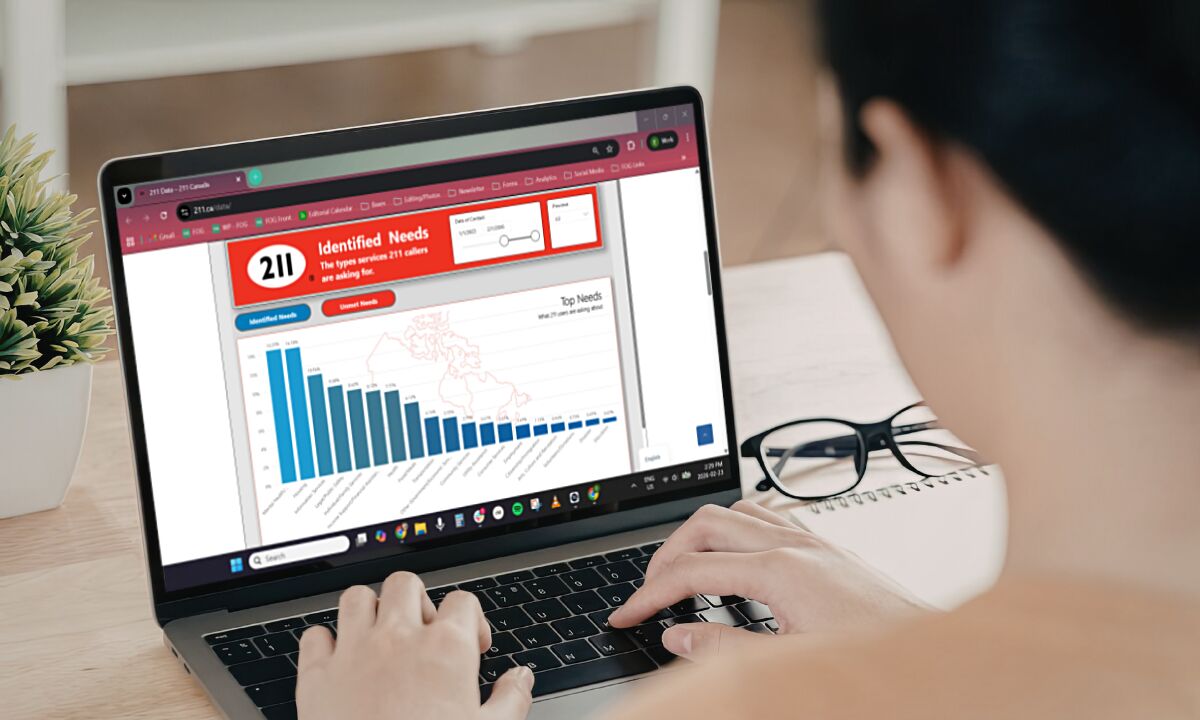
211’s new national dashboard provides a snapshot of all queries callers need support with, along with where 211 navigators can refer them. (211.ca/Illustration)
211 Canada’s new national dashboard shows that mental health and housing remain the two highest needs for callers asking for urgent crisis support.
The dashboard – which went public on Feb.11, which is National 211 Day – differentiates between identified and unmet needs.
Of all the calls where a user’s urgent need went unmet, housing made up 35 per cent.
The data also shows viewers why housing needs remain unmet: navigators found that when referring callers to housing or shelter services, agencies were already full, operating with waiting lists, or working with too few resources.
There is also an urban-rural divide in service provision, according to the data, said Dave Montague, director of digital services at Findhelp Information Services. It’s the home of 211 networks in the GTA’s central region, as well as New Brunswick, Manitoba and Newfoundland.
@futureofgood A brand new tool to track the needs of Canadians has launched. #nonprofitsoftiktok #canada #socialimpact ♬ original sound – Future of Good
In rural areas, “things like transportation and accessibility become the big reasons that people can’t access services, because they have to travel into the big town,” Montague said.
It was during the pandemic that regional and provincial 211 organizations began to collaborate on a national dataset, he added.
“In my mind, there is nothing more telling than the need for something like 211 than those pandemic [call] spikes that you would see in our data,” he said.
“Things like housing and income support just went through the roof.”
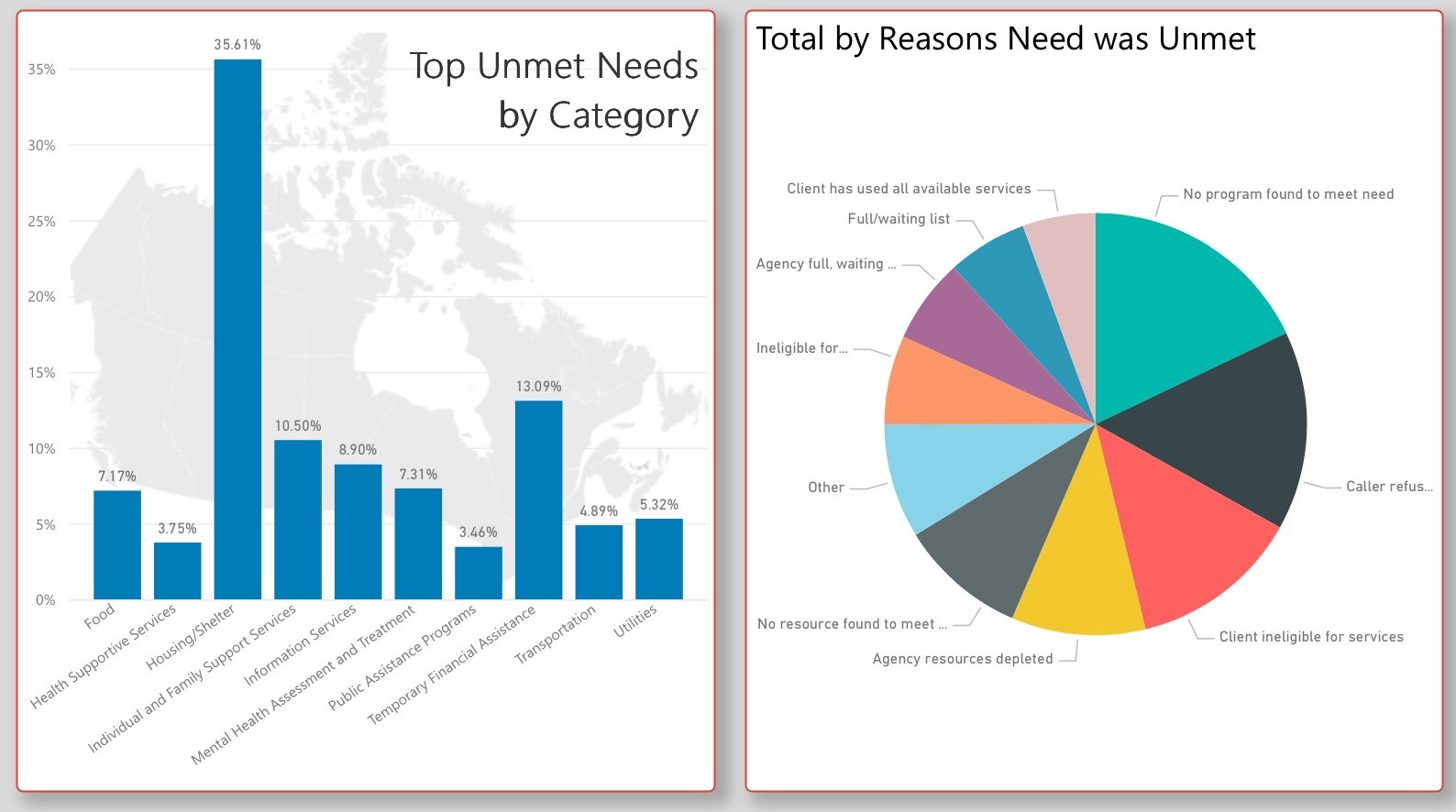
The dashboard shows the extent to which the service is not able to support an individual’s critical need (Image: 211 Canada/Supplied)
Rendering the data into a visual format – a dashboard of data visualizations and graphs with tags and filters – told a much more robust story of what Canadians were facing during the pandemic, Montague said.
New data about recent calls to 211 services shows that needs are still as urgent today as they were during the pandemic: 211 navigators are still referring most callers to food banks and temporary financial assistance services.
211 data demonstrates real-time, critical needs
The national dashboard aggregates information from regional and provincial 211 services, said Judy Shum, vice president of community impact and 211 at United Way Centraide Canada.
Each call received by 211 navigators across the country is classified using the same data fields through a system called iCarol, making it relatively simple to aggregate information into a centralized database, she added.
As information from regional 211 bodies continues to pour in, the national dashboard will be updated monthly.
211 services in Alberta, Montreal and Ontario already present anonymized call records in dashboards, but a national view would allow 211 and partner agencies to have conversations with government at all levels, especially federally, Shum said.
Dashboard users are also invited to make custom requests of the 211 dataset. Over the years, 211 Canada has provided data to the Homelessness Policy Directorate within Housing, Infrastructure and Communities Canada, as well as Toronto’s Wellesley Institute, Shum said. Last year, 211 also provided data for volunteers to analyze as part of the country’s first National Mental Health Datathon in Calgary.
Montague has observed that 211 receives several requests for unmet needs data, whether for a specific geographic area or for municipalities and non-profits to use as a supplementary dataset for their own work.
On the other hand, he recognizes that 211 services, like many non-profits, have capacity constraints.
“We don’t have data analysts sitting ready to go,” he said, adding that students and researchers regularly make custom requests of the data.
“There is a ton of data here. If we don’t have the capacity internally, I’d love to be able to put the data out there so that others with the capacity can do some work on it.”
Your job. Your mission. Your news.
With your support, the sector you're building gets the journalism it deserves, and you get a tax receipt.

Author

Related Articles
Quarter of all Canadian AI ventures could be categorized as ‘clean AI’: new research
At Toronto Climate Week, the global CleanAI Initiative shared research on the Canadian ecosystem, finding growing investment hubs in Vancouver, the GTA, and Kitchener-Waterloo.

Partnered Partnered content Non-profits are increasingly being targeted for cybercrime. Here’s how your organization can help protect itself
Being cybersecure doesn’t have to be daunting or expensive. A panel of experts discuss ways the non-profit and charitable sector can help protect itself in a constantly changing AI landscape.

Canadian astronaut, entrepreneur donates $15M to Concordia to launch new space school
Montreal’s Concordia University will be the home of the Mark Pathy Space Institute.
