Small Economy Works helping drive entrepreneurship in Indigenous communities
Success measured differently in hands-on program
Why It Matters
In communities with different standards, access to employment and education, it’s important to have programs that are hands-on, culturally relevant and flexible to better equip people for training and entrepreneurship.
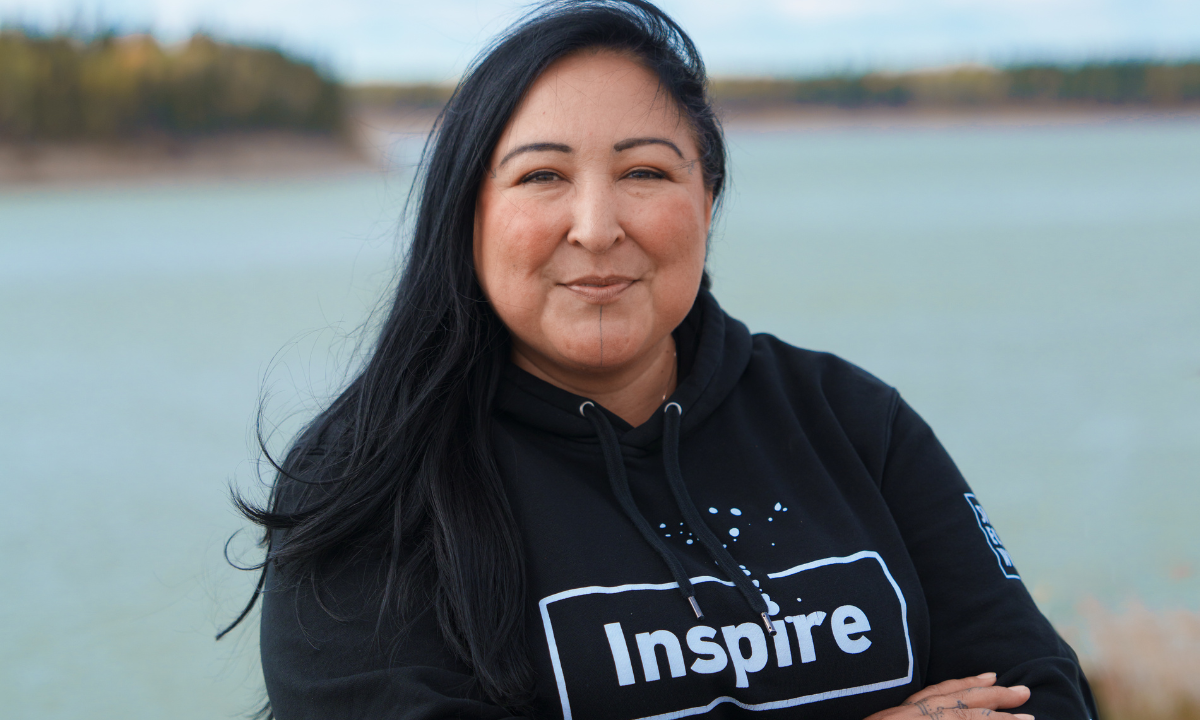
Cora Kavyaktok in Fort Providence, NWT. (Bronson Jacque/Supplied)
This story has been made possible thanks to the generous support of Small Economy Works. To see our ethics and editorial standards, visit here.
Cora Kavyaktok has an image in her mind that contextualizes the past, present and future of economics in Canada’s north within a colonial legacy.
“I have a photo burned into my mind of a white man giving a little Inuk kid a candy and feeding it to her right from his hand,” she said.
“But we can reach in and grab it ourselves.”
Kavyaktok is the Territory Lead for the Small Economy Works (SEW) Inspire Nunavut program. Its designed by and for Indigenous youth living in the North and has now expanded into NWT, Yukon, NWT, and Labrador, where each region has its own set of local instructors, subject matter experts and partners.
Kavyaktok, an artist, writer, and business owner currently living in Alberta, said SEW is unique in recognizing the challenges its participants face without penalizing them for their life circumstances.
“Our program truly is meeting participants where they are at with no judgement,” Kavyaktok said, “We don’t know what people are dealing with once they hang up from our workshops.”
Like many Inuit communities, she points out that her home community of Cambridge Bay, Nunavut, is just one generation off the land so laying a foundation of hope and building capacity is essential.
“My mom’s generation went from igloos to iPads,” she said. “That is not that long ago. Think of a whole culture having to make that big of an adjustment without being given any of the tools.”
“Our key metric is hope,” Founder and CEO Ajmal Sataar said. “The current economic and entrepreneurship systems are not about helping communities; they are about enriching individuals.”
Sataar, the son of Afghan immigrants, grew up in Ottawa’s inner city, where he often felt he didn’t belong in the conventional pathways to achievement. This sense of disconnection sparked his interest in social enterprise, where he realized that business expertise could be used to support ventures aimed at addressing social and environmental challenges.
“I had an opportunity to connect with Indigenous youth in Nunavut and saw parallels in our experience, where the current system is stacked against economically disadvantaged people,” he said, “We felt an even better way would be to think about business and finance from an Indigenous perspective and co-create holistic programming rooted in community values.”
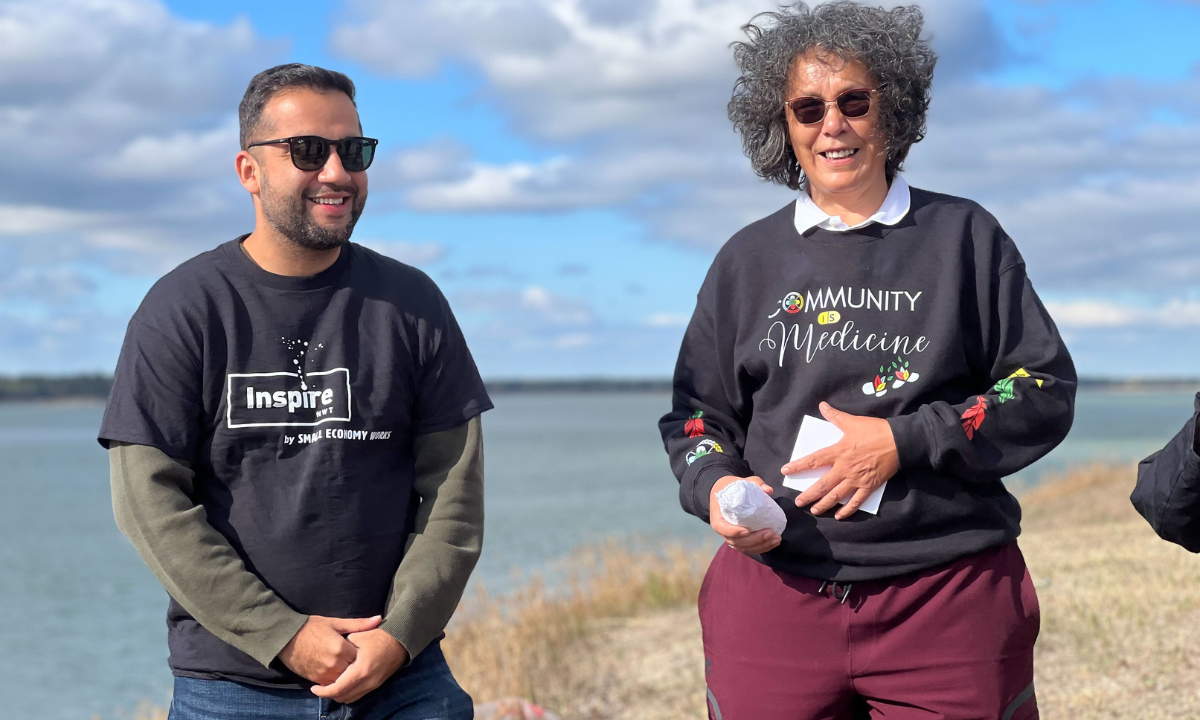
Ajmal Sataar and Lois Philipp in Fort Providence, NWT. (Bronson Jacque/Supplied)
The Inspire program is presented virtually for up to 15 people over 12 weeks, participants are given training allowances, mental health and cultural support and even childcare. Each cohort is different with youth themselves creating and delivering content.
Over the last four years, 300 participants—85 per cent of them Indigenous—from 43 communities have engaged with the Inspire program, which has a 70 per cent graduation rate.
Sataar said that compared to other entrepreneurship programs geared toward youth, SEW stands out for its focus on hyper-local content, which incorporates storytelling, local experts, and the geographic realities of the region it serves.
The program’s core values include reciprocity, community, and a holistic worldview grounded in the Indigenous perspective.
Anne-Marie Byzuk started with SEW as a participant in the February 2022 cohort. She worked two youth and support services jobs when she saw an Inspire ad in Yellowknife.
“I just didn’t feel supported in my positions,” she said. “But with Inspire NWT, the instructors, students, the majority of them of Indigenous, they have the same values and passions.”
Her project focussed on aftercare for Indigenous people struggling with mental health and addictions who have to travel south for treatment because there are no rehabilitation centres in the territory.
“My idea is to have a housing unit that takes young people coming back from treatment for care,” she said, “instead of introducing them to the same people, places, and things that usually end up leading back into addictions.”
Sataar said Byzuk’s project isn’t typical of most entrepreneurial program ventures.
“Her idea takes on a major social issue in her community,” he said, “It is so much more than just starting a business that might help her individual situation. It is about impacting her generation and generations to come.”
Byzuk was hired by SEW shortly after she finished her training and applied what she learned as a leader, especially with peer support and by incorporating traditional culture.
“There’s a piece of culture embedded into it that just strengthens your identity a little bit longer; it builds confidence because you are surrounded by peers,” she said, “That brought something that’s indescribable when it comes to this program.”
Both women agree that success is measured differently with Small Economy Works, which has made the most significant impact and a willingness to be flexible.
“We are always fighting this colonial mindset,” echoed Kavyaktok. “For some people, the fact that they have woken up three days out of the week and attended our workshop is a success for them.”
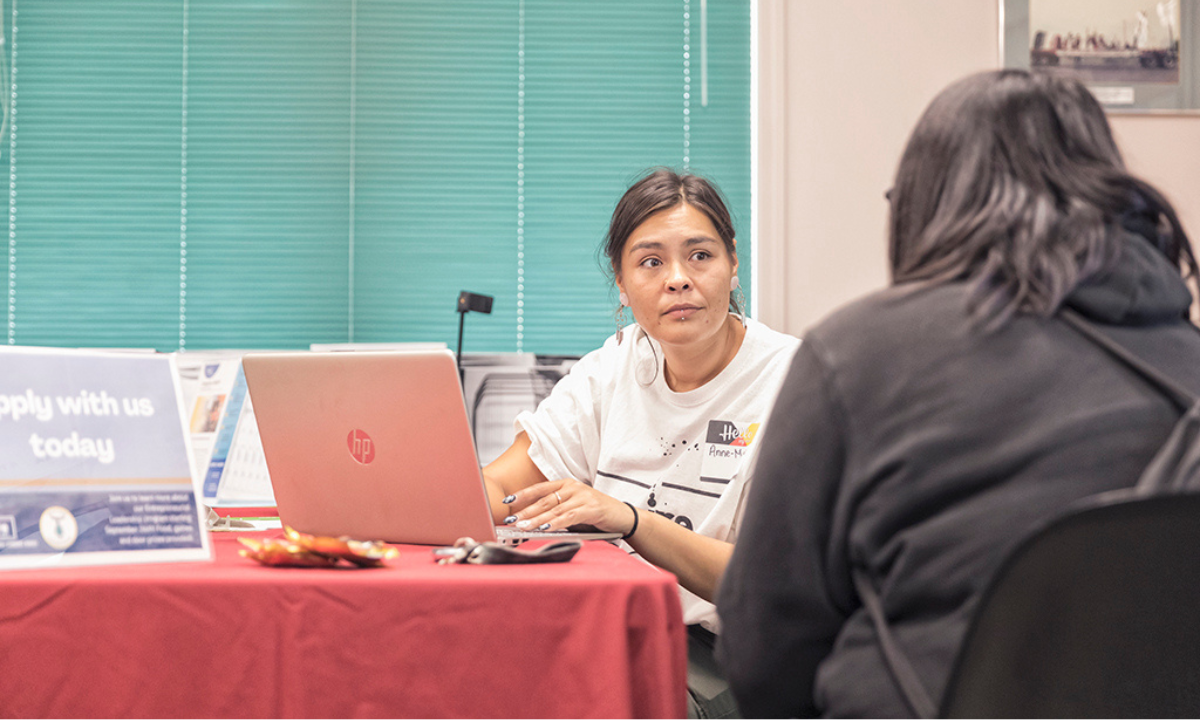
Anne-Marie Byzuk registers new participants for Inspire NWT. (Thorsten Gohl, Supplied)
Nikita Sawrenko-Bailey from the Kaska Denea Nation is now SEW’s communications coordinator, but in 2023, she said she was intrigued by a posting for the Winter 2023 cohort of Inspire Yukon.
“They hired me on as an intern and then hired me as a part-time staff,” she said. “When I went into it as a participant, I didn’t know what to expect.”
She thought launching a business would be her greatest success, but now she sees it as having an open mind, leadership skills, and paid training, inspiring hope and a sense of possibility in others, said Sawrenko-Bailey, adding that being able to earn a weekly allowance was important.
She said committing to the program two hours daily, three times a week, created a good balance with the rest of her life.
“It was enough to get to know the other participants.” she said, “It was great to see people from all the communities, and now I have connections everywhere.”
Sataar said hiring former participants to staff positions within the organizations was always part of the plan, adding that there is true collaboration between youth and the program itself.
“Who better than the youth themselves to lead these programs?” he said. “They know their regions best and what would benefit their communities.”
Local Partnerships key to program success
Rachael Borlase is the Director of Organizational Development and Operations for SEW, joining Sataar four years ago during the height of the COVID-19 pandemic.
She grew up in Labrador and was always passionate about youth and having their voices heard. After a career working internationally as a journalist and then eventually in international development, she saw a chance to reconnect with the North in an organization that was trying to forge new ways of working with Indigenous communities.
“I was at a transition in my career, like so many people in COVID,” she said, “All of a sudden, like everyone, we couldn’t go anywhere anymore, and I was reflecting on where I could find new meaning in my work I was impressed by how community-led SEW’s work was trying to be.
She credits the program’s success to founder and CEO Ajmal Sataar’s willingness to experiment with a new training method.
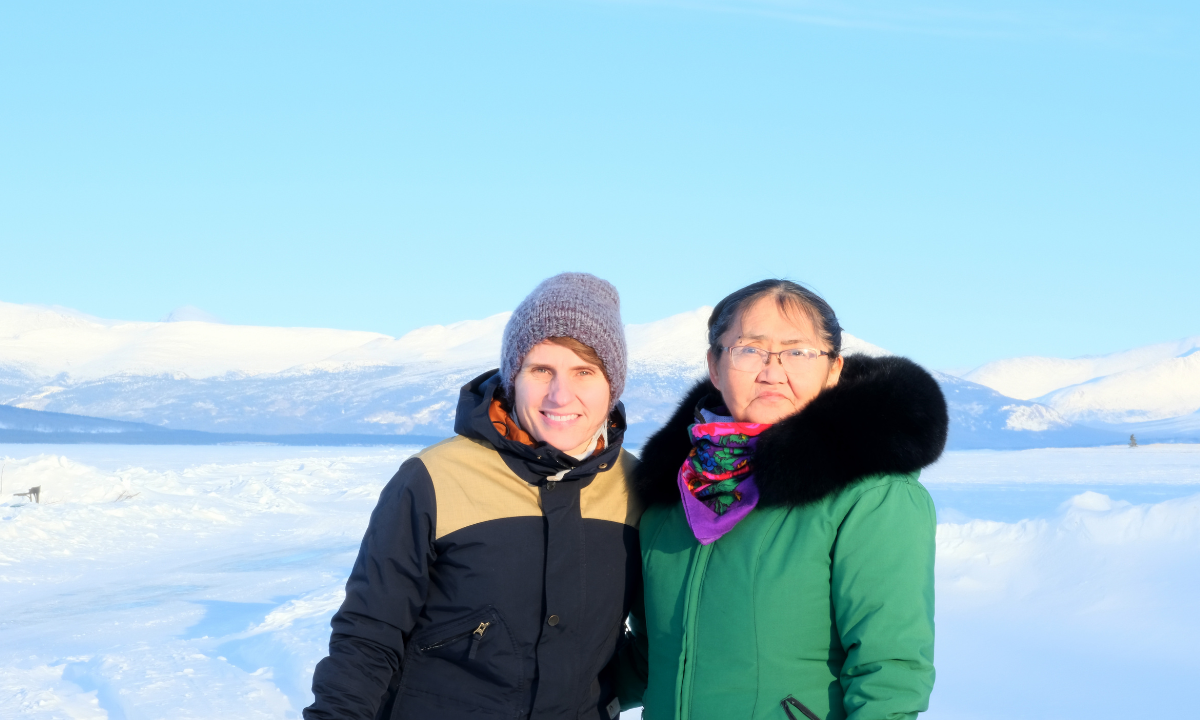
Rachael Borlase and Alyce Johnson, Senior Adviser Yukon on Kluane Lake. (Diyet van Lieshout/Supplied)
“We are actually trying to do things differently,” she said, “Trying to put our money where our mouth is in a way that is meaningful, but it’s really up to the communities and youth we serve to determine if we’re being successful in that”
Borlase said local partnerships in northern communities were essential to launching the program and creating local champions for Small Economy Works.
Those champions include Senior Advisor Lois Philipp, who worked in the school system for 21 years, most recently as a principal.
She has devoted her life to improving the wellbeing of youth in the Deh Cho First Nations region. She founded Northern Loco, a 100 per cent Indigenous-owned company with a mission to create sustainable futures for northern communities.
The first NWT Small Economy Works cohort was held in her home community of Fort Providence, NWT.
“I think as Indigenous people, it is a different type of entrepreneurial spirit,” she said, “It’s more of a collective moving forward rather than the individual.”
Philipp said it’s about providing a space for youth to look at their communities from “an asset lens rather than a deficit lens. “
“Every young person growing up in a small community says, ‘Well, we don’t have a pool, we don’t have this or that,” she said, “So, what do we have? We have access to incredible opportunities that are land-based.”
She said the land is a living classroom and the key to teaching youth how to care for it, especially in the Territories where the land will never be owned.
“Collectively, we’ve been entrusted to maintain it for generations to come, to take care of it,” she said, “As Indigenous people, everything around us is a part of us.”
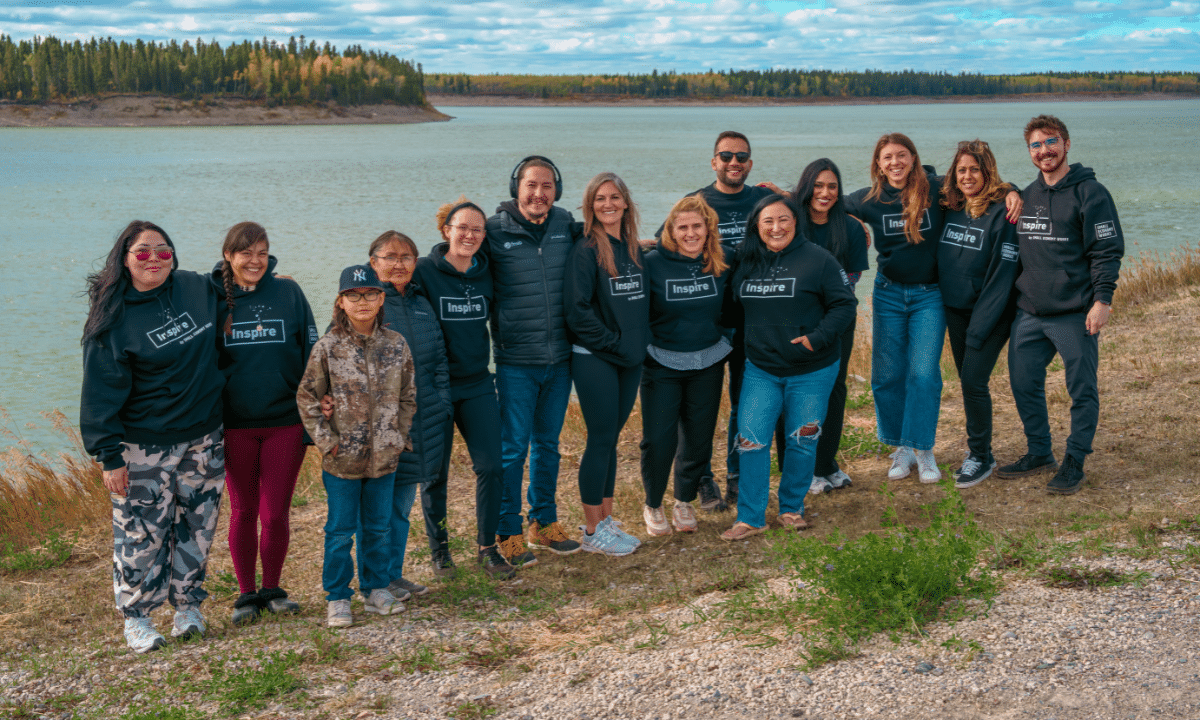
Small Economy Works staff gather in Fort Providence, NWT. (Bronson Jacque/Supplied)
Sataar said real change is coming from Small Economy Works, starting with the Inspire programs and a new program called Initiate, which takes graduates through to real-life businesses and employment.
The next step builds on Initiate’s successes and is geared toward creating community impact. It uses innovations like gamification, where participants can gather points.
“It might be a new business, but it also could be a new job, a new project,” he said, “Real change happens when something affects entire communities and not just one individual.”
Kavyaktok often wondered why the Inuit were not the owners of the businesses that were popping up in their territory, especially when economic opportunities were limited.
“Why are we waiting for someone to hand out these jobs to us when we can just go in and do it ourselves?” she said, adding the ultimate success for her is to one day walk into a business owned by a Small Economy Works Inspire alumni.
“I cannot wait for the day to be back in Nunavut and be walking down the street and be like, ‘OMG, that’s Jonny’s place, and Jonny was talking about that during our program.’” she said.
“I can’t wait to see that happen.”
Ultimately, Sataar said the Small Economy Works model is about using entrepreneurship and co-creation to transform youth and their communities while remaining true to traditional methods.
“Entrepreneurship is the ‘pen’ that allows youth to write their own stories and transform their communities,” he said, “They are ready to rewrite the script,”
“Why don’t we just try it?”
Your job. Your mission. Your news.
With your support, the sector you're building gets the journalism it deserves, and you get a tax receipt.

Related Articles
‘The need is endless’: Food insecurity highest in Canada’s Black, Arab and Indigenous communities
Food insecurity gaps aren’t closing, so community organizations across Canada are trying new ways to help beyond just providing food.
Controversial Palestine exhibit opens at Canadian Museum for Human Rights
The exhibit, called Palestine Uprooted: Nakba Past and Present, drew criticism even before it opened at the national museum in Winnipeg.
Vancouver tests new app to map accessibility in parks and trails
The pilot program allows app users to identify barriers in city parks to help make outdoor spaces more accessible and inclusive for everyone.
