The clampdown is coming
It’s provincial budget time and it’s… not great. It appears the clampdown is coming.
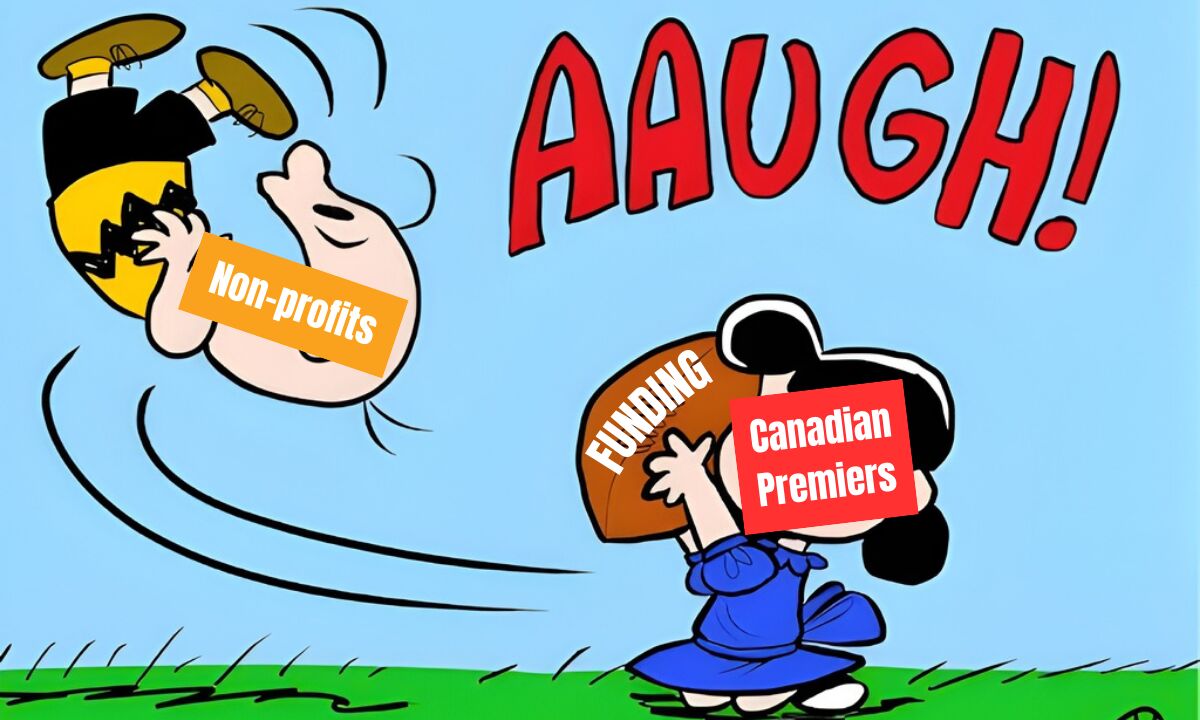
While the federal budget, which passed last week, signalled a shift for some urgent spending, including housing, mental health and immigration, provincial governments are suddenly Lucy Van Pelt’s football to Charlie Brown’s kickoff attempt.
In Nova Scotia, 7,500 non-profits (!) are suddenly scrambling because the proposed provincial budget from the governing Tories includes $130 million in clawbacks. This isn’t just spending cuts – this is money that was promised over multiple years that has disappeared.
On the West Coast, B.C. housing groups and their financers are flabbergasted because the governing NDP encouraged them to spend money to get affordable housing projects shovel-ready so that they could move quickly when provincial money flowed. Except the money they dangled is not in the B.C. budget. Millions down the drain.
And in Alberta’s budget last week … well, no one knows what the heck United Conservative Party leader Danielle Smith is doing as she flip-flops like a landed fish on whether immigrants are good or bad for the province. (Pro tip: By every data measure, they’re good.) Likely outcome: Spending cuts on immigration and refugee programs after the weird referendum in October. This budget already includes a 10 per cent spending reduction on arts, culture, and women-centred support programs, which are key for the integration of newcomers into Canadian culture and a whole other newsletter column.
I anticipate this will continue across the country as provincial budgets are tabled this spring. Manitoba, Quebec and Saskatchewan generally release their budgets in March, and Nunavut and NWT are overdue for their usual February releases.
Look, I get that there’s only one taxpayer, wages haven’t kept up with inflation over the past two years, every province is already in debt, and grocery prices are bonkers. I’m not advocating a spending bonanza.
But a decrease in dollars for preventive and outreach programs means a corresponding increase in emergency programs to alleviate suffering, generally at a much higher cost.
It’s like buying dollar store mittens before hiking the Trans Canada Trail in December – a great way to get frostbite.
So, what do we do? It’s time to make noise. Now is the time to call your provincial representatives – the minister in charge of your sector, the MLA or MPP for your area, the premier – and tell them why cutting your funding will cost them money.
And I mean a phone call, not an email. Emails are easily ignored.
Your clients need help, and your organization deserves funding.
(Photo illustration: My apologies to Charles M. Schultz)
Your job. Your mission. Your news.
With your support, the sector you're building gets the journalism it deserves, and you get a tax receipt.

Author

Related Articles

Dolly Parton’s greatest, most remarkable gift
Clever, kind and witty, she used her fame and her fortune to bless everyone else.