StatsCan: Food insecurity more widespread following COVID-19 pandemic
A new Statistics Canada report found more demographics of Canadians are experiencing food insecurity after the COVID-19 pandemic.
Why It Matters
The impact of the pandemic has been far-reaching. Concrete data about the effects helps policymakers create strategies that support all Canadians struggling to afford food.
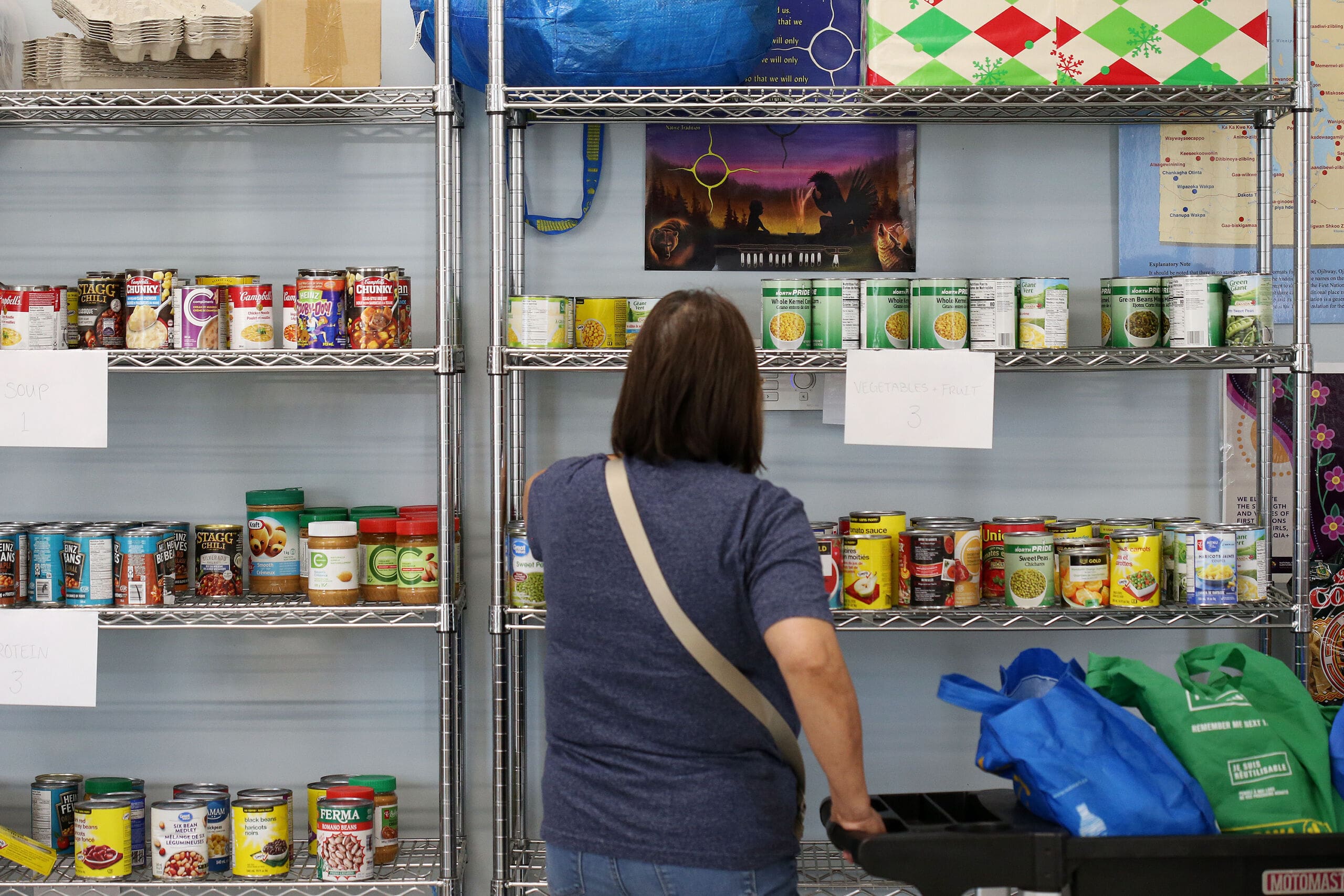
Clients collect food items at a bi-weekly foodbank hosted by Harvest Manitoba, which distrubutes food to more than 380 community organizations, in Winnipeg on May 29, 2025. Photo: Shannon VanRaes
Food insecurity increased significantly across Canada following the COVID-19 pandemic, spreading beyond low-income households and extending to higher-earning Canadians, a new Statistics Canada report found.
In Canada’s ten provinces, food insecurity climbed from 16.8 per cent in 2019 to 22.9 per cent in 2023, according to the report.
Statistics Canada defines food insecurity as “inadequate or insecure access to food because of financial constraints.”
The likelihood of food insecurity is highest for low-income households, but it’s becoming more prevalent among moderate- and higher-income families, showing that having a full-time job no longer guarantees food security.
By 2023, households earning half or more of their income from a job were just as likely to experience food insecurity as those earning less from work.
“This suggests an increased vulnerability among households in the workforce,” the report reads, going on to say it reflects a broader shift in affordability in Canada.
Earlier this month, Future of Good reported on the increasing number of employed Canadians who use food banks.
@futureofgood More employed-Canadians are using food banks. #foodbanks #groceries #inflation ♬ original sound – Future of Good
In Manitoba, 31 per cent of food bank users are employed, and in B.C., more than 23 per cent of users had jobs.
“It is the normalization of this situation that must be the gravest of our concerns,” Dan Huang-Taylor, the executive director of Food Banks BC, said when the findings were released.
Food prices spiked in November, according to Statistics Canada, in total rising 27 per cent between 2020 and 2025, outpacing the rate of inflation.
Canada’s Grocery Code of Conduct will begin Jan. 1 2026, which aims to create transparency around costs between grocery retailers and their suppliers.
Experts hope the code will eventually benefit consumers and help reduce food insecurity.
Your job. Your mission. Your news.
With your support, the sector you're building gets the journalism it deserves, and you get a tax receipt.

Author

Related Articles

‘Canada must not go down that road’: More than 250 organizations demand investigation into CBSA after student protesters issued exclusion orders
The students were protesting after being denied post-graduation work permits they say they were eligible for when they enrolled at Portage College.

Partnered Partnered content How construction contracts became the blueprint for social change in Manitoba
Manitoba is a leader in social procurement, with decades of partnerships among government, businesses and social enterprises that have shaped a model other communities can learn from.

‘Fiercely dedicated’: Prominent Winnipeg labour advocate Gord Delbridge dies
Former CUPE 500 President leaves behind a legacy of years advocating for city workers and opposing the privatization of municipal services.
