Save the Children to withdraw from United Nations emergency funding pool
Save the Children International says they hope the move will mean more funding will flow directly to local organizations and that other INGOs are likely to follow suit.
Why It Matters
By removing themselves from the funding pool, Save the Children hopes to influence where the remaining money goes - hopefully, they say, to local aid organizations. It’s rare to see an organization withdraw from funding - will others do the same?
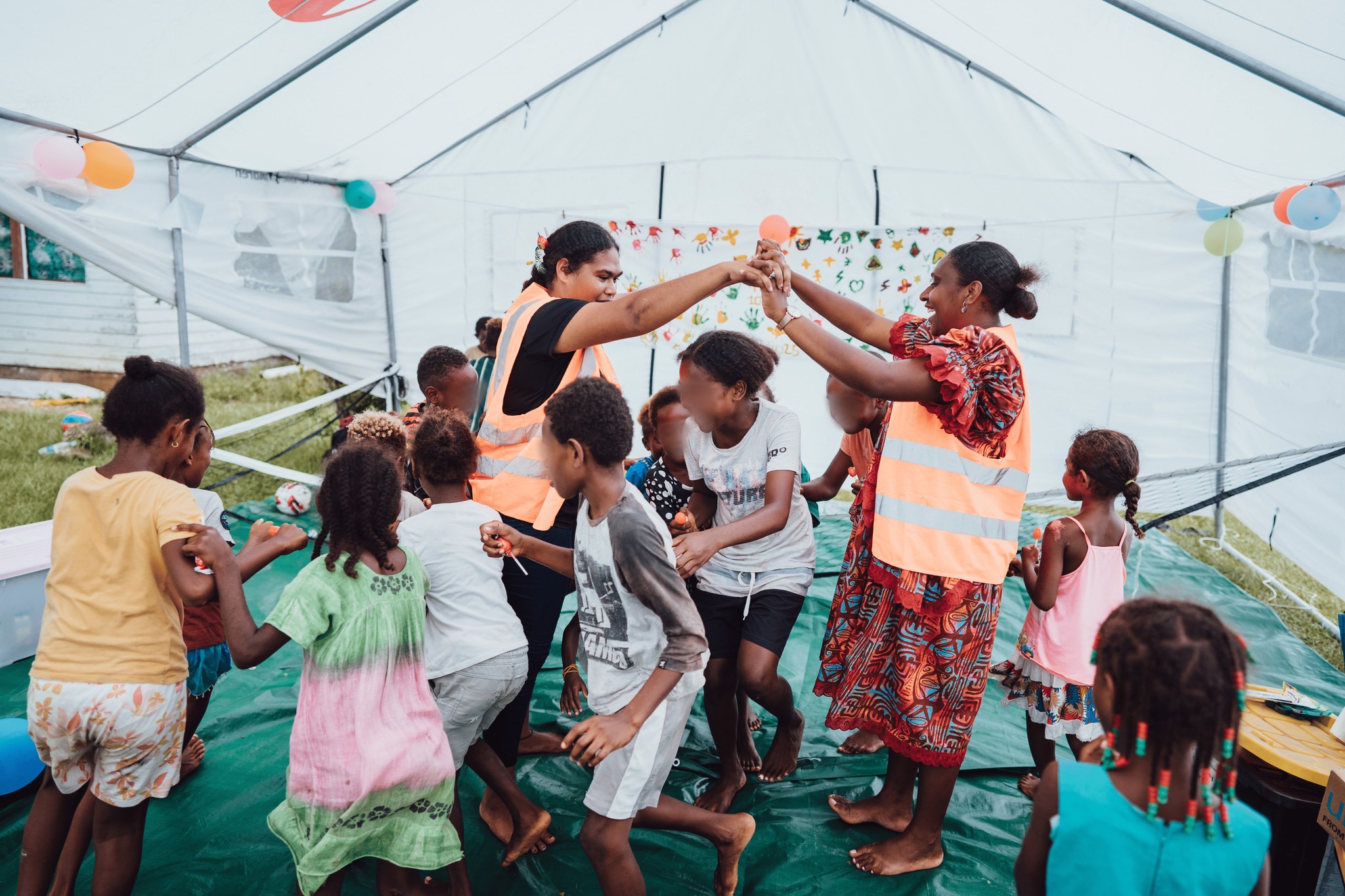
After earthquakes destroyed several classrooms in Vanuatu earlier this year, Save the Children International stepped in to rebuild schools and provide psychosocial support to children (Save the Children International / Facebook)
Save the Children International says it will no longer apply for or receive funding from a United Nations program in hopes that money will instead be funnelled to local organizations.
The multinational non-profit, which has a chapter in Canada, says it will withdraw from the UN’s Office for the Coordination of Humanitarian Affairs (UN-OCHA) Country-based Pooled Funds (CBPFs) by the end of 2027.
@futureofgood Save the Children hopes other INGO’s will follow their move. #humanitarianaid #SavetheChildren #UnitedNations #Funding #greenscreen ♬ original sound – Future of Good
“We recognise this decision carries risk and are committed to ensuring a safe and ethical transition,” said Abdurahman Sharif, senior humanitarian director at Save the Children International.
“To achieve the greatest impact, we hope other INGOs will join us.”
Local humanitarian aid organizations have “trusted relationships and culturally embedded responses that international [organizations] often cannot replicate,” Save the Children International wrote in an advocacy brief.
Local organizations are also likely to deliver aid in a more cost-effective way than international NGOs and UN agencies, they added.
Despite this, local and national NGOs continue to receive only a small percentage of global humanitarian aid financing.
According to the OCHA’s Financial Tracking Service, in 2024, local and national actors received only eight per cent of humanitarian aid funding, while INGOs received 18 per cent. The remainder went to multilateral agencies, including UN agencies.
By withdrawing from the group of recipients funded by CBPFs, Save the Children International hopes to see more money directed towards local organizations.
Crucially, they said, other international NGOs need to follow suit.
“Our withdrawal from CBPFs will be meaningless if other international NGOs simply fill the gap we leave behind,” Sharif wrote.
“Are we prepared to accept a redefinition of our role in the service of a more locally-led humanitarian system?”
In a follow-up interview with Future of Good, Sharif confirmed that while he cannot share specific organization names, other INGOs are “making serious considerations” to also withdraw themselves from CBPFs.
Withdrawal will reduce “unfair competition” for aid financing
CBPFs allow UN-OCHA to consolidate donations and government funding into a centralized pool. The funds are described as “unearmarked” and can thus be directed towards “high-priority projects” and emergency situations.
Today, UN-OCHA operates several country-level funds in places like Afghanistan, the Democratic Republic of the Congo, Palestine, and Ukraine. In 2024, UN-OCHA also announced three new Regional Humanitarian Pooled Funds in Latin America and the Caribbean, Eastern and Southern Africa, and Asia and the Pacific.
There are two types of funding allocations within CBPFs, Sharif said.
Standard allocations typically take place at the beginning of each year, and are allocated by UN-OCHA based on project proposals and applications made by different organizations.
Reserve allocations, on the other hand, take place when specific agencies are approached and funded by UN-OCHA to fulfil a particular mandate or respond to an emergency situation.
The United Nations also has a Central Emergency Response Fund, which is managed centrally by the OCHA, and generally is allocated directly to UN agencies in times of crisis, Sharif said.
The UN-OCHA has developed a CBPF Data Hub, displaying aggregated data about donors and funded partners and projects. The visualizations show that the Netherlands gave the largest contribution to the pools, and that funding was split roughly equally between standard and reserve allocations.
The Hub also shows that between 2021 and 2024, there has been a 22.2 per cent increase in funding given to local and national partners, and a 73.4 per cent decrease in funding allocated to UN agencies. Funding flowing from CBPFs to INGOs has remained stagnant.
However, according to Save the Children International, allocations are still “perpetuating a system dominated by UN agencies and INGOs.”
Sharif pointed out that commitments had been made previously to increase the allocation of funding that flows directly to local and national aid organizations.
“There has been progress, but the progress has not moved fast enough,” he said.
One of the most important commitments that Save the Children International has made is to “establish a principle of non-competition for funding with local actors,” Sharif said.
“If there is any funding that is accessible to local actors, we should not be competing with them, because it will be an unfair competition in a sense,” he added.
Beyond the withdrawal of INGOs from these UN funding allocations, Save the Children International has also been advocating for widespread reform of the CBPFs.
“It is very heavy in terms of governance, bureaucratics and requirements for local and national actors to access it,” Sharif said.
“Those requirements should be eased.”
Positive responses from humanitarian aid ecosystem
Save the Children International plans to finish all ongoing projects that have been funded through CBPFs, with the goal of withdrawing entirely from the pool by the end of 2027.
Sharif – who said the sector needs to be “bold and transformational” – added that the organization has received positive responses to their announcement from UN-OCHA and several UN heads.
Future of Good reached out to two UN-OCHA spokespeople, but did not hear back before publication.
Save the Children International also acknowledged that Tom Fletcher, appointed Emergency Relief Coordinator at OCHA, would like to shift the agency to a place where 70 per cent of all pooled funding is going directly to local and national players.
However, Save the Children would like to see “100 per cent of CBPF allocations [flowing] directly to local organizations.”
Sharif said that INGOs can intervene in exceptional circumstances or as an actor of last resort, where there is no local or national organization able to meet urgent needs in a crisis.
“The children and communities we serve deserve a humanitarian system that puts their needs first, not the institutional interests of those claiming to help them,” the charity wrote.
Your job. Your mission. Your news.
With your support, the sector you're building gets the journalism it deserves, and you get a tax receipt.

Author

Related Articles
Trailblazing Iraqi-Canadian activist Yanar Mohammed killed outside Baghdad home
The feminist leader’s death is a devastating loss for women’s rights movements in Iraq and around the world, say advocates.
Humanitarian aid groups granted interim injunction to continue working in Gaza
Aid organizations from around the world came together to launch a formal petition to the Israeli High Court earlier this week.
