Training citizens to watch the watchmen: Documenters Canada brings transparency to your neighbourhood public meetings
The idea is being embraced and spreading to other Canadian cities
Why It Matters
With the decline of local journalism and mainstream media resources, it becomes difficult to truly understand what happened at local public meetings. This is one solution to help solve that problem.
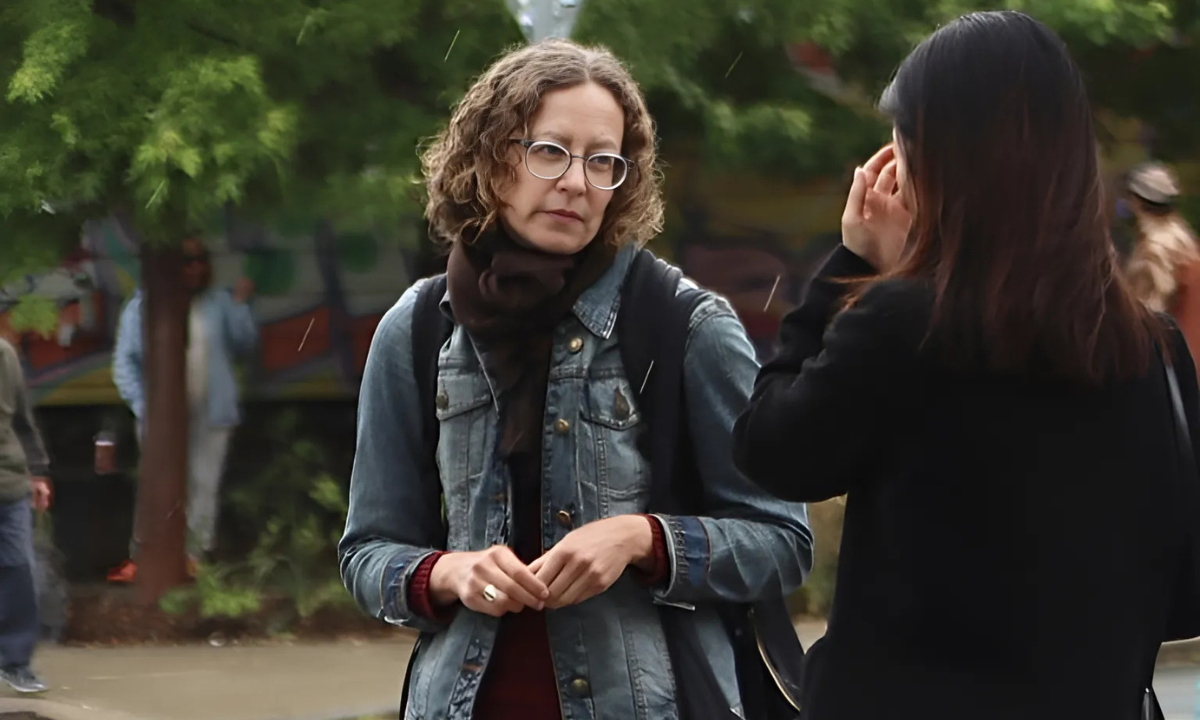
Associate Professor Dr. Magda Konieczna working with community members and The Green Line staff in Toronto. (Mizannojehdehi/Concordia University)
Sebastian Tansil has lived in Kensington Market in Toronto since 2019. As a civically minded resident involved in projects like the Kensington Market Community Land Trust Board, he said he sporadically attended a few public meetings relevant to his life and neighbourhood.
Now, as a trained citizen documenter, Tansil regularly attends public meetings and publishes his detailed notes. The goal is for other Torontonians to become more aware of the decision-making that directly impacts their neighbourhoods but is often obscured by complex, inaccessible systems.
He’s not the only one working hard to publish notes like these about hyper-local issues, including city-wide school lunch proposals or new supportive housing models in Parkdale, which are often overlooked by bigger outlets.
He’s part of a growing coalition of Documenters across Canada, and he would like to see the number grow with “a diverse group of community driven, community minded, ordinary people in the neighborhoods, or people who just care about their communities.”
“Different community groups use Documenters to effectively plan their campaigns, to get resources that they may not know about, to get involved in civic discussions that they’re not aware of,” Tansil said.
Documenters Canada is inspired by Documenters.org, which started in Chicago and spread to cities in the United States. It trains and pays citizens to document and report directly on thousands of public meetings every day.
After fact-checking, their notes are made publicly available to help communities understand what is happening in local government and to work toward greater accountability of elected representatives.
“Even in a neighborhood where there is a local publication, which is unusual for Montreal at this point … It’s hard to find out what happens in these meetings,” said Dr. Magda Konieczna, a professor of journalism at Concordia University, who was determined to plug some of the critical gaps in Canadian local information.
“I came back to Canada and was really excited about the idea of starting some kind of a project that helped engage the community and in becoming more empowered in where the local news and information comes from,” said Konieczna, who founded Documenters Canada with the help of some of her former students.
“Some of [the public meetings] are huge, and there’s people talking about them on Facebook or whatever, but there’s very little source of information about what happens in these public meetings,” Konieczna said, explaining her rationale for bringing the organization across the border “but designing it with a uniquely Canadian flavour,” (according to their launch announcement in fall 2024).
The group is also armed with promising studies from the U.S. Documenters, which has now trained 2,200 citizens covering more than 5,000 public meetings. One study from March 2025 studied Documenters in Grand Rapids, MI, compared official minutes taken by city staff with notes by Documenters at 46 public meetings. It found that a third of meetings documented didn’t have official posted minutes, and that the biggest difference between the two sets of notes, when official city notes did exist, was hyperlinks and other contextual information offered in the Documenters’ notes which weren’t present in the official minutes, but are essential for public understanding of complex issues.
“Some of the Toronto Documenters … said that they didn’t know that you’re allowed to go to a public meeting and that you’re allowed to talk at a public meeting,” said Clément Lechat, Konieczna’s former student who is now a Documenters Canada Network lead.
“Now these folks know, and … when there’s development in their neighborhood, they’re going to know that they can go and take part in that.”
The idea is catching on as local news continues to suffer significant funding cuts in recent decades. Even though polls show that 87 per cent of Canadians believe local news is important to a well-functioning democracy, 2.5 million Canadians now live in a postal code with only one or no local news outlets.
According to a report from Reuters Institute, trust in media among Canadians has been rapidly dropping, from 55 percent in 2016 to 40 percent in 2023, while local news media shutters rapidly. Likewise, distrust in government institutions has grown, especially among communities historically let down by the Canadian government, like Indigenous groups.
“Because we’re in such a crisis of trust in the media, we [have] to do something about it. I hope [Documenters Canada] can catch some attention and inspire some action,” Lechat said, highlighting the importance of rebuilding healthy news and information systems from a local level.
Documenters Canada has been getting its start working with indie media organization The Green Line in Toronto, which has now trained seven Documenters to cover local city meetings and public consultations, publishing 33 sets of notes and dozens of short videos.
They have created an extensive field guide made up of training documents to help regular citizens learn the ropes for reporting important community news. Lessons include finding and researching meetings ahead of time, scheduling follow-up interviews with important sources, and distinguishing between opinion and fact.
“These are under-reported, very hyper-local topics,” said Anita Li, editor-in-chief of The Green Line, a publication that aims to deliver useful information focusing on solutions and resources to Torontonians.
She pointed to issues that Documenters can cover, such as the closures of community pools, which are only known by residents and people with close ties to the communities.
While it’s still in early stages, Documenters Canada plans to expand into Montreal with help from French-language media outlet Pivot, and later into communities in Alberta.
“It’s about getting people to engage with the world around them, rather than just engage with the news,” Li said. “Documenters [is] really empowering members of the public to kind of develop those skills and tell their own stories directly.”
Your job. Your mission. Your news.
With your support, the sector you're building gets the journalism it deserves, and you get a tax receipt.

Related Articles
Quarter of all Canadian AI ventures could be categorized as ‘clean AI’: new research
At Toronto Climate Week, the global CleanAI Initiative shared research on the Canadian ecosystem, finding growing investment hubs in Vancouver, the GTA, and Kitchener-Waterloo.

Partnered Partnered content Non-profits are increasingly being targeted for cybercrime. Here’s how your organization can help protect itself
Being cybersecure doesn’t have to be daunting or expensive. A panel of experts discuss ways the non-profit and charitable sector can help protect itself in a constantly changing AI landscape.
Canadian astronaut, entrepreneur donates $15M to Concordia to launch new space school
Montreal’s Concordia University will be the home of the Mark Pathy Space Institute.
